
If this is your first trip to Manila, pick an area first, then a hotel. For most newcomers the practical split is between central Manila (historic Intramuros and Rizal Park), the business-and-shopping hubs (Makati and Bonifacio Global City), and the airport-side or family-friendly zones in Pasay and nearby suburbs. Each area gives a different travel rhythm—walkable heritage streets and museums, fast-paced shopping and dining districts, or quieter stays near the airport. Decide by how you want to spend most of your time: sightseeing, dining and nightlife, business appointments, or minimizing travel to and from NAIA. This article compares the main neighborhoods, explains the tradeoffs that matter for hotels (transport links, safety, noise, access to dining and attractions), and gives a checklist to use when you lock a booking and when to verify details on the hotel’s own page or booking platform like Trip.com.
Intramuros & Rizal Park: history and walkable sightseeing
Intramuros and the stretch along Rizal Park put you within easy walking distance of Manila’s colonial-era sights, museums, and some of the city’s most photographed plazas. Hotels here tend to emphasize atmosphere and proximity to heritage sites rather than business facilities; they are a good match if you plan several on-foot sightseeing days and want the convenience of stepping out for morning walks or evening cultural performances. Noise levels can vary—streets near major roads will have traffic sounds—so check room location options if you prefer quieter nights.
Tradeoffs include fewer 24/7 dining choices compared with business districts and less variety in late-night entertainment. Public transit options are present but sometimes indirect for destinations beyond the central zone; expect to combine short taxi or ride-hail trips with walking. If museums, churches, and colonial architecture are your main reasons to visit Manila, prioritizing a hotel here can save travel time and make logistic planning simpler for a packed first-day itinerary.
Makati: hotels for business, dining, and central convenience
Makati is Manila’s long-established business district with a dense cluster of hotels, restaurants, and shopping centers. Hotels here commonly offer reliable transport connections, business facilities, and an international hotel scene that caters to business travelers and tourists who value convenience. Streets are walkable between malls and dining strips, and evening options extend to bars and live music venues. For first-time visitors who want easy access to modern amenities and predictable transit, Makati is a practical base.
The tradeoff is less historic character than Intramuros and potentially higher prices for comparable comfort. Traffic into other parts of Metro Manila can be heavy at peak times, so plan around rush hours. If you have meetings, want late dining, or prefer a wider hotel selection with predictable service standards, choosing Makati simplifies many common travel needs while still allowing straightforward day trips to heritage areas by taxi or ride-hail.
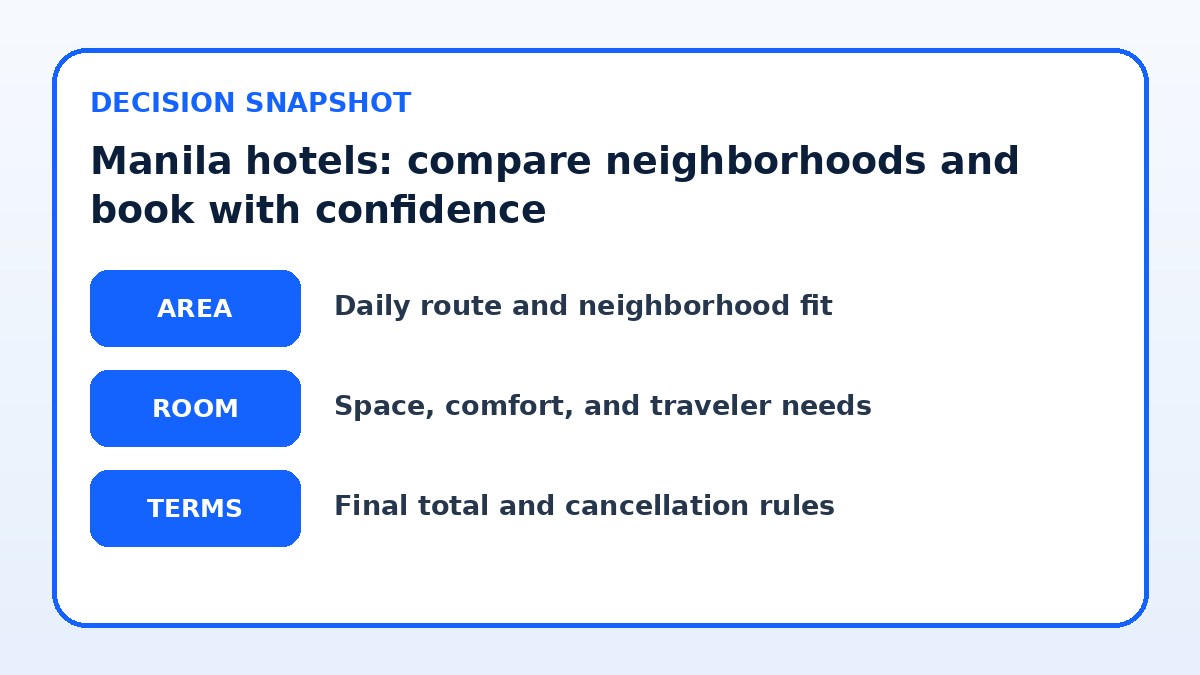
| Approach | Best for | Tradeoff to check |
|---|---|---|
| Stay near historic Intramuros/Rizal Park | Sightseeing and atmospheric walking days | Fewer late-night dining options and less modern infrastructure |
| Stay in Makati | Business travelers and those wanting central conveniences | Less historic character and possible rush-hour traffic delays |
| Stay in Bonifacio Global City (BGC) | Modern nightlife, design-led hotels, and walkable new-city atmosphere | Farther from colonial-era attractions, slightly higher rates |
| Stay in Pasay/airport area | Early/late flights and family convenience | Longer travel times to central attractions and potential traffic |

Bonifacio Global City (BGC): modern planning and nightlife
Bonifacio Global City (BGC) is a newer, planned district with wide sidewalks, public art, modern hotels, and a vibrant dining and nightlife scene. It’s popular with younger travelers and those who favor a contemporary urban feel with easy access to boutique restaurants, fitness studios, and open public spaces. Hotels in BGC often emphasize design, rooftop bars, and proximity to shopping and entertainment complexes. If you want a polished, walkable neighborhood with consistent infrastructure, BGC fits that brief well.
BGC’s tradeoff is distance from some classic Manila attractions and slightly higher nightly rates compared with older districts. It’s also a very different vibe from historic Intramuros, so pick BGC if you value nightlife and new-city conveniences over colonial heritage. For first-time visitors who plan to spend evenings dining or socializing and want modern hotel comforts, BGC is a defensible choice—just expect to commute a short distance for museums and older landmarks.
Before you book
- Check the hotel’s official booking page for room size, bed configuration, and whether interconnecting rooms or suites are available for families.
- Confirm how the property handles airport transfers: whether they offer an official shuttle, estimated transfer times, and where to meet drivers at NAIA.
- Verify inclusions such as breakfast, Wi‑Fi terms, and any extra fees (resort fee, parking) on the hotel’s final booking page before you pay.
- Read recent guest comments about noise and street traffic to choose a quieter room location or higher floor if you’re a light sleeper.
- Compare transport options from the hotel to your main activities—taxi availability, ride-hail coverage, nearby train stations, or hotel-arranged tours.
- Ask the hotel about child amenities (cribs, extra beds, pool rules) and availability of laundry or kitchenette facilities if staying more than a few nights.
Pasay and airport-side areas: convenience for arrivals and families
Pasay, including the area around the Ninoy Aquino International Airport (NAIA), is the practical choice for travelers with early flights, late arrivals, or those who prefer to minimize transfer time. The district hosts a range of hotels from budget to upscale, and some properties target families with larger rooms and pool facilities. Choosing this area reduces the stress of long early-morning transfers and can simplify logistics for short stays or itineraries keyed to flights rather than sightseeing.
The downside is that Pasay is less central to Manila’s cultural and historical attractions, so expect longer trips to Intramuros, Makati, or BGC. Traffic between Pasay and other districts can be heavy, particularly at peak hours, which affects day-trip planning. If you’re balancing airport convenience against sightseeing, compare estimated transfer time and airport shuttle availability on the hotel’s booking page before choosing. For families with tight schedules, the tradeoff often justifies the convenience.
Frequently asked questions
Which Manila neighborhood is safest for first-time visitors?
No neighborhood is risk-free, but Makati and BGC are commonly perceived as more tourist-friendly due to visible security, busy commercial zones, and consistent hotel services. Stay aware of your surroundings, secure valuables, and follow standard city-safety practices such as using licensed taxis or ride-hailing apps, avoiding poorly lit side streets at night, and keeping copies of travel documents. Verify any local safety advisories from your embassy and check recent guest reports on the hotel’s booking page for up-to-date impressions.
How should I choose between being near the airport or central Manila?
Decide by weighing your itinerary: if you have an early departure or late arrival, airport-area hotels reduce transfer stress. If your trip centers on museums, historic sites, dining, and nightlife, central neighborhoods like Intramuros, Makati, or BGC save daily travel time. Consider traffic patterns—Manila can have heavy congestion—so compare average transfer times, hotel shuttle options, and whether your hotel can arrange private transfers. Always confirm shuttle schedules or transfer arrangements on the hotel’s official page before booking.
Are public transport and ride-hailing reliable across these neighborhoods?
Ride-hailing apps and metered taxis operate widely in Makati, BGC, and central Manila, offering flexible point-to-point travel. Public rail and bus options exist but may not reach every tourist site directly, and services can be crowded during peak hours. If you rely on public transit, map routes in advance and allow extra time for transfers. For critical connections (airport transfers, timed tours), plan private or hotel-arranged transport and verify pickup procedures on the provider’s booking page.
Final planning note
First-time visitors to Manila should choose a hotel area based on how they plan to spend most of their time: heritage and walkability (Intramuros/Rizal Park), modern conveniences and business facilities (Makati), contemporary nightlife and design (BGC), or airport convenience and family-oriented stays (Pasay). Each area offers different daily rhythms and tradeoffs between proximity to attractions, available dining and nightlife, and travel times across the city. Use the checklist above to confirm room configuration, transfer options, and amenities on the hotel’s final booking page. If you want a quick way to compare current availability and conditions, you can also check Trip.com as one option—but always verify the hotel’s own policies before you commit.
Continue planning
Check current options and final conditions
Use the provider page to confirm live availability, the final total, cancellation terms, and every condition that matters to your trip.
This evergreen planning guide was created with AI-assisted drafting and a structured quality review. It does not display live prices, schedules, availability, visa guidance, or provider rankings. Verify current details before booking. Some links are affiliate links; we may earn a commission at no additional cost to you.