
Practical answer first: if your family wants milder weather, fewer crowds at major attractions, and more flexible hotel availability, prioritize Osaka shoulder seasons (late spring and early autumn) when planning and searching for Osaka travel deals. Book flights and accommodation once your travel dates are fixed, but leave a small window for fare monitoring and refundable or changeable hotel rates if your schedule allows. For families with school constraints, aim for the less-busy edges of peak windows—weekday arrivals, midweek sightseeing, and splitting busy attractions with low-traffic days. In the paragraphs below I’ll explain the tradeoffs—weather variability, festival overlaps, and when a small savings is worth the compromise on convenience—plus practical checks to run on booking pages before you commit.
Why shoulder seasons often suit families in Osaka
Shoulder seasons mean transitions between high and low travel periods; for Osaka that typically translates to fewer long queues and a more relaxed pace at museums, aquariums, and family attractions. Families get extra breathing room for flexible days—important when toddlers nap or teenagers need breaks. The milder temperatures in spring or autumn reduce the need to plan around intense heat or heavy rain, which simplifies packing and daily itineraries for parents juggling multiple ages.
That relative calm can make practical things easier: restaurants are likelier to seat a family without a long wait, trains are less crowded during peak spurts, and you can secure better room types or contiguous rooms without paying sharp premiums. Still, shoulder seasons are not guaranteed quiet—regional festivals, school breaks, or sports events can spike demand. The key is to identify those local calendar items early and weigh whether avoiding a specific date outweighs other conveniences like preferred flights or existing family commitments.
How to compare Osaka travel deals for family needs
Start by listing must-haves: number of beds, infant or child equipment (cribs, high chairs), proximity to transit, and whether you want a kitchen or simple breakfast included. When you compare flight options, evaluate total door-to-door time and change penalties, not just headline fares. For hotels and rentals, confirm bed configuration and whether extra child fees apply; provider pages and the property’s official notes often list this but always verify at checkout because some platforms show different terms.
When looking at package deals, separate what’s included from what’s optional—transfers, attraction tickets, and meals are common add-ons. For families, value often comes from convenience rather than the lowest headline price: a slightly pricier option with simpler transfers or flexible check-in may save stress and local taxi costs. Remember to check cancellation and change policies for each component and whether those policies differ between platform booking pages and the provider’s official site.
| Approach | Best for | Tradeoff to check |
|---|---|---|
| Book flights early, hold flexible lodging | Families with fixed dates but flexible accommodation needs | Secures air seats and times but may cost more if ideal hotels sell out later |
| Lock refundable package now, monitor prices | Families wanting cancellation safety while tracking deals | Pays a higher upfront rate for flexibility that may not be needed |
| Choose nonrefundable low rates across the board | Confident itineraries and strict budget plans | Saves money but increases risk and potential rebooking costs if plans change |
| Split stay between central and quieter neighborhoods | Families wanting transit convenience and peaceful evenings | Adds one transition day and extra luggage movement for potential overall comfort gain |
Timing bookings: when to lock and when to wait
If your travel dates are fixed around school or work commitments, book flights early enough to secure preferred times and seat selections, especially for families who want adjacent seats. For hotels, if your dates fall squarely in a shoulder period, you can often wait a short time to watch for modest fare movements—provided the rate type you’re eyeing allows free changes or cancellations. If you’re flexible by a few days, comparing midweek versus weekend arrivals can reveal meaningful differences in room availability and crowd patterns at popular attractions.
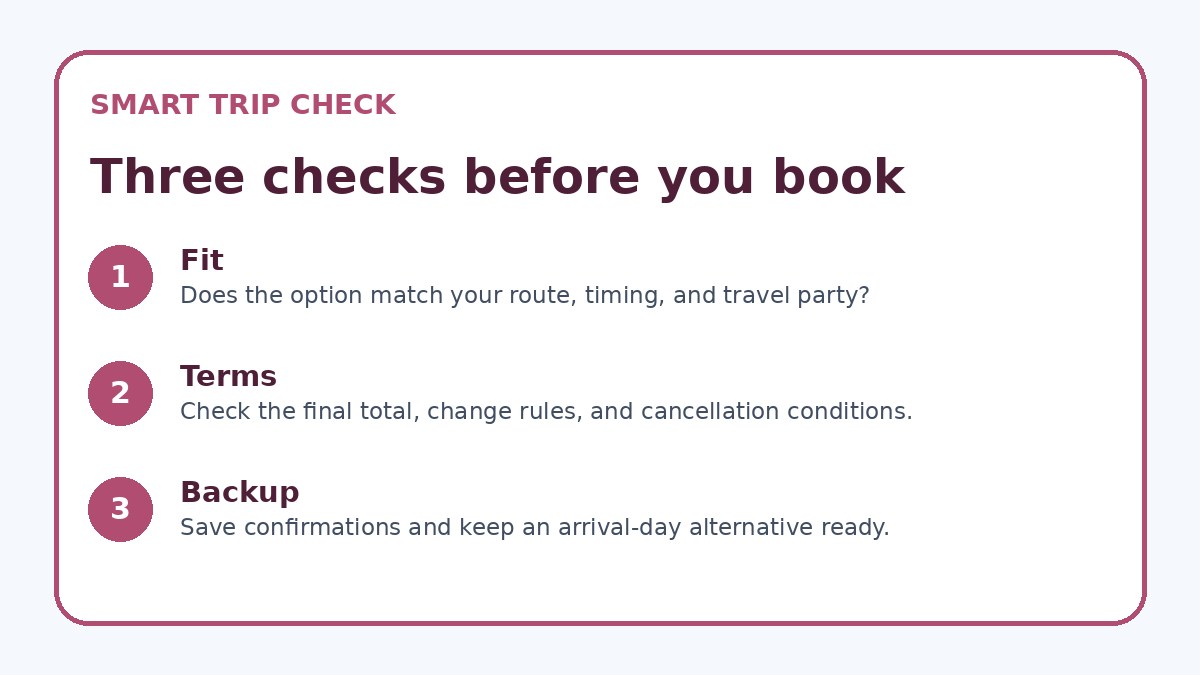
If a specific family event or festival overlaps with your trip, consider securing flights first and then shopping accommodations with more flexible cancellation windows. Use alerts and calendar reminders to recheck ferry or local transport schedules if you plan side trips. Finally, keep a list of must-confirm items to verify on the booking page—baggage rules, bed types, deposit requirements, and whether the quoted price includes taxes—because those details change more often than advertised sale tags.
Before you book
- Confirm the exact bed configuration and maximum occupancy on the property’s booking page before paying.
- Check flight seat selection rules and adjacent-seat policies for families on the carrier’s final checkout page.
- Verify cancellation and change penalties for each component (flights, hotels, transfers) on the provider’s booking page.
- Look up local school holiday and festival dates for Osaka to avoid unexpected crowd spikes on planned days.
- Note whether your chosen accommodation provides cribs, high chairs, or kitchenware and reserve them in writing if needed.
- Compare estimated transit times from your arrival airport or station to the hotel and plan for stroller-friendly routes.
Balancing comfort, convenience, and savings for families
Budget choices can be smart for short stays where you use the room mainly to sleep, but families often prioritize space and convenience. A centrally located apartment with a kitchenette can reduce meal costs and simplify routines for younger children, while a hotel near major rail stations shortens transfers when you’re carrying luggage and strollers. Decide what you value more: a reduced nightly rate far from transit, or a slightly higher rate that cuts travel time and daily taxi costs.
Another tradeoff is booking nonrefundable rates versus flexible fares. Nonrefundable deals may offer savings but increase stress if plans change or illness strikes. For families, the marginal premium of flexible options can be worth it for peace of mind. Also consider how splitting a longer stay between two neighborhoods can combine quieter nights with easy access to key sights, keeping days efficient and evenings low-stress when little ones need earlier bedtimes.
Frequently asked questions
How do I know if a shoulder-season date in Osaka will have fewer crowds?
Shoulder seasons generally bring fewer tourists, but crowd levels depend on local events and school schedules. Check municipal event calendars and Japanese school holiday periods; festival announcements and sports events can make a shoulder-season day busier. Use historical crowd reports from travel forums and recent traveler reviews for the specific attraction you’re visiting, and compare weekday versus weekend patterns. If avoiding crowds is critical, prioritize weekdays for high-demand sites and reserve timed-entry tickets where available; always verify ticket availability and conditions on the provider’s final booking page.
Should I book refundable or nonrefundable rates for a family trip to Osaka?
Choose refundable or changeable rates if your family’s plans could shift due to school, health, or work changes—the extra cost can be worthwhile for peace of mind. If your dates are rigid and you’re comfortable accepting the risk, nonrefundable rates often reduce upfront cost but limit flexibility. Consider a mixed approach: secure flights and critical nights on flexible terms, and use more restricted rates for low-priority nights. Always read the fine print on cancellation windows and any provider-specific fees on the booking page before finalizing.
How far in advance should families search for Osaka travel deals?
Start monitoring airfares and accommodation availability as soon as your travel window is set—this gives you time to spot patterns and set alerts. For peak holiday periods, earlier searches help avoid sellouts for family rooms or specific seat options; in shoulder seasons you can often wait a bit longer for price movements if you choose flexible rates. Aim to finalize bookings once you’ve confirmed school dates and have compared refundability and bed arrangements, and always reconfirm baggage, transfer, and rooming details on the provider’s final checkout page.
Final planning note
Planning an Osaka family trip around shoulder seasons is about tradeoffs: you’ll likely gain easier days and milder weather, but must watch local events and school calendars that can alter crowd patterns. Focus first on your nonnegotiables—fixed travel dates, number of beds, and transit needs—then compare deals emphasizing flexibility for the highest-risk items. Use alerts and careful checks on provider pages for baggage, cancellation, and room details before paying. With a bit of calendar work and the right balance between convenience and savings, families can create smoother Osaka visits that minimize stress and maximize what kids and adults enjoy together.
Continue planning
Check current options and final conditions
Use the provider page to confirm live availability, the final total, cancellation terms, and every condition that matters to your trip.
This evergreen planning guide was created with AI-assisted drafting and a structured quality review. It does not display live prices, schedules, availability, visa guidance, or provider rankings. Verify current details before booking. Some links are affiliate links; we may earn a commission at no additional cost to you.