If you need a short, practical answer: prioritize convenience when traveling with young children or bulky luggage, but lean toward schedule flexibility when your family values lower stress from delays or wants cheaper options. That means choose non‑stop or single‑stop itineraries with predictable airport transfers and departure times when convenience matters most. If your dates are flexible and you can tolerate an extra connection or different airports for better timing or lower fares, schedule flexibility can save money and reduce the stress of tight connections. In either case, check flight duration, number of changes, total transfer time, earliest/ latest departure options for your children’s sleep schedule, and how much official seat and baggage flexibility the fare class allows. Before you finalize, verify the airline's final booking page for baggage rules, change fees, and exact connection times—these details change frequently.
Decide what "convenience" means for your family
Convenience looks different for each family: for toddlers, it often means predictable departure times that match nap schedules and minimal transfers; for older kids, it may mean arriving early enough to settle in and explore. Consider door‑to‑door time, transfer complexity at each airport, and the ease of moving around terminals with a stroller or carry items. Think beyond the airborne time: how long does it take to get to the departure airport from your accommodation in Seoul, what transport is reliable at your chosen hour, and how straightforward is the transfer from Taipei’s arrival airport to your lodging?
List the pain points you want to avoid—late arrivals, multiple security checks, long walks between gates, or tight connection windows—and weight them. Some families trade a slightly higher fare for a direct flight or a longer minimum connection to remove stress. Others accept a single connection if it reduces total travel time or better aligns with preferred departure times. Clarifying these priorities first makes it easier to filter search results and compare concrete tradeoffs that matter to your household.
When schedule flexibility is worth the trade
Schedule flexibility pays off if your travel dates aren’t fixed or you can shift departure times to access a wider set of fares and connections. Flexible schedules let you take advantage of off‑peak flights with fewer families on board, or connections that reduce overnight layovers. They also give you room to recover from unexpected disruptions: moving to an earlier or later flight within the same fare class can be simpler than rebooking a tightly scheduled direct itinerary. For families on longer stays in Taipei or with open‑ended plans, flexibility can save both stress and money.
However, flexibility has costs beyond fare differences: more connections raise the chance of missed transfers, and changing airports or terminals can be rough with little ones. If you choose a flexible route, prioritize a single ticket that covers all legs, and confirm minimum connection times recommended by the airline. Check whether changing flights incurs a fee or only applies to certain fare buckets, and verify these conditions on the carrier’s booking page before purchase so you aren’t surprised by restrictions during travel.
| Approach | Best for | Tradeoff to check |
|---|---|---|
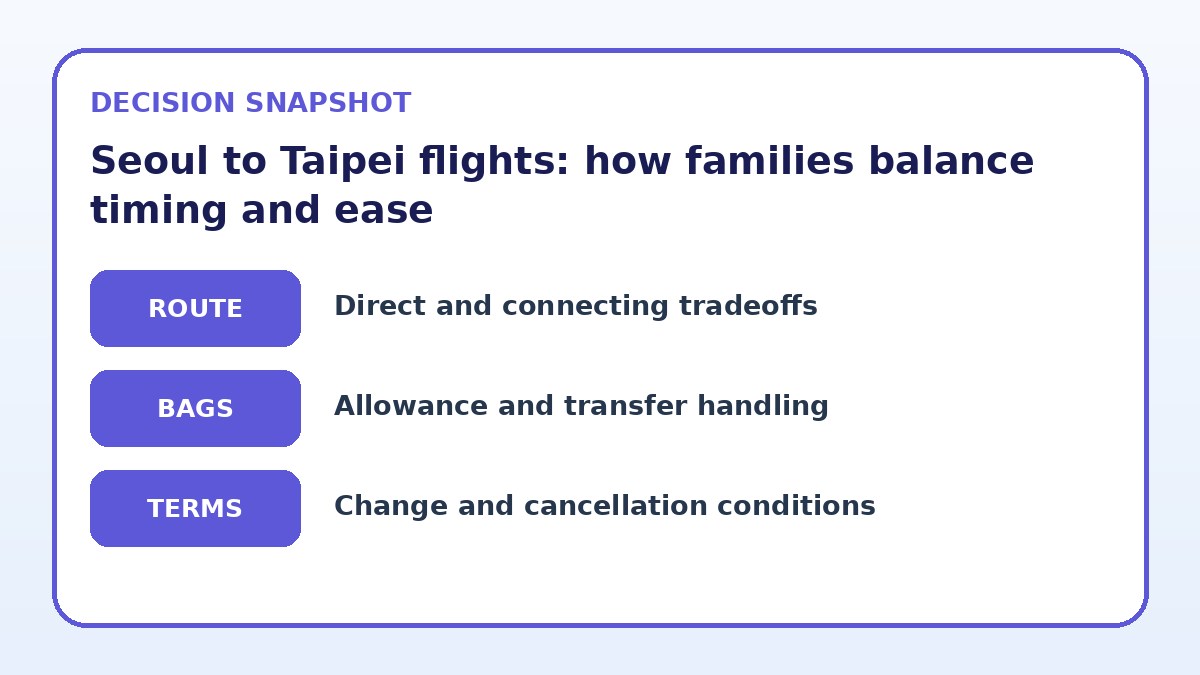
| Direct flights (fewer stops) | Families prioritizing minimal transfers and predictable travel time. | Often less flexible on timing and can be costlier than multi‑stop options. |
| One‑stop with longer layover | Families who accept a stop for better departure times or lower fares. | Adds movement and waiting but can let you avoid inconvenient direct departures. |
| Flexible dates across several days | Families with open schedules aiming to find better timing or lower fares. | Requires more searching and may result in more connections or varying airports. |
| Tightest‑schedule cheapest fares | Travelers comfortable risking tight connections to reduce cost. | Higher stress and greater risk of missed connections, especially with children. |
Comparing direct and connecting options for families
Direct flights are usually the most family‑friendly option because they reduce the number of times you have to move luggage, clear security, and occupy restless children in transit. But direct service may depart at inconvenient hours or be costlier, so compare total door‑to‑door travel time rather than just airborne duration. Sometimes a carefully timed one‑stop itinerary with a convenient layover can beat a late direct flight when you factor in ground transport and sleep schedules. When comparing, add estimated travel to and from each airport and approximate time spent in terminals to make an apples‑to‑apples decision.
If you consider a connecting itinerary, favor layovers that give you time buffers—enough to collect carry items, use restrooms, and refresh without running between gates. Avoid tight connections that require sprinting with children or juggling multiple bags. Also check whether the connection requires changing terminals (or even airports) which can be significantly more burdensome. Always confirm whether flights are on one ticket; if separate tickets are necessary, plan for immigration, baggage recheck, and potential delays, and consider travel insurance that covers missed connections.
Before you book
- Check the total door‑to‑door time including ground travel to and from both airports before choosing a flight.
- Confirm baggage allowance, stroller policy, and infant seat rules on the airline’s official booking page.
- Verify whether all legs are on a single ticket to ensure protected connections in case of delays.
- Choose flights with layovers long enough for restroom breaks, stretching, and unhurried transfers with children.
- Reserve seats early if you need specific seating (extra legroom, bassinets, or adjacent seats).
- Pack a carry kit with snacks, medicines, chargers, and entertainment, and keep documents and boarding passes handy.
Practical booking checks and on‑trip tips
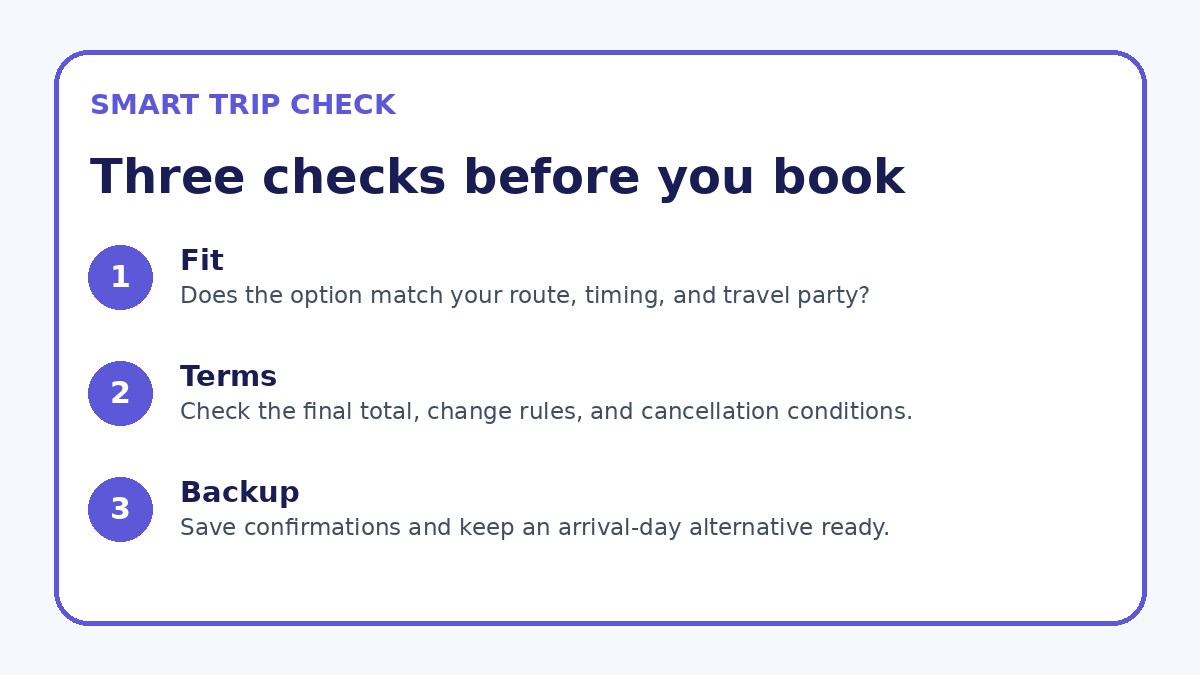
Before finalizing a booking, verify the airline’s baggage allowances, stroller policies, seat assignment rules, and the change/cancellation policy on the carrier’s page. These operational details determine whether a lower fare truly suits a family. If you have infants or toddlers, check whether bassinet seats are available and how to reserve them; where the airline lists these options on the booking page will vary. Also check whether the fare allows same‑day standby or paid upgrades—some families prefer a little flexibility for schedule shifts.
On travel day, arrive early to reduce rushed moments and use airport family lanes if available. Bring a simple carry kit with snacks, a small blanket, basic medicines, and entertainment that doesn’t rely on inflight Wi‑Fi. Keep essential documents, tickets, and any child identification close. If you booked a connection, note terminal maps and gate distances in advance and have a contingency plan for childcare if a long delay occurs. Finally, consider using Trip.com or a similar aggregator to compare current availability and conditions, but confirm final operational details on the airline’s official booking page before payment.
Frequently asked questions
Should I always pick a direct flight for family travel between Seoul and Taipei?
Not always. Direct flights reduce transfers and the number of times you manage luggage and children, which is excellent for convenience. But if direct options depart at awkward hours, are significantly more expensive, or don’t fit your preferred date, a one‑stop itinerary with a reasonable layover can be a smart choice. Compare total door‑to‑door time, layover comfort, and whether the fare class gives you protective change options before deciding.
How much connection time is safe when traveling with young children?
Aim for a buffer that removes rush: typically allow more time than an airline’s minimum connection recommendation when traveling with kids. Consider the need to collect or gate‑check items, visit restrooms, and move between gates or terminals. If a connection requires leaving and re‑entering through security or changing airports, build significantly more time. Exact safe windows depend on airport layout and whether all flights are on one ticket; verify terminal maps and recommended minimums on the airline’s site before booking.
What booking features should families prioritize when comparing fares?
Look for fare rules that let you change flights without steep penalties, clear baggage allowances, the ability to preassign seats, and infant/child policies (such as bassinet availability). Prioritize tickets that keep all segments on one reservation to protect connections. Also confirm whether the fare includes carry‑on and checked baggage in amounts you need, and double‑check these operational details on the carrier’s booking page since they often vary by fare class and route.
Final planning note
Choosing between schedule flexibility and convenience for Seoul to Taipei flights comes down to what your family tolerates and values most: fewer transfers and predictable timings, or the ability to shift dates and accept a connection for better timing or pricing. Start by listing your non‑negotiables—sleep schedule alignment, luggage needs, and transfer tolerance—then compare total door‑to‑door times, number of stops, and fare rules that affect changes and baggage. Use aggregators like Trip.com to survey options, but always confirm baggage limits, seat policies, and change fees on the airline’s final booking page before paying. With those checks in place, you can pick the itinerary that reduces stress and fits your family rhythm.
Continue planning
Check current options and final conditions
Use the provider page to confirm live availability, the final total, cancellation terms, and every condition that matters to your trip.
This evergreen planning guide was created with AI-assisted drafting and a structured quality review. It does not display live prices, schedules, availability, visa guidance, or provider rankings. Verify current details before booking. Some links are affiliate links; we may earn a commission at no additional cost to you.