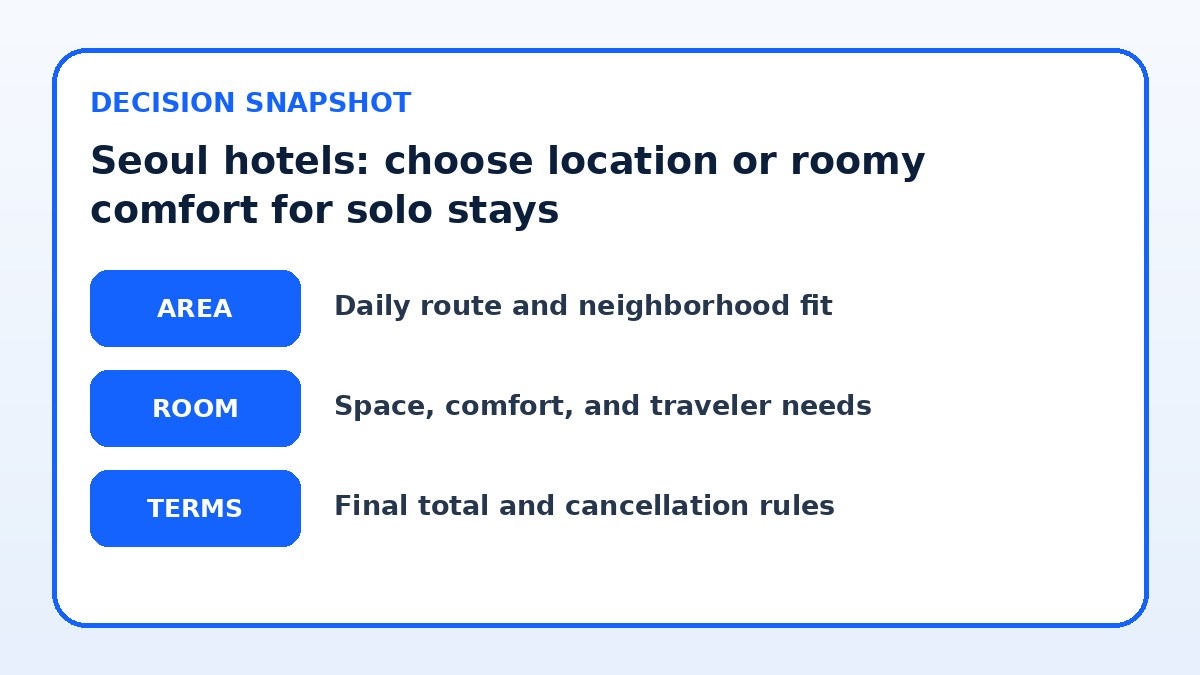
Practical answer first: if you plan to be out most days exploring Seoul and want quick access to nightlife and transport, prioritize location—pick a hotel in Hongdae, Myeongdong, Jongno, or near a major subway hub. If your trip includes long remote work blocks, late nights resting, or you value comfort for the price, prioritize room size and quiet—look for hotels with larger standard rooms, good soundproofing, and in quieter neighborhoods like Seongsu, Yeonnam, or the fringes of Gangnam.
The tradeoff is simple: central equals convenience but often smaller rooms and more street noise; residential outskirts or business districts can offer more space and a calmer sleep but mean longer transfers to attractions. Below you’ll find decision criteria, how to compare options when booking, sample tradeoffs, a booking checklist, and answers to common solo-traveler questions to help you choose the right balance for your Seoul stay.
How to decide: trip priorities and daily rhythm
Start by writing a short itinerary and estimating how many hours per day you'll be out vs in the room. If most days are sightseeing, museum visits, or night markets, a central location near a subway line will reduce travel time and let you return easily for breaks or to drop purchases. Solo travelers who value late-night safety and quick access to food and nightlife should prioritize neighborhoods with multiple transit lines and active street life so you’re rarely alone walking late.
If your Seoul trip includes work blocks, a long recovery sleep, or frequent time in the room, prioritize room comfort: look for listings that clearly show room size in square meters, include photos of the layout, and advertise desks or seating areas. Pay attention to descriptions mentioning soundproofing, quiet courtyards, or rooms on higher floors. Balancing both needs may mean choosing a central-but-residential pocket, or a business hotel near a subway node that offers larger standard rooms than city-center boutique properties.
Neighborhoods and what they give you
Central neighborhoods like Myeongdong, Jongno (Insadong), and Hongdae put you close to major sights, multiple subway lines, and dense food and nightlife options. These areas are excellent when you want minimal transfer time and easy walking access to attractions. Expect more street noise, smaller hotel rooms, and higher demand during weekends and holidays. For solo travelers, being in a busy district also means more people around late at night and a wider choice of convenient shops and late eateries.
Residential or emerging neighborhoods—Seongsu, Yeonnam, parts of Gangnam, and quiet stretches of Mapo—often offer larger rooms, quieter nights, and a different local vibe. The tradeoff is extra travel to central tourist sites, which is manageable by Seoul’s efficient subway system but can add 15–30 minutes each way. These neighborhoods are great if you prefer calmer evenings, more living space for work, or boutique-style hotels with modern interiors. Compare door-to-door travel times on the subway map rather than straight-line distance.
| Approach | Best for | Tradeoff to check |
|---|---|---|
| Central small room near subway | Travelers wanting minimal transit time and quick access to nightlife and attractions | Smaller living space and potentially more street noise, less room for long work sessions |
| Larger room in quieter neighborhood | Those who value sleep quality, working space, and more relaxed evenings | Longer transfer times to central sites and fewer late-night conveniences nearby |
| Business hotel near transit hub | Solo travelers needing dependable amenities, desks, and straightforward check-in | Often generic surroundings and less character compared with boutique city-center options |
| Boutique hotel in a lively district | Travelers seeking local character, design, and walkable food scenes | Varied room sizes and noise levels; must verify room specifics carefully before booking |
Room features that matter for solo travelers
Prioritize what you actually use: a comfortable bed and good blackout curtains for better sleep, reliable Wi‑Fi and a desk for remote work, and storage for shopping or longer stays. If noise is a concern, ask about room facing (courtyard vs street), double-glazed windows, and availability of rooms on higher floors. Check photos for closet space, a luggage rack, and whether bathroom configuration is private rather than a shared corridor layout. Small touches—kettle, mini-fridge, safe—improve convenience for solo stays.
If you need space to work, look for hotels that list room area or include photos showing a working surface and chair. Hotels with business centers, 24-hour lobbies, or co-working partnerships can be a helpful compromise if you choose a compact central room. Remember that advertised room types vary across booking sites; verify the exact room size, bed type, cancellation policy, and whether breakfast is included on the provider’s final booking page before confirming.
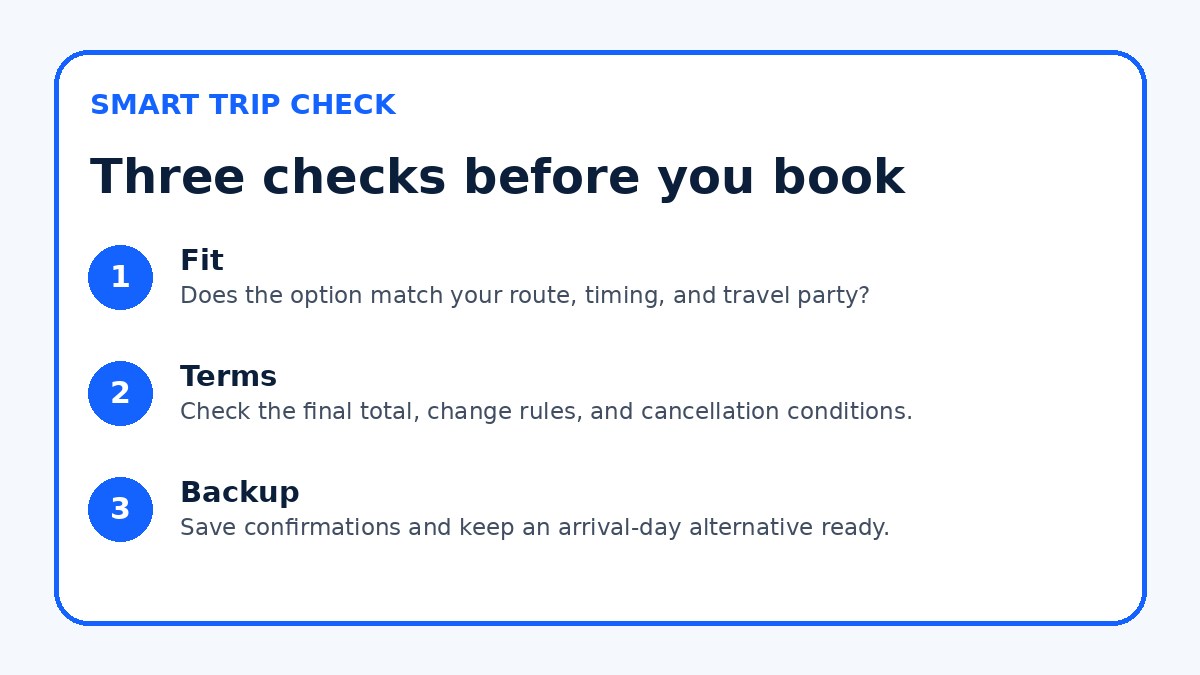
Before you book
- Map the hotel to the nearest subway station and estimate door-to-door travel times at your usual travel hours.
- Confirm the exact room size, bed type, and whether the room faces the street or a courtyard on the booking page.
- Check recent guest comments for mentions of noise, Wi‑Fi reliability, and cleanliness, paying attention to dates.
- Ask the hotel or booking site about early/late check-in options and any additional fees that may apply.
- Verify what amenities are included (breakfast, kettle, desk, safe) on the provider’s final booking confirmation.
- Plan a fallback route home (taxi app, well-lit walking route, or 24‑hour store landmark) for late returns.
Practical comparison tactics when booking
Make side-by-side comparisons: map the hotel’s location versus the subway station, calculate door-to-door transit using a real map app, and consider time of day for transfers. For each candidate, note the distance to the nearest subway line, typical transfer complexity (number of transfers), and how late-night options work (taxis, safe walking routes). For solo travelers, also check nearby convenience stores, late eateries, and street lighting—these small items matter when returning to your room alone.
Read recent guest comments specifically about room size and noise, but pay attention to date and context. When provider-specific facts may change—like shuttle services, breakfast policies, or check-in rules—always check the hotel’s official page or the booking confirmation to verify what is included and any extra fees. Trip.com can be useful to compare current availability, room photos, and policies, but confirm final details on the hotel’s own page before you finalize.
Frequently asked questions
Is it safer for a solo traveler to stay central in Seoul rather than farther out?
Seoul is generally safe, but central areas offer more people and services late at night, which many solo travelers prefer. Staying near a subway line or a busy street reduces the need for long solo walks after dark. If you choose a quieter neighborhood, pick accommodations with clear arrival instructions, good lighting, and easy taxi access. Regardless of location, confirm the hotel’s local contact details and have a phone app for taxis or translations on hand for added confidence.
How do I assess whether a room is 'big enough' before booking?
Look for the room area in square meters or the layout photos showing bed size and usable floor space. A comfortable solo traveler workspace typically needs a dedicated desk and chair; check photos to see if these are present. If the listing doesn’t state dimensions, message the property or booking platform to request exact room measurements and photos of the type you’ll receive. Also confirm whether the advertised room is standard, superior, or a different category to avoid surprises at check-in.
Should I rely on hotel descriptions for noise and soundproofing claims?
Descriptions can be optimistic. Use recent guest reviews to verify noise levels, specifically searching for mentions of street noise, thin walls, or noisy neighbors. Ask the hotel whether certain rooms are on quieter sides or higher floors, and request a room away from elevators and garbage areas. If noise sensitivity is critical, book refundable options and confirm the cancellation policy so you can change rooms or properties after arrival if conditions aren’t acceptable.
Final planning note
Choosing between central location and room comfort in Seoul comes down to how you use your time and what you need from your space. Prioritize location if you want to minimize daily transfers, maximize nightlife access, and be within easy reach of attractions. Prioritize room size and quiet if you work remotely, need better sleep, or want more living space for longer stays. Use the checklist above to compare exact room specs, transit times, and recent guest feedback before booking. Confirm any provider-specific details—like included amenities and check-in rules—on the hotel’s final booking page so your stay matches expectations.
Continue planning
Check current options and final conditions
Use the provider page to confirm live availability, the final total, cancellation terms, and every condition that matters to your trip.
This evergreen planning guide was created with AI-assisted drafting and a structured quality review. It does not display live prices, schedules, availability, visa guidance, or provider rankings. Verify current details before booking. Some links are affiliate links; we may earn a commission at no additional cost to you.