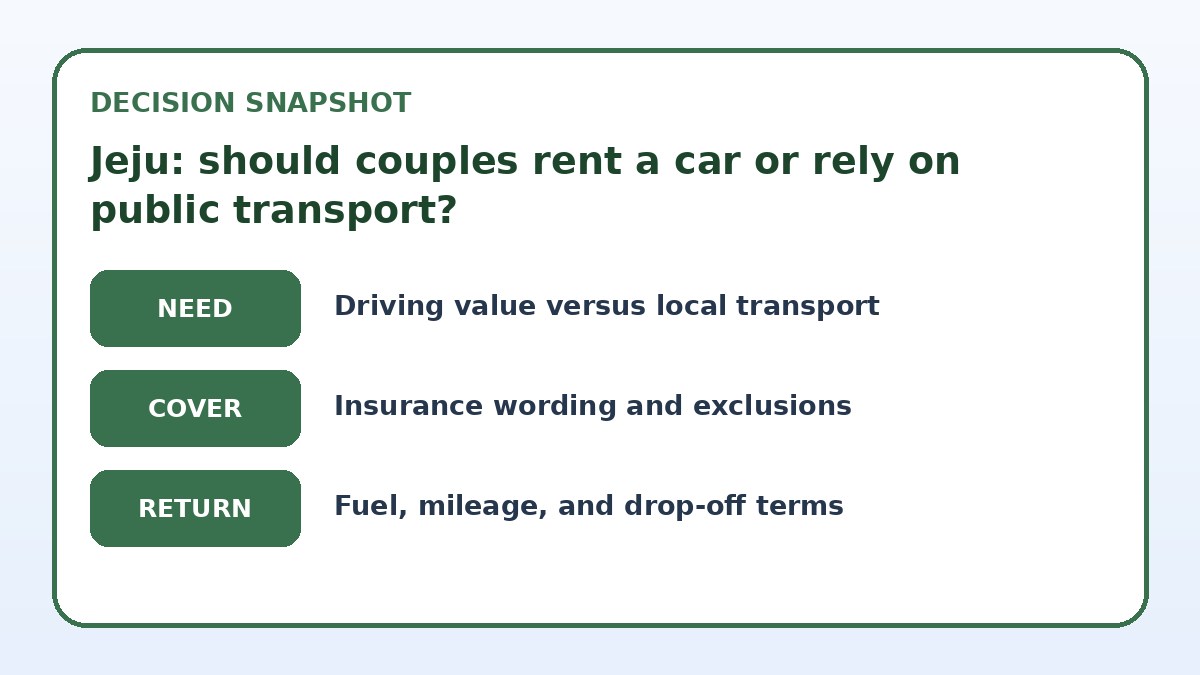
If you and your partner are planning a romantic or active break on Jeju, the central practical question is whether to get a Jeju car rental or rely on public transport. The short answer: choose a car if you want flexibility, early mornings or late evenings, and to reach remote coastal or mountain spots on your own time; choose public transport if you prefer a simpler, lower-stress rhythm, don’t want to navigate unfamiliar roads, or plan to base yourselves in a town with frequent services. Your decision should hinge on where you’ll stay, the style of days you want (slow and local vs. pointer-to-pointer exploring), how comfortable you are driving abroad, and whether parking logistics at your lodging and planned stops are easy. Below I unpack the tradeoffs, key checks to make before booking a car or arranging routes by bus, and a practical checklist to finalize your plan.
Practical advantages of renting a car
A car transforms your itinerary from a sequence of scheduled departures into a flexible plan you can reshape day by day. For couples who like to wake early for quieter sights, chase light for photography, or linger over a seaside lunch, a car saves waiting and route compromises. You can build loops that hit farther-flung beaches, scenic coastal roads, or mountain trails at times that suit your pace rather than a timetable. This freedom also helps when weather or energy levels change: you can swap stops without worrying whether a bus still runs.
Driving together also opens up logistics that buses rarely match: bringing picnic gear, larger luggage, or overnight clothes without juggling tighter connections, plus the privacy to play your music or talk without time pressure. However, remember to gauge driving confidence on unfamiliar roads and to double-check driving regulations, insurance coverage, and rental provider policies. For provider-specific details like allowed mileage, insurance excess, or additional driver rules, check the rental company’s final booking page before you reserve.
Why public transport can make for a relaxed couple’s trip
Using buses and local transport reduces the mental load of navigation, parking, and fuel. Couples who value conversation, unhurried meals, and the chance to observe local life often prefer public transport because it encourages a slower, more serendipitous rhythm. Staying in a village or town with frequent routes lets you take short walks between sights and try neighborhood cafés or markets without shifting parking positions or worrying about one person driving back after wine or late dinners.
Public transport also forces a natural focus: you plan fewer, deeper experiences per day instead of racing through too many points of interest. That can suit couples who want to savor hiking routes, galleries, and beach time. Still, you should map your intended daily loops in advance to avoid long waits or multiple transfers. Verify route maps, station locations relative to your accommodation, and whether buses serve the specific parks, peaks, or coastal roads you want to visit—check operator pages or a travel aggregator like Trip.com for current timetables and route maps.
| Approach | Best for | Tradeoff to check |
|---|---|---|
| Rent a car | Flexible itineraries, early/late outings, reaching remote beaches and hilltops | More logistics: driving stress, parking, and extra costs for insurance and fuel |
| Public transport | Low-stress, sociable travel with easy central bases and fewer driving responsibilities | Less flexibility and possible waits or transfers to reach off-grid attractions |
| Hybrid (car for part of trip) | Combining base-in-town comfort with a day or two of self-drive exploration | Requires careful scheduling and possibly extra pick-up/drop-off complexity |
| Taxi or rideshare for short legs | Late evenings, short transfers, and avoiding parking hassles for single nights | Can become costly for repeated long-distance transfers compared with a car |
Key decision criteria for couples choosing transport
Start by listing your must-see places and mark which ones lie on main roads, in remote areas, or inside protected zones with limited vehicle access. If most attractions cluster along a single corridor with frequent buses, public transport may be efficient. If your list includes dispersed beaches, inland trails, or sunrise spots off the main routes, a car will save time. Also weigh personal preferences: do you relish the idea of scenic drives together, or does the thought of foreign driving add stress? Honest answers here will steer the choice more than general advice.
Consider lodging: hotels and guesthouses in central towns reduce car necessity; rural stays or beachfront pensions often have little or no regular bus service. Think about timing too—early starts and late finishes work more cleanly with a private car. Finally, assess practicalities: parking availability where you stay, narrow rural roads, seasonal crowding, and whether you’ll want flexibility for impromptu detours. Confirm the specific parking policies at your accommodation and major stops before you book either transport option.
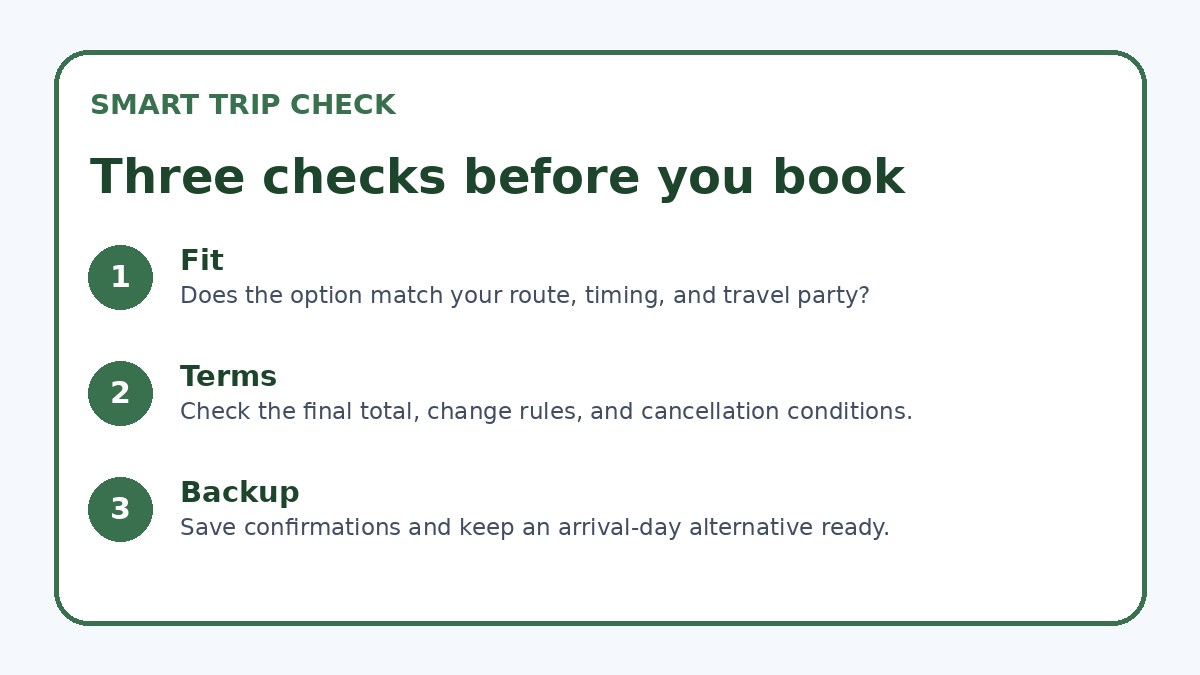
Before you book
- List your absolute must-see spots and mark which are remote or poorly served by buses.
- Confirm whether your chosen accommodation has on-site parking, street parking rules, or shuttle options.
- Check driver license requirements and whether your license needs a translation or international permit.
- Review the rental company’s insurance options, excess amounts, and policies for additional drivers.
- Map bus stops and likely transfer points near your lodging and key attractions to estimate wait times.
- Decide how you’ll handle evenings with alcohol—plan taxis or a non-driving partner if you rent a car.
Cost, complexity, and safety tradeoffs to weigh
Costs are about more than base rental fees. With a car you should factor in insurance choices, fuel, parking, tolls if applicable, and potential additional-driver charges. With public transport, costs are mostly predictable but can rise if you need taxis for the last mile or book guided transfers for hard-to-reach sites. For either route, create a simple sample budget comparing anticipated expenses for your planned itinerary rather than comparing generic per-day estimates. When in doubt, get firm numbers from provider pages for car insurance options and local transport fares.
Safety and comfort matter for couples: driving unfamiliar roads at night can be tiring and reduces enjoyment, and some rural routes may be narrow or winding. Conversely, public transport keeps you off the road and lets you both relax, though it may involve standing or crowded buses during peak times. Whatever you choose, double-check driver eligibility, required documents, and emergency procedures with the rental company or transport operator before confirming bookings. Confirm the exact insurance coverage and any driving restrictions on the rental company’s final booking page.
Frequently asked questions
Can couples navigate Jeju easily without a car?
Yes, many couples travel Jeju without a car, especially if they base themselves in larger towns with frequent bus services. Public transport is a low-stress option for nearby attractions and urban sightseeing, and it encourages a relaxed pace. However, if your interests include dispersed beaches, mountain trails, or early sunrise locations, buses may not run at the times or frequencies you need. Before committing to no-car travel, map your intended daily routes and check current bus connections to the specific sites on operator pages or a travel aggregator like Trip.com.
Is driving in Jeju difficult for visitors?
Driving in Jeju is manageable for many visitors, but it depends on your comfort level with unfamiliar roads and local traffic patterns. Roads around popular sites are generally straightforward, but rural and coastal lanes can be narrow and winding. Night driving, tight parking areas, and seasonal traffic require extra attention. Make sure you understand local driving rules, have adequate insurance, and confirm any restrictions with the rental provider. If either partner feels uneasy, consider public transport or splitting driving duties to keep the trip enjoyable.
How can we mix public transport with occasional car use?
A hybrid approach works well for couples who want both ease and occasional freedom: base yourselves in a town with good bus links for most days, then rent a car for one or two full days to reach remote spots. Plan rental pick-up and drop-off times around your bus schedule to avoid wasting travel time. When booking a short-term rental, verify pick-up and drop-off locations, potential one-way fees, and the availability of short-term insurance. Check the rental company’s booking page for exact terms before reserving to avoid surprises.
Final planning note
Choosing between a Jeju car rental and public transport comes down to how you want to spend your days together. If flexibility, early starts, and visiting dispersed coastal or mountain spots matter, a car brings independence and time savings; if you prefer a gentle rhythm, less navigation stress, and staying close to town life, buses let you relax and soak up local scenes. Many couples opt for a hybrid approach—use public transport for in-town days and rent a car for a day or two of countryside exploration. Whatever you decide, map your must-sees, confirm parking and insurance details, and verify provider terms on their booking pages so your trip runs smoothly.
Continue planning
Check current options and final conditions
Use the provider page to confirm live availability, the final total, cancellation terms, and every condition that matters to your trip.
This evergreen planning guide was created with AI-assisted drafting and a structured quality review. It does not display live prices, schedules, availability, visa guidance, or provider rankings. Verify current details before booking. Some links are affiliate links; we may earn a commission at no additional cost to you.