Practical answer first: for most families travelling Hanoi to Da Nang, choose the transport mode that minimizes transfers and door-to-door friction — usually a daytime train or a direct coach that collects near your accommodation, or a flight if airport transfers fit your schedule and luggage. Decide by comparing terminal distance from your accommodation, how many times you'll handle luggage, and how flexible departure times need to be. This article walks through how to choose between rail, coach, air, or a multi-mode plan; what to pack and how to time your day; how to manage terminals and family needs; and a simple disruption backup. Focus on end-to-end practicality: not just the ride, but how you get from your home to the station or airport, and from the destination terminal to your hotel or rental. Use provider booking pages to confirm final baggage rules, exact terminals, and real-time schedules — Trip.com can be one place to check availability but always verify details with the carrier before you commit.
Choosing between rail, coach, air, or a mixed plan
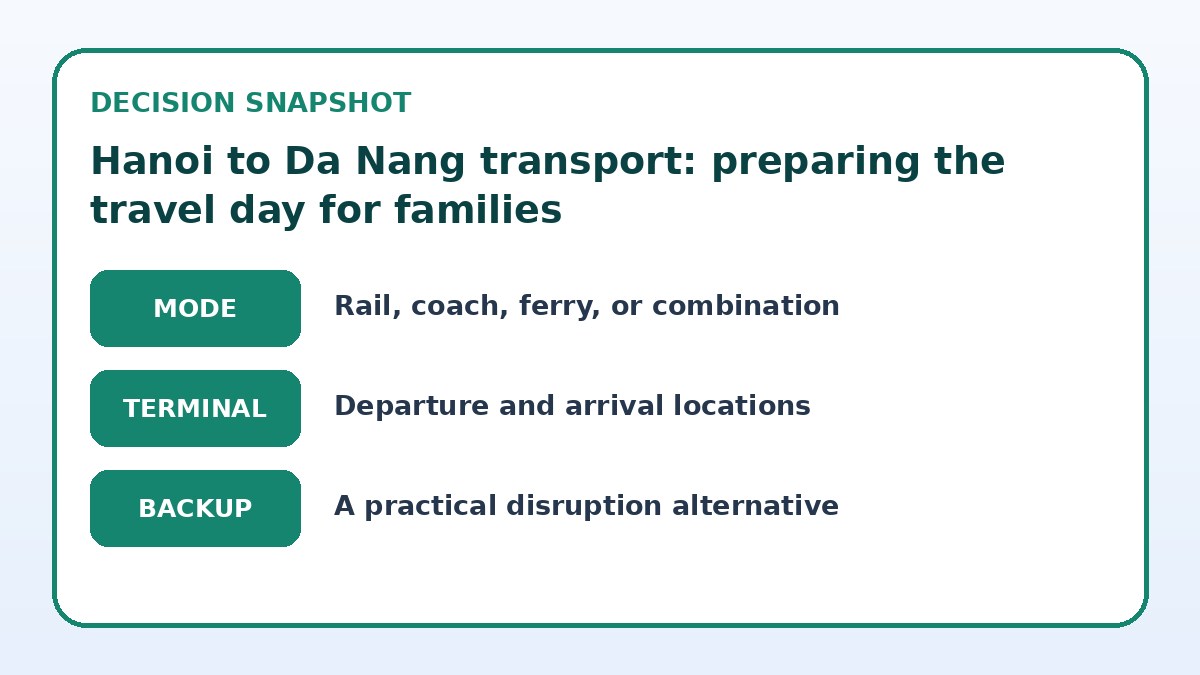
Start by mapping door-to-door time, not just in-vehicle duration. For families, a direct train or coach that departs near where you stay often beats a faster flight that requires long airport transfers. Trains generally allow more space to move, and coaches sometimes deliver you closer to central hotels. Flights can cut journey segments but add security checks, early arrival windows, and more handling of luggage — consider whether your family is comfortable with that sequence before prioritizing speed.
A mixed plan — for example, a short flight combined with a local transfer or a train plus a short taxi — can balance comfort and time if you accept one extra handoff. Compare options by counting transfers, estimating how long each transfer will take with children and pushchairs, and whether you can pre-book seats or a child-friendly berth. Whichever you choose, list each micro-step from your door to the destination door and prefer the plan with fewer stressful or unpredictable steps.
Choose the end-to-end journey plan
| Journey approach | Best for | Friction to check |
|---|---|---|
| Direct train from city station | Families who prioritize fewer transfers and onboard space | May require a longer initial taxi if your accommodation isn’t near the station |
| Direct coach that picks up near hotels | Families wanting convenient boarding and simpler luggage handling | Comfort varies by operator; still subject to road traffic and stops |
| Flight plus airport transfer | Families needing fastest in-vehicle time when airport transfers are short | More security, earlier check-in, and extra luggage handling compared with surface travel |
| Mixed-mode (train or flight plus short taxi) | Families balancing speed and comfort with one manageable transfer | Introduces one extra handoff that must be planned and timed well |
Check live intercity options
Look beyond the ride itself and compare terminals, transfers, luggage, and arrival fit.
Terminal fit and luggage: minimizing friction
Assess terminals and stations for family needs: elevator access, stroller-friendly routes, and short walking distances. If your starting accommodation is far from the rail station but near the highway, a coach or private transfer may reduce total stress. Conversely, if you’re close to the railway, a train often means less time spent managing baggage in traffic. Note that luggage allowances and how bags are loaded differ by mode; verify the carrier’s final booking page for size limits, whether they load luggage for you, and if there are fees.
Pack and stage strategically: keep snacks, entertainment, spare clothes, medicines, and essentials in a daypack for quick access. Use luggage labels and a tracking method for checked bags. If your family uses a stroller or car seat, check whether it can be gate-checked, fits in overhead space, or needs a separate ticketed item. Having the right-sized luggage and a single larger piece plus hand luggage per adult often simplifies transfers and taxi loading.
Timing flexibility and kid-friendly scheduling
Match the travel slot to your children’s rhythms. Early departures suit families who can travel after an overnight sleep, while late-morning or early-afternoon departures may align with nap schedules for toddlers. Leave padding for slow mornings, bathroom breaks, and unexpected delays. When booking, choose departure slots with seat reservation options or coach seats sold in blocks so the family can sit together. If a train has sleeper options, evaluate whether a short daytime journey with space to move will work better than an overnight that breaks sleep patterns.
Factor in transfers at both ends into your timing decision. For example, a quick city-center train arrival could get you to your Da Nang hotel faster than a flight that lands at an airport with a longer transfer time. Plan arrival windows so check-in times, arranged transfers, or childcare routines are respected. If you’ll arrive before hotel check-in, arrange luggage drop or a small activity near arrival to bridge the gap without tiring the children.
Compare the practical alternatives
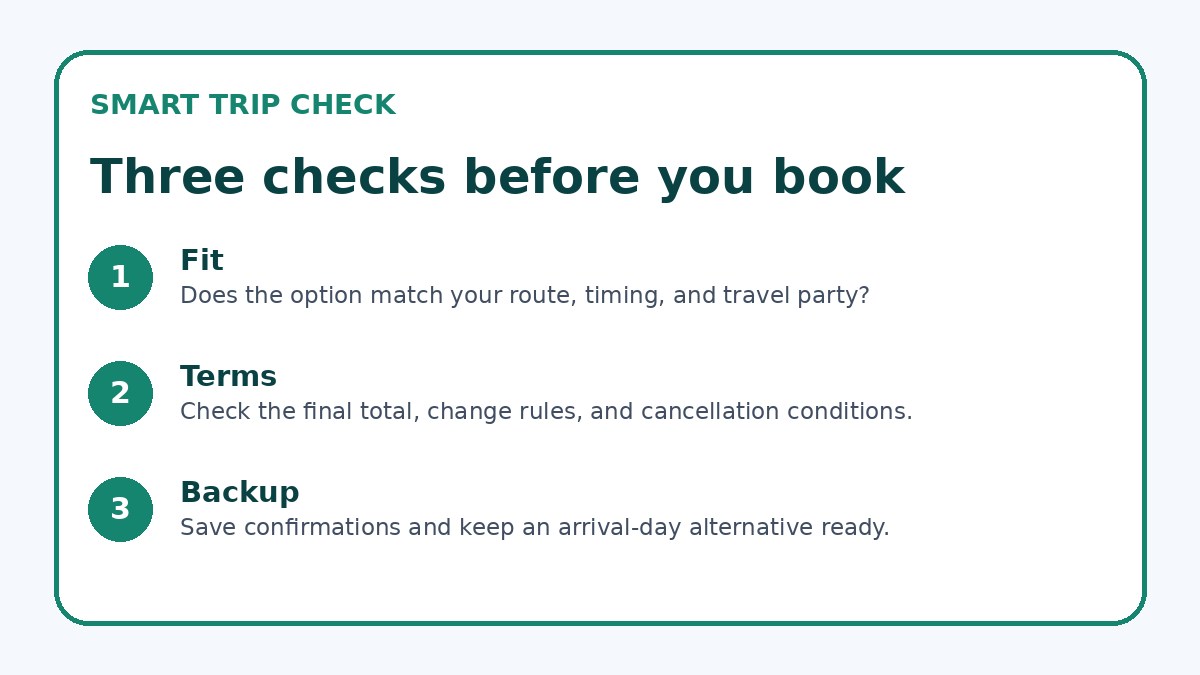
Use the final page to confirm what is actually offered on your dates and save a workable fallback.
Intercity travel checklist
- Map door-to-door time for each option: home to departure point, ride duration, transfers, and arrival to hotel.
- Confirm baggage allowances and whether carriers load luggage or require you to carry it onto platforms or ramps.
- Reserve seats together or a family compartment when available; note seat numbers and carriage/coach details.
- Pre-book or identify a reliable local transfer at arrival and save driver contact and booking reference.
- Pack a daypack per adult with medicines, snacks, chargers, spare clothes and a small comfort toy for children.
- Save alternative departure options and the steps to rebook; keep carrier contact details and hotel late-check-in policy.
Disruption backup: simple plans that solve common problems
Families need a compact, actionable backup plan for cancellations, long delays, or missed connections. Identify an alternative departure within a reasonable window — another train, coach, or flight — and note how to buy last-minute seats. Have a trusted local taxi or ride-hailing app preloaded with payment, and confirm whether your accommodation will hold a late arrival or accept a delayed check-in. Keep all important contacts and reservation references in both paper and digital formats for quick access.
Prepare emotional backups too: bring quiet activities, a comfort object, and snacks so a delay is bearable. Arrange quick wins at the destination — a nearby café or park where kids can stretch while you sort rescheduling. Finally, know which details you must verify at booking (baggage rules, exact terminal, seat assignments, and child policies) on the provider’s site before relying on any backup option; Trip.com can be a comparison tool but always confirm on the carrier’s official page.
Rail & Intercity Transport questions travelers ask
Should I choose a daytime train or a flight for children aged 2–10?
For many families, a daytime train is gentler: more space to move, easier bathroom and snack access, and simpler boarding. Flights reduce in-vehicle time but add airport arrival windows and extra baggage handling, which can be tiring. Choose a flight only if airport transfers at both ends are short and predictable; otherwise prefer rail or a coach that minimizes the number of times you lift or move children and luggage.
How early should we leave Hanoi for our chosen departure to avoid stress?
Allow more buffer than you think you need: factor in local traffic, parking or drop-off time, security or ticket queues, and restroom breaks. For city stations or coach terminals, aim to arrive with at least 30–60 minutes before departure for families; for flights, follow the airline recommendation but add extra time for children’s needs. If using a pre-booked transfer, confirm pickup windows and build contingency time in case of traffic.
What documentation and confirmations should families carry on the travel day?
Carry printed and digital copies of booking references, ticket confirmations, seat numbers, transfer contacts, and hotel reservation details. Have photo ID for adults and any required documents for children handy. Also keep a small printed summary of your backup plan and alternative departure options. Always verify baggage and boarding rules on the carrier’s official booking page before departure since policies can change.
Final decision note
Planning the travel day from Hanoi to Da Nang as a family is about reducing handling, choosing the route that fits your door-to-door needs, and preparing simple backups. Start by listing each micro-step from your front door to your Da Nang accommodation and choose the option with the fewest stressful handoffs. Pack intentionally, reserve seats together, and confirm luggage and terminal details on the carrier’s booking page. Have a short backup plan, a loaded ride-hailing app, and essentials accessible for delays. With these practical steps you’ll turn a potentially complicated day into a manageable, even pleasant, part of your trip.
Continue planning
Check current options and final conditions
Use the provider page to confirm live availability, the final total, cancellation terms, and every condition that matters to your trip.
This evergreen planning guide was created with AI-assisted drafting and a structured quality review. It does not display live prices, schedules, availability, visa guidance, or provider rankings. Verify current details before booking. Some links are affiliate links; we may earn a commission at no additional cost to you.