If you’re flying from Busan to Jeju for the first time, the most useful decision is balancing route convenience against the fare conditions you can live with. Practical travel planning starts with knowing whether you need a fully flexible ticket, a low-cost nonrefundable fare, or a middle-ground option that allows one free change and reasonable baggage allowances. Focus on exact travel dates, the number and age of travelers, and whether you’ll need to make same-day connections in Busan or Jeju. This article gives a concise, traveler-first checklist for reading change and cancellation policies, assessing baggage and connection risk, and matching schedules to your trip priorities. Follow the checklist and check provider booking pages for the final terms before you pay; if you want a single place to compare live fares and policies, you can look on Trip.com as an optional tool but verify details with the airline or booking agent.

See live routes for your exact travel day
Compare direct and connecting choices with the same baggage and traveler details.
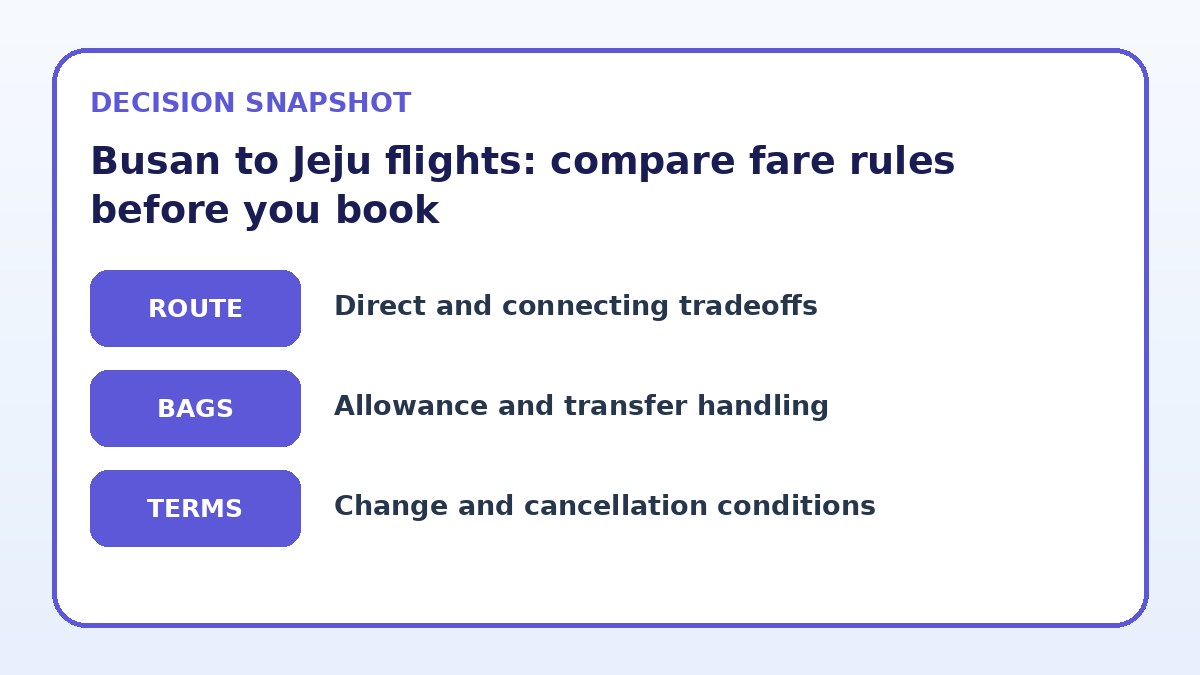
Routing options and the fare-versus-convenience tradeoff
On the Busan to Jeju corridor you’ll often choose between faster direct routing and lower fares that impose stricter rules. Direct flights are the baseline convenience: they reduce the chance of missed connections and are easier to rebook if cancelled, but direct-service seats with flexible change conditions tend to be priced higher. Alternatively, some tickets or multi-leg itineraries with connections can look cheaper on price boards but increase the number of carriers or segments involved, complicating who accepts responsibility for delays, rebooking, or refunds.
When comparing routing options, always examine the change and cancellation clause linked on the airline’s booking page for the exact fare code or booking class you’re offered. Look for phrases that state whether changes are allowed only with a fee, whether the fare is nonrefundable, and whether any voucher-only options apply. If multiple carriers are involved, ask the booking agent which carrier’s contract of carriage governs changes and refunds — the cheapest route might be the most fragile if any segment is delayed or cancelled.
Baggage rules and connection risk
Baggage allowances often determine the true cost of a fare more than the headline ticket price. Low-fare tickets sometimes exclude checked bags and even charge extra for larger carry-ons; that’s manageable for light travelers but can become expensive if plans change and new charges are applied at the airport. If your itinerary includes a tight connection in Busan or an onward ground transfer on Jeju, consider the risk: checking luggage increases the chance of delay at the belt, and missing a connection can mean paying to rebook segments under restrictive rules.
For first-time travelers, verify baggage allowances for each segment and confirm whether a through-checked bag is offered on connecting itineraries. If you need reliable arrival times with checked luggage, choose a fare that explicitly permits a reasonable bag size and quick rebooking options, or allow generous connection windows to lower the chance of missed baggage links. Always confirm on the airline’s final booking page which items are free, which incur fees, and how refunds or exchanges handle baggage fees if you cancel.
Compare flight-selection strategies
| Flight strategy | Best for | Risk to check |
|---|---|---|
| Lowest-fare, nonrefundable ticket | Solo travelers confident of fixed dates and traveling light. | Very low upfront cost but fees for changes/cancellations and separate baggage charges raise total risk. |
| Economy fare with paid change option | Travelers wanting some flexibility without full flexible fares. | Lower change fees than nonrefundable fares, but still may require fare difference and have restrictions. |
| Flexible refundable or change-included fare | Travelers with uncertain schedules or those booking for others. | Higher ticket price, mitigated stress and easier rebooking when plans shift. |
| Hybrid approach: low fare plus separate travel insurance | Risk-tolerant travelers seeking savings while covering specific cancellation causes. | Insurance covers select events but rarely reimburses change fees for voluntary changes; read policy exclusions. |
Recheck the complete itinerary
Confirm airports, connection handling, baggage, and change conditions before deciding.
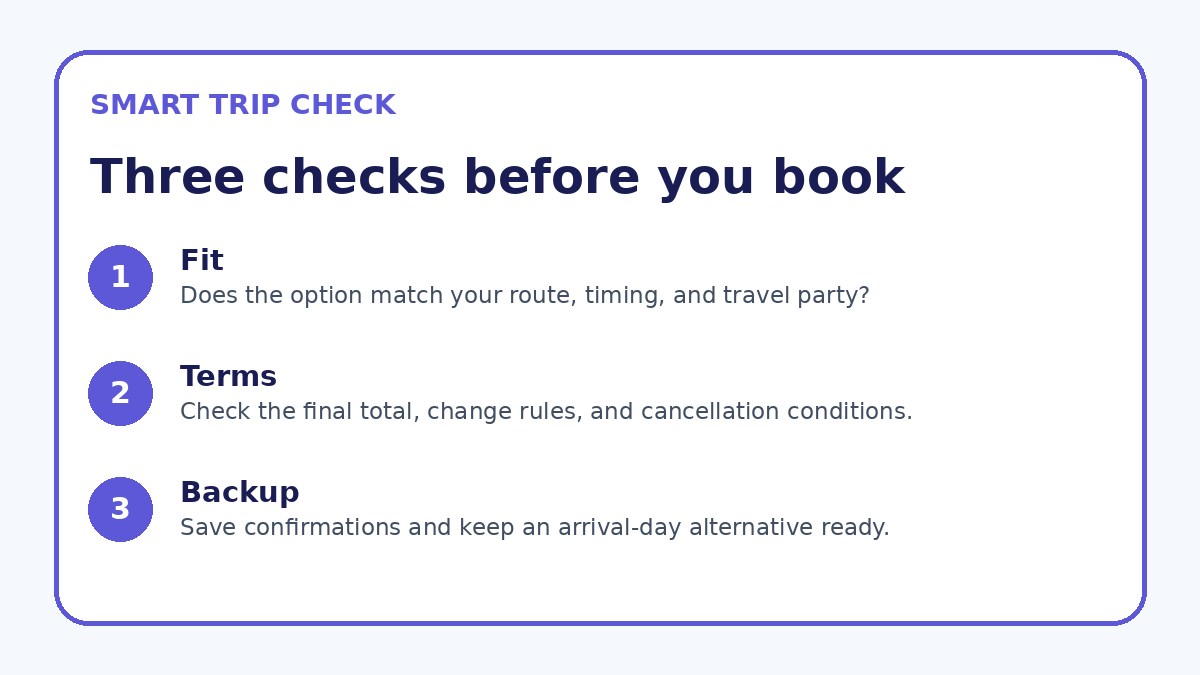
Schedule fit, day plans and flexibility needs
Selecting flights that match your on-the-ground schedule matters more than squeezing a few won from the fare. Consider how arrival and departure times on both ends affect your plans: do you need morning arrival to maximize activities on Jeju, or is an evening flight fine? If you have timed reservations, tours, or hotel check-in windows, aim for a fare with flexible change conditions so you can adjust in case of travel delays or personal changes. A slightly higher fare with free or low-cost changes may save money and stress if your schedule is uncertain.
Also think about contingency time: if your Busan plans include other transport to the airport, build extra buffer in case of traffic or transit delays. If your itinerary involves a same-day return, focus on fares and schedules that allow recovery from mid-trip delays. Before payment, check whether the fare’s change policy includes a free reissue window, seasonal blackout dates, or restrictions for specific days that might block changes close to travel dates. Confirm these specifics on the airline or booking site's authoritative terms.
Flight details to verify
- Have exact travel dates, full passenger names, birthdates, and contact details ready before searching fares so the booking shows accurate rules for your passengers.
- Open the airline’s detailed fare rules for the quoted booking class and save a screenshot or PDF of the policy before you pay.
- Compare baggage allowances per segment and note whether checked luggage or carry-on fees are charged separately or bundled with the fare.
- Check whether the ticket allows free reissue or only fee-based changes, and calculate the worst-case cost of changing dates (fee plus any fare difference).
- If booking through an agency, confirm their change/cancellation service fees and whether they can process emergency changes on the airline’s behalf.
- If you rely on vouchers or credits for refunds, verify expiry dates, usage restrictions, and transferability on the provider’s refund policy page.
Reading fare conditions: what to verify on the final booking page
When you’re ready to book, don’t rely on summary lines shown on comparison sites. Open the airline or agency’s detailed fare rules page for the exact booking class you are quoted. Verify whether changes are allowed, what the change fee is (fixed fee, percentage, or fare difference), whether cancellations are refundable or refundable only as travel vouchers, and whether any time limits or administrative fees apply. If the site mentions credits or vouchers, check expiration dates and whether vouchers are transferable.
Also confirm passenger-specific rules: infant, child, or group bookings may carry different terms. If you booked through an online travel agency, confirm whether the agency has separate service fees for changes or cancellations and whether they can act on your behalf quickly. When provider-specific facts might change, the single exact source is the airline’s or agency’s final booking page and the fare rules document linked there — verify all change fees, refund rules, date-change windows, and contact procedures before you complete payment.
Flight Guide questions travelers ask
Can I change Busan to Jeju flights without paying a fee?
Whether you can change a Busan to Jeju booking without a fee depends entirely on the fare rules tied to your booking class. Some flexible fares permit one free change within a specified window, while most low-cost or promotional fares charge a change fee plus any fare difference. For a definitive answer, open the specific fare rules on the airline or agent final booking page shown at checkout and look for the wording on free changes, penalty fees, and time limits. If the policy is unclear, contact the airline’s reservation team and save any written confirmation.
Will cancellations always be refunded to my original payment method?
Not necessarily. Refundability depends on the fare conditions: refundable fares generally return funds to the original payment method, while many low-cost fares are nonrefundable and may offer travel credit or vouchers instead. Agencies can add their own cancellation handling terms and service fees. To avoid surprises, verify the payment refund policy for the exact fare on the airline’s or agency’s final booking page, note any voucher expiration and restrictions, and keep a copy of the fare rules and transaction receipt for future reference.
How should I evaluate change risks if I have a tight schedule?
If you must meet a strict schedule — tours, meetings, or same-day returns — prioritize fares that allow easy changes or rebooking and give generous connection buffers. Direct routing lowers the number of points of failure, and refundable or change-inclusive fares reduce financial risk if you must shift plans. If you choose a lower-cost ticket, add extra time between ground transport and flight, avoid tight single-connection itineraries, and consider travel insurance that covers specific unforeseen events, while remembering insurance rarely reimburses voluntary change fees.
Final decision note
For first-time travelers on the Busan to Jeju route, the key decision is whether you prioritize the lowest upfront fare or the flexibility to change or cancel with minimal cost. Start by preparing exact traveler details and intended dates, then read the airline or agency’s full fare rules for the quoted booking class before paying. Compare direct routing, baggage rules, and change fee structures side by side: a slightly higher flexible fare often prevents the frustration and expense of last-minute rebooking, while a low-cost ticket can be safe if your dates are fixed and you travel very light. Always verify final terms on the provider’s booking page and retain a copy of the fare conditions and receipt after purchase.
Continue planning
Check current options and final conditions
Use the provider page to confirm live availability, the final total, cancellation terms, and every condition that matters to your trip.
This evergreen planning guide was created with AI-assisted drafting and a structured quality review. It does not display live prices, schedules, availability, visa guidance, or provider rankings. Verify current details before booking. Some links are affiliate links; we may earn a commission at no additional cost to you.