Practical answer up front: for most families building a multi-city ground-transport plan between Toronto and Montreal, start by choosing a primary trunk mode (rail or coach) for the main intercity leg, then layer short local hops or car segments at each end to reach accommodations and attractions. Prioritize terminals with easy public-transit links, low-transfer walk distances, and luggage handling that suits kids and strollers. Build in at least one buffer transfer and a clear backup option—an alternative departure or a different nearby station/coach terminal—so canceled or delayed services don’t strand you. Use provider pages and a live aggregator (Trip.com can show availability) to confirm schedules, seat options, and family policies before booking. The rest of this article explains how to compare terminals, luggage and transfer friction, timing flexibility, and disruption backups to make a door-to-door plan that suits your family’s pace and energy levels.
How to choose between rail, coach, car segments, or a combination
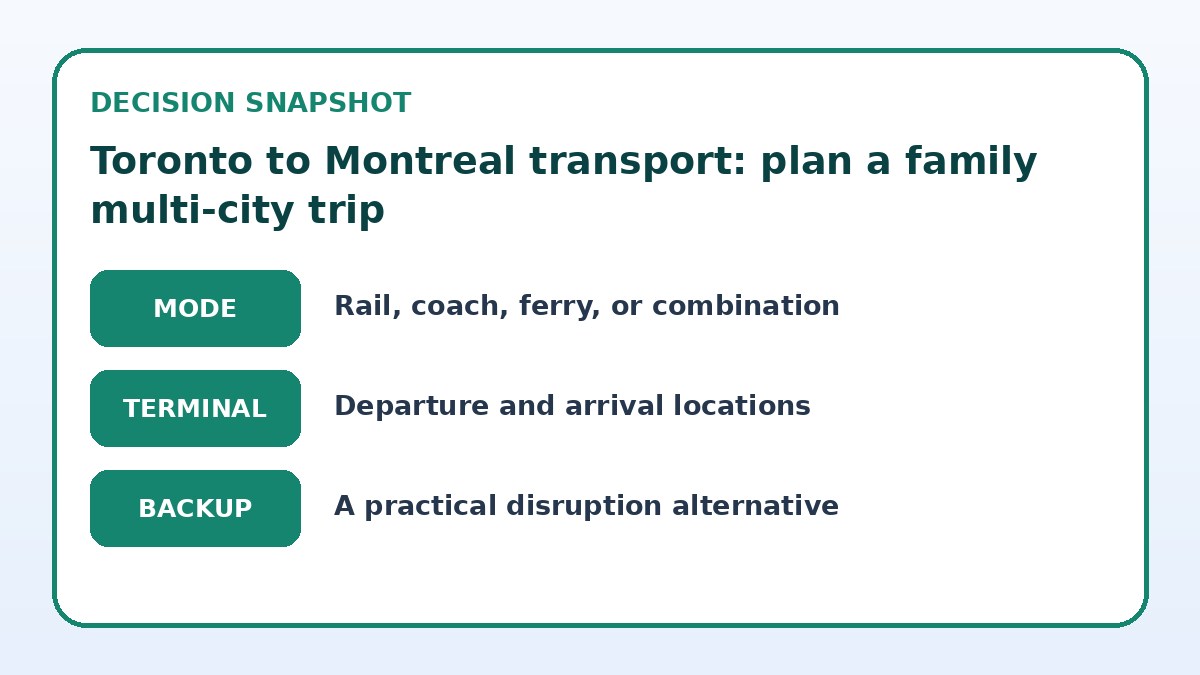
Families deciding which mode to use for the Toronto–Montreal trunk should weigh space, predictability, and door-to-door complexity. Trains typically offer more room to move, onboard bathrooms that families find useful, and straightforward station platforms; coaches may stop at different terminals and sometimes have more flexible routing. Driving segments give door-to-door control and make stopping for breaks easy, but increase driver fatigue and parking logistics. When planning a mixed-mode trip, pick the leg that maximizes comfort for the longest duration—use rail for the long haul if seats and space matter most, or coach if it aligns better with your local arrival and departure points at either city.
Families should also think about how many times they want to move luggage: each transfer increases friction. A well-planned combination minimizes handoffs by routing all large bags through a single, manageable transfer point. Consider the ages of children and whether naps or stroller use require more flexible stopping. Finally, confirm accessibility features and family seating policies on the provider booking pages; these affect where you sit and how easily you can access storage, restrooms, and assistance if needed.
Choose the end-to-end journey plan
| Journey approach | Best for | Friction to check |
|---|---|---|
| Single-mode rail trunk with local transit at ends | Families who value onboard space and predictable station access | May require longer last-mile transit if stations sit outside lodging areas |
| Single-mode coach trunk with short car hops | Families prioritizing flexible stop points or different terminal options | Coach terminals can vary in ease of local transit links and luggage handling |
| Drive the whole route (private car or rental) | Families wanting full door-to-door control and flexible rest stops | Involves parking logistics, driver fatigue, and less restful travel for non-driving family members |
| Mixed plan: rail or coach trunk plus short private transfers | Families balancing comfort on the long leg with direct door-to-door picks at each city | More transfers increase luggage handling and require careful timing and backup planning |
Check live intercity options
Look beyond the ride itself and compare terminals, transfers, luggage, and arrival fit.
Terminal fit and end-to-end door-to-door planning
Terminal fit means more than station amenities; it means the practical distance and time between arrival or departure points and your actual lodging, attractions, or onward connections. Map public-transit lines, local bus stops, and common taxi/rideshare pickup spots at each terminal to see which arrival city center gets you closest to your home base. Note whether terminals require lengthy indoor transfers, stairs, or outdoor walks—these matter when traveling with small children or lots of bags. Where possible, choose an arrival terminal with an easy, child-friendly transit link or a predictable short taxi ride.
Also plan the first and last mile as part of your booking decision: measure walking distances from platform or curb to transit stops and check for elevators and stroller-friendly ramps. Factor in time for bathroom and snack breaks, stroller folding, and ticketing lines—these add minutes that can make a tight connection unworkable. If you expect to arrive late in the day, prioritize hotels closest to your terminal’s transit line or within a short taxi ride to avoid complicated late-night transfers.
Luggage, transfer friction, and family-friendly seating
Luggage rules vary by operator and can increase transfer time when you must collect and move bags between modes. For each leg, check whether large suitcases can be stored onboard or must be checked, whether strollers fold for onboard storage or can be gate-checked, and whether there are limits that force extra handling. When comparing options, prefer services that allow you to keep essential items—snacks, a change of clothes, child comforts—accessible during travel to limit stops. If you must transfer between train and coach or to a car, plan who will handle the luggage and whether porters, station carts, or family-sized luggage trolleys are available.
Seating and reservation rules matter: look for the ability to reserve family seats together, request a seat by a restroom, or get extra space for a baby seat. If booking separate seats, plan how children will board and settle while one adult secures luggage. When transferring, account for time to stow and retrieve luggage, fold strollers, and regroup at designated meeting points; pad every transfer by at least 20–30 minutes on family trips to reduce stress from tight schedules.
Compare the practical alternatives
Use the final page to confirm what is actually offered on your dates and save a workable fallback.
Intercity travel checklist
- Map the exact walking and transit route from arrival terminal to your accommodation and time it during a test run or using public-transit maps.
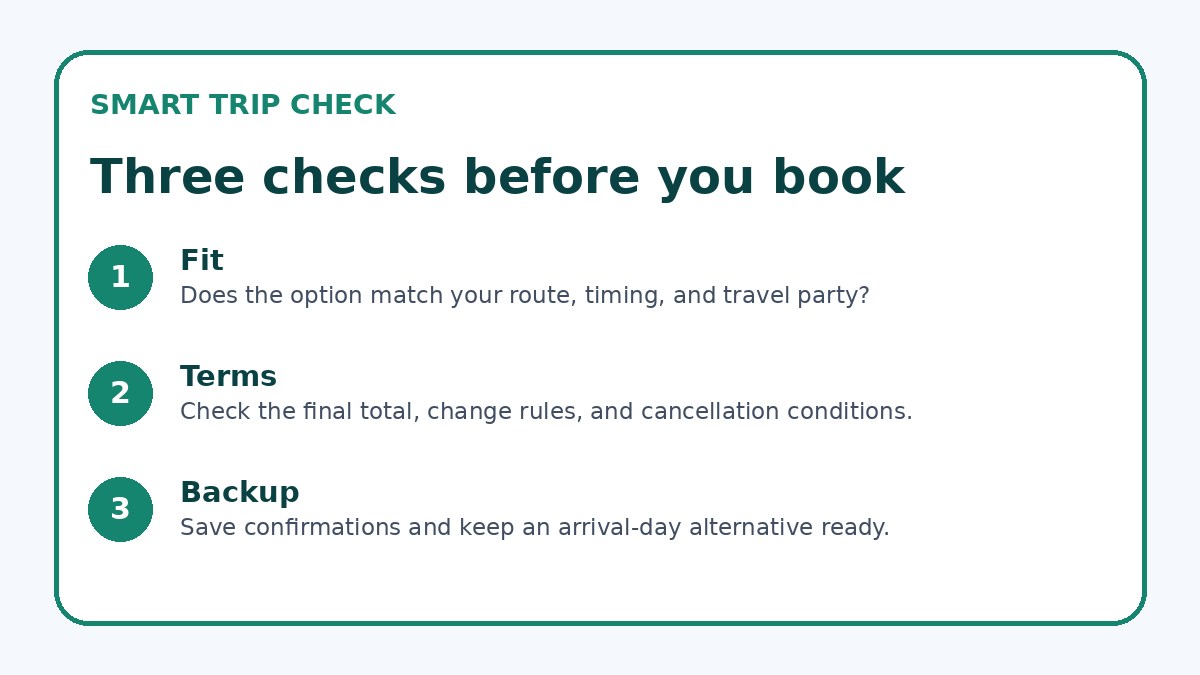
- Confirm family seating options and baggage allowances on each provider’s booking page before purchasing tickets.
- Reserve at least one later departure on the same route as a backup, or allow refundable/changeable fare components for flexibility.
- Pack a single accessible ‘day’ bag with essentials (snacks, medication, travel documents, chargers, change of clothes) to avoid repeated baggage searches.
- Download or bookmark real-time status pages and local taxi/rideshare apps for both Toronto and Montreal before travel day.
- Allocate an adult to manage logistics and another to supervise children during transfers; brief both on the transfer plan and disruption steps.
Timing flexibility and building a disruption backup
Timing flexibility is your buffer for everything that can go wrong: delayed departures, traffic to a coach terminal, or longer restroom stops with small children. Build a plan with at least two reasonable alternatives—a later direct departure, an earlier train followed by a short local transfer, or a different nearby terminal that serves the same city. Identify which options require a new ticket purchase and which might be covered under ticket-change policies; verify refund and change terms on the provider’s booking page before you commit. Having a flexible booking or refundable component for one leg can reduce the stress of holding fixed onward reservations like tours or special check-in windows.
Create a simple disruption checklist for the day of travel: confirm real-time status on the provider app or aggregator, have the contact details for the station customer-service desk, and keep local rideshare/taxi apps ready. If weather or major delays occur, your backup might shift to an alternative train, a coach routed through a different terminal, or a private transfer for the short local leg. Plan how you’ll communicate changes with family members — assign one adult to manage logistics and another to keep kids fed and entertained while transitions are made.
Rail & Intercity Transport questions travelers ask
What’s the easiest door-to-door approach for families traveling Toronto to Montreal?
Easiest depends on your priorities. If you want minimal handling and more onboard space, take a train for the main intercity leg and use local transit or a short taxi to reach lodging. For direct doorstep drops, combine the intercity trunk with a booked private transfer at one or both ends so a driver handles bags and last-mile navigation. If you prefer fewer carrier changes, driving the entire route gives total control but shifts all navigation and parking tasks onto your party. Before booking, check operator family policies and local transfer times on the provider pages.
How much transfer time should I allow between a train arrival and a local coach or taxi?
For families, add more cushion than standard advice: plan at least 30–45 minutes for typical transfers to accommodate stroller folding, bathroom breaks, luggage retrieval, and regrouping. If you must change terminals within a city or use public transit, increase that buffer to 60 minutes or more depending on distance and time of day. Always check station layouts and elevator availability in advance and confirm whether bags are stored onboard or gate-checked to estimate retrieval time accurately. Use real-time status tools on travel day to adjust as needed.
How do I build a practical disruption backup without double-booking everything?
Prioritize one flexible element rather than duplicating full tickets. For example, buy a more flexible or refundable ticket for the intercity trunk leg where delays would be most disruptive, or identify the next two realistic departures and confirm change policies. Keep a list of nearby alternative terminals and a reliable local transfer option you can book last-minute. Have a small budget for an on-demand ride if a tight connection breaks. Verify all change, refund, and standby terms on the provider’s booking page before relying on them.
Final decision note
Building a family-friendly Toronto to Montreal multi-city ground-transport plan is about stitching together a comfortable main leg with realistic last-mile solutions. Choose the trunk mode that matches your family’s tolerance for space, stops, and luggage handling; then prioritize terminals with easy transit links or short taxi rides to your accommodation. Pad every transfer, confirm seating and baggage rules on provider pages, and name one adult to manage logistics so the other can care for the children. Finally, prepare a simple disruption backup—either a flexible ticket or an identified alternate departure and local transfer—so delays don’t derail the whole trip. Use live booking pages or an aggregator such as Trip.com to check current schedules and policies before you finalize bookings.
Continue planning
Check current options and final conditions
Use the provider page to confirm live availability, the final total, cancellation terms, and every condition that matters to your trip.
This evergreen planning guide was created with AI-assisted drafting and a structured quality review. It does not display live prices, schedules, availability, visa guidance, or provider rankings. Verify current details before booking. Some links are affiliate links; we may earn a commission at no additional cost to you.