For families traveling from Amsterdam to Berlin, the practical choice is to pick the transport mix that reduces transfers, fits kids’ routines, and matches luggage needs. Start by deciding whether a single-mode option (all train or all coach) or a combined plan (train plus coach or local rail segments) keeps your door-to-door time and transfers lowest. Consider which departure and arrival terminals are easiest for your accommodations and the walk or taxi time at each end. Think about luggage friction—stair-only platforms or coach compartments may change what luggage you bring or whether you pre-book seat reservations. Finally, build a disruption backup: identify the next few departure options, a local taxi/ride-hail fallback, and a place to regroup with children if a delay happens. This article lays out the decision criteria, terminal fit, timing flexibility and a clear disruption plan so you can choose the safest, least stressful combination for your family.
Choosing between train, coach, ferry or a mix
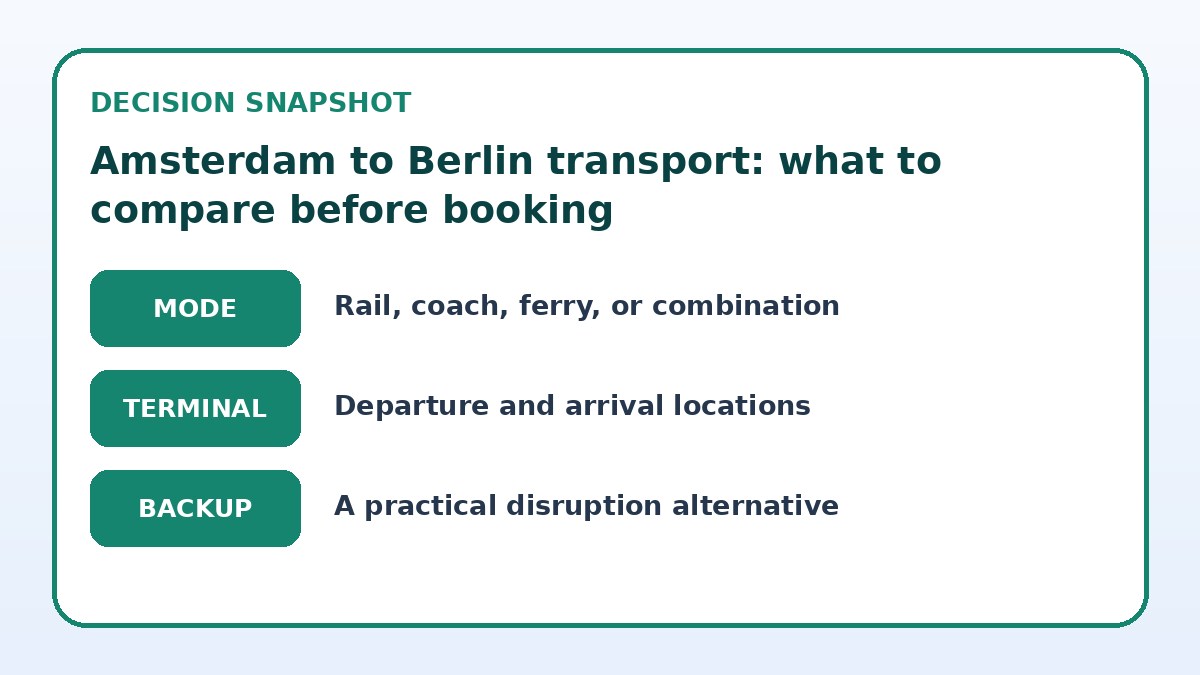
Start by listing realistic end-to-end options for your group: all-train, all-coach, or a mixed itinerary that uses regional rail to a hub then coach onward. For families, the criteria should be total door-to-door time, number of transfers, and how comfortable children will be during the journey. Trains often let you move around, use family areas or accessible toilets, and reduce luggage shuffles between vehicles. Coaches can be direct between city centers that don’t have convenient rail links, but they may require tighter packing and more attention to onboard behavior.
A mixed plan can be the right compromise when direct rail connections are infrequent or when you want to visit a stop en route. When considering a mix, map the transfer points and check platform layouts and interchange walk times before booking. Verify whether seats can be guaranteed together and whether luggage allowance or storage is easy to access. For every option you shortlist, write down how many times you’ll load and unload bags and how long each connection requires—families often value one extra hour of predictability over a small savings.
Choose the end-to-end journey plan
| Journey approach | Best for | Friction to check |
|---|---|---|
| All-train itinerary | Families wanting fewer transfers and easier onboard movement | May require more walking at stations or reservations; check platform access for strollers |
| All-coach itinerary | Groups looking for direct center-to-center service and potentially simpler stops | Limited luggage handling and less ability to move around during long stretches |
| Mixed rail + coach | Families visiting a stop en route or balancing cost with convenience | Adds transfer points and requires careful timing to avoid missed connections |
| Short-trip segments with overnight stop | Families preferring shorter daily travel and time to rest between legs | Increases total trip time and requires an extra night’s accommodation and packing |
Check live intercity options
Look beyond the ride itself and compare terminals, transfers, luggage, and arrival fit.
Terminal fit and door-to-door practicality
Terminal fit is about more than the station’s name: it’s where that station sits relative to your accommodation, how easy the last-mile will be with children, and whether there are sheltered waiting areas or family facilities. Identify the specific station entrances and common taxi pickup spots, as a station with many exits can cause confusion for tired kids. If you’re carrying a stroller or large suitcases, check whether the station has lifts or long ramps; otherwise plan for a porter, foldable luggage, or a taxi that picks you up curbside.
Also consider arrival times relative to local transit schedules. An arrival at an off-peak hour may mean fewer trams or buses, longer waits, and a higher taxi cost—factors that can outweigh a slightly cheaper fare. For family comfort, prioritize routes that let you arrive during daylight or near typical mealtimes so you can settle in without juggling tired children and logistics. If your accommodation offers a late check-in, confirm that arrival logistics are simple; if not, aim for an arrival time when nearby cafes or stations are open for short rest stops.
Luggage, transfers and timing flexibility
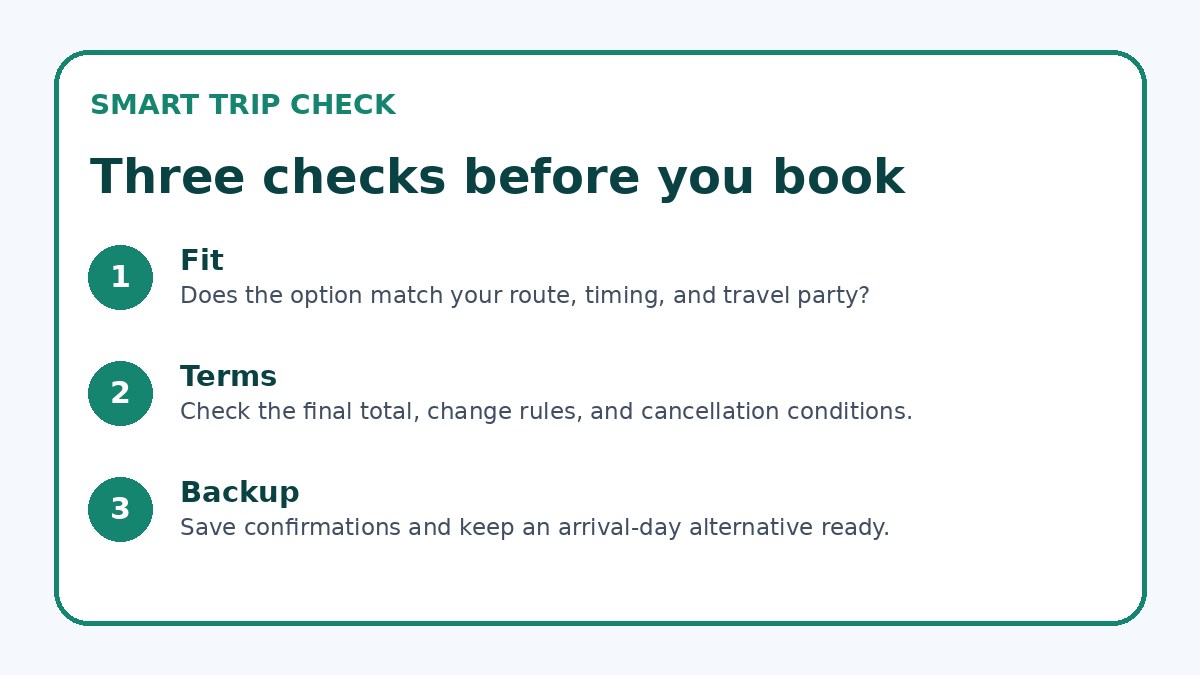
Count every piece of luggage and the stroller or car seat you’ll bring. Luggage rules can differ across modes: coaches may have limited overhead space, trains might require lifting to racks, and mixed itineraries mean repeated handling. Choose luggage that’s easy to wheel and lift in short bursts. If you have heavy items, consider sending them by courier or arranging for a hotel delivery service where available. Also plan seats near doors if you expect frequent boarding or quick station exits with children.
Timing flexibility matters more with families than with solo travelers. Build buffer time for restroom breaks, snack stops, and short walks. When comparing departures, prefer options with multiple alternatives on the same day—this reduces stress if you miss a connection. Avoid plans that hinge on a single tight transfer. If seats can be reserved, secure them together; if not, be prepared to split into smaller groups temporarily while boarding. Keep paper or digital boarding references handy and a simple printed map of your transfer station to speed movement between platforms.
Compare the practical alternatives
Use the final page to confirm what is actually offered on your dates and save a workable fallback.
Intercity travel checklist
- Map door-to-door time for each option, including taxi/tram time at both ends, before choosing a mode.
- Verify seat reservation rules and whether you can reserve adjacent seats for your family on the operator’s booking page.
- Confirm luggage size and quantity limits and plan to use wheeled or lightweight bags suitable for transfers.
- Identify two alternate same-day departures and a nearby major station to use if your original service is disrupted.
- Download or print station maps and note exact station exits and taxi ranks to speed arrivals and pickups.
- Pack a small ‘arrival kit’ with snacks, wipes, a portable charger, and a lightweight blanket to handle unexpected waits.
Disruption backup and what to verify before booking
A disruption plan should be short, practical and rehearsed: identify two later departures for the same day, a nearby major station with frequent services, and a reliable taxi or ride-hail app usable in both countries. Teach older children a simple meeting point near the boarding area and keep a charged power bank and printed contact list. If your tickets are flexible, check the provider’s change or cancellation options on the final booking page before you buy; if they are not, plan for the cost and time to book an alternative on short notice.
Before you finalize any booking, verify several provider-specific details on the seller’s page: seat reservation rules, luggage size and quantity limits, refund and change policies, and the exact station entrance or coach stop name. Confirm which currency the provider charges in and whether a mobile or printed ticket is required. If you use online aggregators such as Trip.com to compare current availability, always cross-check key terms on the operator’s official booking page to confirm what is included and how to proceed if something changes.
Rail & Intercity Transport questions travelers ask
Should families prefer trains or coaches for the Amsterdam to Berlin route?
Trains often offer easier movement, more onboard facilities, and fewer stops, which many families find less stressful. Coaches can be convenient when they provide a direct link to a neighborhood not well served by rail. Weigh how many times you will need to lift or wheel luggage, whether you need guaranteed seats together, and how tolerant your children are of longer, uninterrupted stretches. Always check seat reservation and luggage policies on the operator’s booking page before deciding.
How much buffer time should we allow for transfers with children?
Allow substantially more buffer time than you would for solo travel: plan for restroom stops, snack breaks and unexpected delays when finding platforms or coach bays. A practical approach is to target connections with at least one reliable scheduled alternative later the same day, and to avoid tight transfers that require dashing across large stations. If transfers involve stairs or long ramps, add extra time for navigating luggage and prams. Write down the platform-to-platform walking time from station maps to set realistic buffers.
What’s the easiest disruption backup for families on this route?
Identify later departures on the same corridor, a nearby bigger station with frequent services, and a local taxi or ride-hail option you can use across borders. Keep vital documents and a charged phone accessible, and have a simple meeting point at each station. If flexible tickets are available, prefer those or confirm change options on the booking page. For peace of mind, know a nearby café or sheltered waiting area to regroup if children need a break while you rebook.
Final decision note
Putting together an Amsterdam to Berlin transport plan for a family is about minimizing transfers, matching terminals to your lodgings, and preparing for luggage and timing realities. Start by comparing straightforward all-train and all-coach options, then consider mixed itineraries only if they reduce total door-to-door friction or add a meaningful stop you want to visit. Reserve seats together when possible, map the exact station exits and taxi ranks you’ll use, and build a short disruption checklist with alternate departures and a taxi fallback. Verify seat, luggage and change policies on the operator’s booking page before purchase, and use a comparison tool like Trip.com only to check availability—always confirm critical terms with the carrier itself. With this approach you’ll reduce stress, keep children comfortable, and have practical alternatives ready if plans change.
Continue planning
Check current options and final conditions
Use the provider page to confirm live availability, the final total, cancellation terms, and every condition that matters to your trip.
This evergreen planning guide was created with AI-assisted drafting and a structured quality review. It does not display live prices, schedules, availability, visa guidance, or provider rankings. Verify current details before booking. Some links are affiliate links; we may earn a commission at no additional cost to you.