If you’re a solo traveler considering a car in Honolulu, the practical question is simple: will driving actually add value to your trip once you factor in insurance wording and pickup logistics? For many solo visitors, a rental unlocks easy access to the windward shore, Koko Head trails, and early morning drives—but those conveniences come with coverage choices that change what you pay and what you risk. This guide gives a decision-forward answer up front, then walks you through the insurance language that matters, where pickup/return can add time and cost, how to judge route value for solo itineraries, and what to do if you decide not to drive. Read this to make a confident choice at booking and to know exactly what to verify on the rental company’s final page before you sign.
Decide if driving genuinely improves your Honolulu itinerary
Start by mapping what you want to do on Oʻahu and how far each activity sits from central Honolulu. Driving benefits rise when you have multiple off-city objectives—early sunrise hikes on the east coast, sunset views at Kaʻena Point, or stops along the windward coast—because you control timing and gear storage. Solo travelers who favor neighborhoods, beaches close to Waikīkī, museums, or guided tours might find that the extra time and cost of managing a car aren’t justified.
Think also about single-driver fatigue and parking. Honolulu traffic can vary, and parking at popular beaches or trailheads may be limited or metered; that affects whether a short drive saves time versus taking a rideshare or local bus. If you value independence and plan several remote stops across the island, a rental likely helps; if you prefer to relax, avoid parking hunts, and rely on public transport, you may be better off without one.
Decide whether driving earns its place
| Mobility strategy | Best for | Cost or friction to check |
|---|---|---|
| Full rental with provider CDW/LDW and liability buy-up | Solo travelers needing maximum control and low out-of-pocket damage risk | Highest quoted costs and complex paperwork at pickup; verify full policy wording and exclusions on the final page |
| Basic rental relying on personal credit card or travel insurance coverage | Budget-conscious solo travelers who already have strong external insurance | Lower upfront cost but potential gaps in coverage; confirm your card’s terms and the rental’s required documentation |
| No-rental approach using public transit, rideshares, and guided tours | Solo travelers avoiding insurance complexity and parking hassles | Less schedule flexibility for multi-stop days and remote trailheads; plan pickups and reserves in advance |
| Hybrid: short-term rental for specific days plus transit otherwise | Solo travelers who need a car only for a couple of excursions | Requires careful timing and extra pickup/return steps; check one-way and hourly policies before booking |
Check live rental choices only after the route test
Use the exact driver, dates, pickup point, and return plan to compare current conditions.
Insurance wording solo travelers must understand
Insurance pages are full of terms that change your real exposure. Focus first on collision damage waiver (CDW) or loss damage waiver (LDW): these can reduce or waive your financial responsibility if the rental car is damaged, but they often exclude certain causes (off-road use, reckless driving). Check whether the waiver is merely an option sold at the counter or included in the quoted rate, and whether it has a per-damage deductible. The most important numbers to note are the maximum liability listed, deductible amount, and any exclusions tied to vehicle type or driver age.
Next, clarify third-party liability and personal injury protection: liability protects you when you damage someone else’s property or injure another person. Many policies show a liability limit that may be low for your comfort; consider supplementing it with your own travel insurance that includes supplemental liability or buying an excess liability policy. Also verify roadside assistance coverage and whether roadside calls have a fee or are unlimited. Before you book, identify the exact policy document or insurance code on the final provider page so you can read exclusions and conditions thoroughly.

Compare the full rental conditions
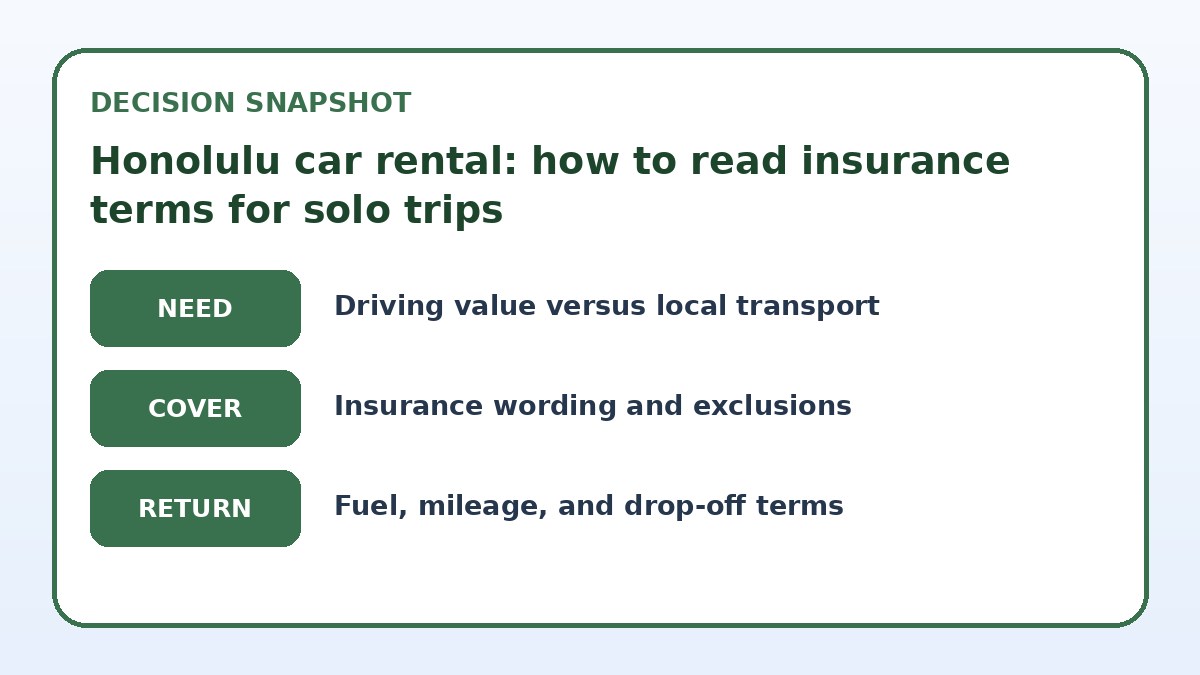
Confirm insurance wording, exclusions, deposit, fuel, mileage, and return terms on the final page.
Pickup, return friction, and how it affects solo travelers
Pickup and return aren’t just logistics; they are part of the time cost of renting for a solo traveler. Airport counters can involve shuttle transfers, long queues, and mandatory document checks that take longer when you’re the only person handling luggage and forms. Off-airport locations sometimes cut rates but introduce shuttle wait time—calculate whether that shuttle crosses your convenience threshold, and always check whether after-hours drop-off is permitted and if it triggers a fee. These details often appear only on the final booking or rental contract page.
Inspect the pickup checklist on the provider’s final page: what ID they require, whether credit cards must be in the primary driver’s name, and whether they accept digital licenses. Note also where you’re allowed to refuel and how fuel charges are applied if you return with less than full. For solo travelers, minimizing friction often means choosing a pickup point with shorter walk times and clear after-hours policies—even if the base rate is slightly higher—because convenience can outweigh a small saving.
Car rental terms to verify
- Confirm whether collision/ loss damage waiver (CDW/LDW) is included in the quoted price or sold only at pickup.
- Read the exact deductible amount and any listed exclusions on the rental provider’s final policy document.
- Verify the provider’s liability limits and whether your personal travel insurance or credit card supplements that coverage.
- Check pickup logistics: airport counter location, shuttle times, after-hours return rules, and any associated fees.
- Ensure the primary driver’s ID, credit card, and age requirements match what the provider requires on the booking page.
- Compare the fuel policy and refuel options so you avoid high refueling penalties when you return the vehicle.
Non-driving fallback: alternatives that fit solo itineraries
If after weighing route value and insurance wording you decide not to drive, there are practical alternatives. Honolulu’s bus network (TheBus) covers large parts of Oʻahu and is budget-friendly for solo travelers on a slower schedule. Rideshare services and taxi networks fill gaps when you need door-to-door rides, though multiple rides across the island can add up. Organized day trips and local shuttle services handle common tourist routes—these can be efficient for solo visitors who want a guide and predictable logistics without insurance worries.
A hybrid plan also works: use a car for one or two carefully chosen days when you need flexibility, and rely on public transport or rideshares for the rest. If you choose this mixed approach, confirm the rental’s one-way rules and where you can pick up and drop off so you avoid unexpected fees. When comparing options online, Trip.com is one optional place to check current availability and provider details, but always verify coverages and final terms on the rental company’s booking page before committing.
Car Rental & Road Trip questions travelers ask
Can my personal car insurance or credit card cover a Honolulu rental for a solo traveler?
Many personal auto policies and major credit cards offer rental coverage, but the scope varies: some cover physical damage but not liability, some limit coverage to certain vehicle classes, and cards often require you to decline the rental company’s CDW/LDW. To confirm, request your insurer’s exact rental policy wording and your card issuer’s rental insurance terms, including geographical limits and claim procedures. At the rental counter, have those documents or contact numbers ready and verify acceptance on the provider’s final booking page to avoid surprises.
What insurance exclusions are most likely to surprise solo renters in Honolulu?
Common exclusions include off-road damage, driving under the influence, damage while using the vehicle for commercial purposes, and wear from prohibited use (such as unauthorized persons driving). Some waivers exclude glass, tires, undercarriage, or interior damage unless you bought a specific protection. Verify whether roadside assistance covers towing and where billing occurs; sometimes towing to a non-approved repair shop may result in out-of-pocket costs. Always read the exclusion list on the rental contract and confirm ambiguous points on the provider’s final page before signing.
If I decide not to drive, how should I plan mobility in Honolulu as a solo traveler?
Start by listing the places you want to visit and grouping those reachable by TheBus or within a reasonable rideshare fare. For early starts or remote hikes, consider booking a guided shuttle or a private transfer for that segment. Use rideshares for late-night returns and local tours for places that are hard to reach by public transport. If you plan single-day distant trips, check organized excursions that include pickup from central Honolulu; always confirm meeting points, cancellation policies, and what’s included before you book.
Final decision note
For many solo travelers, the decision to rent in Honolulu comes down to a single tradeoff: control versus complexity. A rental unlocks island routes and timing that public transport and tours may not, but insurance wording, pickup friction, and potential exclusions can add cost and risk if you don’t read the fine print. Before booking, calculate how much driving time you’ll actually use, compare the rental’s CDW/LDW and liability limits to your existing coverage, and inspect pickup/return procedures on the provider’s final page. If you prefer lower hassle, choose a non-driving or hybrid approach and plan transfers or guided options for remote excursions.
Continue planning
Check current options and final conditions
Use the provider page to confirm live availability, the final total, cancellation terms, and every condition that matters to your trip.
This evergreen planning guide was created with AI-assisted drafting and a structured quality review. It does not display live prices, schedules, availability, visa guidance, or provider rankings. Verify current details before booking. Some links are affiliate links; we may earn a commission at no additional cost to you.