Practical answer first: for most families travelling London to Paris, a direct international train that arrives and departs city-centre terminals will usually offer the easiest door-to-door transfers; if you value lower cost over convenience, a coach or a combination of coach plus ferry can work, but expect more terminal hops and heavier luggage handling. To choose, compare total door-to-door time, how many separate terminals or stations you must cross, luggage friction (strollers, car seats, suitcases), and how flexible your schedule needs to be. Start by listing door pickup and final drop-off locations, then compare realistic transfer walking distances, public-transport links, and how many times you’ll move luggage between vehicles. This article focuses on station and terminal transfers so families can pick the approach that balances convenience, cost, and resilience against delays.
How to choose between train, coach, ferry or mixed routes
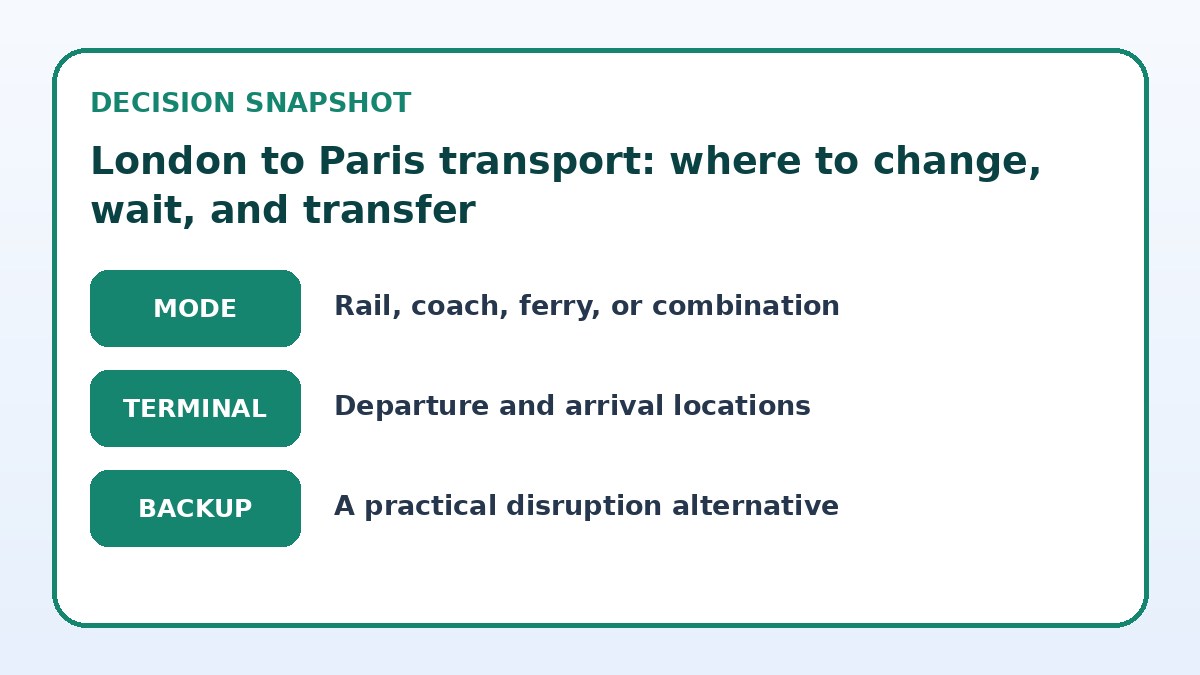
When deciding which mode to book, treat the journey as a sequence of door-to-door movements rather than solely the in-vehicle time. For families that prize simplicity and fewer transfers, direct international trains that use central-city terminals normally reduce the number of handoffs: you walk from accommodation to a single station, board, then arrive nearby your destination accommodation. Coaches and ferry combinations may be cheaper but usually add extra terminal hops—coach stations, ports, and then local transfers—so weigh those extra steps against the savings. Make a simple matrix: rows for modes, columns for door-to-door time, number of transfers, luggage effort, and child-friendly facilities. Use that to match your family’s priorities.
Also consider practical details that affect transfers: how many suitcases and child items you have; whether you can lift them alone or need porter assistance; and whether you value a guaranteed seat or flexible change options. If you will be switching terminals or modes within a city, map the exact walking routes and public-transport options between terminals before booking. Finally, check accessibility for prams and mobility needs at each terminal or station on the provider’s booking pages so you are not surprised at first contact with steps, long ramps, or distant bus stops.
Choose the end-to-end journey plan
| Journey approach | Best for | Friction to check |
|---|---|---|
| Direct international train to central terminals | Families wanting minimal transfers and easy luggage handling | Usually less flexibility on budget and dependent on train schedules |
| Coach service between major terminals or stations | Budget-conscious families who can tolerate longer door-to-door time | More luggage handling and potential for multiple terminal hops |
| Ferry plus coach or drive segments | Families seeking an alternative route or wanting a travel experience | Adds port transfers and longer total travel time with extra handoffs |
| Mixed-mode with local trains and taxis for first/last mile | Families balancing cost and convenience with flexible local transfers | Requires careful timing and more coordination during terminal changes |
Check live intercity options
Look beyond the ride itself and compare terminals, transfers, luggage, and arrival fit.
Terminal fit: matching departures and arrivals to family logistics
Terminal fit means choosing departure and arrival points that match where you’ll start and finish each day. For families, a station close to your hotel or rental reduces taxi rides and the hassle of moving backpacks and child gear over long walks. Identify the main terminals used by each mode (for instance, which city stations or which port/coach station) and then measure the likely transfer from those terminals to your lodging by taxi, local transit, or walking. If you are traveling across cities within London or Paris before your international leg, factor those intra-city transfers into your overall plan so you avoid tight connections.
When terminals are not centrally located, consider booking accommodation near the terminal for either the night before departure or the night of arrival; this can be a useful strategy for families with early or late services. Also check whether the terminals offer family-friendly facilities such as luggage trolleys, family toilets, dedicated waiting areas, or secure left-luggage—these amenities make transfers smoother. Where online information is uncertain, call or email the operator and verify details like elevators, stroller storage, and platform access before you commit.
Luggage and transfer friction: pack, plan, and practice
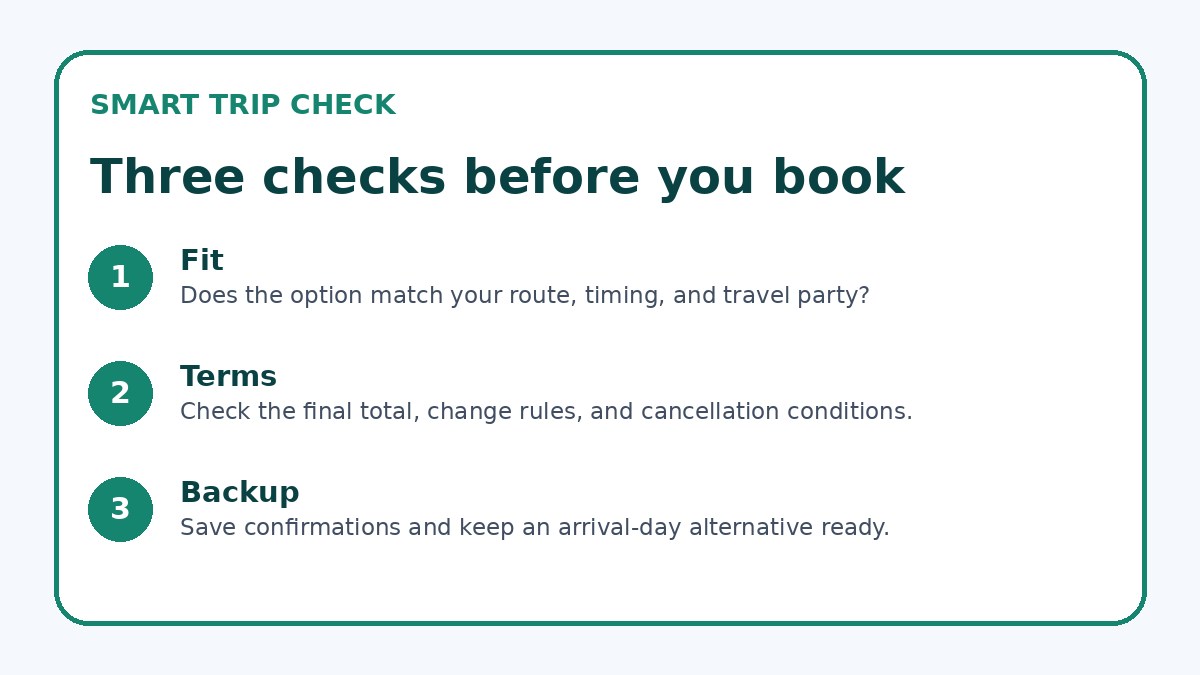
Luggage handling is often the biggest hidden cost in transfers. Count items that need carrying: checked suitcases, cabin bags, car seats, and a stroller. For each transfer between a station and a terminal or between vehicles, assign at least one adult to manage the bulkier items. Plan for luggage trolleys or baggage services at bigger terminals but never rely on them without verification; check the operator’s booking page to confirm what’s available. If you must cross platforms or streets with children, aim for rolling suitcases and compact travel strollers to reduce the physical effort.
A simple rehearsal helps: pack as you plan to travel and run through each handoff at home—lift a suitcase up stairs, snap in a car seat, collapse a stroller quickly. If your family includes a child who sleeps while traveling, factor in how easy it is to board without waking them. Consider buying a small protective cover or strap to keep multiple bags together and label everything clearly. Finally, keep a small day bag with snacks, important documents, medication, and entertainment for the transit portions so you don’t need to open large suitcases during transfers.
Compare the practical alternatives
Use the final page to confirm what is actually offered on your dates and save a workable fallback.
Intercity travel checklist
- Map exact walking and public-transport routes between each departure and arrival terminal before booking.
- Verify accessibility, stroller handling, and luggage services on the operator’s official booking page.
- Pack a day bag with documents, medicines, snacks, and entertainment for the transit windows.
- Plan at least one longer transfer buffer than the minimum suggested connection time.
- Install local taxi or ride-hail apps and save payment details for quick terminal transfers.
- Photocopy or photograph passports and tickets and share a copy with another adult in the party.
Timing flexibility and preparing a disruption backup
Timing flexibility is crucial for families because delays and missed connections affect children more than adults. Look for options that give you buffer time on either end: arrive at the departure terminal earlier than you think necessary, and when scheduling connecting services allow at least one longer transfer window than the minimum recommended. If you must use services with tight connections, ensure you have plan B options for the next available service, and confirm how to change bookings if your ticket type allows. When comparing options, prefer those with straightforward change policies or clear instructions on how to rebook family tickets.
A robust disruption backup includes a list of alternate stations or terminals, local taxi and ride-hail apps installed and logged in, a printed or offline map, and a small emergency fund for an unexpected hotel or taxi if a layover becomes necessary. Make sure all adults in the party know who has the travel documents and what the plan is if you get separated. Check the operator’s booking page or contact centre for guidance on re-routing children’s tickets, and keep a photograph of each child and their passport page accessible in case of misplacement.
Rail & Intercity Transport questions travelers ask
Should families choose a train or a coach for London to Paris transport?
Choosing between train and coach depends on priorities: trains typically reduce the number of terminal-to-terminal transfers because they use city-centre stations, which lowers luggage friction and walking. Coaches can be more economical but often use peripheral coach stations or require port transfers, increasing the number of handoffs and total door-to-door time. For families with small children or lots of gear, fewer transfers usually mean less stress; for those focused on keeping costs down and willing to handle extra transfers, coach options are reasonable. Always compare the full door-to-door journey rather than ticket price alone.
How much transfer time should we allow between services when travelling with children?
Allowing generous transfer time is wise for families. Factor in extra minutes for collecting and moving luggage, using toilets, feeding or settling children, and unexpected delays. If you are changing terminals within a city, account for pedestrian crossings, elevator waits, and public-transport timetables. A flexible buffer gives you room to catch a later service without stress. If your tickets permit changes, check the operator’s rebooking policy so you know your options if you miss a connection; verify those conditions on the provider’s booking page before purchase.
What should we verify on provider pages before booking to avoid surprises at terminals?
Before you buy, verify station and terminal names, exact arrival and departure locations, platform access or transfer recommendations, and whether facilities like lifts, family toilets, left-luggage, and stroller storage exist. Confirm the operator’s guidance on boarding with car seats or bulky strollers and whether staff assistance is available. Check rebooking and refund rules specific to family tickets in case plans change, and look for information about contacting customer service from the terminal. If details are unclear, contact the operator directly; you can also compare current availability and terminal conditions on sites such as Trip.com but treat their information as a search tool, not a guarantee.
Final decision note
For families travelling London to Paris, the right choice comes down to minimizing terminal hops and luggage handling while fitting your budget and timetable. Direct trains to central terminals usually offer the smoothest transfers and the fewest handoffs; coach and ferry combinations can save money but add transfer friction and time. Map every transfer, verify accessibility and luggage services on the provider’s booking pages, and build generous timing buffers. Pack smart, keep essential items with you, and prepare a simple backup plan with local taxi apps and alternate stations. With a clear door-to-door plan and a few contingencies, family travel between London and Paris becomes manageable and far less stressful.
Continue planning
Check current options and final conditions
Use the provider page to confirm live availability, the final total, cancellation terms, and every condition that matters to your trip.
This evergreen planning guide was created with AI-assisted drafting and a structured quality review. It does not display live prices, schedules, availability, visa guidance, or provider rankings. Verify current details before booking. Some links are affiliate links; we may earn a commission at no additional cost to you.