Short answer: compare the exact same dates, traveler counts and refund rules before deciding whether a package will save you time or money. For business travelers heading to Dubai during shoulder seasons, the right choice often hinges on flexibility, how close your travel dates are to major conferences, and whether your employer requires refundable fares or individual invoices. Bundles can simplify expense reporting and reduce coordination, but they sometimes lock in seating classes, hotel room types, cancellation penalties and transfer timings that don't fit shifting business schedules. Before you click buy, line up the flight times, layover patterns, hotel cancellation windows, and how easy it is to change individual elements. The rest of this guide walks through exactly what to compare, the tradeoffs for common traveler profiles, and a short checklist so you can examine any quote with confidence.

Test package value fairly
| Booking approach | Best for | Tradeoff to check |
|---|---|---|
| All-in-one packaged bundle | Small teams wanting single invoicing and simplified logistics | Less control over individual elements, possible stricter change rules and mixed fare classes |
| Flights booked direct + hotel as package | Frequent flyers who need airline loyalty benefits but want hotel convenience | Requires separate invoices and more coordination for transfers or schedule changes |
| Separate flight and hotel bookings | Travelers prioritizing schedule control, direct routing, or refundable fares | More time to manage bookings and potentially multiple invoices for expense reports |
| Flight bundle with flexible insurance and add-on hotel | Business travelers who want flight protection but flexible local accommodation | Added insurance cost and complexity; hotel availability may differ from initial quote |
Check current package and separate options
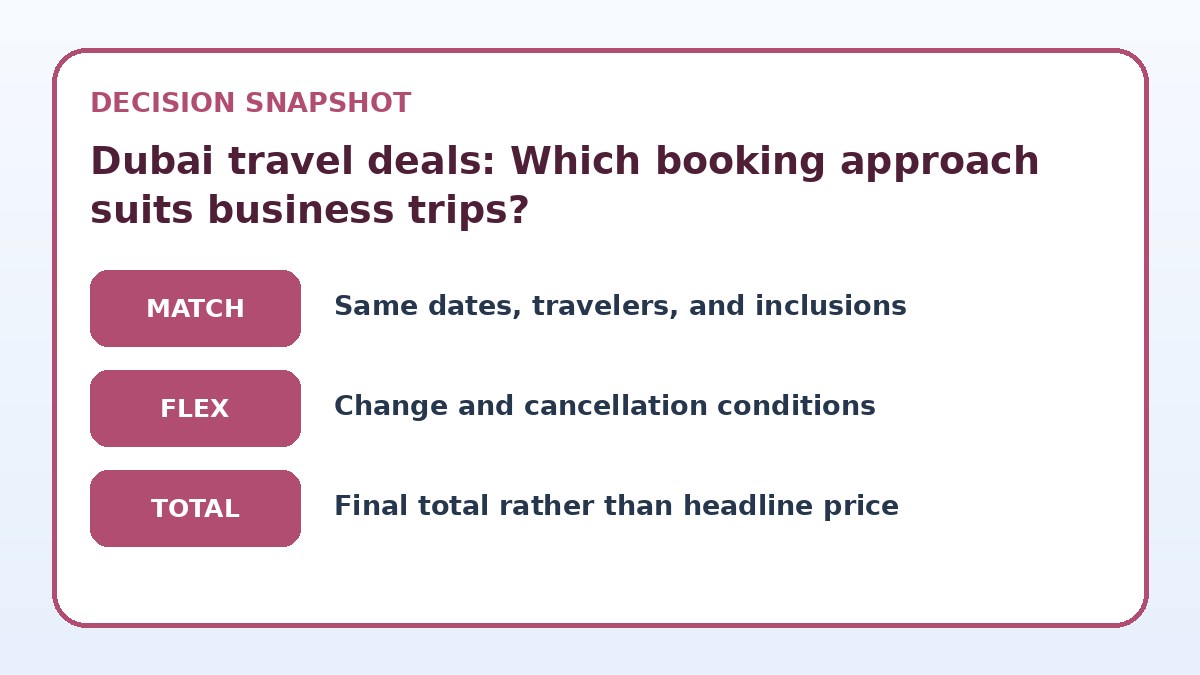
Use identical dates, travelers, room needs, baggage, and flexibility so the comparison stays meaningful.
What to include in the bundle comparison
When you evaluate a package for a business trip to Dubai, first itemize the specific inclusions so you can compare apples to apples. Note flight times, fare classes (refundable vs non-refundable or changeable with fee), baggage allowances, seat selection options, hotel room type and board basis, airport transfers, and any meeting-room credits or breakfast inclusions. Don’t overlook ancillary services often bundled as ‘extras’—lounge passes, travel insurance, or local SIM cards—and treat them as optional unless they are required by your itinerary.
Next, translate those inclusions into a common baseline for comparison with separate bookings. Price out the exact same flights (or nearest alternatives with similar change rules), matching seat and baggage options, and a hotel room in the same category with the same cancellation window. If the bundle offers a private transfer, find a comparable private or shared transfer price to judge real value. Only by matching these elements can you spot hidden tradeoffs such as stricter change policies or limited check-in windows that matter for business travelers.
Flexibility and schedule risk in shoulder seasons
Shoulder seasons in Dubai—periods just outside peak tourist months—can offer moderate prices and fewer crowds, but they also coincide with variable business events and conference schedules. For business travelers, the ability to change dates without steep penalties is often more valuable than a small upfront saving. When testing bundles, examine how changes are handled: will altering a flight force reissuing the entire package? Can the hotel reservation be modified independently? Clarify these mechanics before you assume a bundle’s flexibility.
Also consider flight routing and connection options. Bundled itineraries sometimes favor carrier combinations that optimize the package price but introduce lengthier layovers or indirect routing. If your meeting schedule tolerates a late arrival or a long connection, a bundle might be acceptable. If you need reliability and the shortest possible travel time, separate flight bookings—carefully chosen for direct or minimal-connection itineraries—could reduce schedule risk even if they appear slightly costlier on first glance.
Look past the headline total
Compare inclusions and change conditions before deciding whether a package is genuinely useful for this trip.
Deal comparison checklist
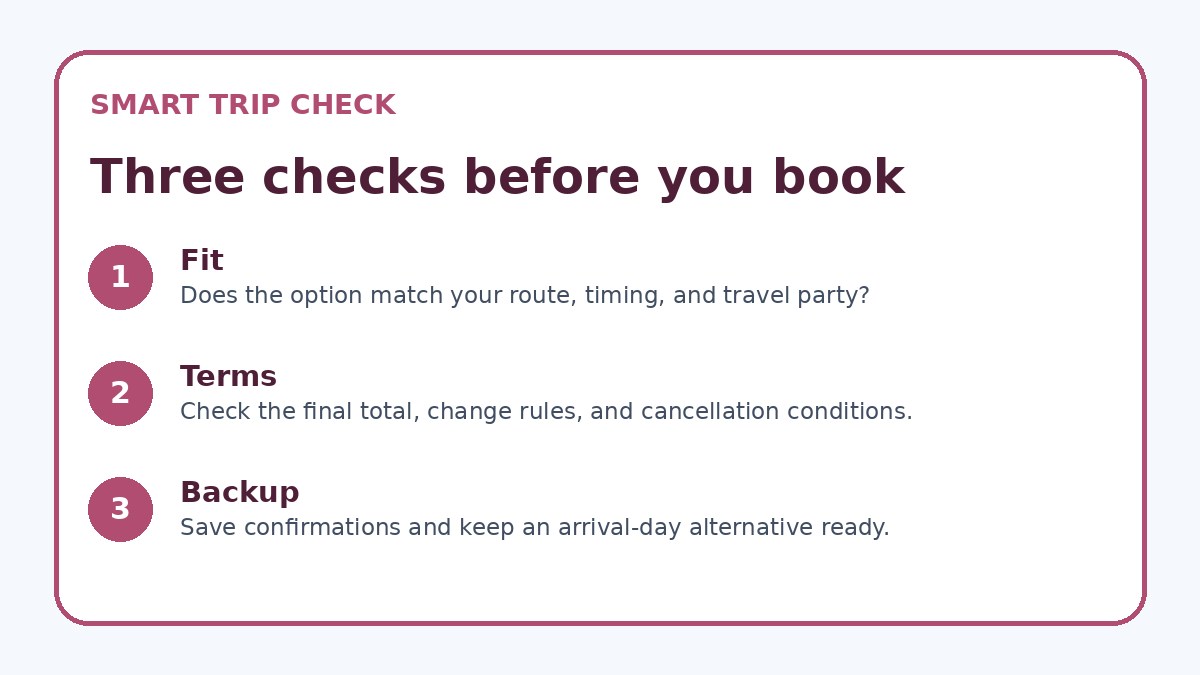
- Match the same travel dates, number of travelers and room type when comparing a package to separate bookings.
- Verify fare conditions: refundable or changeable fares, fees for name changes, and the deadline to cancel without penalty.
- Confirm baggage allowance and seat selection policies for each flight leg included in the bundle or separate bookings.
- Ask your finance or travel manager whether a single bundled invoice satisfies corporate reimbursement requirements.
- Check who processes refunds and rebookings—package provider or supplier—and their contact method for disruptions.
- If transfers are included, confirm the pickup location, acceptable wait time, and policy for missed connections.
Traveler-specific value: frequent flyers, teams, and expense rules
Your personal or corporate priorities shape whether a bundle makes sense. Frequent flyers should check how bundled fares earn miles and status credits; some package fares reduce accrual or block seat upgrades. If loyalty benefits matter for future travel, you might prefer booking flights directly with the airline and adding a hotel separately. For small teams traveling together, a bundle can simplify coordination and invoicing, but confirm that name changes or substitutions are permitted without punitive fees.
Corporate expense rules also play a decisive role. Some employers require separate airlines and hotel invoices, itemized VAT or service charges, or pre-approval for specific suppliers. Before you accept a package that consolidates payment, confirm with your finance team that a single bundled invoice meets their documentation needs. If not, separate bookings or a package that issues itemized receipts will save time during reimbursement.
Final terms and what to verify on the booking page
Always read the provider’s final booking page carefully before completing a purchase. Verify the passenger names, fare conditions including change and cancellation fees, breakdown of taxes and service charges, and whether hotel check-in or room-type guarantees are included. If a transfer or shuttle is in the package, confirm meeting-point instructions and what constitutes a missed transfer. These are provider-controlled details that can change and should be clear on the page you will sign off on.
If you use a third-party comparison site such as Trip.com to view availability, remember it’s a starting point—not a guarantee. Use it to pull up current options but then click through to the flight or hotel supplier’s final page to confirm the exact terms. Confirm how refunds are processed (through the supplier or the package provider), who handles rebooking if a flight is delayed, and the precise cancellation cutoff times for each component before you complete payment.
Travel Deals & Booking Strategy questions travelers ask
Are bundled Dubai travel deals usually better value for business travelers?
Bundled deals can offer convenience and a single invoice, which helps when coordinating group travel or fast turnarounds. However, for many business travelers the determining factor is flexibility: refundable or changeable flight options and independent hotel cancellation windows often outweigh small upfront savings. To decide, compare the same flights, fare classes, baggage, and hotel room types across bundle and separate options. Also factor in how your employer handles expense documentation—single invoices may simplify reimbursement but could violate itemization requirements.
How should I handle bookings when meetings might shift during Dubai’s shoulder season?
Plan for flexibility by prioritizing refundable or low-fee change options for flights and hotels. If you must commit to a bundle, confirm the process and fees for modifying just one component without canceling the whole package. Alternatively, secure flights with flexible fare types and book hotels with generous cancellation windows, or use short-term refundable reservations to hold space until dates are confirmed. Always document the provider’s change policy from the final booking page so you can show the exact terms if you need to alter plans.
Can I rely on transfer inclusions in a package when my arrival time is uncertain?
Transfer inclusions can be useful but check the conditions closely: whether the transfer is private or shared, the allowable arrival windows, and the provider’s policy for late flights. Shared shuttles commonly have set pickup times and may require waiting; private transfers usually cost more but offer greater flexibility. If your arrival could vary because of connection risk, consider booking a flexible private transfer independently or confirm that the package allows separate transfer bookings without affecting the rest of the reservation.
Final decision note
For business travelers planning Dubai trips during shoulder seasons, the pragmatic approach is to test parity: compare the exact same flights, seats, baggage, hotel room type and cancellation rules before judging a package’s value. Bundles can save time and simplify billing, but they also risk limiting flexibility and complicating loyalty accrual or expense rules. Use the checklist above when reviewing any quote, and verify final terms on the supplier’s booking page. If you need a quick comparison window, Trip.com can show current availability, but always confirm the provider’s exact conditions before you commit.
Continue planning
Check current options and final conditions
Use the provider page to confirm live availability, the final total, cancellation terms, and every condition that matters to your trip.
This evergreen planning guide was created with AI-assisted drafting and a structured quality review. It does not display live prices, schedules, availability, visa guidance, or provider rankings. Verify current details before booking. Some links are affiliate links; we may earn a commission at no additional cost to you.