If you’re traveling solo in Los Angeles, deciding to drive changes the trip from simple logistics to a small operational project. Driving gives you freedom for coastal or canyon routes and late-night movements, but rental insurance wording can turn an otherwise sensible choice into a complex risk calculation. The practical answer: only rent if driving meaningfully improves your itinerary and you fully understand the rental agreement’s liability, loss, and third-party wording before pickup. If the contract leaves questions about deductibles, “loss of use,” or roadside assistance, factor that uncertainty into your decision. This article helps you judge route value, decode common insurance terms you’ll see at the desk, compare pickup/return friction, and choose a fallback—so you leave for Los Angeles with a clear, evidence-based plan.

Decide whether driving adds real value to your Los Angeles plan
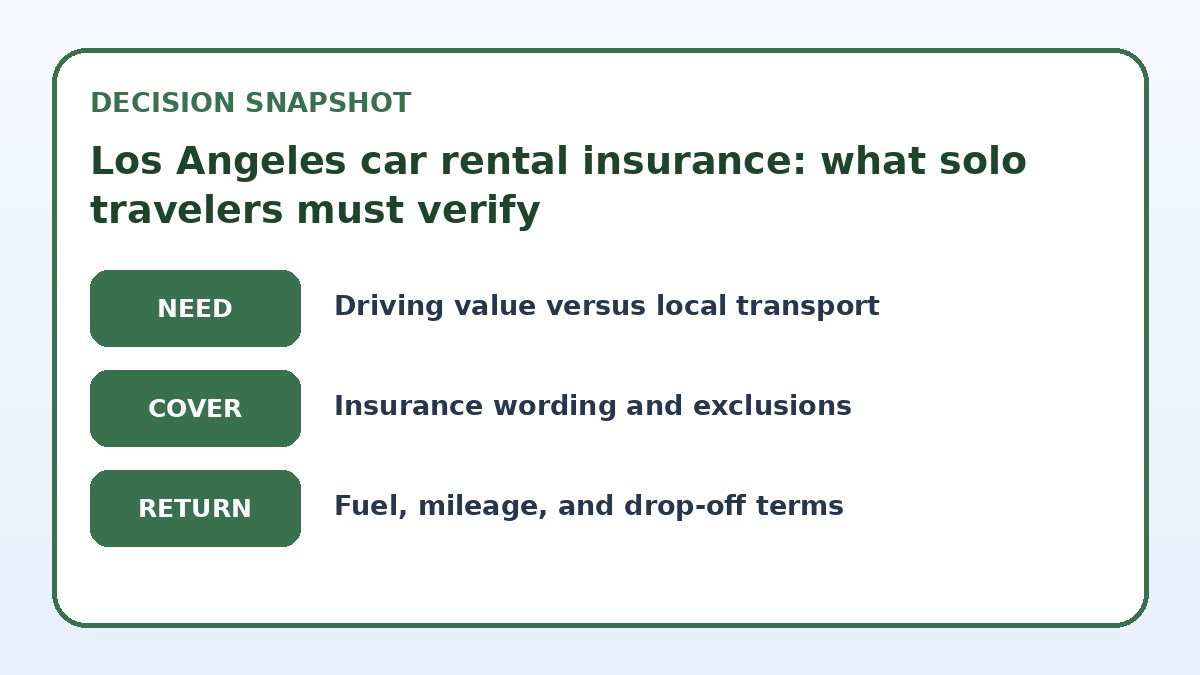
Start from your itinerary: list neighborhoods, activities, and timing. Driving is worthwhile if you plan multiple stops across distant parts of the metro area in one day—think an early morning canyon hike, an afternoon beach stop, and an evening event across town. It’s also the clear choice for trips that rely on flexibility (late finishes, carrying bulky gear, or crossing county lines). Consider travel fatigue: driving in heavy traffic can use time and energy you might otherwise spend sightseeing.
Contrast that with a base in one neighborhood—Westside, Downtown, Hollywood, or Santa Monica—where many attractions cluster and public transit plus occasional rideshares or scooters may be faster and cheaper. Walking-friendly days and concentrated restaurant or gallery visits reduce the value of a car. Write down estimated transit times and rideshare costs for a sample day to compare with rental time and parking hassles. If driving only saves convenience for a single day trip, renting for that day instead of the whole stay may be smarter.
Decide whether driving earns its place
| Mobility strategy | Best for | Cost or friction to check |
|---|---|---|
| Full-trip rental | Travelers needing daily flexibility and multi-stop itineraries across Los Angeles. | Higher pickup/return friction, parking costs, and full exposure to rental insurance wording. |
| One-day rental for specific excursions | Solo travelers staying in one neighborhood who want a single scenic drive or mountain trip. | Requires extra planning on the rental day; still subject to rental terms and pickup timing. |
| Public transit plus rideshare | Visitors staying in central neighborhoods with clustered attractions and limited luggage. | Less flexibility for remote sites and late-night travel; potentially higher per-trip cost for many detours. |
| Micro-mobility plus transit (e-scooters, bikes) | Short hops inside compact neighborhoods and last-mile connections from transit stops. | Not suitable for long distances, poor weather, or carrying large bags; safety rules vary by area. |
Check live rental choices only after the route test
Use the exact driver, dates, pickup point, and return plan to compare current conditions.
How to read the insurance wording you’ll see at pickup
Rental contracts use specific phrases that matter: liability coverage (protects others if you’re at fault), loss/damage waivers or collision damage waivers (CDW/LDW, which reduce your responsibility for vehicle damage), deductibles (out-of-pocket amount you pay after a claim), and loss-of-use (charges for income the company claims while a damaged car is being repaired). Don’t sign until you understand who pays for what in each scenario: accident damage, theft, and damage to underside or glass. If the rental agent uses unfamiliar terms, ask for the exact clause and read it carefully before accepting.
Also check whether roadside assistance is included or sold separately and whether it covers towing, lockouts, or flat tires. If you plan to use a personal auto policy or a credit-card benefit, verify the rental company accepts those as primary or secondary coverage and what documentation they require at pickup. Ask to see the deductible amount in writing. Finally, confirm if the contract disallows driving in certain areas or on unpaved roads—those exclusions can void coverage and are often buried in the fine print.
Compare the full rental conditions
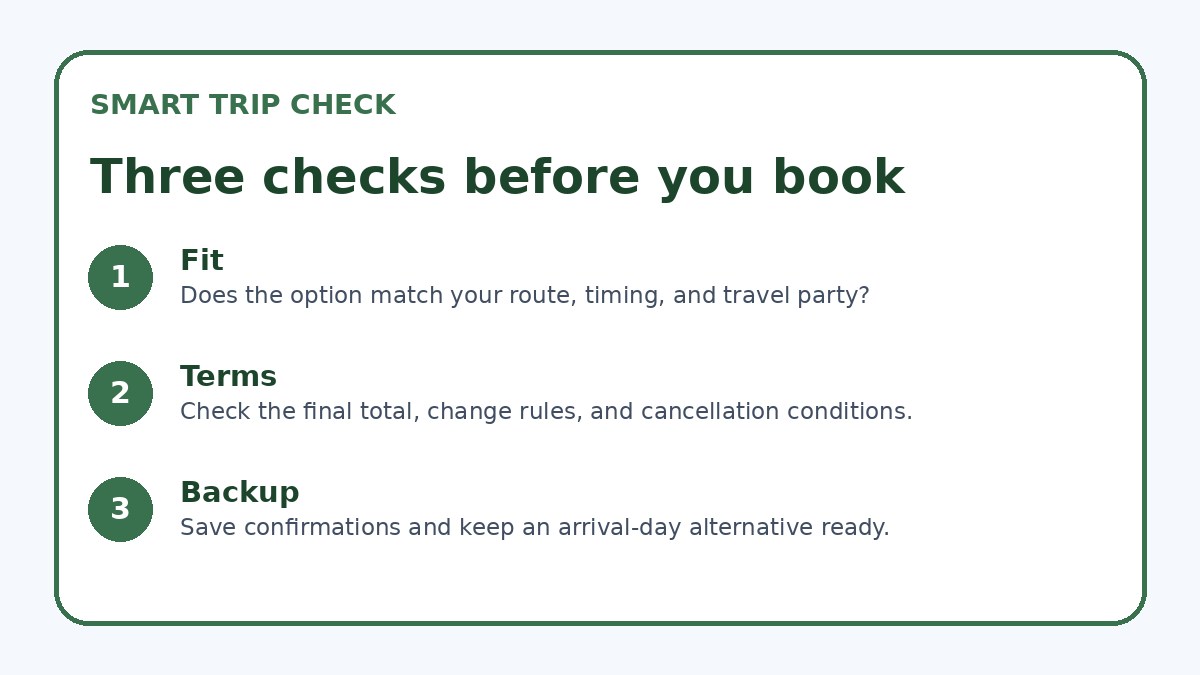
Confirm insurance wording, exclusions, deposit, fuel, mileage, and return terms on the final page.
Pickup and return friction: what to expect and what to verify
Airport pickups often involve shuttle rides, busy queues, and additional fees such as concession recovery or airport surcharge; city-center branches sometimes require advance reservations for specific vehicle classes. At pickup, insist on a walk-around inspection with photos or a time-stamped digital record; verify fuel policy—full-to-full is usually simplest—and confirm the exact drop-off location and after-hours return procedure. If you plan different pickup and drop-off locations, check for one-way fees and whether the contract names all authorized drop sites.
When returning, allow extra time for inspections and receipts. Ask how damage discovered after return is handled and what timeline the company uses to charge subsequent claims. If you encounter a disputed damage charge later, the wording in the rental agreement and the inspection record you made at pickup are your primary defenses. Before you finalize the booking, check the company’s cancellation and modification wording so you can adjust plans without unexpected penalties.
Car rental terms to verify
- List every place you want to visit and mark those that require driving versus reachable by transit.
- Request the rental contract text before pickup and highlight liability, deductible, loss-of-use, and exclusion clauses.
- Call your insurer and your credit-card company to confirm what rental coverage they provide and any required documentation.
- At pickup, take time-stamped photos of every panel and the interior and save the agent’s inspection report.
- Confirm fuel and return procedures in writing and ask exactly how after-hours returns are handled at your drop-off location.
- If avoiding a full rental, pre-book a one-day car for the specific excursion and map the pickup and drop-off windows.
A practical non-driving fallback for solo travelers
If you decide against renting for the whole trip, plan a fallback that still gives you flexibility: pair public transit with rideshare services for nights and tight connections, and book a single-day rental for any long scenic drives or day trips. Many travelers use transit-friendly bases—Santa Monica for beaches and the Expo Line, Hollywood for nearby attractions, or Downtown for museums and rail links—and reserve a car the morning of a day trip. This reduces pickup/return friction and limits exposure to insurance wording you’re unsure about.
For areas where transit is sparse, consider rideshare to a nearby transit hub or using local shuttle services to reach trailheads or coastal points. E-scooters and bike rentals cover short hops and last-mile connections inside flat neighborhoods. Whatever you choose, record alternative pickup points, reservation windows, and the exact coverage detail for any day rental so you can switch strategies quickly if weather or timing changes your plans.
Car Rental & Road Trip questions travelers ask
Can my personal auto insurance or credit card replace the rental company’s coverage in Los Angeles?
Often personal auto policies and certain credit cards offer secondary or primary rental coverage, but terms vary. Call your auto insurer to confirm whether their policy extends to rental cars in California and whether there are geographic or vehicle-type exclusions. For credit cards, ask if coverage is primary or secondary, what deductible (if any) applies, and whether specific licenses or steps—like declining the rental company’s CDW at the counter—are required. Always get the card issuer’s benefit guide and the insurer’s confirmation in writing before relying on them.
What does ‘loss of use’ mean and how can it affect me after a minor incident?
Loss of use is a charge some rental companies claim for income lost while a damaged vehicle is being repaired. Even with a collision damage waiver, the company might seek loss-of-use fees unless the waiver explicitly covers them. These charges are variable and often based on the company’s internal accounting. Prevent problems by taking a detailed inspection record at pickup, asking whether loss-of-use is waived by the coverage you choose, and getting any waiver language in writing. If a charge appears after return, the rental agreement and inspection evidence are your primary defenses.
How should I handle claims and disputed charges after returning the car?
Immediately save all documents: the rental agreement, inspection records, photos, and any receipts for repairs or towing. If the company charges you later, request itemized evidence and the repair shop’s invoice. If your insurer or credit card is involved, notify them promptly and provide the same documentation; they often require timely notice to process claims. For persistent disputes, escalate to the rental company’s customer service and keep a written trail. In California, consumer protection agencies can advise on unresolved cases; check the local office or consult Trip.com for current contact processes if you need a place to compare options.
Final decision note
For many solo travelers, the right Los Angeles mobility choice balances itinerary needs against insurance uncertainty and pickup friction. If your plan involves long drives, multiple distant stops, or heavy gear, a rental makes sense—provided you vet the contract wording on liability, deductibles, and exclusions. If your trip centers on one neighborhood or you prefer simpler logistics, combine transit and rideshare and rent only for a day trip. Whatever you decide, document everything: the pre-rental contract text, inspection photos, and insurer or card confirmations. That paperwork is what turns ambiguous wording into a manageable risk so you can focus on the trip instead of a future billing dispute.
Continue planning
Check current options and final conditions
Use the provider page to confirm live availability, the final total, cancellation terms, and every condition that matters to your trip.
This evergreen planning guide was created with AI-assisted drafting and a structured quality review. It does not display live prices, schedules, availability, visa guidance, or provider rankings. Verify current details before booking. Some links are affiliate links; we may earn a commission at no additional cost to you.