If you need to travel from Busan to Jeju on business, start by weighing travel time against ticket flexibility. A direct flight removes connection stress and tends to be the fastest door-to-door option, while a connecting itinerary can sometimes unlock better schedule matches, seat choices, or fares when direct times don’t align with meetings. For a business traveler the core tradeoff is reliability versus potential savings and scheduling flexibility. Before you search, have exact travel dates, departure and arrival times you’re willing to accept, baggage requirements, and whether you need changeable tickets or seat selection. Use those specifics to compare direct and connecting options on airline sites or a comparison tool (Trip.com can be used to see availability), and always verify fare conditions and minimum connection times on the carrier’s final booking page.
See live routes for your exact travel day
Compare direct and connecting choices with the same baggage and traveler details.
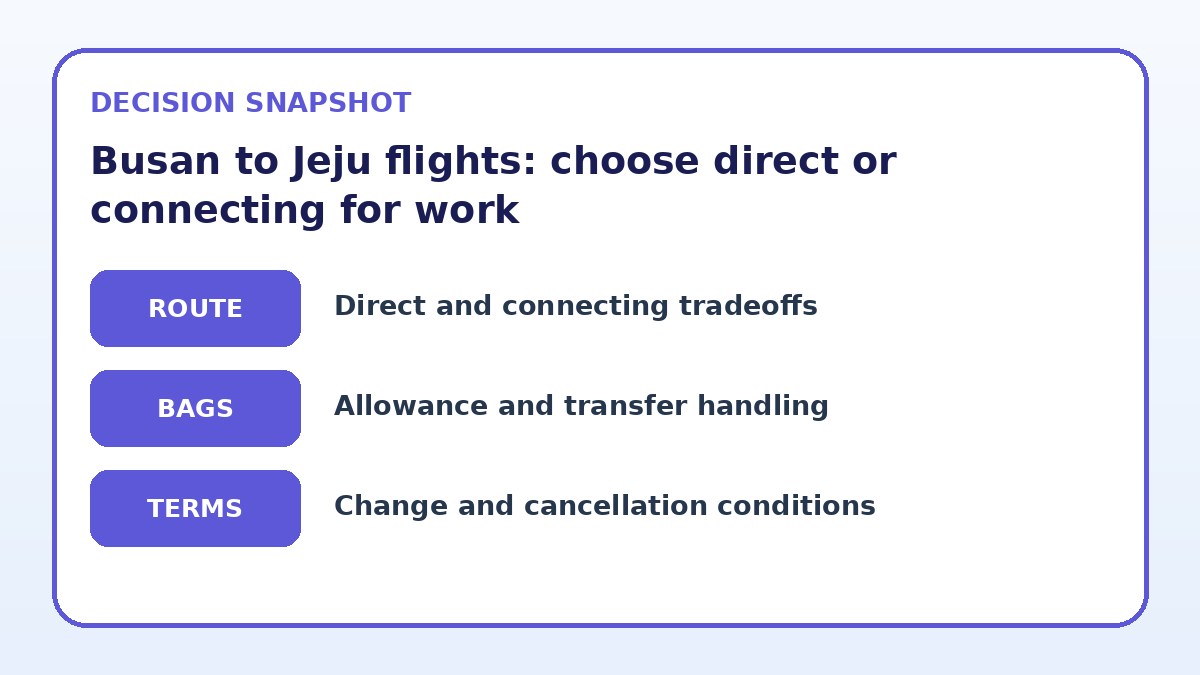
Routing: how to compare direct and connecting options
Start by listing direct flight departure times and the duration from the airport to your meeting or hotel in Jeju. Direct flights eliminate connection windows and additional boarding events, so they usually give the most predictable schedule. If a direct flight leaves at a convenient time that still allows margin for unexpected delays, it often becomes the simplest choice for a business day. But direct schedules may be limited in frequency, so they might not match flights early enough or late enough to meet certain meeting times or same-day return needs.
When direct flights don’t match your itinerary, compare connecting options with attention to total door-to-door time and realistic connection buffers. Look at the full route duration and compare whether a longer flight with a tight connection genuinely saves time versus taking a later direct flight. Also consider where the connection happens: some intermediate airports require a terminal change or longer transfer times. For business travel, prioritize options that leave a comfortable buffer for delays rather than marginally faster itineraries that leave no room for disruption.
Baggage and connection risk: practical checks before you book
Checked-baggage rules and whether your bag will transfer automatically are crucial for connected itineraries. If you book both legs on the same ticket with the same carrier family, bags are usually checked through to the final destination; on separate tickets you may need to collect and recheck luggage, adding time and complexity. For business trips where you may have equipment or suits, losing a bag or missing a recheck window risks disrupting meetings. Verify the carrier’s baggage transfer policy and, when in doubt, plan a connection with a comfortable margin to recheck or retrieve luggage.
Connections also carry a higher risk of missed flights due to delays, security queues, or terminal transfers. When picking a connecting flight, factor in realistic transfer time—account for passport or security checks, and allow extra for peak travel hours. If your itinerary includes an overnight gap, check whether baggage is held or requires recheck and whether transport between terminals is required. For short business trips, an itinerary with fewer touchpoints and lower recheck likelihood usually reduces stress and contingency planning.
Compare flight-selection strategies
| Flight strategy | Best for | Risk to check |
|---|---|---|
| Direct flight, refundable/flexible fare | Business travelers valuing timing certainty and freedom to change plans | Higher fare cost and fewer scheduling choices compared with nonrefundable or connecting options |
| Direct flight, nonrefundable budget fare | Short fixed-schedule trips where timing is set and cost sensitivity matters | Lower price but limited change options and increased risk if plans shift |
| Connecting flight on a single ticket | Travelers needing a specific arrival time not served by direct flights | Potentially longer travel time and higher missed-connection risk, but bags usually transfer automatically |
| Separate-ticket connections to save money or widen choices | Experienced travelers comfortable with contingency plans and rechecking baggage | Lower cost or more schedule options but no protected connection—missed flights mean rebooking and extra expense |
Recheck the complete itinerary
Confirm airports, connection handling, baggage, and change conditions before deciding.
Schedule fit and productivity: aligning flights with work priorities
Think about when you need to be in Jeju and whether you must be fully travel-ready on arrival. Early direct flights may be preferable if you need to arrive fresh for an afternoon meeting. Conversely, if meeting times are flexible or you can work in transit, a connection that departs later but arrives at the same readiness level may be acceptable. For productive travel, review in-flight amenities, Wi‑Fi availability, and seat options when comparing flights—these can affect your ability to work en route. A slightly longer flight with reliable connectivity might be better than a shorter flight without any onboard work options.
Also consider same-day return possibilities and how connection choices affect them. If you plan to return to Busan the same day, prioritize an itinerary with predictable timing and minimal risk of a missed connection. For one-way business trips where schedule flexibility matters, choose fare conditions that allow changes without steep penalties. Align your travel times with meeting schedules and local transport options at both airports to reduce downtime and make the trip efficient for work obligations.
Flight details to verify
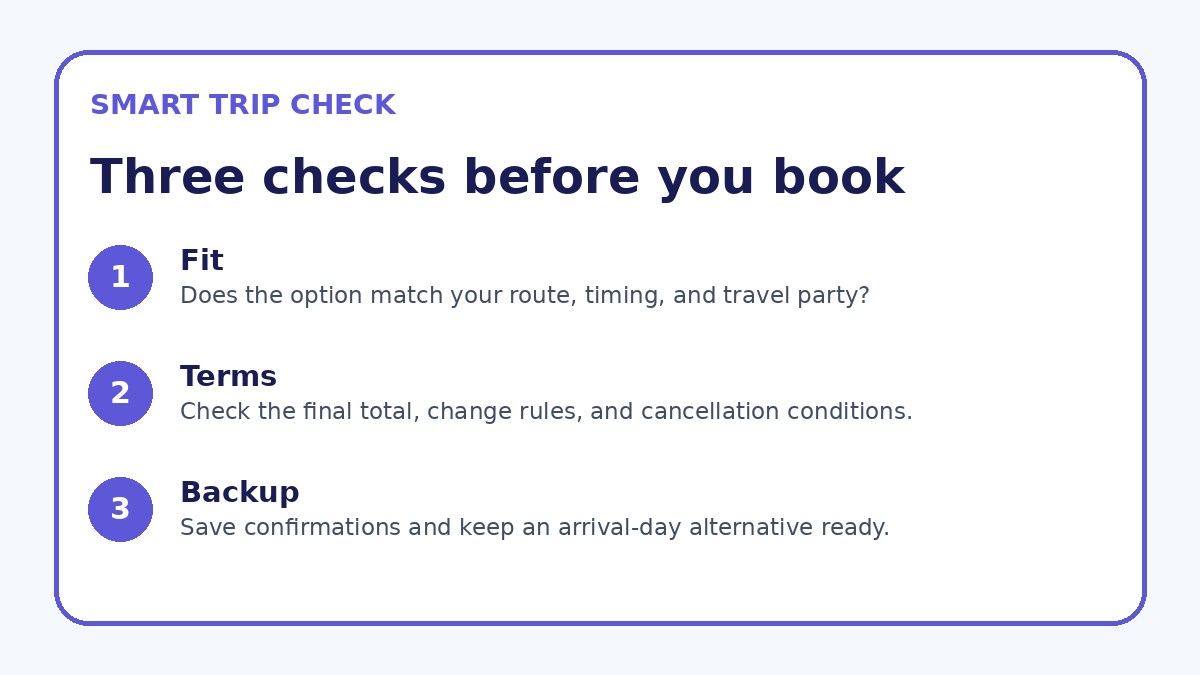
- Confirm exact travel dates, departure and arrival airports, and preferred time windows before searching fares.
- Check the fare rules on the airline’s final booking page for change, cancel, and no-show penalties.
- Verify baggage allowance and whether checked bags transfer automatically on connecting itineraries.
- Compare total door-to-door time, not just flight time, when evaluating direct versus connecting options.
- Allow realistic minimum connection time and add a personal buffer for security lines and terminals.
- If booking separate tickets, plan for how you will rebook or cover missed connections and factor that cost in.
Fare conditions and booking checks: what to verify on the final page
Before you complete a booking, read the fare rules on the carrier’s final booking page. Confirm change and cancellation fees, standby rules, and whether the fare allows refunds or only credits. For business travelers, refundable or flexible-change fares can be worth the premium because they reduce exposure to last-minute schedule changes. Also verify baggage allowances, seat selection options, and whether premium boarding or other business-class amenities are included or sold separately.
When comparing fares across carriers or tools, make sure taxes and surcharges are included in the displayed total and that any loyalty program benefits apply to the fare bucket you choose. If using multiple tickets to save money, understand that protections for missed connections may not apply, and you could be responsible for rebooking. Always confirm the airport terminal information and minimum connection times, and check the airline’s page to verify flight departure and arrival times, as those can change between search and booking.
Flight Guide questions travelers ask
Is a direct flight always better for business travel between Busan and Jeju?
Not always. Direct flights reduce connection risk and generally shorten travel time, which is excellent for tight schedules. However, if the direct schedules don’t fit your meeting times, or if the direct fare lacks the flexibility you need, a carefully chosen connecting flight can be a practical alternative. Evaluate whether you need refundable/changeable tickets, whether you’ll be checking luggage, and how much margin you want for delays. Choose the option that minimizes disruption to your business commitments rather than automatically picking direct service.
What should I check about baggage rules when my itinerary has a connection?
First, confirm whether both legs are on the same ticket and operated by the same carrier group; that usually determines if bags transfer automatically. If you have separate tickets, expect to collect and recheck baggage, which adds time and risk. Also check weight and size limits, any fees for additional pieces, and whether priority handling applies. For business travelers carrying suits or equipment, consider packing critical items in carry-on luggage and allow extra connection time to recheck bags when necessary.
How much connection time should I allow when choosing connecting flights?
Allow more than the published minimum connection time to account for security, terminal transfers, and gate changes—especially during peak hours or if you need to recheck baggage. For domestic connections within the same airport, a comfortable buffer reduces stress; for connections that require a terminal shuttle or extra security checks, add additional time. If your trip is time-sensitive, favor itineraries with longer, realistic buffers even if total time is longer, because arriving reliably for meetings is often more valuable than shaving a small amount of travel time.
Final decision note
For Busan to Jeju business travel, the decision between direct and connecting flights comes down to reliability versus flexibility and cost. Direct flights give simpler, more predictable travel with fewer touchpoints and a smaller chance of interruption—valuable for tight schedules and same-day returns. Connecting itineraries can fill timing gaps or offer wider choices, but they increase baggage and connection risk and require careful planning and cushion time. Before booking, gather exact dates, desired time windows, baggage needs, and your tolerance for change fees; then verify fare rules and connection protections on the airline’s booking page to ensure the itinerary supports your business priorities.
Continue planning
Check current options and final conditions
Use the provider page to confirm live availability, the final total, cancellation terms, and every condition that matters to your trip.
This evergreen planning guide was created with AI-assisted drafting and a structured quality review. It does not display live prices, schedules, availability, visa guidance, or provider rankings. Verify current details before booking. Some links are affiliate links; we may earn a commission at no additional cost to you.