If you’re traveling to Kyoto with extra bags, use price alerts as a tool — not a trigger — for thoughtful comparisons. The practical answer: set alerts for identical travel dates and traveler counts across single-item bookings (flight-only, hotel-only) and package offers, then compare concrete inclusions like baggage allowances, transfer options, luggage fees, cancellation rules, and change fees before buying. That way an alert’s low headline fare doesn’t push you into a package that adds restrictive rules or hidden charges for oversized bags. This article walks through the exact things to compare before judging whether a package is worth it for your heavier packing, shows how to use alerts responsibly, and gives checklist items you can complete before you click Book.
Test package value fairly
| Booking approach | Best for | Tradeoff to check |
|---|---|---|
| All-in-one package (flight + hotel + transfers) | Travelers who prioritize convenience and predictable handling of heavy bags. | May include restrictive change/cancel rules; verify baggage and transfer capacity before buying. |
| Flight-only booking plus separate hotel | Travelers seeking maximum control over baggage allowances and airline selection. | You must add baggage fees and arrange transfers separately, which can add cost and hassle. |
| Package with basic flight and optional paid luggage | Travelers wanting a lower headline price but willing to pay for baggage as needed. | Add-on baggage fees can quickly erode savings and policies may be less flexible than full-baggage fares. |
| Book train or ground travel plus hotel (no flight) | Local/regional travelers or multi-stop trips where rail has generous luggage rules. | Compare luggage limits and storage options; transfers and long connections may be harder with many bags. |
Check current package and separate options
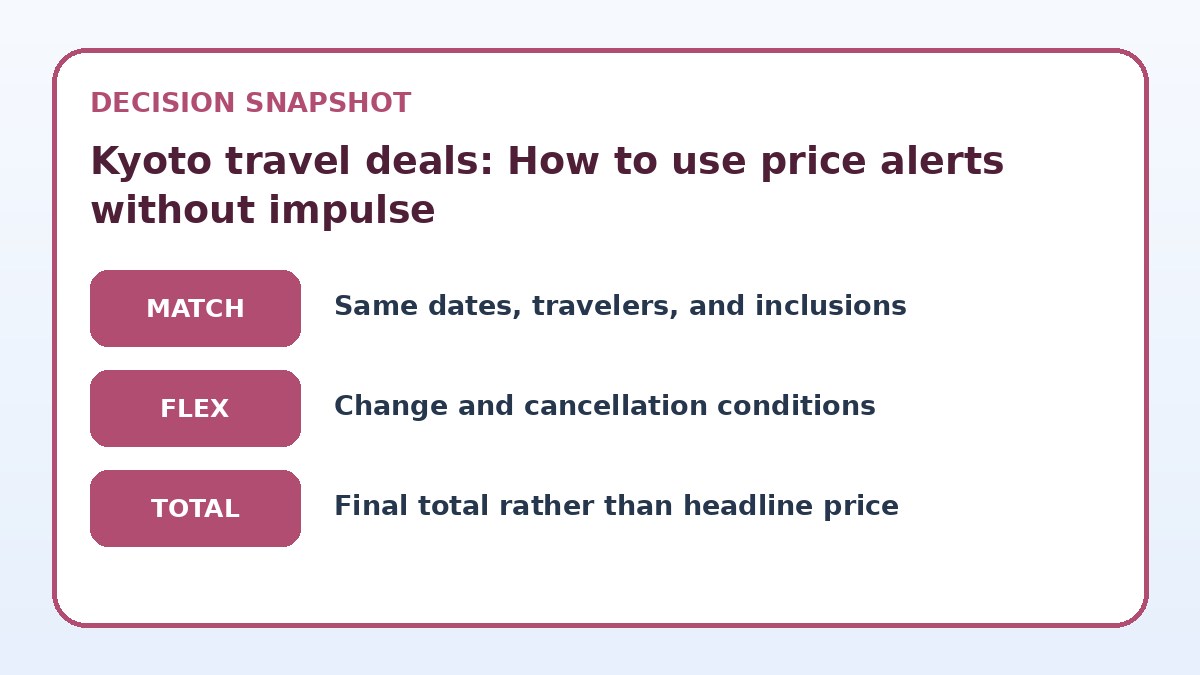
Use identical dates, travelers, room needs, baggage, and flexibility so the comparison stays meaningful.
What to compare before judging a bundle
Start by listing what you need: total checked pieces, approximate weight per piece, whether you need airport-to-hotel transfers, and how much flexibility you want for date or name changes. For each package and each separate booking option, compare the exact baggage allowance per passenger, overweight/oversize fee policies, and whether any included transfers permit large items. Don’t assume a bundle includes free baggage just because a flight is part of it — some package terms differ from standalone flight terms.
When comparing prices, match the same travel dates, the same number and types of travelers (adult, child), and the same total baggage. If a package includes hotel and sightseeing, note whether those inclusions restrict refunds or changes; bundled sightseeing vouchers, for instance, can be non-refundable and keep the whole package from being amended without penalty. Keep a simple spreadsheet or note with four columns: provider, total price, baggage rules, and change/cancel terms so you can make an apples-to-apples comparison.
Using price alerts without impulse booking
Price alerts are notifications, not purchase orders. Configure alerts for both full packages and for separate flight/hotel pieces, but set them to notify you over a few weeks rather than trigger an immediate purchase. When an alert fires, pause: review the provider’s final booking page to confirm baggage allowances, exact cancellation and change fees, and any non-refundable elements. If the alert points to a package, open the full itinerary and read the fine print on baggage and transfer inclusions before continuing.
To avoid impulse buys, add simple friction to your process: require at least two alerts within a set window (for example, the same price appears twice in seven days) or commit to a checklist you must finish before booking. Use alert tools that show fare history or trend graphs so you can see whether a low price is an outlier. If you want a third-party reference for availability, you may check a general aggregator like Trip.com, but always verify final terms on the seller’s booking page because aggregators sometimes summarize rather than reproduce full provider conditions.
Look past the headline total
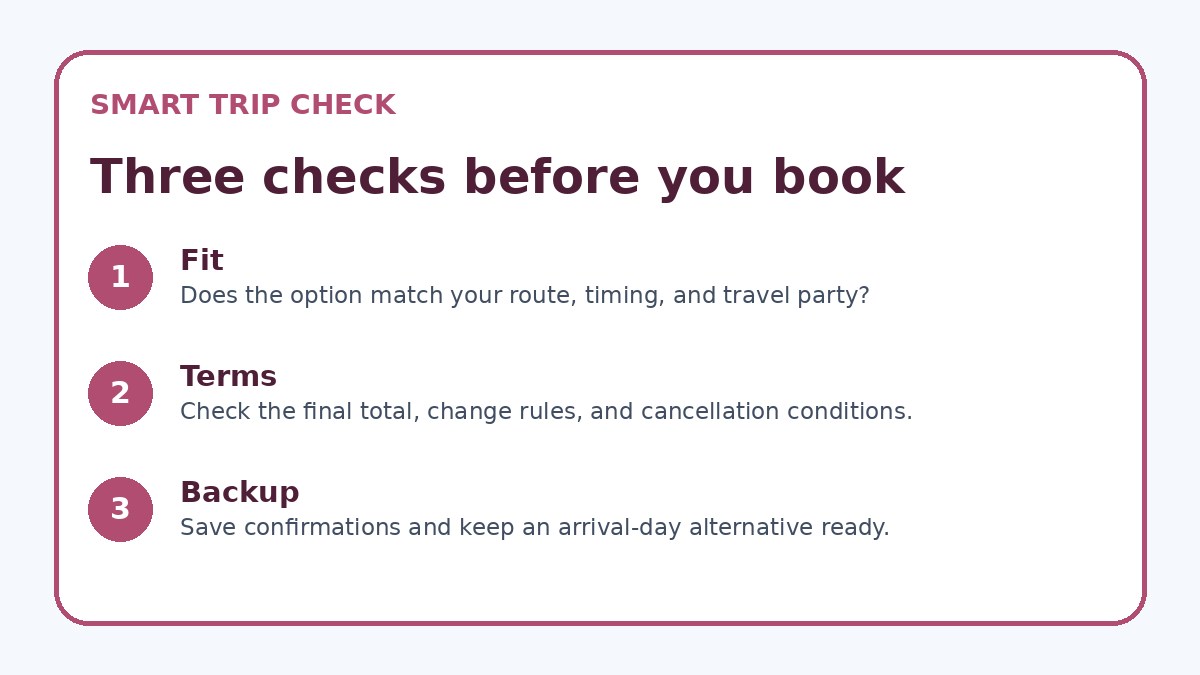
Compare inclusions and change conditions before deciding whether a package is genuinely useful for this trip.
Deal comparison checklist
- Set parallel price alerts for the same dates and passenger count: one for package offers and one for separate flight+hotel bookings.
- When an alert hits, open the seller’s final booking page and copy the exact baggage allowance language and applicable fees.
- Calculate the total expected baggage costs for flight-only itineraries and add transfer fees to compare against any package premium.
- Verify change, cancellation, and refund terms on the package page; note whether refunds are full, partial, or travel credit.
- Check transfer vehicle luggage capacity, hotel porter services, and whether the hotel charges for extra oversized items.
- Save screenshots or PDFs of the final terms page and confirmation pages for whichever option you choose before completing payment.
Inclusions, flexibility and traveler-specific value
Inclusions matter more when you’re traveling heavy. A slightly higher package price can be worth it if it includes generous baggage allowances, transfers that handle large suitcases, or hotel porter service. Calculate the expected cost of separate baggage fees if you booked flights alone, then compare that to the package premium. Consider practical value: a package that saves you an extra taxi with a large suitcase, or that bundles a rail pass allowing easier luggage carriage, could be the smarter financial choice for your situation.
Flexibility is a separate consideration. If your travel dates are fixed and you’re confident in plans, a non-refundable package with generous baggage may be acceptable. But if there’s any risk of changes, prefer options where flights and hotels can be changed with reasonable fees or where the package allows substitutions. Check whether third-party suppliers (airlines, hotels) will accept name or date changes under the same rules as the package seller — if they won’t, an initially cheaper package could cost you more if plans shift.
Final terms to verify on the seller’s booking page
Before you click Book, open the seller’s final booking page for every option you consider and confirm exact baggage allowances, overweight/oversize fees, and how those rules apply to infants or lap children if relevant. Also check cancellation windows, change fees, refund processing times, and whether refunds are issued as travel credit or to the original payment method. If a package includes transfers or excursions, confirm meeting points, luggage limits for transfer vehicles, and any weight restrictions.
Look for supplier contact details and a clear summary of what happens if one component changes (for example, if the airline changes flight times). If the package is a combination of services sold by multiple suppliers, verify who is responsible for rebooking or compensation if one part is disrupted. Make a habit of saving or printing the final terms page or taking screenshots; these pages are the contract you’ll need if you must dispute charges or request refunds later.
Travel Deals & Booking Strategy questions travelers ask
Can price alerts reliably flag package deals that include generous baggage allowances?
Price alerts will notify you of fare or package price changes but won’t reliably flag package specifics like baggage allowances. When an alert shows a low package fare, you must open the seller’s final booking page and read the baggage and inclusion details. Some packages may use lower-base fares but require paid baggage add-ons; others may include transfers and baggage handling. Use alerts as a signal to compare, not as confirmation that baggage is covered — always verify the exact terms before booking.
If I find a cheaper package on an aggregator, what should I verify on the provider’s page?
If an aggregator shows a lower price, immediately confirm the same itinerary, baggage rules, change and cancellation conditions, and contact details on the provider’s final booking page. Aggregators sometimes summarize or omit fees and restrictions. Check who is the contracting party for each service (airline, hotel, or tour operator) and whether refunds or changes will be handled by the aggregator or the supplier. Only finalize payment after you confirm these specifics on the seller’s own terms.
How do I decide between paying extra for checked baggage on a flight-only booking versus choosing a higher-priced package?
Estimate the total cost of baggage fees (checked pieces, overweight/oversize fees) and add any transfer and porter costs you’d incur separately. Compare that total to the package premium and weigh intangible benefits like included transfers, simpler ticketing, or a single point of contact for problems. Also consider flexibility: if you might change dates, a package with strict non-refundable components could be riskier. Choose the option whose confirmed inclusions and fees align with your luggage needs and tolerance for change risk.
Final decision note
Traveling to Kyoto with extra luggage changes which deal is actually best. Price alerts are useful for spotting options, but they should be followed by deliberate verification: match dates and travelers, confirm exact baggage allowances, and read cancellation and change rules on the seller’s booking page before committing. Compare the total cost of separate baggage fees and transfers to any package premium, and factor in the practical convenience of included porter or transfer services. With a short checklist and a habit of pausing after alerts, you’ll avoid impulse bookings that look cheap on the surface but cost more in baggage charges or inflexibility.
Continue planning
Check current options and final conditions
Use the provider page to confirm live availability, the final total, cancellation terms, and every condition that matters to your trip.
This evergreen planning guide was created with AI-assisted drafting and a structured quality review. It does not display live prices, schedules, availability, visa guidance, or provider rankings. Verify current details before booking. Some links are affiliate links; we may earn a commission at no additional cost to you.