If your family is tracking Busan travel deals, price alerts are a useful tool — but they can also tempt you into impulse bookings that don’t actually suit your trip. The practical answer: set targeted alerts and a decision checklist, then compare any package against separate bookings using the same dates, travelers, and cancellation terms before you hit purchase. Start by choosing which parts of the trip you value most (flights, convenience, refundable options, onboard or hotel perks) and set alerts only for those elements. Keep a short waiting rule (for example, 24–72 hours) to gather multiple alerts, then run a side-by-side comparison of total cost, true inclusions, and final booking terms. That discipline turns alerts from a trigger into useful market information for family planning.
Test package value fairly
| Booking approach | Best for | Tradeoff to check |
|---|---|---|
| All-in-one package (flight + hotel + transfers) | Families who prioritize convenience and single-point support over granular control | May bundle simpler terms but can hide stricter change policies or limited inclusions compared with separate bookings |
| Separate flight + hotel bookings | Families who want maximum flexibility, loyalty credit, and control over seating/room options | More time-consuming to manage and you must coordinate separate cancellation or rebooking if plans change |
| Flight-only alert with hotel booked separately | Families tracking flight price dips while securing preferred hotels and room types independently | Risk of losing matched hotel availability or higher hotel rates if the flight alert requires quick booking |
| Bundle with refundable or flexible components | Families needing changeable plans who want some convenience plus flexible exit options | Flexible bundled fares tend to cost more and require careful verification of who handles refunds and rebookings |
Check current package and separate options
Use identical dates, travelers, room needs, baggage, and flexibility so the comparison stays meaningful.
What to compare before you judge a bundle useful
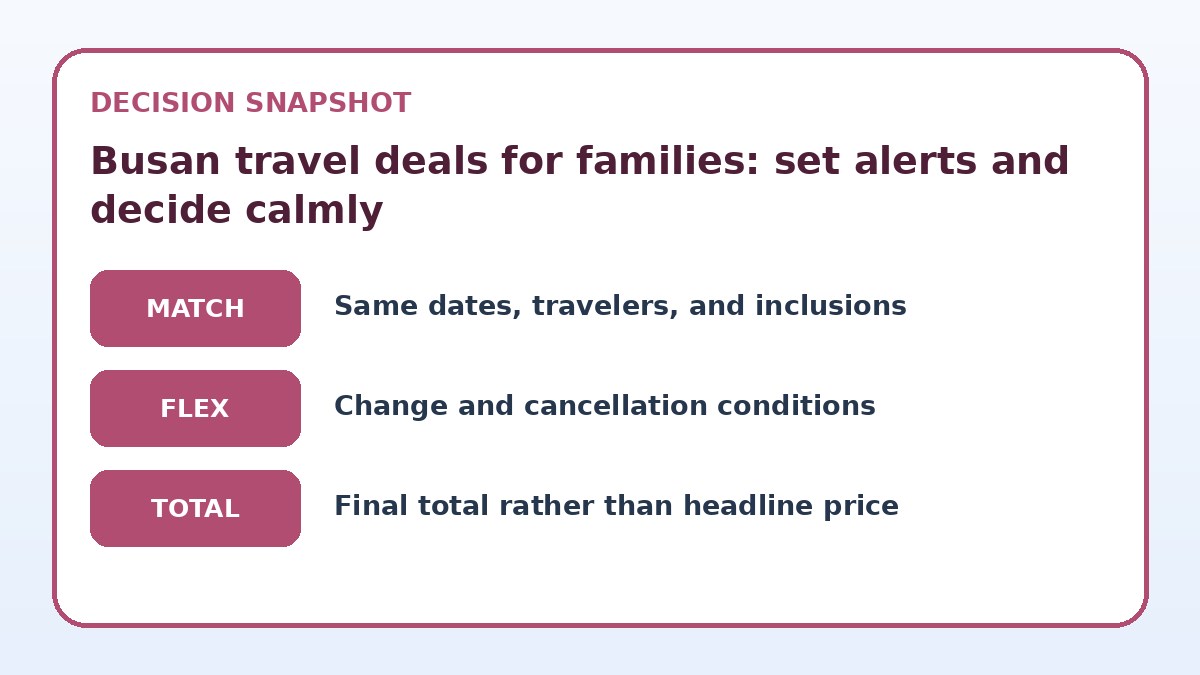
Before you assume a package is a good deal for your family, put the same itinerary into at least two separate checks: individual flights and hotels (plus transfers if relevant) and the packaged option. Match the travel dates, number of travelers including children’s ages, room type, baggage allowance, seat class, and whether breakfast or transfers are included. Only by standardizing these inputs will you avoid a false savings illusion where a package looked cheaper because it used a lower room category or excluded checked bags.
Also verify the total out-the-door cost on the provider’s final booking page. Some bundles display promotional pricing but then add mandatory service fees, tourism levies, or per-passenger surcharges at checkout. For families, small per-person fees quickly add up. Confirm final payment currency, whether any deposit is required up front, and whether the displayed rate includes local taxes so your comparison reflects the real amount you’ll pay.
Inclusions: spotting real value versus marketing
Inclusions create real family value only when they match your needs. Free breakfast is valuable for families if it covers the whole party and fits your meal habits; airport transfers only help if arrival times, vehicle size, and luggage capacity match your group. When an alert highlights an inclusion, open the provider’s detailed description and read the exact language: ‘breakfast included’ may mean fixed menu or buffet access for a fee per child. If details are missing, contact customer support before assuming the inclusion applies to your booking.
Think beyond the headline: check luggage allowances, seat selection rules, bed configuration (two double beds vs. a single), and child pricing policies. For flights, see whether infant or child seats are complementary or charged separately; for hotels, confirm cot/extra bed availability and fees. These small details influence comfort and whether the bundle genuinely saves money or just shifts costs into add-ons.
Look past the headline total
Compare inclusions and change conditions before deciding whether a package is genuinely useful for this trip.
Deal comparison checklist
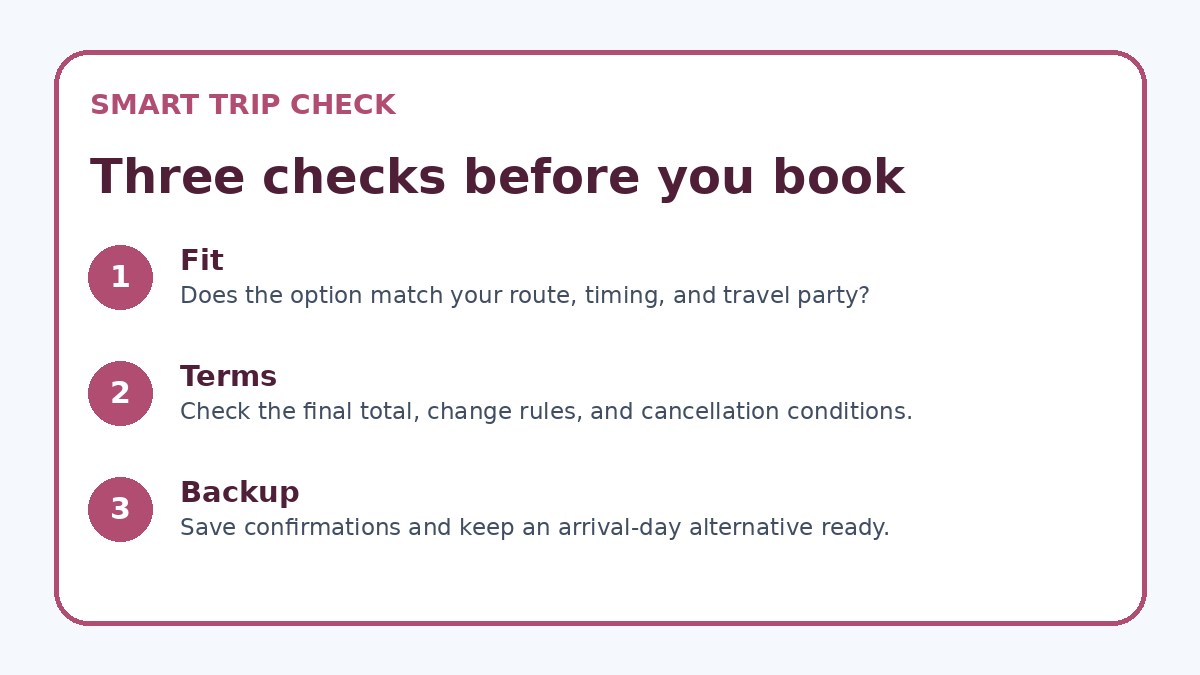
- Match dates, number of travelers and room/seat types exactly before comparing bundled and separate totals.
- Open the provider’s final booking page and read the full cancellation and change policy line by line.
- Verify exact inclusions (breakfast type, transfer schedule, luggage allowances) on the supplier’s detailed description.
- Confirm who issues refunds and the typical processing timeline for cancellations or changes.
- Set a simple cooling-off rule (for example, 48 hours) to collect alternative price checks before booking.
- If loyalty benefits matter, check whether the bundle credits points or whether separate bookings are required.
Flexibility: change and cancellation terms families must verify
Families often need flexibility. Carefully compare change and cancellation policies for both bundled and separate bookings. Some package deals offer one-window customer service but tie you into stricter supplier rules; others let you change components individually. On the provider’s booking page, look for whether changes incur a flat fee, a fare difference, or both. Also confirm refund timelines and whether refunds come from the provider or the underlying airline or hotel — that affects how quickly you can rebook if plans change.
Verify which party handles reissues and refunds: the package seller, an airline, or the hotel. If the seller handles everything, ask how long reimbursements typically take and whether they will rebook at current market rates when you change plans. For international family travel to Busan, also check passport name-change rules and whether infant/child fare rules differ; these operational details will affect real flexibility even when the headline policy looks generous.
Traveler-specific value: what matters most to families
Decide what matters most for your family: saving money, fewer logistics, better sleep, or lower stress. A bundled package can be worth the convenience if it eliminates coordination between flight and hotel and includes a reliable transfer. For multi-stop family itineraries or longer stays, separate bookings sometimes give better seat selection, more flexible cancellations, or loyalty program benefits that a package may not pass through.
Also weigh non-monetary factors like flight times and overnight connections. A slightly more expensive option that avoids late-night arrivals or long layovers might be worth it for younger children. Finally, consider whether loyalty points or hotel status matter; those benefits usually require booking directly or through channels that credit your accounts, so check whether the bundle preserves or forfeits those perks.
Travel Deals & Booking Strategy questions travelers ask
How should families use price alerts for Busan travel without overreacting to one notification?
Treat each alert as one data point, not an automatic trigger to buy. Configure alerts narrowly (exact dates, travelers, cabin class), then wait a set period — for example, 24 to 72 hours — to gather other alerts and compare. During that time, run side-by-side price checks for separate flight and hotel options using the same input details. If the alert corresponds to a bundled offer, open the seller’s final booking page and verify full terms, inclusions, and cancellation rules before deciding. This routine reduces impulse booking and reveals whether the alert is genuinely helpful.
If a price alert shows a low fare to Busan, should I book flights first or secure family-friendly hotel rooms?
Decide based on what’s more sensitive to price or availability for your family. Flights often fluctuate more and can be useful to lock in first if the fare fits your travel window, but only do so if the fare includes acceptable seat options and baggage rules. If your family needs a specific hotel layout or on-site amenities, check hotel availability concurrently. Ideally, collect a flight alert, confirm hotel options for the same dates, then compare total costs and flexibility. Always verify final conditions on the booking pages before paying.
What exact booking-page details should I verify when an alert leads to an apparent bundle deal?
On the final booking page check the total price including taxes and fees, cancellation and change penalties, refund timelines, exact inclusions (type of breakfast, transfer pickup rules), baggage and seat assignment rules for flights, and whether child pricing or extra-bed fees apply. Also confirm the booking currency and who will be responsible for issuing refunds or rebooking. If the bundle mentions third-party components, note whether you must contact the bundle seller or the underlying provider to make changes — that affects how quickly you can adjust plans if something changes.
Final decision note
Price alerts can be a helpful family planning tool for Busan travel deals if you use them deliberately. The core habit is simple: standardize inputs, verify final booking terms, and compare bundled versus separate totals with the same traveler and inclusion assumptions. Combine targeted alerts with a short cooling period and an apples-to-apples checklist so you evaluate real value rather than reacting to a headline price. When you find an alert worth pursuing, double-check the provider’s booking page for cancellation rules, inclusions, and refund handling before you commit. For quick comparisons of current availability you can optionally check Trip.com, but always rely on the final supplier page for terms.
Continue planning
Check current options and final conditions
Use the provider page to confirm live availability, the final total, cancellation terms, and every condition that matters to your trip.
This evergreen planning guide was created with AI-assisted drafting and a structured quality review. It does not display live prices, schedules, availability, visa guidance, or provider rankings. Verify current details before booking. Some links are affiliate links; we may earn a commission at no additional cost to you.