Short practical answer: for most first-time visitors to Paris who plan to stay inside the city and use public transit for museums, neighbourhoods, and short outings, skip renting a car. Driving in central Paris adds time, parking hassles, and low-emission zone checks that usually outweigh benefits. If your plan includes regional day trips (Versailles, Giverny, Champagne) or onward travel through Normandy or the Loire, renting can make sense — and airport pickup often saves time and gives clearer return logistics for onward flights. This article explains the tradeoffs between picking up at an airport versus a city location, what to watch in insurance wording, pickup and return friction, route value, and a practical non-driving fallback so you can decide on booking day with confidence.

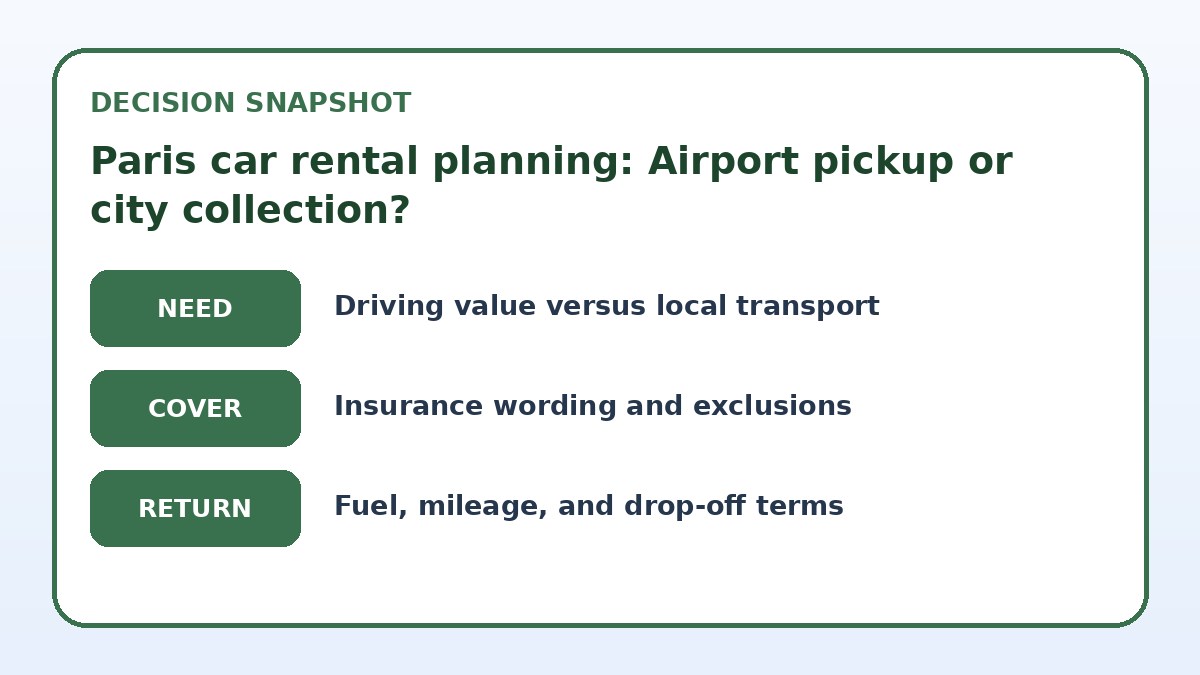
Does driving add route value for your Paris stay?
Evaluate the actual routes you plan to drive. If your days are museum- and neighbourhood-focused—Louvre, Marais, Saint-Germain, Montmartre—public transport and walking deliver higher value: frequent metros, buses, and short taxi rides remove the stress of parking and narrow streets. Driving becomes valuable when you leave the Île-de-France for half- or full-day trips to sites that are poorly connected by rail or where a flexible schedule matters, such as early-morning departures to rural areas or multiple small stops where train schedules would be limiting.
To quantify route value, list destinations, their rail or bus connections, and total door-to-door time by public transport versus car. Include parking time and the likely search time in central Paris. For regional routes, factor tolls and fuel versus train fares and local transfers. If parking at your Paris accommodation is impossible or costly, the convenience of a car for day trips must justify that extra cost and the mental load of city driving.
Decide whether driving earns its place
| Mobility strategy | Best for | Cost or friction to check |
|---|---|---|
| Airport pickup and return | Travelers starting or ending a multi-leg trip or making long regional drives. | Easier integration with flights but may mean terminal queues, shuttles, and extra one-way or airport fees. |
| City pickup and return | Short drives beginning inside Paris, avoiding terminal traffic and quicker access to central streets. | Limited hours and smaller branches can have fewer vehicle choices and may charge more for cross-border travel. |
| No car — public transport, taxis, and day tours | Visitors staying within Paris who prioritize museums, dining, and neighbourhood walks. | Less flexibility for rural routes; may be slower or costlier for multiple remote stops compared with a private car. |
| Car for day trips only (rent one-way or use guided tours) | Those who want driving flexibility for specific outings without city parking or long rentals. | Higher per-day expense and the inconvenience of coordinating pickups/returns or joining scheduled tours. |
Check live rental choices only after the route test
Use the exact driver, dates, pickup point, and return plan to compare current conditions.
How insurance wording affects airport vs city pickup
Insurance wording is the fine print that changes your outlay. Look for collision damage waiver (CDW) excess amounts, third-party liability limits, and whether roadside assistance is included. Airport counters sometimes upsell wider protection at slightly different terms; city branches may offer similar products but with different pick-up hours and paperwork. Always get confirmation—on the provider’s final booking page—about what the basic rate covers, what a zero-excess option actually excludes, and whether policies cover driving into neighboring countries or low-emission zones.
When comparing offers, don’t rely on generic phrases. Verify deductibles, named driver rules, and whether credit-card coverage applies (and its limitations). If you plan to use an independent insurer or a credit-card benefit, print or save policy wording and carry it to the desk. For first-time visitors unfamiliar with French insurance terminology, request an English copy of the rental agreement and confirm exactly how damage claims are processed and disputed.
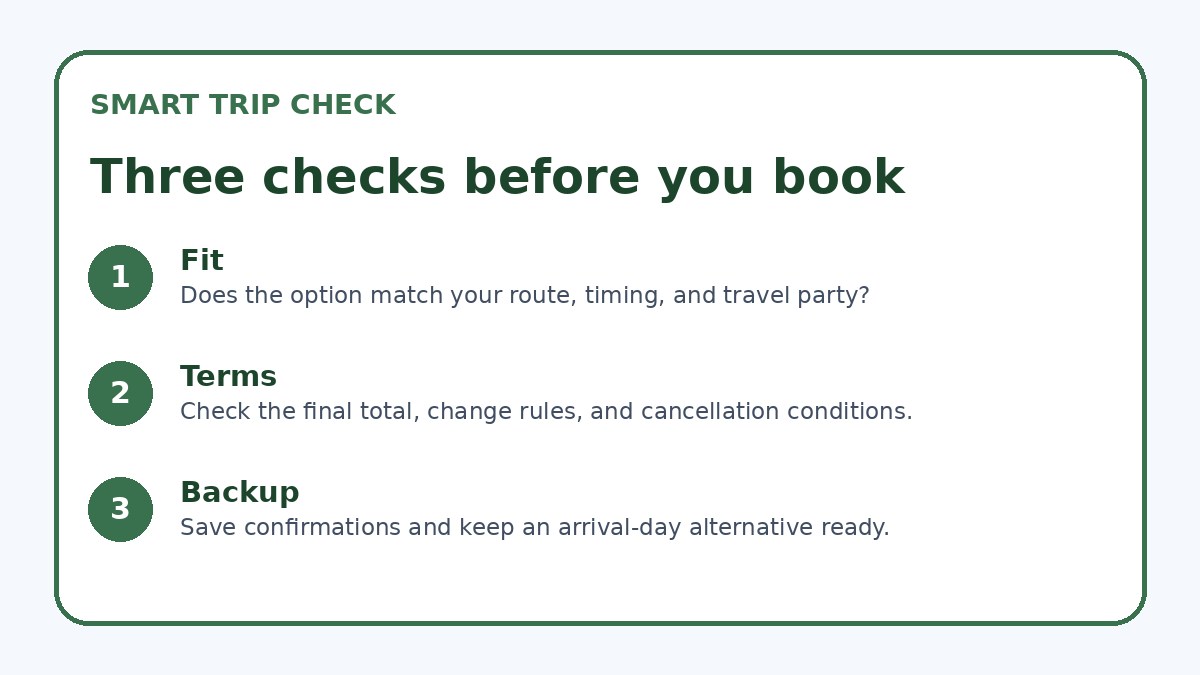
Compare the full rental conditions
Confirm insurance wording, exclusions, deposit, fuel, mileage, and return terms on the final page.
Pickup and return friction: airport counters versus city desks
Airport pickups often mean long terminal queues, shuttle transfers to off-site lots, and additional waiting when busy flights arrive. They do, however, align well with flight schedules and usually have extended hours. City pickups can be easier to reach by metro or taxi, and you can start driving away faster from a central location without navigating terminal traffic. Returns in the city may offer more flexible parking options if your hotel has arrangements; returns at airports can be smoother if you must catch a flight and the rental company has clear drop-box and shuttle procedures.
Anticipate friction by checking the supplier’s exact pick-up and return address, after-hours drop instructions, and any shuttle requirements. Confirm whether fuel policies require returning a full tank or pay-on-return and whether there are different charges for airport locations. Before finalizing, verify opening hours on the provider’s booking page, ask about off-site collection shuttles, and note whether identification, international driving permits, or paperwork must be presented at pickup.
Car rental terms to verify
- List every drive you expect to make and compare door-to-door time for car versus public transport for each journey.
- Verify the rental agreement on the supplier’s final booking page for CDW excess, liability limits, and roadside assistance terms.
- Check whether the pickup location requires shuttles or extra terminal time and note exact pickup and return addresses.
- Confirm fuel policy, expected toll usage, and whether the rental includes a vignette or low-emission zone permit if needed.
- Plan parking: find your hotel’s parking options and prices, street-parking rules, and likely overnight garage availability near your base.
- Arrange a non-driving fallback: book flexible train tickets, note reliable taxi companies, or reserve a guided day tour as a backup.
A non-driving fallback: plan B for first-time visitors
If you decide against driving or something goes wrong with the rental, have an alternate plan. Paris has an extensive regional rail network (RER and SNCF) plus reliable intercity buses and coaches to many tourist sites. For local hopping, taxis, app-based rides, and bike-sharing cover short gaps. Book flexible train tickets where possible and save reliable taxi company numbers. For day trips that really need a car, consider a guided small-group tour or a private driver so you avoid parking and insurance hassles yourself.
Also prepare for last-minute changes by checking cancellation and amendment policies on your car booking and by keeping digital copies of tickets and maps. If you choose city pickup but then prefer not to use the car, cancel early in the provider’s allowed window to avoid significant charges and consider a short-term car-sharing option for one-off drives. Trip.com can be used as one place to compare current availability and conditions, but always verify the final rental terms on the supplier’s booking page.
Car Rental & Road Trip questions travelers ask
Is it legal to drive in Paris with a foreign license and do I need an international driving permit?
Most visitors can drive in France with a full, valid foreign driving license in Latin script; some countries’ licenses may require an international driving permit (IDP). Check the rental company’s policy and your country’s rules before booking. If your license is not in French or uses a non-Latin alphabet, an IDP is commonly required. Always carry your passport, driving license, and the rental agreement. Confirm the exact document requirements on the provider’s final booking page to ensure compliance at pickup.
What low-emission or traffic restrictions should I check before driving in Paris?
Paris enforces low-emission zones that restrict or charge certain older vehicles on specific days, and municipal traffic restrictions can change seasonally. Before booking, verify whether your rental has Crit'Air or similar stickers and whether the car is permitted in restricted zones. Check the supplier’s final booking page and city transport websites for current rules, and ask about fines the renter would be liable for. Plan routes to avoid restricted areas where possible and allow time for detours.
How do I handle tolls, fuel charges, and motorway costs when renting in Paris?
French motorways use tolls (péage) and electronic or ticket systems; the rental company may offer a toll transponder for convenience at extra cost. Decide whether you want the transponder or prefer paying tolls in cash or by card on the road. For fuel, confirm if the policy requires returning the tank full or if a prepaid fuel option is available—these choices affect total cost. Always check these details on the provider’s booking page and keep toll receipts or records if you plan to dispute a charge.
Final decision note
For first-time visitors to Paris, the decision to rent hinges on whether you mostly stay inside the city or have substantial regional driving planned. Skip the rental if your trip centers on museums, cafés, and walking neighbourhoods; use public transit and reserve trains or guided day tours for longer outings. Choose airport pickup when you need a car for onward travel or multi-leg regional routes and prefer streamlined returns with flights. Opt for city pickup when your drive starts in Paris and you want to avoid terminal congestion. In every case, read the rental agreement on the supplier’s final booking page for insurance limits, fuel policy, pickup hours, and any location-specific fees before you book.
Continue planning
Check current options and final conditions
Use the provider page to confirm live availability, the final total, cancellation terms, and every condition that matters to your trip.
This evergreen planning guide was created with AI-assisted drafting and a structured quality review. It does not display live prices, schedules, availability, visa guidance, or provider rankings. Verify current details before booking. Some links are affiliate links; we may earn a commission at no additional cost to you.