If you’re traveling from Tokyo to Osaka with more than a carry-on, practicality—not speed alone—should drive your choice. For most people with extra suitcases, an express long-distance train that allows easy platform access and simple transfers at both ends wins for door-to-door convenience. A direct coach can be simpler if you need to stay within a single terminal and avoid city-center transfers. Ferries and mixed rail-plus-bus options can work if you’re moving very bulky items or prefer a cheaper slow route, but they usually increase handling and the number of transfers. This article walks through terminal fit, luggage and transfer friction, timing flexibility, and disruption backups so you can pick the option that minimizes hauling, saves time at each end, and reduces stress during connections.
Terminal fit: where you start and where you end
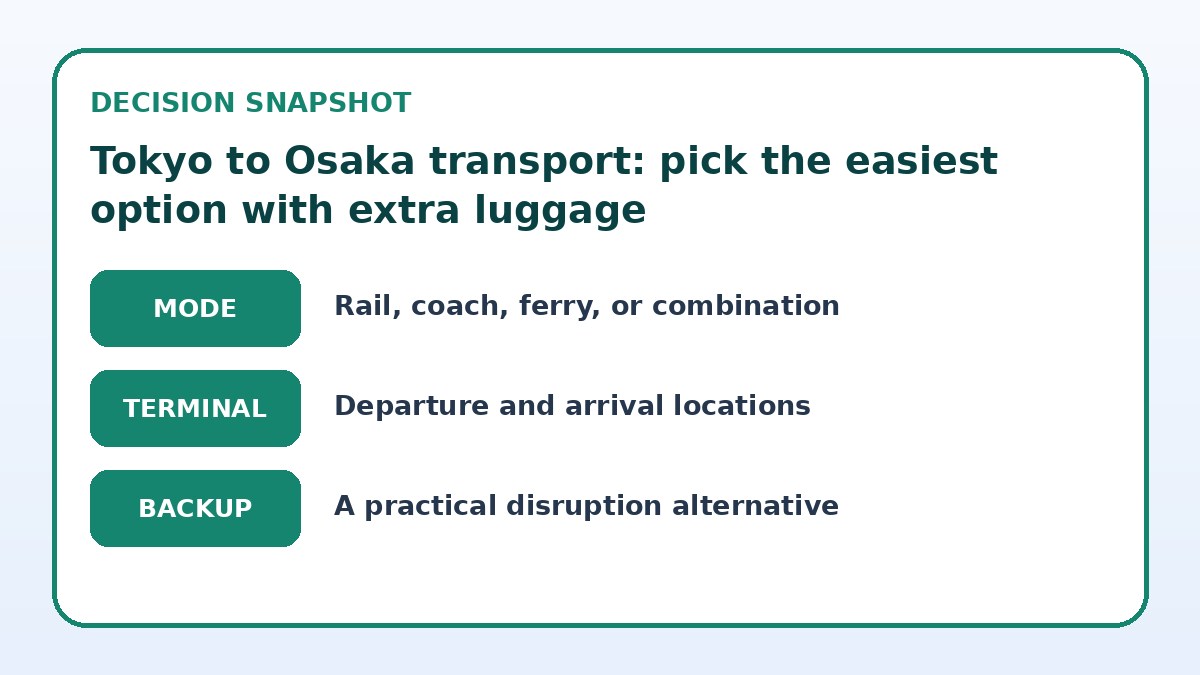
Terminal fit means matching the departure and arrival points to your door-to-door plan. For Tokyo to Osaka travel, think beyond the main stations: which station or coach terminal is closest to your accommodation, and how easy is the last-mile transfer with heavy bags? A slightly longer seat-on-time can be worth it if it drops you at a terminal with a simple taxi rank, luggage trolleys, or direct shuttle connections to hotels. Evaluate walking distances between platforms, the presence of elevators or ramps, and whether you’ll need to move luggage across multiple concourses or streets to reach ground transport.
If you’ll be picked up or dropped off by a private transfer or taxi, confirm the vehicle’s size and whether the terminal has a convenient pick-up spot. Some central stations require navigating stairs or busy pedestrian zones to reach street level; others have integrated bus bays or dedicated porter services. When comparing options, make a quick map of the last mile from each possible arrival point to your lodging, noting estimated taxi time and any stairs or staircases that could complicate moving suitcases.
Choose the end-to-end journey plan
| Journey approach | Best for | Friction to check |
|---|---|---|
| Direct express train to a central Osaka station | Travelers who value predictable, step-free station access and want minimal handling on arrival. | May require navigating busy station concourses with bags even if on-platform storage is adequate. |
| Direct long-distance coach between major terminals | Those prioritizing single-terminal boarding and underfloor luggage bays to avoid carrying bags on and off platforms. | Coach stops may be outside city centers, adding last-mile taxi or shuttle time to reach accommodations. |
| Mixed route (train plus short coach or ferry) | Travelers moving oversized or irregular cargo who want the flexibility to use different vehicle types. | Increases the number of transfers and hands-on luggage moves, requiring more buffer time. |
| Door-to-door luggage delivery combined with a passenger service | Anyone wanting to avoid handling heavy cases entirely and willing to pay separately for convenience. | Adds coordination and cost; you must verify pickup/drop rules and timelines on the delivery provider’s booking page. |
Check live intercity options
Look beyond the ride itself and compare terminals, transfers, luggage, and arrival fit.
Luggage and transfer friction: handling, storage and policies
Different modes handle luggage differently. Trains often allow you to bring larger suitcases onboard and store them in racks or at the end of the carriage, but usable space varies by train type and carriage. Coaches may have underfloor bays where staff load and unload bags—convenient if you don’t want to carry them across platforms, but plan for extra time at stops. Ferries and mixed journeys typically require you to move bags more, especially during transfers between train and bus, or while boarding a vessel. Always check how many pieces are permitted and whether staff will assist with loading.
To reduce friction, pack to allow quick transitions: use wheeled suitcases, pack an easily reachable day bag, and label everything. If you expect to store luggage at a terminal or station network, verify storage sizes and operating hours on the provider’s booking page before you travel. Consider using a baggage delivery service for door-to-door convenience if you prefer to travel light on the actual intercity leg; this adds cost but removes handling at every transfer point.
Timing flexibility: schedules, buffers and peak travel
When you have heavy bags, you need extra buffer time. A slightly less frequent service with low transfer friction can be superior to a fast, frequent option that forces tight platform changes. Look at the whole schedule: arrival time at your final stop matters for hotel check-in windows, late-night taxi availability, and public transit options. If your arrival falls during rush hour, a direct drop-off close to your accommodation may save more time and hassle than shaving minutes on the ride itself.
Also weigh how flexible you must be with departure times. Trains may offer many departures daily, letting you pick off-peak times with easier station access. Coaches sometimes run overnight or at specific hours that reduce traffic but may have limited luggage assistance at smaller stops. Ferries and combined routes generally have fewer daily departures, so missing one can force long waits. Build at least one extra connection window into your plan if you’re changing modes or moving through a busy central terminal.
Compare the practical alternatives
Use the final page to confirm what is actually offered on your dates and save a workable fallback.
Intercity travel checklist
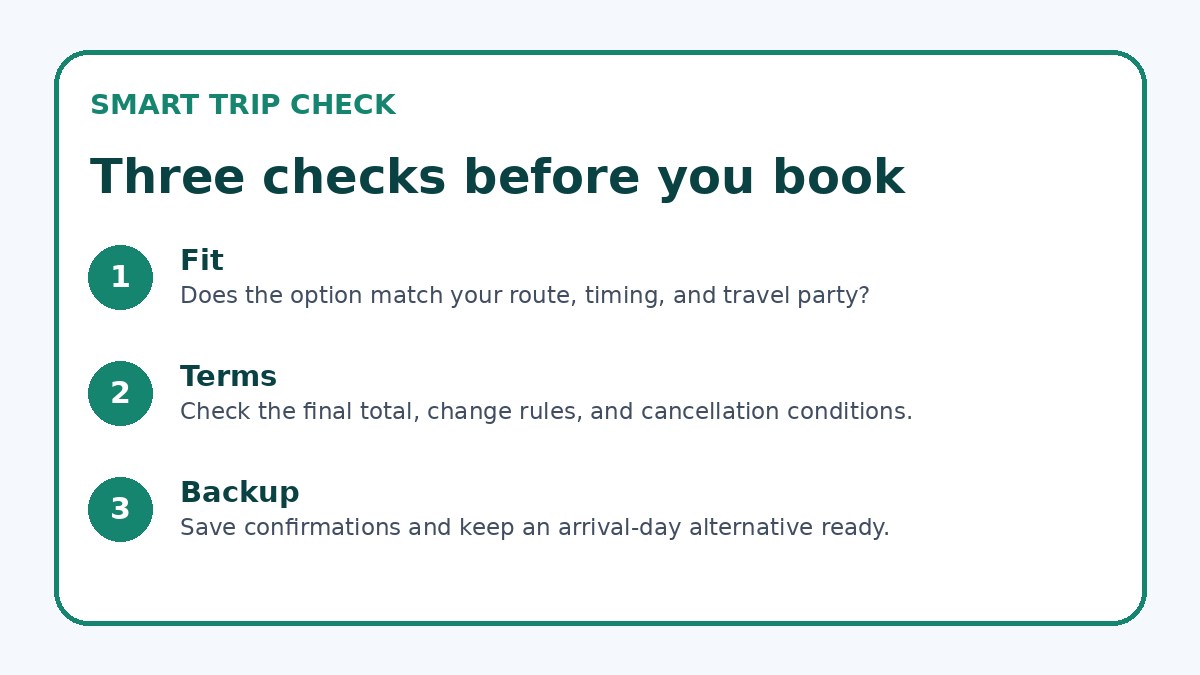
- Map the exact departure and arrival terminal names and the street-level pickup/drop-off points before booking.
- Measure your largest suitcase and confirm acceptable dimensions on the provider’s baggage policy page.
- Plan at least 30–60 minutes extra transfer time for each connection when you have multiple large bags.
- Check for elevators, ramps, and dedicated luggage trolleys at stations or terminals on official station maps or provider pages.
- Decide whether a door-to-door baggage delivery service would simplify your journey and read its terms before booking.
- Save contact details for station information desks and a local large-vehicle taxi operator in case of last-minute changes.
Disruption backup: simple fallbacks that don't multiply transfers
Disruptions happen. Choose a backup plan that keeps the same terminal fit to avoid multiplying transfers under stress. For example, if you’re on a train and the line is disrupted, a standby coach or a later direct train from the same station keeps you at a single terminal. If you rely on a flight or a ferry leg, identify a surface alternative that departs from the same port or air terminal to spare you extra city transfers. Always know the next two viable options from your departure point before you leave.
When booking, note the provider’s official rebooking or refund policy on their booking page so you know whether same-terminal alternatives are supported. Keep contact details for station information desks and a local taxi operator with large vehicles. If a baggage delivery or porter service is part of your plan, understand how they handle delays; some will hold or forward items if your scheduled ride is disrupted, which can be a real relief when you’re dealing with multiple heavy bags.
Rail & Intercity Transport questions travelers ask
Can I bring oversized suitcases on intercity trains between Tokyo and Osaka?
Many intercity trains allow larger suitcases, but carry-on space and storage layouts differ by train type and carriage. Before you book, check the operator’s baggage policy on the booking page for maximum dimensions and whether reservations or special handling are required. If the train has limited onboard storage, consider booking a seat near the carriage end where space is often freer, using a short-term station locker (confirm sizes and hours), or arranging a luggage delivery service that will pick up at your hotel and drop at your Osaka address to avoid onboard constraints.
Is taking a coach easier than a train when I have a lot of luggage?
Coaches typically use underfloor luggage bays loaded by staff, which means you won’t carry bags through crowded stations—this can reduce effort. However, coach terminals may be farther from central neighborhoods or require a taxi at the other end. When comparing, look at total door-to-door time: a direct coach that drops you close to your accommodation can be easier than a faster train that arrives at a station with stairs or long concourses. Verify luggage assistance and terminal locations on the provider’s booking page before you commit.
How should I plan for disruptions when traveling with heavy luggage?
Plan backups that keep you at the same terminal or minimize extra transfers. Identify the next two departures of the same service type from your departure point, and know whether alternative coaches or trains can rebook you without moving across the city. Keep a list of local taxi numbers that operate larger vehicles and confirm whether your luggage delivery or porter service will hold or forward items if your schedule changes. Always check the provider’s rebooking rules on their site so you understand options if a service is delayed or canceled.
Final decision note
For most travelers with extra luggage on the Tokyo to Osaka corridor, the practical winner is the option that minimizes handling and extra transfers—even if it isn’t the fastest single-leg ride. Match terminal locations to your door-to-door plan, verify luggage allowances and station facilities on provider booking pages, and build time buffers for each connection. If avoiding lifts and staircases is essential, favor services with step-free access or use a luggage delivery service to travel light. Keep simple, same-terminal disruption fallbacks and local taxi contacts so you can adapt without turning one hiccup into multiple heavy lifts.
Continue planning
Check current options and final conditions
Use the provider page to confirm live availability, the final total, cancellation terms, and every condition that matters to your trip.
This evergreen planning guide was created with AI-assisted drafting and a structured quality review. It does not display live prices, schedules, availability, visa guidance, or provider rankings. Verify current details before booking. Some links are affiliate links; we may earn a commission at no additional cost to you.