For most couples visiting Ho Chi Minh City, the practical question is whether a rental car actually improves your trip — and if you do rent, what the insurance wording will mean if something goes wrong. Driving can give freedom for day trips north to Cu Chi or coastal days, but urban traffic, parking scarcity, and unfamiliar local rules often change the tradeoffs. This guide gives a clear yes/no decision point up front, then walks through route value, four insurance terms you must understand, pickup and return friction, and a realistic non-driving fallback. Read the plain-language checkpoints before you book; if you want to compare availability, you can check a travel site such as Trip.com, but always verify the final provider terms on the booking page.
Decide whether driving improves your couple’s trip
Start by mapping the concrete places you want to visit and noting how each location is best reached. If most plans are concentrated in Districts 1–3, Thao Dien, or a few riverside neighborhoods, urban traffic, narrow streets, and limited parking will likely make driving slower and more stressful than a combination of Grab cars, taxis, or walking. For couples, the intangible cost of navigating hectic lanes and finding secure parking can reduce relaxation and obscure the privacy benefit a car might otherwise offer.
Conversely, a rental often pays off when your itinerary includes multiple day trips to places where public transport is sparse or timetables limit flexibility — for example, multi-stop beach excursions, countryside visits, or when you want to travel on your own schedule at dawn or late evening. Add the emotional value: if you enjoy scenic drives together or want spontaneous stops without relying on schedules, that flexibility can outweigh the friction. Weigh time saved and peace of mind against the stress of local traffic and parking constraints.
Decide whether driving earns its place
| Mobility strategy | Best for | Cost or friction to check |
|---|---|---|
| Rent a self-drive car | Couples wanting full control over multi-stop day trips and scenic drives. | Higher administrative friction, parking stress, and direct responsibility for excesses and local fines. |
| Private driver or chauffeur hire | Couples who want flexibility without driving stress or insurance responsibility. | Higher daily cost and less privacy than having your own unlocked vehicle. |
| Ride-hailing taxis and occasional private transfers | Urban couples seeking convenience for city sightseeing and occasional out-of-town trips. | Costs can add up for full-day travel and you’ll depend on driver availability and local routing. |
| Public transport and guided day tours | Budget-conscious couples or those preferring low-responsibility travel with planned itineraries. | Less schedule flexibility and reduced privacy compared with private vehicles. |
Check live rental choices only after the route test
Use the exact driver, dates, pickup point, and return plan to compare current conditions.
Key insurance wording couples must understand
Four terms determine most financial risk: excess (also called deductible), third-party liability, theft protection, and territorial or driver restrictions. The excess is the amount you must pay before insurance covers the remainder of a claim — check if the dealership offers an excess-reduction product and how that alters responsibility. Third-party liability shows how much the insurer will pay for damage or injury to others; in Vietnam, confirm this covers local legal processes and whether the sum is adequate for serious claims.
Theft protection wording tells you when the insurer accepts a vehicle-theft claim and whether you face proof requirements, such as police reports within specified hours. Driver restrictions identify who is allowed to drive: some policies limit coverage to named drivers or require an extra fee for additional drivers. Also verify territorial limits — many rental policies exclude coverage outside the country or in some nearby provinces. On the final booking page, verify exact deductible amounts, named-driver rules, and whether roadside assistance is included.
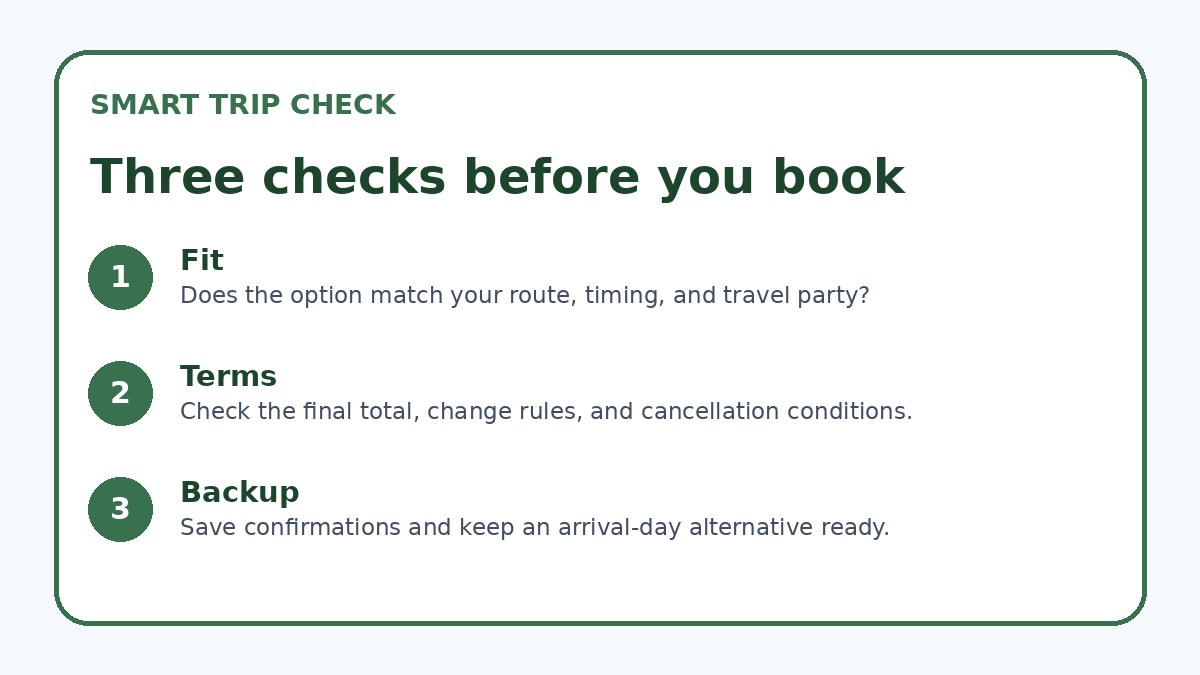
Compare the full rental conditions
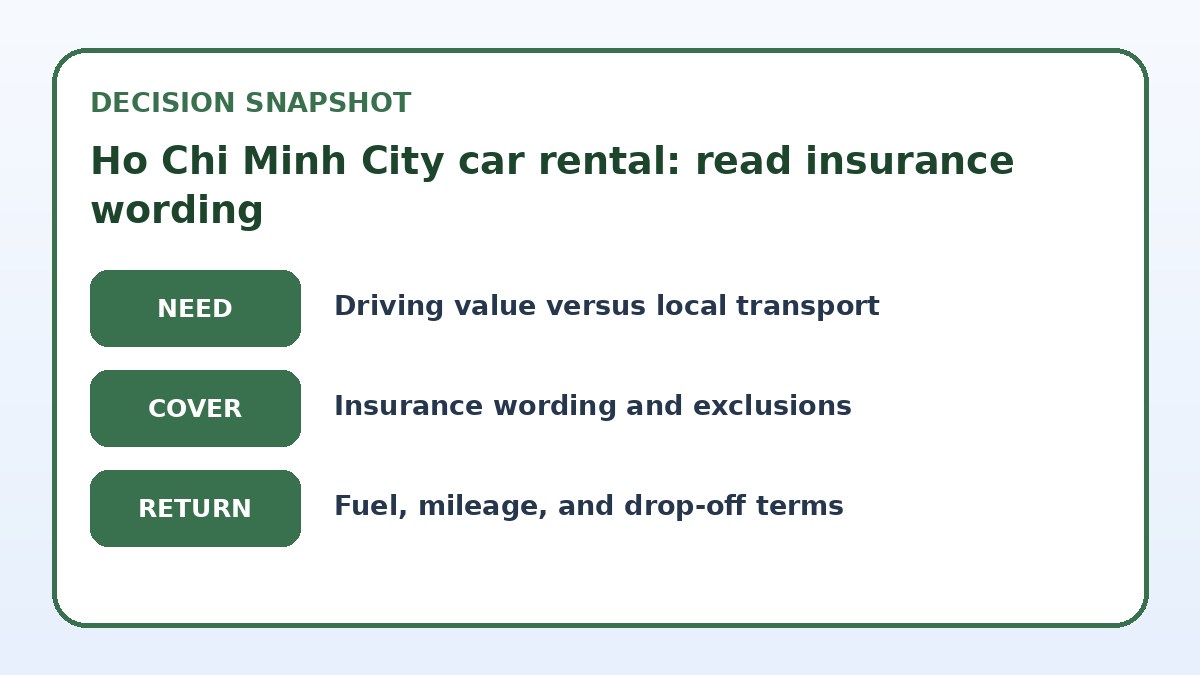
Confirm insurance wording, exclusions, deposit, fuel, mileage, and return terms on the final page.
Pickup and return friction: what to expect and check
Pickup counters in Ho Chi Minh City vary; some are at the airport, many are city-located offices with a short transfer. Expect an identity and document check, a credit card hold for the excess, and vehicle inspection for existing damage. Couples should designate one primary renter on the contract to simplify paperwork, then add the partner as an additional driver if the policy allows. Carefully photograph all sides of the car, interior, and the odometer with timestamps, and keep those photos and the inspection report in your phone to resolve disputes on return.
On return, fuel policy and timing create the most friction. Confirm whether the car must be returned with a full tank or faces refill charges. Note the exact drop-off location and where to leave keys after hours if applicable. Many disputes arise from claims of damage found after the car is returned — insist on a signed final inspection or timestamped photos from the rental agent. If staff are unavailable, take your own high-resolution photos and email them to the rental company immediately with a receipt of drop-off time.
Car rental terms to verify
- Compare the excess/deductible amounts and note how much the rental company will hold on your credit card.
- Confirm who is a covered driver by name and whether adding a second driver incurs fees.
- Read theft protection conditions and verify what proof (police report, timestamp) is required for a claim.
- Check territorial limits and whether coverage is valid for all planned day-trip provinces.
- Document the car’s condition with timestamped photos at pickup and again at return; save inspection forms.
- Verify the fuel policy, after-hours drop procedure, and whether roadside assistance is included in writing.
When driving fails: a practical non-driving fallback
If, after considering routes and insurance wording, driving feels like excess hassle, choose a non-driving plan that preserves flexibility. For couples, a split approach often works well: use taxis or app-based ride services for city exploration and pre-booked private transfers for day trips. This reduces exposure to insurance complexities and the need to negotiate parking. It also preserves spontaneity: you can request a private driver for a full day and negotiate a clear price and route beforehand, avoiding damage liability entirely.
Public buses and guided day tours are additional fallback options for budget-conscious couples or those preferring to avoid driving in unfamiliar traffic. For multi-stop regional travel where private transfers are costly, consider a train or scheduled coach for the main leg and local hires at either end. Whatever you pick, confirm cancellation terms, included stops, and whether liability transfers to the operator. If you do compare rental options, always recheck the insurer’s final terms on the booking page rather than relying on summary language.
Car Rental & Road Trip questions travelers ask
Is the rental company’s collision damage waiver the same as full coverage?
Not necessarily. Collision Damage Waiver (CDW) often reduces your financial responsibility for physical damage but usually does not eliminate it entirely — an excess/deductible typically remains. Some CDWs exclude certain damage types (windshield, tires, undercarriage) or require proof that the vehicle was locked and parked correctly. Read the policy wording to confirm what remains your liability, and check whether an excess-reduction option or third-party liability top-up is available. Always verify these specifics on the rental provider’s final booking page before confirming.
What documentation should couples carry to avoid insurance disputes?
Carry the rental contract, the insurance summary page showing covered amounts and named drivers, your driver’s licenses, passport copies, and the credit card used for the booking. At pickup, get a signed or timestamped inspection report and take high-resolution photos of any pre-existing damage. Keep authorities’ contact details and learn the local procedure for reporting theft or accidents — many policies require a police report within a specific timeframe. Upload copies of all documents to cloud storage so both partners can access them if needed.
If we decide not to drive, how can we still enjoy day trips together?
You can combine app-based rides for city movement with pre-booked private transfers for day trips to beaches or rural attractions; this keeps planning flexible while avoiding rental liability. Another option is to book guided small-group tours that include pickup and drop-off in central districts, which reduces logistics work. For full privacy and control without driving, negotiate a full-day private driver and confirm a written itinerary and price. Always check cancellation and change policies, and verify what services are included on the operator’s confirmation.
Final decision note
For couples in Ho Chi Minh City, the decision to rent depends on your planned routes, tolerance for traffic stress, and appetite for insurance complexity. If your trip is mostly central, ride-hailing and short private transfers usually offer a calmer, lower-risk experience. If you need multi-stop countryside freedom, a self-drive rental can be worthwhile — but only after you confirm excess amounts, named-driver rules, theft requirements, and territorial limits on the provider’s final booking page. Whatever you choose, use the checklist items to reduce surprises at pickup and keep copies of all documents so both partners can manage any incident together.
Continue planning
Check current options and final conditions
Use the provider page to confirm live availability, the final total, cancellation terms, and every condition that matters to your trip.
This evergreen planning guide was created with AI-assisted drafting and a structured quality review. It does not display live prices, schedules, availability, visa guidance, or provider rankings. Verify current details before booking. Some links are affiliate links; we may earn a commission at no additional cost to you.