If you need a simple practical answer: for most first-time visitors, start by comparing KTX-style high-speed rail for fastest city-center to city-center travel, regular intercity buses if you value lower fuss and fewer transfers, and ferry or mixed options only if your itinerary requires coastal stops or luggage flexibility. Decide by prioritizing end-to-end door-to-door time, luggage and transfer friction, and how fixed or flexible your schedule must be. Think beyond the ride: which terminal is nearest your accommodation, how easy is luggage handling, and whether you can realistically recover from a missed connection. This article helps you weigh those everyday tradeoffs for Seoul to Busan transport so you can pick the option that minimizes friction and keeps your trip on track.
Terminal fit: where your trip actually starts and ends
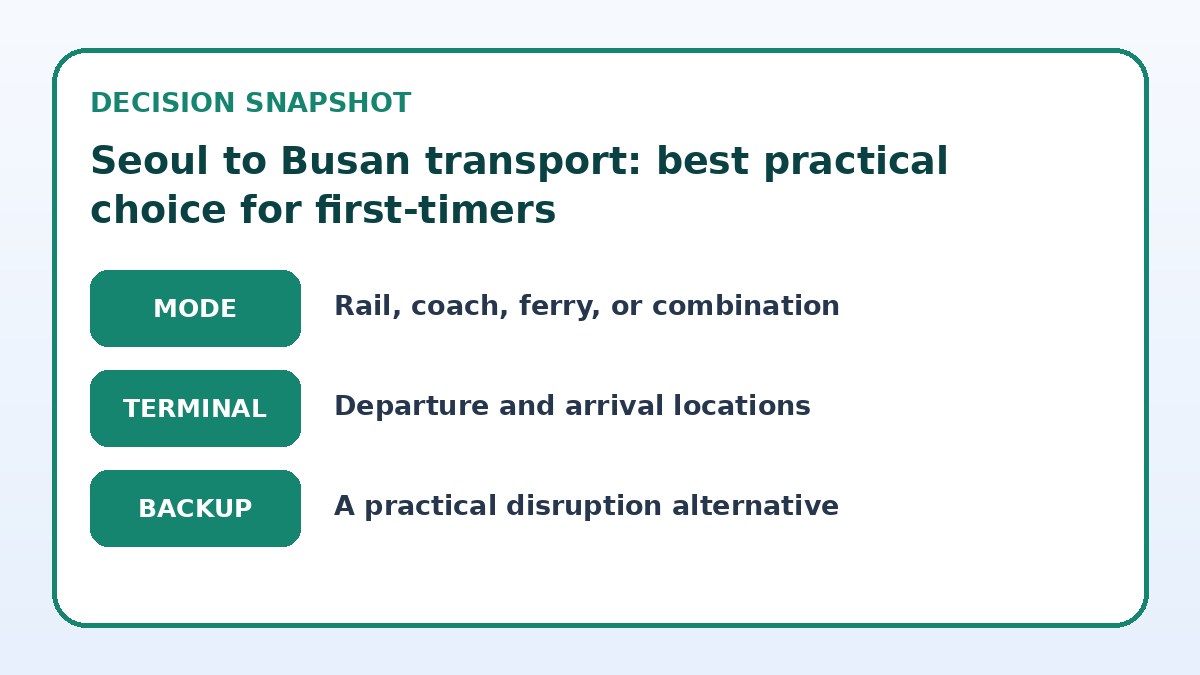
When choosing between rail, coach, ferry, or a mixed plan, map the door-to-door route first. Identify the exact station, terminal, or pier on both ends and then measure how long and costly the transfer will be from your accommodation. A fast train that dumps you at a station far from your Busan hotel can lose its time advantage if you need taxis or multiple subway changes. Conversely, a bus that arrives at a terminal within walking distance of your lodging might be faster overall despite a longer en-route time. Think about luggage handling and whether the terminal has elevators, easy ticket lines, or straightforward taxi ranks; these details affect whether a theoretically quick option stays practical in reality.
For ferries, check where the pier sits relative to your landing point and whether you must cross a city to reach the historic districts or beaches you plan to visit. Ferry terminals sometimes require separate shuttle connections or longer taxi rides, which can be a deciding factor for first-time visitors who prefer low-transfer journeys. If your start or end point is an airport, factor in extra transit time; some travelers combine a flight with a train segment, which adds security and transfer friction. Always sketch the full path: accommodation to terminal, terminal to train/bus/ferry, and final transfer at the other end before booking.
Choose the end-to-end journey plan
| Journey approach | Best for | Friction to check |
|---|---|---|
| High-speed rail (city-center to city-center) | Travelers who prioritize fastest, low-transfer journeys and clear station access. | May require a final-mile taxi or subway if your accommodation isn’t near the arrival station. |
| Intercity coach (direct bus services) | Those staying near major bus terminals or seeking simpler ticketing and fewer advance decisions. | Longer on-road time and potential less luggage convenience compared with trains. |
| Ferry or overnight sea routes | Visitors linking coastal stops or preferring a relaxed overnight leg as part of the experience. | Fewer daily departures, extra transfers to/from piers, and higher sensitivity to weather disruptions. |
| Mixed approach (train + local transfer or coach + taxi) | Complex itineraries that need the speed of rail with local flexibility at either end. | Requires coordinating different providers and allowing extra buffer time for transfers. |
Check live intercity options
Look beyond the ride itself and compare terminals, transfers, luggage, and arrival fit.
Luggage and transfer friction: small details that slow a trip
Practical travel is about less friction. Trains often have dedicated luggage racks, smooth platform access, and predictable boarding routines, which reduces stress for first-timers. Coaches can require lifting bags onto racks or stowing them with the driver, which may be harder if you have oversized suitcases or mobility concerns. Ferries add another layer: you may need to roll luggage across open decks or navigate gangways, and overnight ferries can require transferring between vehicle and passenger decks. Consider whether you will be carrying gear between modes; if you plan several transfers, lighter, wheeled luggage and fewer bulky items make road-tested options more convenient.
Transfer friction also shows up in ticketing and language. Trains and main intercity buses commonly offer online booking in English and clear seat assignments, making arrival straightforward. Ferries and some regional coach services might use less user-friendly booking platforms or require in-person ticketing. If you anticipate late arrivals or unpredictable schedules, favor options with easy rebooking or multiple departures per day. Check what you must verify on the provider’s booking page—seat selection rules, luggage allowances, boarding times, and refund/change policies—because those procedural details determine how smoothly the trip flows from door to door.
Timing flexibility: schedules, frequency, and your tolerance for delays
Decide how flexible your schedule needs to be. High-frequency services reduce the cost of a missed connection; if trains run frequently between the cities, you can be less anxious about exact arrival times. Coaches can be frequent too, but some routes have fewer departures, so a missed bus could mean long waits. Ferries generally have the fewest daily sailings, especially overnight or seasonal services, which makes them less forgiving if your plans are tight. If you must arrive at a specific time—say for an event—opt for the mode with the most frequent reliable departures and straightforward rebooking options.
Consider how the daily rhythm of your itinerary interacts with departure times. Early-morning trains avoid city congestion and can squeeze more sightseeing into arrival day; coaches leaving later in the evening might suit travelers who prefer relaxed departures. For mixed options, coordinate the connecting window—allow generous time for platform changes, ticket checks, and traffic when transfers involve surface streets. Always build a buffer for the unexpected and verify the provider’s latest schedule and change policies on their official page before committing, because real-time frequency and seasonal variations can affect practicality.
Compare the practical alternatives
Use the final page to confirm what is actually offered on your dates and save a workable fallback.
Intercity travel checklist
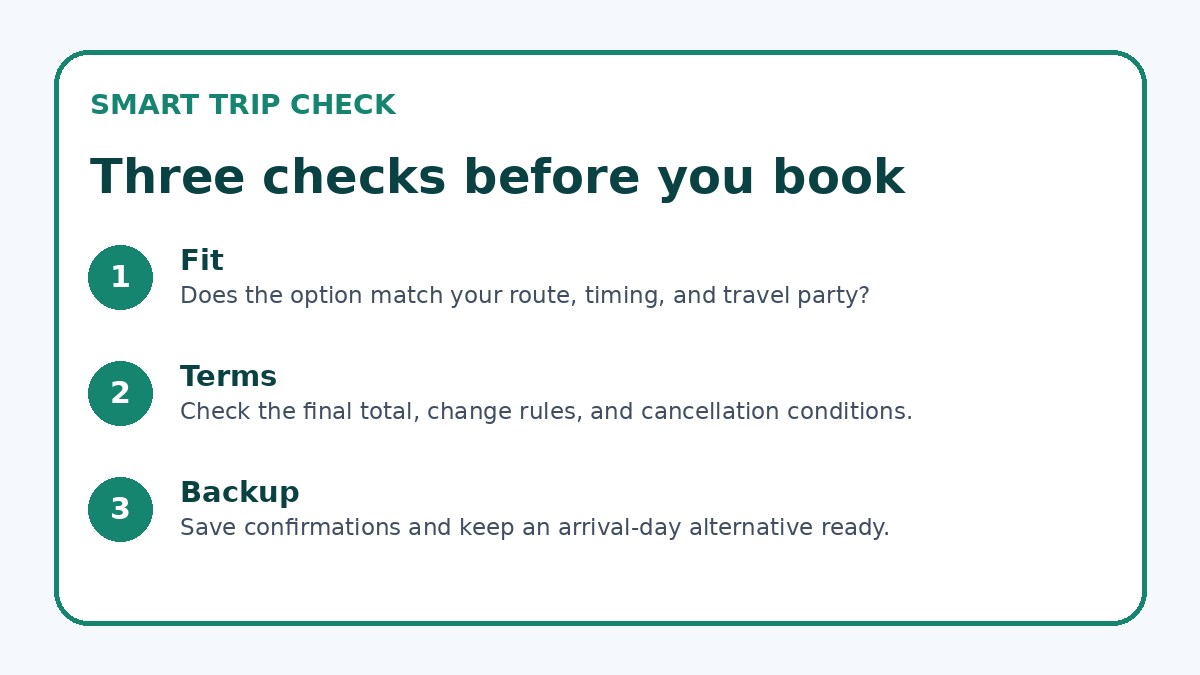
- Map the door-to-door route for each option: accommodation to departure point, on-route transfers, and final transfer to your lodging.
- Confirm luggage allowances and boarding procedures on the provider’s official booking page before purchasing any ticket.
- Check frequency and typical departure windows to ensure a missed connection won’t force a long wait.
- Locate nearby taxi ranks or ride-hailing pickup points at departure and arrival terminals in case you need a quick backup.
- Compare total travel time including transfers and waiting time, not just the advertised in-vehicle duration.
- Save booking confirmations and terminal addresses in both English and the local script for easy communication in taxis or with agents.
Disruption backup: how to prepare if things go wrong
A simple backup plan saves panic. Choose an alternative mode you can reasonably switch to if your primary option is disrupted. For example, if you plan to travel by train, know the nearest major bus terminal and how often coaches depart to Busan. If traveling by bus, identify a nearby rail station with services you can catch instead. For ferry users, research inland alternatives because sailings are most vulnerable to weather and cancellations. Keep local taxi apps or contact numbers handy, and note pickup points for ride services at each terminal so you can pivot quickly without losing time searching for help at arrival.
Keep tickets and booking confirmations accessible and verify change or refund rules before you travel; that reduces delays when you must rebook. If you rely on peak-time departures, consider booking a flexible fare or an earlier service to create personal slack. Store the addresses of your accommodations in both English and the local script so taxi drivers or ticket agents can help you efficiently. Lastly, consider travel insurance that covers missed connections or cancellations, and review what you must confirm on the provider’s final booking page—rebooking windows, allowable changes, and contact methods—so you have actionable steps when disruptions occur.
Rail & Intercity Transport questions travelers ask
Is taking the high-speed train always the most practical choice between Seoul and Busan?
Not always. High-speed rail often reduces travel time between central city stations, but practicality depends on your accommodation locations, luggage needs, and schedule rigidity. If either your origin or destination is far from a major station, time saved on the main leg can be offset by longer transfers. Coaches might be more practical when they drop you closer to your hotel or when you carry oversized items. To decide, map the complete door-to-door journey and compare total transfer time and convenience rather than assuming the fastest in-vehicle option is best.
How should I factor luggage into my Seoul to Busan transport choice?
Assess how many pieces you have, their size, and whether you’re comfortable lifting them between modes. Trains typically offer accessible platforms and luggage areas that reduce handling, while coaches may require loading into undercarriage bays. Ferries can involve moving between decks and longer walks. If you anticipate multiple transfers or limited mobility, prioritize options with easy platform access, elevators, or ground-level boarding. Verify specific luggage rules and any additional handling requirements on the provider’s booking page before you finalize reservations.
What immediate backups should I set up in case my planned service is canceled or delayed?
Identify at least one alternative mode before you travel—another train departure, a major coach line, or a nearby airport with flights—so you can rebook quickly. Note the addresses and pickup points for taxis and have a ride-hailing app or local taxi numbers ready. Keep flexible ticket options or know the provider’s change policies for quick swaps. If you rely on time-sensitive plans after arrival, book an earlier service to create slack. Finally, store emergency contact details for your accommodation and verify rebooking rules on the official booking page so you can act efficiently if disruption occurs.
Final decision note
Choosing the most practical Seoul to Busan transport option is less about which mode is fastest on paper and more about which one reduces friction from your door in Seoul to your door in Busan. Prioritize the terminal fit with your accommodation, the real luggage handling demands, how flexible your schedule needs to be, and a clear disruption backup. For many first-time visitors, a high-speed rail or a well-located coach will offer the best balance of speed and ease; ferry or mixed options pay off when they match specific coastal plans. Before you book, verify schedules, luggage rules, boarding points, and change policies on the service’s official booking page and consider Trip.com as one place to compare current availability and conditions.
Continue planning
Check current options and final conditions
Use the provider page to confirm live availability, the final total, cancellation terms, and every condition that matters to your trip.
This evergreen planning guide was created with AI-assisted drafting and a structured quality review. It does not display live prices, schedules, availability, visa guidance, or provider rankings. Verify current details before booking. Some links are affiliate links; we may earn a commission at no additional cost to you.