Practical answer first: for most couples planning Kuala Lumpur travel deals, prioritize travel dates within the shoulder months between high and low season, then compare a full package to separate bookings using the same dates, traveler names, and inclusion list. The date window often yields better hotel availability and more flexible flight options while still offering pleasant weather and active urban life. Before you buy a bundle, put the package and separate component costs side by side and verify cancellation and change policies for each element—flights, transfers, hotels and any included tours. This article walks through exactly what to compare, how to value flexibility versus convenience for a couple, and which booking approach commonly fits different relationship styles and trip goals. Follow these checks to avoid false savings and to keep your plans adaptable if either partner wants to shift timing or add a day on the fly.

Test package value fairly
| Booking approach | Best for | Tradeoff to check |
|---|---|---|
| All-in travel package (flight + hotel + transfers) | Couples seeking low-planning hassle and predictable logistics. | Usually less flexible; check multi-component cancellation and name-change rules carefully. |
| Flight + hotel booked separately | Couples wanting to mix carriers or hotels and preserve some flexibility. | Requires more time comparing inclusions and rebooking separately if plans change. |
| Hotel plus add-on local tours/transfers | Couples who want control of long-distance travel but convenience locally. | Local add-ons can vary widely in value; verify pickup times and private/group status. |
| Self-planned DIY (book everything individually) | Independent couples who prioritize customization and potential targeted savings. | More work to manage separate cancellation policies and coordinate timings. |
Check current package and separate options
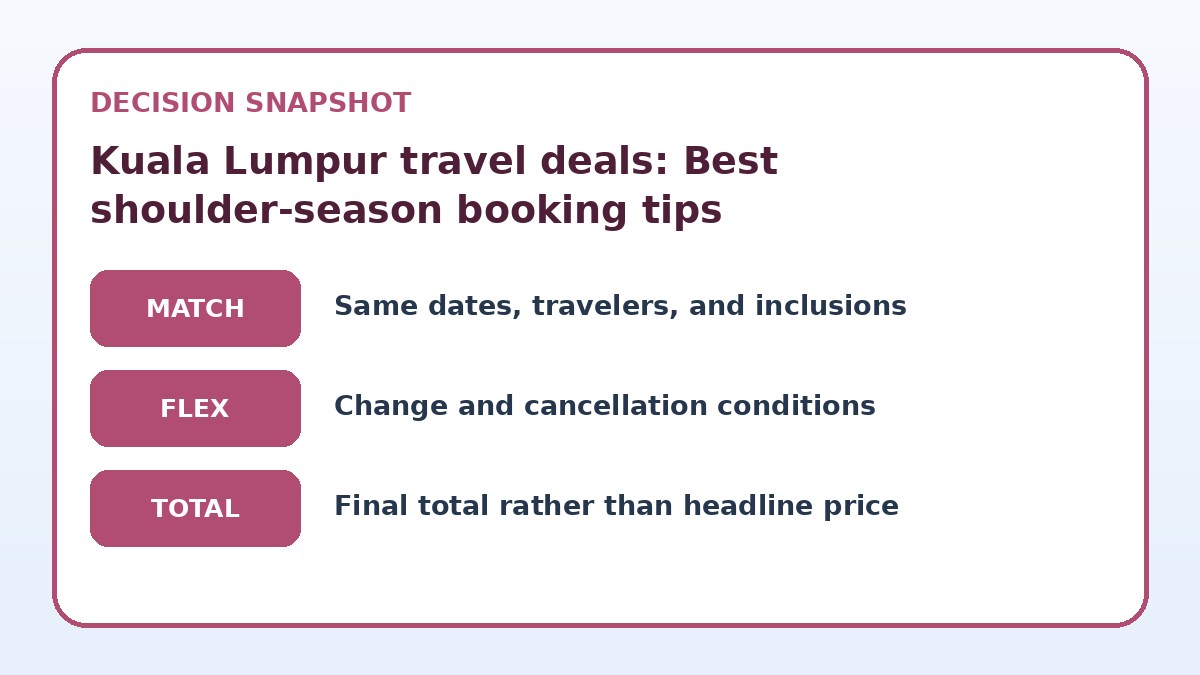
Use identical dates, travelers, room needs, baggage, and flexibility so the comparison stays meaningful.
What to compare before judging a Kuala Lumpur package
Start by lining up an apples-to-apples comparison. Use identical travel dates, the same number of nights, the same hotel room type and the same passenger names when checking bundle versus separate bookings. For flights, compare the same cabin, checked baggage allowance and connection pattern — departures shown as direct might actually include a change if carriers code-share, so read the flight segment list. Include airport transfers, city taxes, and breakfast because a package that says “breakfast included” can mean continental buffet or a simple voucher; treat those as different values when you total costs.
Next, place the total out-the-door cost for both paths side by side and add realistic change/cancellation costs. Don’t forget optional extras couples often want: late checkout, room upgrades, private tours and special-occasion perks like a private dinner. If one booking path locks you into nonrefundable fares while the other offers free changes for a modest upcharge, that flexibility has monetary value for couples who may need to shift plans. Make notes of booking deadlines and the fine print—these are the items most likely to change between now and travel day.
Inclusions that matter for couples traveling off-peak
Couples usually prioritize comfortable room type, included breakfast, and convenient transfers rather than budget dorm-style accommodation. In shoulder seasons, hotels sometimes bundle extras—breakfast, early check-in, or a city credit—to attract bookings; however, those perks vary in real value. For each option, list exactly what’s included: breakfast for two daily, airport pickup for two with meet-and-greet, daily city tax, and any scheduled tours. If a package states “city tour,” verify duration, pick-up times and whether it’s private or group; a private half-day tour has very different value to a couple celebrating an anniversary than a shared three-hour excursion.
Also consider logistic inclusions that reduce friction: transfers timed to your flight arrival, flexible check-in if you arrive late, and the ability to modify room nights without heavy penalties. For couples who plan to explore neighborhoods on foot, proximity to transit or an included transit card is more useful than an included shuttle to a theme park. List inclusions by usefulness to your relationship’s travel style (romance, food-focused, cultural exploration, or low-stress rest). That list helps you monetize the extras and decide whether a bundle’s convenience is worth losing some flexibility.
Look past the headline total
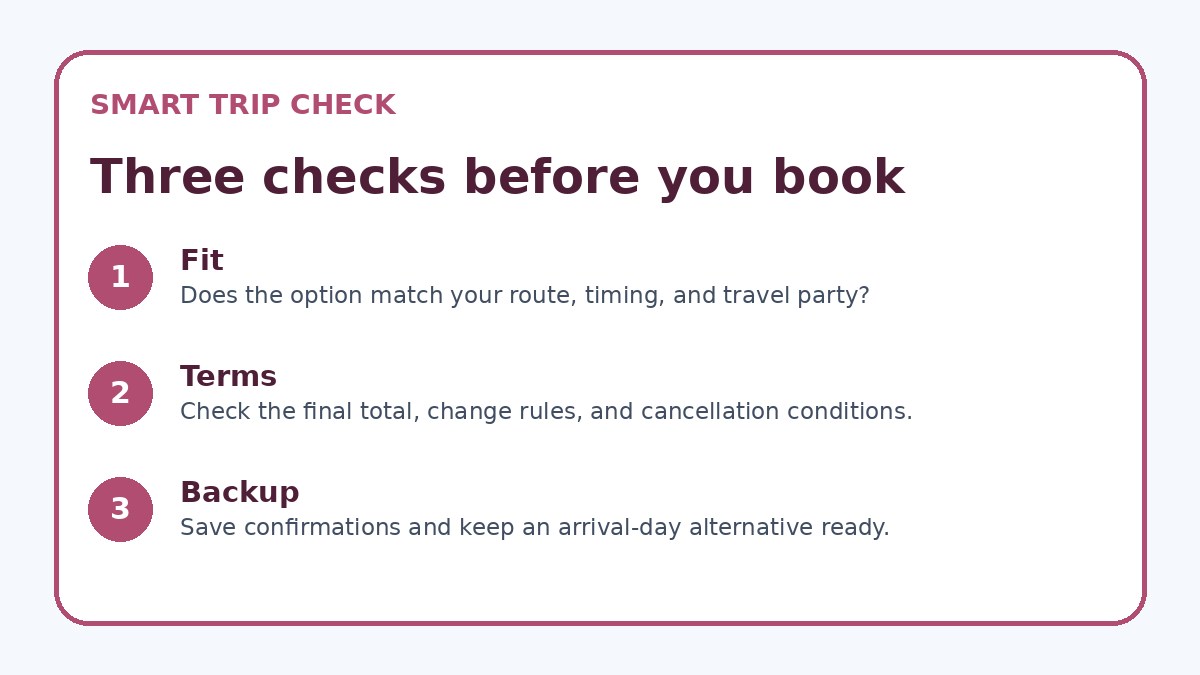
Compare inclusions and change conditions before deciding whether a package is genuinely useful for this trip.
Deal comparison checklist
- Match travel dates and the number of travelers when comparing package and separate booking totals.
- List every inclusion (breakfast, transfers, taxes, resort fees) and assign a personal value to each for your couple.
- Confirm cancellation and change fees on the provider’s final booking page before committing.
- Check flight segment details to confirm direct vs. connecting routing and baggage allowances.
- Ask the supplier about private versus group tours and exact pickup or meeting logistics.
- Save confirmation emails, provider contact numbers, and screenshots of final terms in one shared folder.
Flexibility versus fixed savings: choosing what matters
Decide how much schedule flexibility matters to both partners. Flexible bookings let couples adapt if one person falls ill, if work calls come up, or if you decide to extend your stay to explore neighboring states. If either of you prefers making spontaneous side trips, separate hotel bookings with flexible cancellation rules may beat a package that penalizes individual changes. On the other hand, if you both want a worry-free, all-in plan where logistics are handled for you, a bundled package that includes transfers and selected tours might reduce day-of stress and micro-decisions.
Quantify flexibility by estimating potential change costs: round-trip change fees, cost to cancel and rebook a different hotel night, or the premium for a refundable fare. Couples who split responsibilities—one handles flights, the other handles lodging—might find separate bookings easier to renegotiate. For newlyweds or couples celebrating an occasion and wanting minimal planning, a well-checked package can deliver the relaxation you want, provided you verify the cancellation terms before purchase.
Final terms to verify on the provider page
The headline price rarely tells the full story. Always verify on the provider’s final booking page: total taxes and surcharges, whether the rate is prepaid or pay-at-hotel, explicit cancellation and change fees, and how extras like breakfast are delivered. If a package includes flights, check baggage allowances, seat selection rules, and whether the airline allows name corrections or date changes without cost. For transfers, confirm pick-up timelines and whether there are charges for late arrivals; if a supplier’s page lists specific limitations, capture screenshots or save a confirmation email.
When supplier-specific facts could change, write down exactly what to verify at check-in or arrival: confirmation numbers for transfers, voucher redemption points, and contact info for the local provider. If you use an aggregator or travel platform, use it to compare availability but always confirm final terms on the supplier page before paying. Trip.com is one place to compare current availability, yet you should still read the fine print on the provider’s booking page to avoid surprises.
Travel Deals & Booking Strategy questions travelers ask
When are Kuala Lumpur shoulder seasons and why do they matter for couples?
Shoulder seasons are the transitional months between busy peak periods and quieter low season; they typically offer a balance of lower crowd levels and decent weather. For couples, shoulder periods can mean better hotel room options, more restaurant availability without long waits, and a calmer city vibe for romantic activities. They also often provide increased flexibility on flights and hotel bookings compared with peak season. When planning, compare the same dates across options because seasonal price perceptions can mislead—verify final terms rather than relying on headline seasonal labels.
How should couples value included extras like breakfast or airport transfers?
Treat extras as practical conveniences with dollar and time value. Breakfast saves time and provides a predictable morning routine; airport transfers remove the first-arrival logistics burden. To value them, estimate the local cost of the same service if bought separately and consider intangible benefits—reduced stress, private moments, or time saved. For a couple celebrating a special occasion, private transfers or a romantic room upgrade may be worth a premium. Always confirm whether extras are private or shared and the exact redemption process on the supplier’s page.
If a package looks cheaper, how can we be sure it’s a real saving for two travelers?
Create a side-by-side list that covers every cost and term for both options: base price, taxes, baggage fees, meals, transfers and change/cancellation fees. Use the same traveler names and dates so conditions match. Add the monetary impact of limited flexibility—what you’d pay to change dates or names under each option. If the package removes multiple small friction points you value (transfers, breakfast, easy check-in), that convenience has worth, but don’t accept headline savings without verifying the supplier’s final booking terms and total out-the-door cost.
Final decision note
For couples planning Kuala Lumpur travel deals, the smartest approach is practical: choose shoulder-season dates first, then run an apples-to-apples comparison of a package versus separate bookings using identical dates, inclusions and traveler details. Value the convenience of bundled transfers and tours against the protection of flexible fares and refundable hotel nights. Verify every material term on the supplier’s final booking page—taxes, baggage rules, cancellation fees and how inclusions are fulfilled—before paying. If you want a quick source to check live availability, Trip.com can be a comparison tool, but always confirm the contract terms with the provider. With these checks, you’ll avoid false savings and pick the booking style that fits your relationship’s travel priorities.
Continue planning
Check current options and final conditions
Use the provider page to confirm live availability, the final total, cancellation terms, and every condition that matters to your trip.
This evergreen planning guide was created with AI-assisted drafting and a structured quality review. It does not display live prices, schedules, availability, visa guidance, or provider rankings. Verify current details before booking. Some links are affiliate links; we may earn a commission at no additional cost to you.