Practical answer first: pick the travel mode that minimises transfers and walking with small children, then plan your day around terminal access, luggage ease, and simple disruption backups. For many families, a direct intercity train or coach that arrives near your Melbourne accommodation reduces door-to-door friction; if you choose to drive, prioritise realistic driving stints and pre-book parking. This article walks you through how to compare rail, coach, car, or mixed options for a family travel day between Sydney and Melbourne, focusing on practical tradeoffs—where you’ll spend time before and after the ride, how much hands-on luggage handling is needed, and which contingencies to have ready if plans change. I’ll also list an actionable checklist and clear questions to verify on any provider’s booking page before you commit — including checking final pick-up/drop-off points, luggage policies, and options for family seating.
How to choose between train, coach, car, or mixed routes
Start by ranking the family’s priorities: door-to-door convenience, cost, flexibility, and how your kids handle time confined in a seat. A direct intercity train often reduces handling because stations may be central to both city centres, letting you avoid long taxi rides at either end. Coaches can be competitively convenient if they stop near where you need to go, but they sometimes require longer roadside boarding or terminal transfers. Driving offers full control of stops, luggage placement, and timings, yet adds concentration and parking logistics to your day—important when one adult will be focused on the road.
To compare realistically, estimate total door-to-door time rather than only the advertised in-vehicle duration: include travel to the departure terminal, security or boarding procedures, any transfers, and the time from arrival terminal to your accommodation. For mixed itineraries—say, a short flight plus train—treat each leg as separate bookings and confirm minimum connection times on providers’ final booking pages. When schedules vary, prioritise options with buffer time that matches how your family handles unpredictability, especially if you’re travelling with toddlers, carers, or significant luggage.
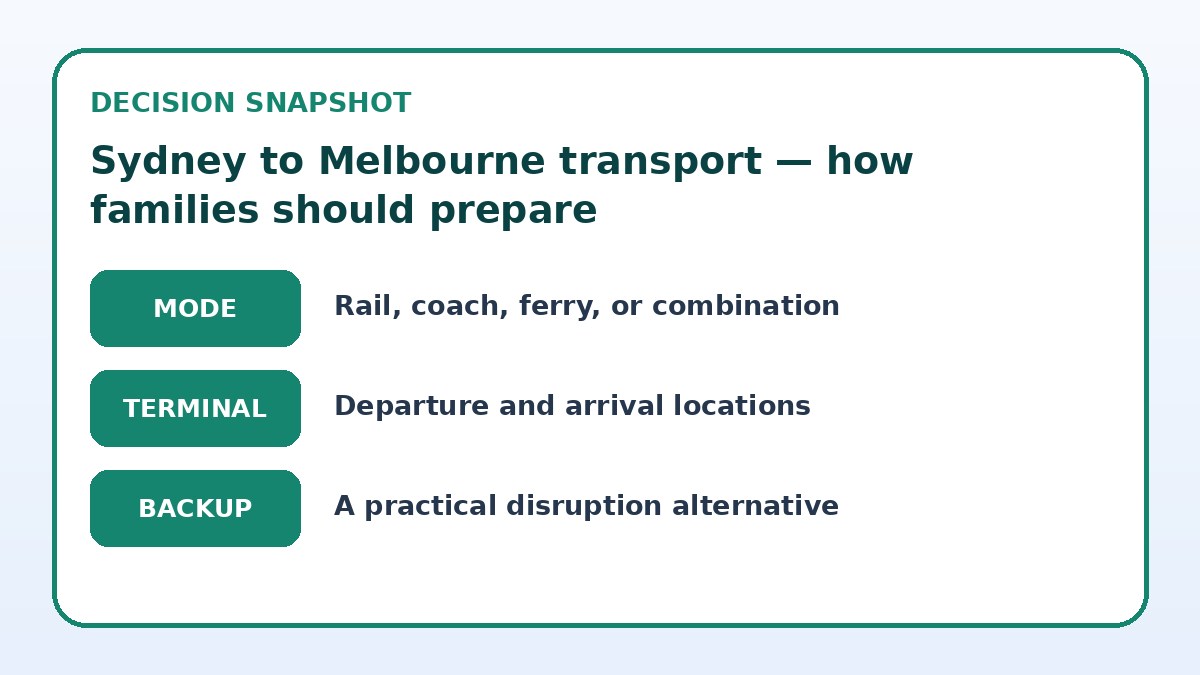
Choose the end-to-end journey plan
| Journey approach | Best for | Friction to check |
|---|---|---|
| Train-focused planning | Families wanting fewer transfers and central arrival points. | May involve strict luggage rules and limited departure times to match your schedule. |
| Road-trip by private car | Families who value flexibility, door-to-door control, and frequent stops. | Adds driving fatigue, parking logistics, and responsibility for long-distance safety. |
| Coach/bus option | Families seeking a generally low-hassle, single-booking option with modest walking at endpoints. | Onboard comfort and legroom vary; some services have limited family seating guarantees. |
| Mixed routes (flight+train or coach+train) | Families needing the fastest total travel time or specific arrival locations. | Increases connection risk and requires careful timing and separate booking checks. |
Check live intercity options
Look beyond the ride itself and compare terminals, transfers, luggage, and arrival fit.
Terminal fit and transfers: practical checks before you book
Not all terminals or stations are equally family-friendly. Before booking, check where the service actually departs and arrives and whether those points require a long walk, shuttle, or a separate ticketed transfer. Look for sheltered waiting areas, toilets with baby-changing facilities, and easy taxi or rideshare pick-up zones—these small conveniences matter more than minute differences in travel time when you have young children. If the provider page doesn’t clearly show the exact stop or entrance, call or use the provider’s chat to confirm the location; Trip.com can be a place to compare live availability but always verify details on the provider’s final page.
Also consider the transfer experience between vehicle and your accommodation. Is there a single short taxi ride, or will you need two changes and lug heavy bags up stairs? If you anticipate stairs, narrow walkways, or long platform ramps at either end, factor in a helper or use luggage with wheels designed for those surfaces. When choosing a service, ask whether family seating is assigned together and whether prams or strollers can be folded and stored easily onboard or require separate handling at the station.
Luggage, transfers and timing flexibility for families
Make luggage decisions around what you need during the travel day and what you can leave behind or send ahead. For families, a practical approach is to carry one easy-access bag with snacks, medication, entertainment, and a change of clothes per child, plus consolidated checked luggage if the provider allows it. Confirm on the booking page whether luggage is included, the maximum size and number allowed, and whether there are fees or a separate process for larger items like prams or car seats. If you need to check items, pick services with straightforward drop-off and collection procedures to avoid last-minute wrangling.
Timing flexibility is your buffer. Aim to arrive at the departure point earlier than for solo travel so you can manage bathroom trips, feeding, and unexpected fussiness. If the family is prone to delays, book tickets that permit changes without excessive penalties so you can move to a later service if required. For long single-leg journeys, plan short stop windows and bring compact activities for different age levels; for multi-leg trips, build at least 45–60 minutes between connections where possible to absorb small delays without stress.
Compare the practical alternatives
Use the final page to confirm what is actually offered on your dates and save a workable fallback.
Intercity travel checklist
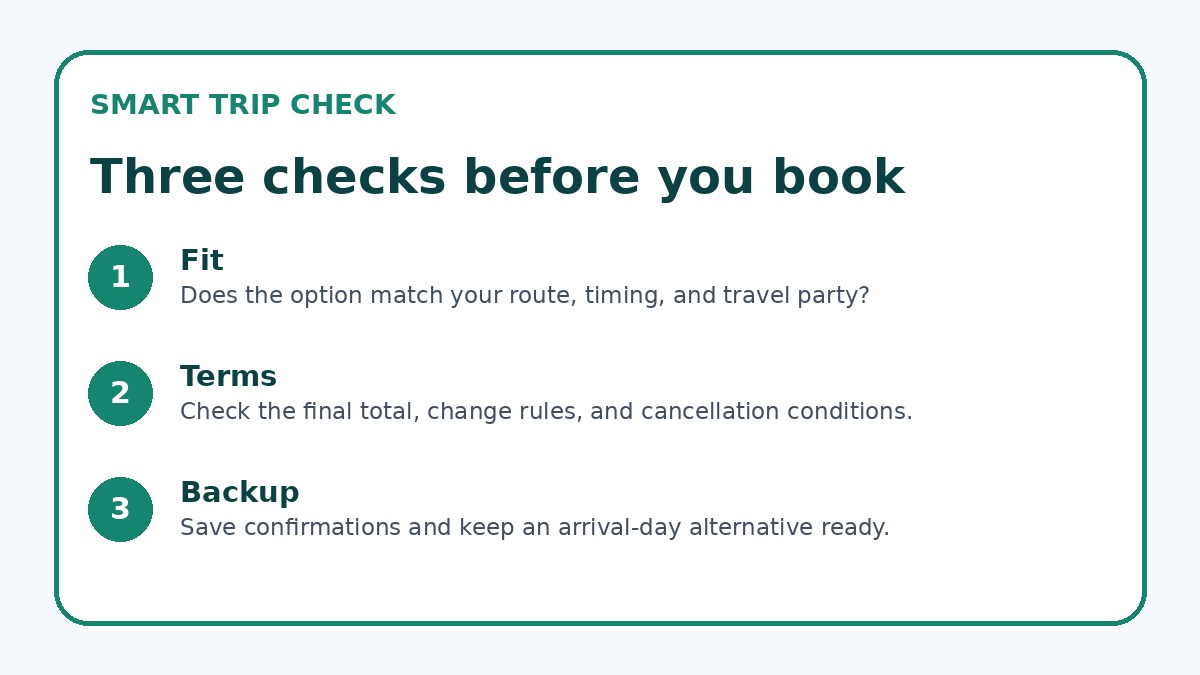
- Confirm exact departure and arrival points on the provider’s final booking page and map the door-to-door route from your accommodation.
- Verify luggage allowances (size, number, pram/car-seat rules) and whether you must pre-book space for large items.
- Book flexible or changeable tickets for at least one leg, or be prepared with an alternate same-day service.
- Reserve family seating together if available, and note the carrier’s boarding policy for families with small children.
- Pack an accessible travel-day bag with snacks, medication, spare clothes, chargers, and comfort items for each child.
- Save contact numbers for the provider, your Melbourne accommodation, and a local taxi/rideshare app for quick pickups.
Disruption backups: what families must prepare for the travel day
Delays or cancellations happen. Create a simple backup plan before you leave: a preferred alternate departure later in the day, a local taxi/rideshare option that can bridge a short gap, and a list of contact numbers for the provider and your accommodation. If you’ve booked separate legs, know the refund or rebooking policy for each one and check whether you can change legs online quickly. For critical connections—like a late check-in at your Melbourne stay—identify a fallback hotel or a late-arrival snack option so you won’t be stranded without basics.
Keep essentials accessible: printed or digital copies of tickets and contact details, the address and phone number of your Melbourne arrival point, and a charged phone power bank. For longer disruptions, plan how to keep children comfortable—spare snacks, familiar blankets or toys, and a small first-aid kit. Finally, if weather or public transport strikes are likely, check official travel alerts the morning of departure and verify the provider’s customer-service channels on their final booking page so you can change plans quickly if needed.
Rail & Intercity Transport questions travelers ask
Should we take the train or drive between Sydney and Melbourne with young children?
It depends on your family’s priorities. Trains often reduce the number of handoffs and can be less tiring because you’re not driving, and stations may be closer to city centres, simplifying the final leg. Driving gives complete control over stops and pace, which helps with feeding and toilet needs, but introduces long hours for the driver and parking at your destination. Compare total door-to-door time, how well your children handle confined travel, and whether you want to avoid the responsibility of long-distance driving when deciding.
How much connection buffer should we build between legs when travelling with kids?
Aim for more buffer than you would alone: at least 45–60 minutes between scheduled arrival and departure of connecting services when possible. That extra time covers bathroom breaks, a late snack, a quick change of clothes, and the inevitable slow-moving stroller or luggage wrangle. If connections are tight, check for alternative later services and confirm change policies before you book so a small delay doesn’t force expensive last-minute decisions.
What luggage and pram rules should families check before booking?
Always verify the provider’s exact luggage policy on the final booking page: permitted size and weight, how many items are included, and whether a pram or car seat is free to bring onboard or must be checked. Some services require strollers to be folded before boarding or stored in a specific compartment, while others may have limits on oversized items. If this information isn’t clear, contact the provider directly so you can plan whether to bring collapsible gear, use a travel stroller, or arrange alternate storage.
Final decision note
Preparing the travel day from Sydney to Melbourne for a family is more than choosing the fastest ride; it’s about reducing transfers, making luggage and terminal access manageable, and building practical backups for delays. Choose the mode that keeps your family together, minimizes heavy handling, and fits your tolerance for driving or connections. Verify exact stop locations, luggage rules, seating arrangements, and change policies on each provider’s booking page before you commit. Pack an accessible travel-day bag, pre-plan pickup or drop-off logistics, and have a simple contingency plan. With those steps you’ll minimise stress and keep the day focused on comfort and ease rather than logistics.
Continue planning
Check current options and final conditions
Use the provider page to confirm live availability, the final total, cancellation terms, and every condition that matters to your trip.
This evergreen planning guide was created with AI-assisted drafting and a structured quality review. It does not display live prices, schedules, availability, visa guidance, or provider rankings. Verify current details before booking. Some links are affiliate links; we may earn a commission at no additional cost to you.