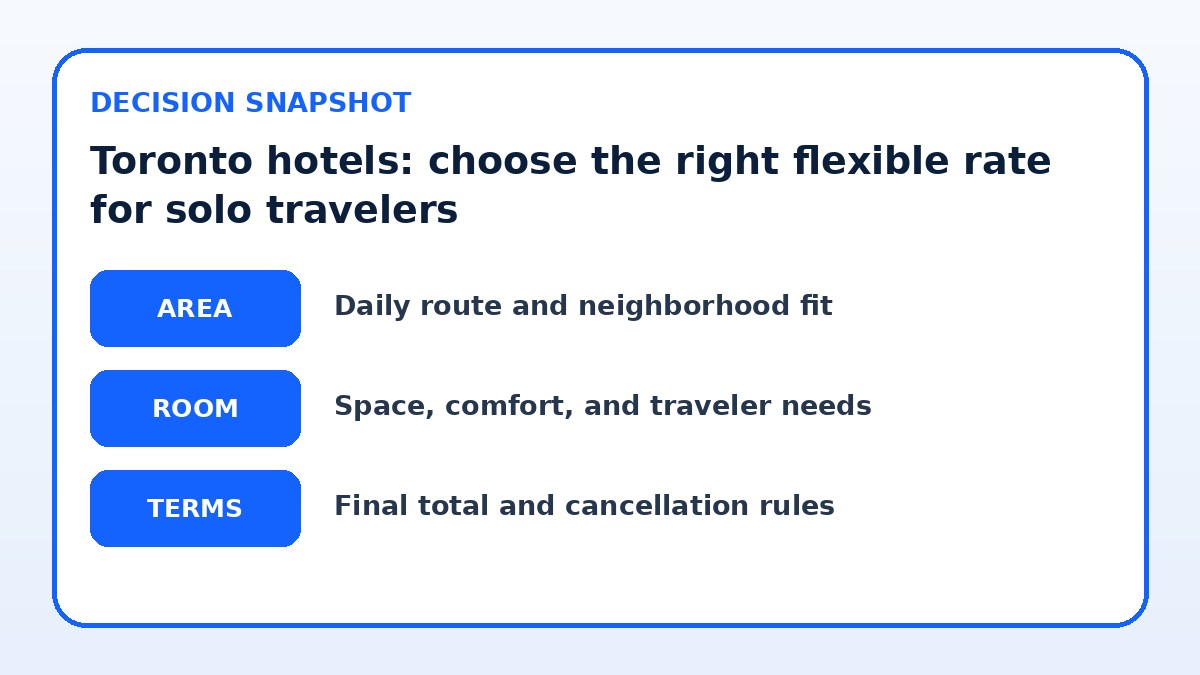
Decide where to stay first, then pick a flexible rate that matches how you travel. For solo travelers in Toronto, the neighborhood you choose determines daily convenience, safety feel, and how often you’ll rely on public transit or rideshares. Once you’ve narrowed the area, compare room types and booking terms—fully refundable, free cancellation inside a window, or partially refundable non‑refundable rates with credits—and match them to your risk tolerance and plans. This article helps you select a stay area quickly, understand how each option affects your daily routes and solo comfort, and weigh the exact booking terms you should verify on the final provider page. By the end you’ll be ready to shortlist one or two neighborhoods and know the specific cancellation and payment details to check before committing.

Check live stays in the areas that fit
Use your dates and party size to compare current rooms after you narrow the neighborhood fit.
Neighborhood fit: where in Toronto you should base yourself
Start by ranking what you’ll do most often—museums and the waterfront, nightlife and dining, business meetings, or the university campus. If you want short daytime walks and easy evening returns, look for neighborhoods with a compact core: the downtown Entertainment District and the nearby Financial District concentrate theaters, restaurants, and transit links. For a quieter solo stay focused on cafés and parks, consider West Queen West or the Annex, where a smaller radius gets you most daily needs without repeated long treks.
Safety perception and late-night options also affect your neighborhood choice. Areas with frequent foot traffic and active transit at night feel more comfortable for solo travelers returning late; check whether your candidate streets are well lit and lined with shops or restaurants. Remember that convenience to a subway or major streetcar line reduces dependence on rideshares—valuable when you want to limit costs or prefer predictable routes home after evening plans.
Choose an area-selection strategy
| Area approach | Best for | Tradeoff to check |
|---|---|---|
| Stay downtown near theaters and transit | Solo travelers prioritizing short walks and easy nighttime returns | Potentially more noise and higher baseline rates; check cancellation windows closely. |
| Base in quieter neighborhoods (Annex, West Queen West) | Those wanting a low-key environment and café culture | Longer transit to central attractions; verify transit connections and weekend service. |
| Near major transit hubs or GO stations | Travelers planning day trips outside Toronto | Less central for evening dining; ensure flexible check-in if arrival times vary. |
| Boutique or business hotels with few public spaces | Solo visitors who value privacy and predictable service | Fewer opportunities to meet others; flexible rates may be limited on some room types. |
Daily-route friction: how neighborhood affects your days
Map your likely daily routes before choosing a hotel: how will you travel from the hotel to attractions, meetings, or dining spots? Downtown neighborhoods minimize multi‑modal transfers—walk to a streetcar or subway, or take a short rideshare—while outlying areas like Liberty Village or Leslieville might require longer transit times or transfers. For a solo traveler, fewer transfers mean less chance of missed connections and a more relaxed schedule, especially if you plan multiple day trips or evening activities.
Consider the practicalities of luggage and rest between activities. If you’ll return midday to rest or change, a centrally located hotel saves time and reduces the friction of backtracking. Conversely, if you plan day trips outside the city, a neighborhood near major transit corridors or GO train stations may be more convenient even if it’s farther from downtown attractions. Balance convenience for your primary planned activities against the occasional longer journey you’re willing to accept.
Now compare like with like
Keep the same dates, guests, room needs, and cancellation preferences while you compare the final choices.
Room and party needs: what solo travelers should prioritize
As a solo traveler, prioritize room layouts and amenities that improve comfort and safety: a single queen or double room with a reliable lock and clear sightlines in the corridor is often better than a larger suite you won’t use. If you value workspace, choose rooms with a dedicated desk and good lighting; if you want late-night privacy, ask about noise insulation or higher floors. Think about pantry or minibar options only if you expect to prepare simple meals—otherwise, a hotel with 24-hour front desk and secure storage matters more than in-room kitchens.
Also consider social preferences: if you hope to meet other travelers, pick a hotel with shared lounges, breakfast areas, or events. If you prefer solitude, a smaller boutique property with fewer public spaces or a business hotel with consistent operations can be more comfortable. These room- and property-level choices interact with booking flexibility—some room types or promotional rates restrict changes, so match the physical product to the booking terms you’re willing to accept.
Hotel booking check before payment
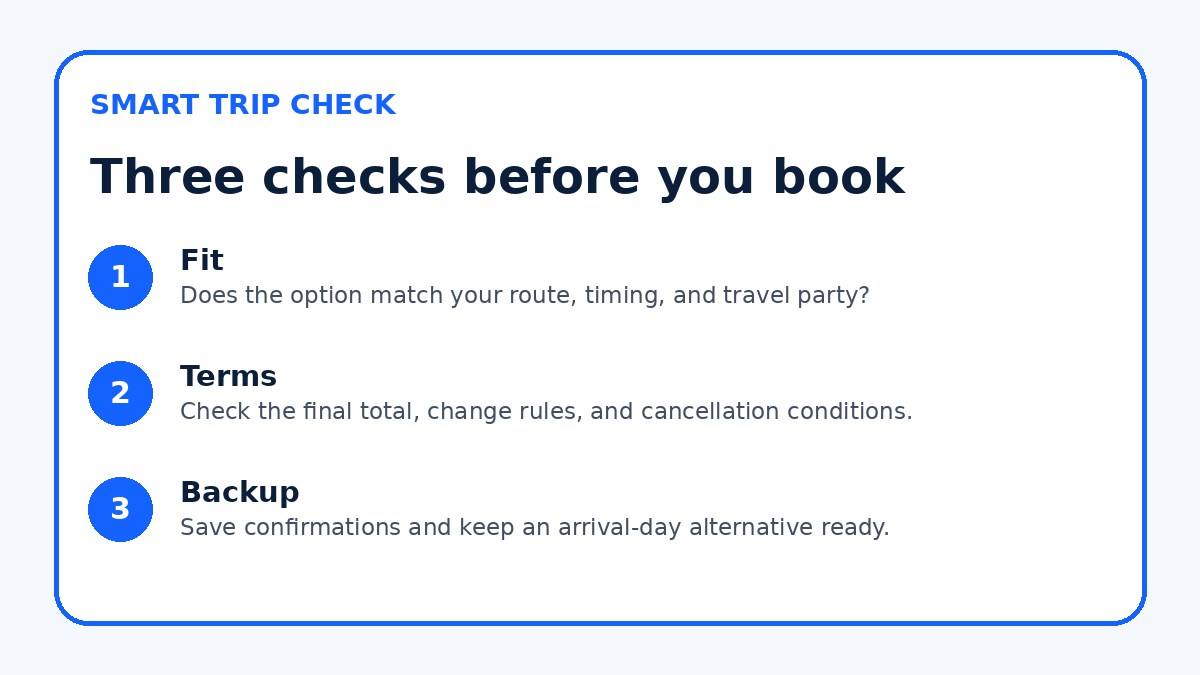
- Choose two neighborhoods that put most of your daily activities within a 20–40 minute transit or walk time.
- Decide which flexible term you need: full refund, free-cancellation window, or credit-based amendment before comparing rates.
- Confirm on the booking page the exact cancellation cutoff (date and local time) and any nonrefundable portions.
- Check whether the rate requires full prepayment, partial deposit, or pay-at-hotel and how refunds are processed.
- Verify whether name changes or date modifications incur fees and whether requests are handled online or require phone support.
- Note room specifics (floor, bed type, workspace, noise policies) and confirm these details on the hotel’s page before selecting a rate.
Final booking terms: which flexible options to compare and what to verify
When comparing booking terms, focus on three core elements: cancellation window and refundability, prepayment and deposit rules, and amendment fees. Fully refundable bookings let you cancel up to a specified time for a full refund; free-cancellation windows allow free changes before a cutoff; partially refundable or credit-based rates may offer some flexibility but often require provider-specific confirmations. For solo travelers with uncertain schedules, a wider free-cancellation window or a modest change fee is usually worth the higher rate.
Always verify the fine print on the provider’s final booking page before you pay. Specifically check the exact cutoff time for free cancellation (date and local time), whether prepayment is required and refundable, which forms of ID or credit card are accepted at check‑in, and whether changes can be made online or require provider contact. If comparing options, Trip.com can be used to view live availability and terms, but confirm the cancellation and payment policies on the individual hotel or booking provider page to avoid surprises.
Hotel Guide questions travelers ask
How do I decide whether to book a fully refundable rate or a cheaper nonrefundable one?
Choose a fully refundable rate if your travel dates or plans are uncertain—illness, schedule shifts, or delayed confirmations make the flexibility worthwhile. If your schedule is fixed and you’re confident about travel, a nonrefundable or partially refundable rate may reduce cost but increases risk. Compare the difference in cost against the potential loss if you cancel; also review whether the cheaper rate allows name or date changes, or offers a credit toward a future stay. Always confirm the provider’s exact refund policy and the timing of any refund processing on the booking page before you pay.
What specific cancellation details should solo travelers verify on the booking page?
Look for the precise latest time you can cancel for a full refund, including the time zone and clock time (for example, 24 hours before local check‑in), and whether partial refunds apply after that window. Check whether prepayment is refundable, whether taxes and fees are returned, and if third-party booking platforms impose separate fees. Also confirm any administrative or processing times for refunds and whether the hotel requires the original booking card at check-in. If the policy language is unclear, contact the hotel or booking provider to get a written clarification before paying.
If I plan late-night arrivals or early departures, how should that affect my booking choice?
Prioritize hotels with 24-hour front desk or clear late-check-in procedures, and choose a flexible cancellation or amendment policy in case travel times change. If a property requires prepayment but allows free amendments up to a cutoff, that can balance cost and flexibility. For early departures, verify whether the hotel issues a partial refund or credits if you leave before your booked checkout—many rates don’t pro‑rate stays. Confirm these rules on the final booking page and, if needed, ask the hotel directly about how they handle late arrivals and early check-outs to avoid unexpected penalties.
Final decision note
For solo travelers in Toronto, the neighborhood should drive your initial decision: pick the area that minimizes daily friction for your plans, then choose a booking term that matches how fixed your schedule is. Downtown locations favor short walks and late-night returns; quieter neighborhoods trade centrality for calmer streets; transit hubs ease day trips. Once you’ve shortlisted an area and few room types, focus on the cancellation window, prepayment requirements, and change fees shown on the provider’s final booking page. Use the checklist to confirm exact times and refund rules before paying. With that preparation you’ll be able to book confidently, knowing the terms support how you actually want to travel.
Continue planning
Check current options and final conditions
Use the provider page to confirm live availability, the final total, cancellation terms, and every condition that matters to your trip.
This evergreen planning guide was created with AI-assisted drafting and a structured quality review. It does not display live prices, schedules, availability, visa guidance, or provider rankings. Verify current details before booking. Some links are affiliate links; we may earn a commission at no additional cost to you.