Practical decisions on baggage and airport time often matter more than picking a particular carrier when you fly from Los Angeles to Las Vegas. For first-time visitors the main tradeoff is simple: shorter ground-to-airtime and fewer connections usually cost a little more or mean tighter fare conditions, while the cheapest ticket choices can add complexity—nonrefundable fares, baggage fees, and longer or riskier connections. Start by confirming your exact travel dates, the number of checked bags and carry-ons, and whether you need flexible change or cancellation terms. With those details in hand you can compare nonstop versus connecting itineraries, estimate how much airport dwell time to budget, and decide if it’s worth paying to check a bag or to buy priority boarding. This guide gives a practical checklist, explains how to weigh risks, and shows which flight-selection strategy suits different priorities so you can book confidently.

See live routes for your exact travel day
Compare direct and connecting choices with the same baggage and traveler details.
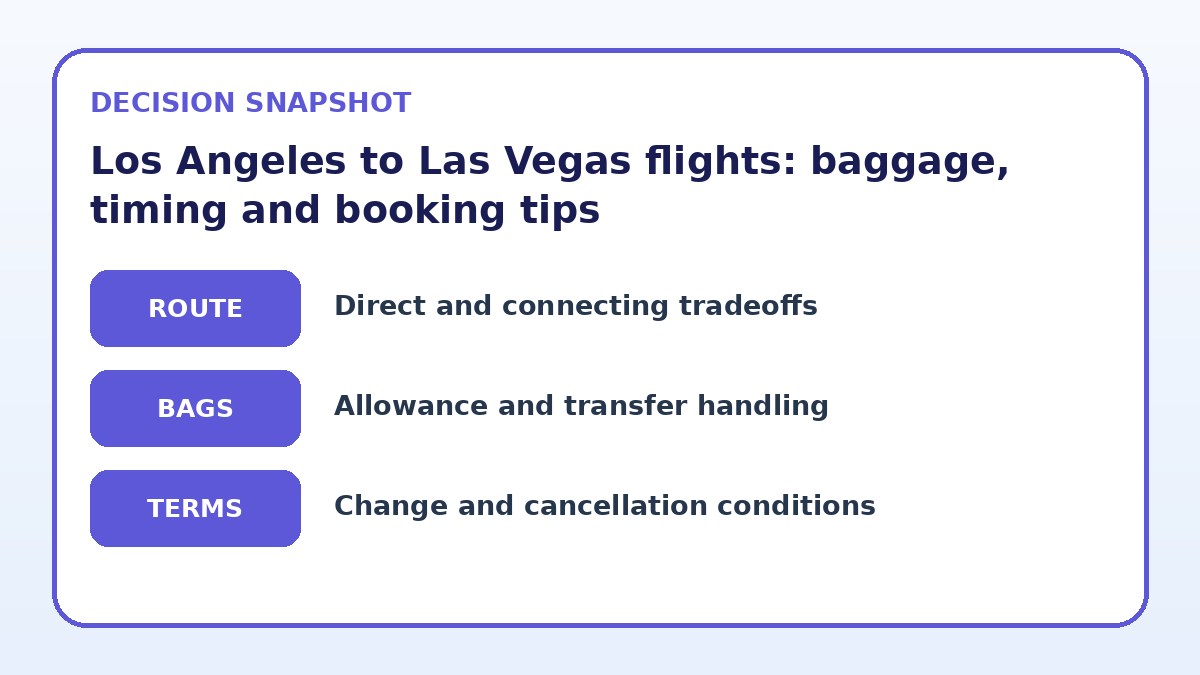
Routing: nonstop versus connecting choices
On the Los Angeles to Las Vegas route you’ll find both nonstop and connecting itineraries in searches. Nonstop options usually minimize total travel time and reduce the number of touchpoints where bags or schedules can go wrong. When comparing routes, check the total elapsed time from your door to destination, not just air time. Also verify whether the itinerary requires changing terminals or re-clearing security at either end—details that affect how much time you should allow.
Connecting itineraries can be cheaper or provide otherwise unavailable schedule windows, but they add complexity. If you choose a connection, look at minimum connection times suggested by the airline and add a buffer if you’re checking bags or unfamiliar with the connecting airport. Remember to confirm whether the ticket is through-checked (one booking, bags transferred) or whether you’ll need to collect and re-check luggage—this has a big impact on how much airport time to plan.
Baggage: size, fees, and the time cost
Before you book, inventory what you’ll actually pack: one carry-on and personal item, or multiple checked pieces? Low-cost or basic fares often exclude checked baggage and may limit carry-on size. Check the airline’s baggage allowance and fee schedule on the carrier’s final booking page; don’t rely solely on search engine summaries. If you must check baggage, expect extra time at bag drop on departure and at baggage claim on arrival—account for those minutes when timing airport transfers or rideshares.
Choose carry-on-only when possible to save time, but be realistic about space for souvenirs or specialty items. If you anticipate checking a bag, consider a fare that bundles baggage or a credit card benefit that waives the fee. For checked items, pack an essentials kit in your carry-on—medications, chargers, a change of clothes—so a delayed or mishandled bag won’t derail your plans. Label bags clearly and note the airline’s baggage tracking options if available.
Compare flight-selection strategies
| Flight strategy | Best for | Risk to check |
|---|---|---|
| Book a nonstop, higher-fare ticket | Travelers who value shortest door-to-door time and low connection risk | Higher upfront fare and possibly stricter change penalties compared with basic fares |
| Choose the cheapest available fare with connections | Budget-minded travelers willing to accept extra time and flexibility limits | Greater risk of missed connections, separate-ticket complexity, and added baggage fees |
| Pay for a bundled fare (bags + seat + flexibility) | Those wanting simplified baggage handling and fewer surprise fees | Higher initial cost but fewer logisitical headaches at check-in and boarding |
| Carry-on-only with a basic fare | Light packers aiming to skip baggage claim and speed up airport processing | Requires strict packing and may limit what you can bring home; stricter size rules apply |
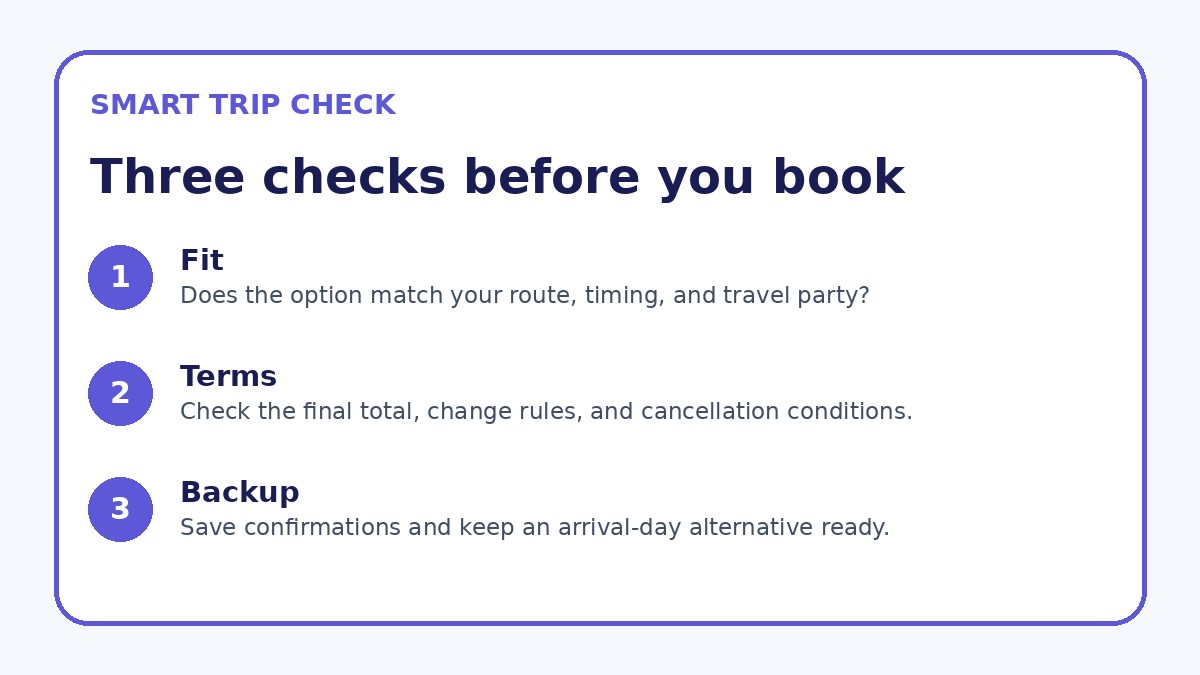
Recheck the complete itinerary
Confirm airports, connection handling, baggage, and change conditions before deciding.
Airport time: check-in, security, and transfers
Plan airport arrival based on whether you have checked bags and the airport’s typical congestion times. If you’re checking luggage, arrive earlier than you would with carry-on-only to allow for bag drop lines. Account for the time it takes to get from curbside to the terminal, through security, and to your departure gate. If you have a midnight or very early morning departure, verify whether the terminal’s check-in counters and security checkpoints are open before you travel.
Consider tools that can reduce wait time: online check-in, mobile boarding passes, priority security lanes, or designated bag-drop kiosks. If you’re traveling between airports in the Los Angeles region or need to transfer terminals after arrival, build in extra buffer time for traffic and shuttle transfers. Always check the airline’s final instructions for check-in deadlines and recommended arrival times for domestic flights so you don’t risk missing required cutoffs.
Flight details to verify
- Confirm exact travel dates, full traveler names and birthdates before starting a live search to avoid name-match issues at booking.
- Decide whether you’ll bring checked bags; tally expected pieces, weight, and any oversized items before comparing fares.
- Search both nonstop and one-stop options and note whether itineraries are single-ticket or separate-ticket before assuming baggage transfer.
- Open the airline’s booking page and verify baggage allowance, change/cancellation terms, and check-in deadlines on the final purchase screen.
- Plan airport arrival time based on whether you need bag drop: allow additional buffer for security, terminal transfers, and rideshare pickup.
- Pack an in-cabin essentials kit with medications, chargers, and a spare outfit in case checked luggage is delayed or misrouted.
Fare conditions and flexibility to manage risk
Fare rules determine change and cancellation costs, seat assignments, and whether your baggage is included—these factors matter as much as the headline fare. Before purchase, read the fare conditions on the carrier’s booking page or ticketing popup: look for how changes are handled, whether a fee applies, and how refunds are processed. If your plans are uncertain or you want to avoid last-minute stress about missed connections, choose a fare that offers more flexible change terms even if the initial price is higher.
Keep an eye on bundled options that include seat selection or baggage for a transparent comparison against ‘a la carte’ low-fare tickets. Also verify whether the itinerary requires separate tickets for each leg; separate tickets increase baggage and missed-connection risk because protections that apply to single-ticket itineraries may not apply. If you rely on a single carrier or an alliance, confirm baggage transfer and missed-connection policies on the carrier’s final booking page before completing payment.
Flight Guide questions travelers ask
How much time should I allow at the airport for a Los Angeles to Las Vegas flight if I’m checking a bag?
Allow extra time when checking bags because you’ll need to use the bag-drop counter before security. Aim to arrive earlier than carry-on-only travelers to accommodate potential lines at check-in or bag drop. Also factor in time to get from curbside to the terminal and to pass through security. Check the airline’s suggested arrival time on the final booking page and add a personal buffer for busy travel periods or unfamiliar terminals.
Can I avoid baggage fees by traveling carry-on-only, and what are the pitfalls?
Traveling carry-on-only can avoid checked baggage fees and speed up arrival and departure, but you must meet the airline’s size and weight rules and be disciplined about packing. Fees and size limits vary by fare class and airline, so verify the carrier’s policy on the booking page. Also consider how souvenirs or special items will fit on return, and whether you need an essentials kit in your carry-on in case a checked bag were necessary.
If I book a connecting ticket, will my baggage be transferred automatically?
Whether baggage is transferred depends on how the tickets are issued. With a single, through-ticket on the same airline or partner carriers, bags are often checked through to the final destination—but you must confirm this when booking. Separate tickets for different legs usually require you to collect and re-check luggage between flights. Always check the booking confirmation and the airline’s baggage transfer policy on the final purchase page to understand your responsibilities and how much transfer time to allow.
Final decision note
For first-time travelers between Los Angeles and Las Vegas, the right choice balances time, cost, and baggage needs. Nonstop flights reduce touchpoints and time, while cheaper connecting fares can save money but increase logistical risk—especially when bags are involved or tickets are separate. Decide early whether you’ll travel carry-on-only, what level of fare flexibility you want, and how much buffer you need at the airport. Prepare exact traveler details before searching and verify baggage rules and fare conditions on the carrier’s final booking page. If you want one more place to compare live availability, Trip.com is an option to cross-check current schedules and total fees, but always confirm policy details on the airline’s own site before you pay.
Continue planning
Check current options and final conditions
Use the provider page to confirm live availability, the final total, cancellation terms, and every condition that matters to your trip.
This evergreen planning guide was created with AI-assisted drafting and a structured quality review. It does not display live prices, schedules, availability, visa guidance, or provider rankings. Verify current details before booking. Some links are affiliate links; we may earn a commission at no additional cost to you.