Pick your Osaka stay area first, then compare flexible booking terms. Business travelers operate on meeting locations, commuting rhythms, and contingency plans; flexible bookings should support those realities, not marketing language. Start by mapping meetings and transit hubs to one or two neighborhoods, then narrow by room setup and cancellation/change rules. Flexible rates can save headaches when schedules shift, but the nuances—cutoff time to cancel, fee structure, free date changes, and corporate invoice options—vary widely and matter more than a generic “flexible” label. Before you book, verify the exact cancellation window, what counts as a change versus a cancellation, whether refunds are instant or require processing, and which ID or corporate documentation the hotel will require at check-in. Use this guide to shortlist an area, match room and party needs, and know exactly which booking terms to check on the provider’s final page before committing.

Check live stays in the areas that fit
Use your dates and party size to compare current rooms after you narrow the neighborhood fit.
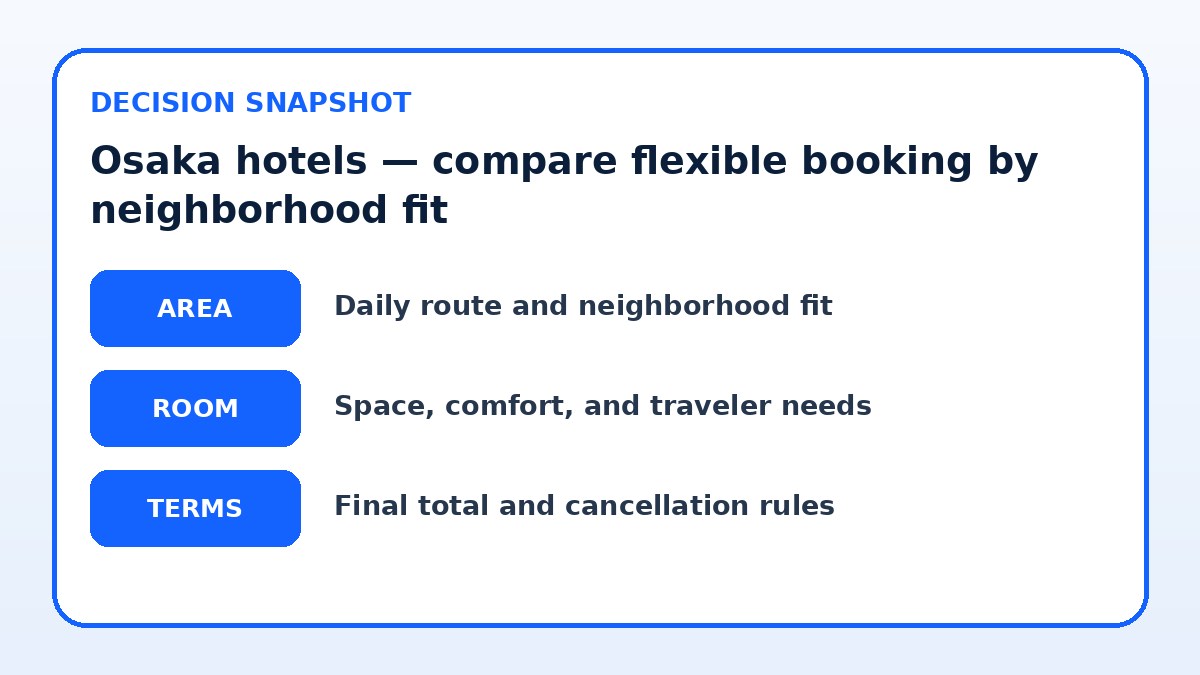
Neighborhood fit: pick where your day begins
Start where your meetings, co-working space, or client sites are located. In Osaka, neighborhoods like Umeda, Namba, and Honmachi each cater to different business rhythms—big convention centers and major corporate offices cluster in certain areas, while others are better for fast access to tech offices or manufacturing sites. Think in terms of the morning routine: where will you be leaving from at 8 a.m.? How long can you tolerate a commute when a meeting runs late? Shorter travel times reduce the risk of missed connections and let you reserve flexible check-out or late arrival options only as a backup.
Also consider evening logistics: business dinners and client entertainment often determine where you actually want to be after work. A hotel near major train lines minimizes friction if you expect to split evenings between networking and catching up on work. When you shortlist neighborhoods, mark the closest stations, the availability of taxis late at night, and whether the area tends to be busy or quiet in the evenings. These practical factors influence whether you need a more flexible booking (to change nights) or a stricter rate with extra amenities to replace travel time.
Choose an area-selection strategy
| Area approach | Best for | Tradeoff to check |
|---|---|---|
| Stay near major stations (Umeda/Namba) | Minimizing transit time and easy access to multiple lines | Higher foot traffic and potentially less quiet for after-hours work |
| Base in business districts (Honmachi/Kitahama) | Close to corporate offices and daytime meetings | Fewer evening dining options and longer transit to nightlife or entertainment |
| Choose near the convention center/large venues | When events largely determine your itinerary | Less flexibility for meetings across the city and variable night transport |
| Select a quieter neighborhood for focused work | Undisturbed evenings and reliable in-room workspaces | Longer commutes to clients or central hubs when schedules shift |
Daily-route friction: how flexibility reduces lost hours
Map a typical day from hotel to meeting and back, then identify friction points. If your itinerary requires multiple cross-town trips, you’ll value hotels that offer flexible daytime use—either a daytime-room option or a straightforward policy for same-day changes. If you depend on connecting trains or airports, prioritize hotels that clearly state late check-in and luggage hold policies. These operational details determine if a flexible booking truly saves time or just shifts hidden costs like late check-in fees or paid luggage storage.
When comparing hotels, ask how they handle last-minute schedule shifts: can you move a booking to another date with no penalty, and how are partial-night cancellations handled? Also confirm the process and timeline for refunds or credits if you have to cancel. A flexible policy that issues credits rather than refunds may be fine for planned business travel but less useful if your company requires reimbursable expenses. Always verify these provider-specific terms on the hotel’s booking page before finalizing, because wording and processing times differ.
Now compare like with like
Keep the same dates, guests, room needs, and cancellation preferences while you compare the final choices.
Room and party needs: match configuration to your work
Decide who will share the room and what work you need to accomplish there. Single-occupant travelers often prioritize quiet workspaces and stable Wi-Fi, while guests bringing an assistant or colleague may need connecting rooms, larger desks, or rollaway beds. If you require meetings in-room, confirm availability of a seating area, a table suitable for laptops, and whether additional setup (projector, conference phone) can be arranged. These requests affect whether a flexible rate makes sense; some hotels permit free room-type upgrades or swaps, while others treat them as a separate fee.
Think about sleep and recovery as business assets. If you sometimes fly red-eye or have unpredictable evening plans, a flexible rate that allows late check-out or guaranteed late arrival without penalty will reduce stress. When comparing rooms, check whether the hotel’s flexible offers include guaranteed late check-out or priority re-rooming if your original room isn’t ready. Always find the exact verbiage on the hotel’s final booking page—terms like “subject to availability” are common and materially change how useful a flexible rate will be for your needs.
Hotel booking check before payment
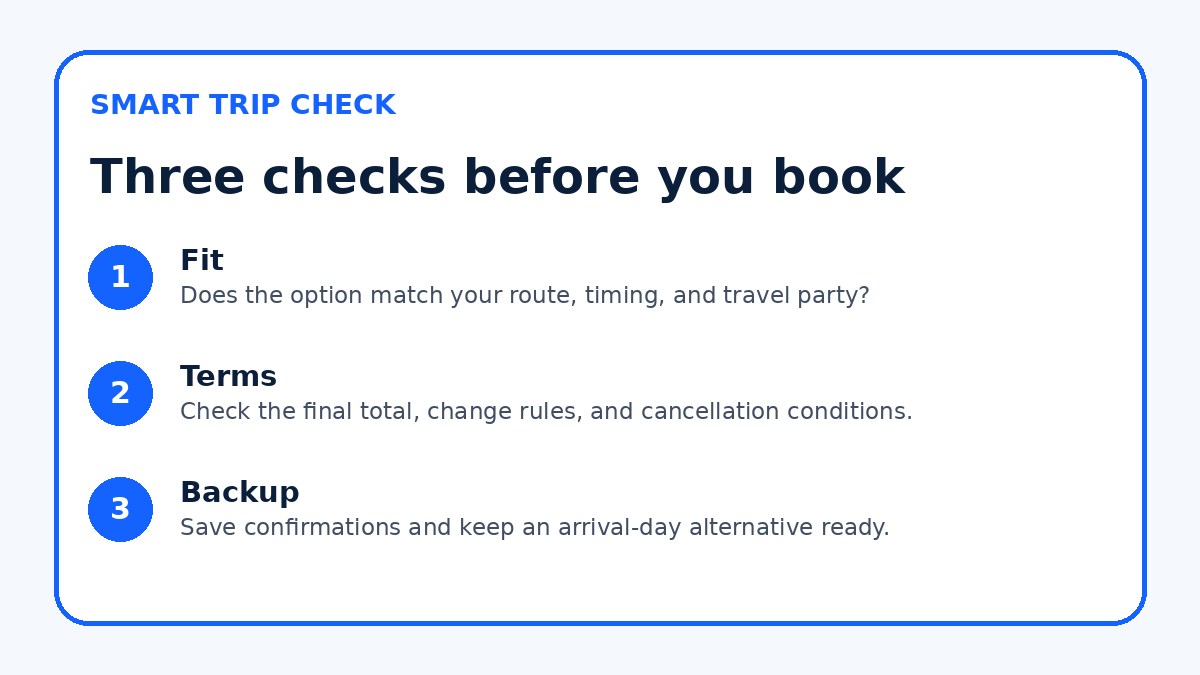
- Map morning meeting locations and choose one or two neighborhoods within 20–40 minutes commute by public transit or taxi.
- On the hotel page, verify the cancellation cutoff time, exact penalty amounts, and whether refunds go back to the original payment method.
- Confirm change policies: how many days or hours before arrival you can change dates without fees and whether same-day changes are allowed.
- Check whether the flexible rate includes late check-out, guaranteed late arrival, or free luggage hold and the exact wording used.
- Ask the hotel or booking provider about invoicing and corporate documentation requirements for expense reimbursement.
- If booking via a third party, confirm on the hotel’s final confirmation page whether the hotel treats third-party bookings differently for refunds or changes.
Final booking terms: what to verify before you commit
Before you hit confirm, compare four concrete contract points: cancellation cutoff and penalties, change fees and how changes are applied, refund method and processing time, and corporate or invoicing options. Ask whether the flexible rate allows same-day changes, whether penalties are a flat fee or a percentage of the stay, and whether refunds will go back to the original payment method or be issued as hotel credit. These are the details that determine whether a flexible booking actually protects you or simply shifts cost onto complicated reimbursement steps.
Also check third-party booking rules and corporate rate conditions. Some hotels treat third-party bookings differently for refunds and invoicing; others will honor corporate terms only if you book through an approved channel. If using an agency or a corporation’s travel tool, verify on the hotel’s final page the required documentation at check-in and any conditions for claiming business expenses. Trip.com can be used as one place to compare live availability and terms, but always confirm the provider’s exact policy language on the booking confirmation page or the hotel’s own policy statement.
Hotel Guide questions travelers ask
How do I decide which Osaka neighborhood will save me the most time?
Start with where your first appointment begins each morning and where you’ll likely return at day’s end. Plot those addresses against major train lines and rapid transit connections. If most meetings sit on one line or within one district, prioritize proximity to stations serving that line. Factor in evening plans and taxi availability: a hotel near a major station reduces the risk of delays for early meetings and shortens travel when plans run late. Shortlist two neighborhoods within your acceptable commute and then compare flexible booking terms among hotels in those areas.
What specific booking terms matter most for business travelers?
The most important terms are the cancellation cutoff (how long before arrival you can cancel without fee), the method and timeline for refunds or credits, change fees for moving nights, and late arrival/check-out policies. Also check whether the rate supports corporate invoicing or requires a specific billing process. For multi-person bookings, clarify policies for adding or removing a guest and any fees for rollaway beds or connecting rooms. Verify all of this on the hotel’s booking page because phrasing like “flexible” or “free cancellation” can hide restrictive time windows or credit-only refunds.
Is it better to book a refundable rate or a non-refundable flexible option with extras?
It depends on your priorities: refundable rates offer cash back but can be pricier, while non-refundable flexible bundles may include extras like guaranteed late check-out or breakfast that reduce other friction points. If itinerary uncertainty is high and expense reimbursement requires refunds to the original card, refundable rates are usually safer. If you value operational conveniences—luggage storage, guaranteed workspace, or late arrival protection—and can accept credits in some cases, a bundled option could be more practical. Always read the final booking terms to see how refunds versus credits and change processes are handled.
Final decision note
For business travel in Osaka, decide your neighborhood first, then use flexible booking details to protect the daily schedule. Short commutes to meetings reduce stress and may make stricter rates acceptable; if your calendar is fluid, prioritize transparent cancellation windows, same-day change allowances, and refund methods that align with your company’s expense rules. Match the room configuration and in-room work features to the length and tone of your trip so flexibility covers real needs—late check-out, luggage hold, or connecting rooms—not hypothetical perks. Before paying, confirm the exact cancellation and change language on the hotel’s final booking page and verify corporate invoicing rules if you need them. Trip.com can be used to check availability, but always validate terms on the hotel or provider confirmation to ensure the flexible booking you think you bought is the one you actually receive.
Continue planning
Check current options and final conditions
Use the provider page to confirm live availability, the final total, cancellation terms, and every condition that matters to your trip.
This evergreen planning guide was created with AI-assisted drafting and a structured quality review. It does not display live prices, schedules, availability, visa guidance, or provider rankings. Verify current details before booking. Some links are affiliate links; we may earn a commission at no additional cost to you.