For busy business travelers, the core tradeoff on Seoul to Jeju flights is simple: save time and complexity by leaving from the closest, easiest airport, or chase a lower fare or better schedule at a different Seoul airport. Practically speaking, choose the airport that minimizes total trip time (commute plus waiting) and offers the schedule reliability and fare conditions your meeting window requires. If you need a same-day return, depart from the airport with the simplest connections to your office or hotel. If the itinerary tolerates early starts or later returns, consider other airports only after checking how much extra door-to-door time, baggage handling steps, and change fees they introduce. Before searching, have exact travel dates, meeting times, luggage needs, and traveler names ready to compare live options and fare rules on airline or booking pages (Trip.com can be used as a place to compare availability).

See live routes for your exact travel day
Compare direct and connecting choices with the same baggage and traveler details.
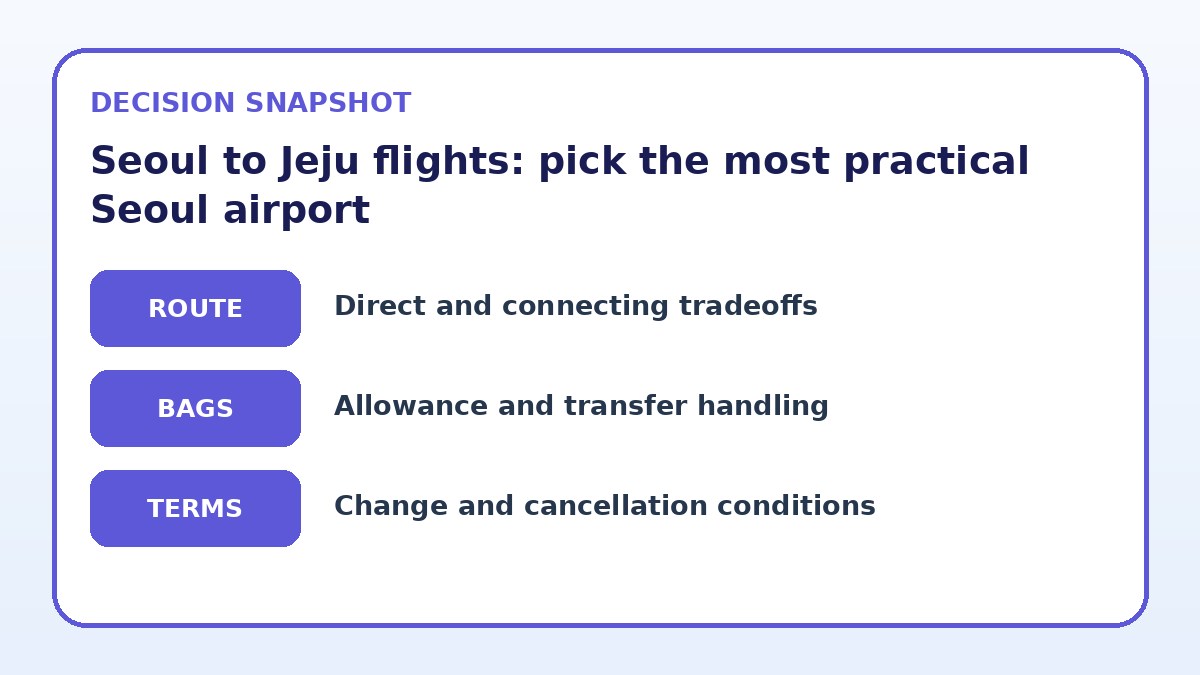
Routing: where a few extra minutes matter
When deciding between Seoul airports for travel to Jeju, think in terms of total trip minutes rather than just flight time. Business travelers should calculate commute time from office or hotel to the airport, the recommended arrival window for domestic flights, and the ground time at Jeju on arrival. An airport that shaves 30–60 minutes each way can be worth a higher fare if it preserves meeting time or reduces the risk of needing an overnight stay. For same-day round trips, those margins are the difference between catching a return flight comfortably and missing it.
Also consider how predictable commuting time is during your travel window. A taxi during off-peak hours may be reliable, but morning or evening congestion can make even short distances risky. If your schedule includes tight transfers to trains, subways, or ferries at either end, prefer the airport with straightforward, frequent ground connections. When comparing options, write down door-to-door timings for each airport alternative and use them to decide whether a lower ticket cost is worth the added travel complexity.
Baggage and connection risk: protect your time and reputation
For business trips, checked baggage delays are not merely an inconvenience; they can cost you credibility if you arrive without important materials or a suit. Favor flights and airports with the simplest baggage routing — direct flights without interline transfers and departures from an airport where your carrier handles your bag end-to-end. If choosing a multi-leg itinerary or mixed-carrier connection, verify at booking whether checked bags are automatically transferred or need to be claimed and rechecked. That single detail changes connection margins significantly.
Carry-on only is often the safest choice for same-day business travel. If luggage is essential, build padding into your schedule: choose flights with longer minimum connection times and avoid back-to-back meetings immediately after arrival. At booking, read the carrier’s baggage policy and check the booking page for any notes about interline baggage handling. These are provider-specific facts and can change; confirm them on the airline or booking site before finalizing the purchase.
Compare flight-selection strategies
| Flight strategy | Best for | Risk to check |
|---|---|---|
| Choose the nearest airport to your base | Tight meeting schedules, same-day returns, minimal ground time | You may pay more for shorter commute and simpler logistics |
| Pick the airport with the cheapest available fare | Flexible schedules where small savings matter | Longer commutes and stricter fare conditions can eat savings |
| Select flights with the most flexible fare rules | Uncertain itineraries and frequent last-minute changes | Higher upfront cost but lower risk of expensive changes later |
| Prioritize flights with minimal baggage handling steps | Travelers carrying important luggage or fragile business items | May limit carrier choice and require earlier booking |
Recheck the complete itinerary
Confirm airports, connection handling, baggage, and change conditions before deciding.
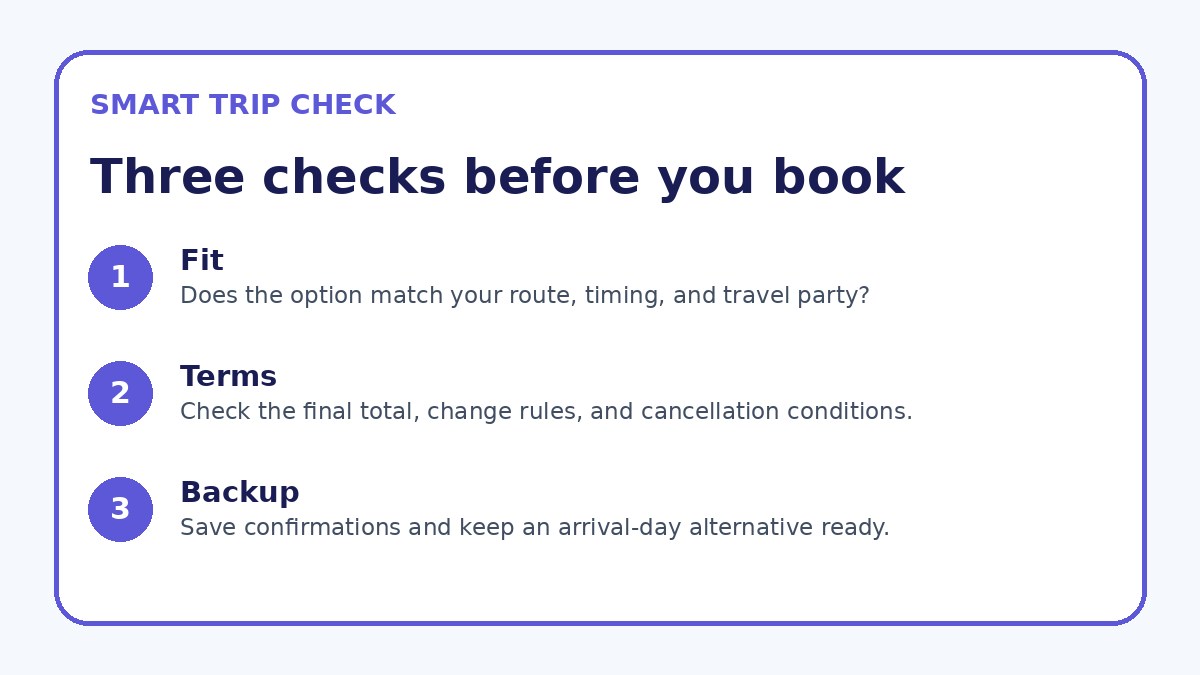
Schedule fit: align flights to meetings and recovery time
Flight schedules vary across airports and days of the week. For business travelers, align departure and arrival windows around realistic buffers: time for airport security, possible traffic, and a short recovery period before your first meeting. An earlier arrival may require an earlier wake-up and commute; a later arrival might be acceptable if your first obligation is remote or flexible. Consider whether you might need a hotel for an overnight stay and whether the chosen airport’s ground options simplify that contingency.
If you plan to return the same day, map both outbound and inbound options together rather than choosing each segment independently. Look for arrival times into Seoul that allow for travel from the airport back to your base without cutting the schedule too close. For recurring travel, note which days typically offer better frequency and slightly longer turnaround times that reduce risk. Before booking, draft a schedule that lists appointment times and two fallbacks for flight times that keep you covered if a connection is canceled or delayed.
Flight details to verify
- Confirm exact travel dates, traveler full names as on ID, and meeting times before searching flights.
- Calculate door-to-door time for each Seoul airport option, including typical traffic variation for your travel window.
- Decide whether you can travel carry-on only and, if not, read the carrier’s checked-baggage routing and transfer rules.
- Compare outbound and return schedules together to ensure same-day return feasibility if required.
- Read and save the fare conditions on the airline’s final booking page, noting change, cancellation, and refund policies.
- If using a travel manager or corporate account, verify whether corporate fares or fee waivers apply for each airport option.
Fare conditions: flexibility beats tiny savings for business trips
A lower headline fare can be tempting but read the fare conditions before you select an airport. Business travel often requires last-minute changes; confirm change and cancellation rules, rebooking fees, and the conditions for refunds or credits. Flexible fares or upgradeable tickets can protect your schedule and sometimes justify using a more convenient airport. Check whether baggage, seat selection, and priority boarding are included or additional; these add-ons affect total cost and convenience.
When comparing options, explicitly note the provider’s change fee, same-day change policy, and the process for reissuance—details that appear only on the airline’s final booking page. If you use a corporate booking tool or travel manager, confirm whether corporate rules or negotiated fares apply at each airport. Keep a copy of the fare rules with your itinerary and have the airline or agent’s contact information accessible so you can act quickly if a meeting shifts and you must change flights.
Flight Guide questions travelers ask
Which Seoul airport is usually faster for business travelers going to Jeju?
There isn’t a single fastest airport for everyone — the best choice depends on where you start in Seoul, your flight times, and traffic patterns. Business travelers should measure door-to-door time from their office or hotel to each airport, include recommended pre-flight arrival time, and add estimated travel time on Jeju after landing. For same-day return trips, prioritize the airport that guarantees the shortest, most reliable commute rather than the lowest fare. Always confirm ground transfer options and expected travel duration for your specific travel window before booking.
How should I handle checked luggage for a short business trip to Jeju?
If possible, travel with carry-on only to eliminate checked-baggage risk. If checked luggage is necessary, book flights that minimize handling steps — ideally a single-carrier reservation where bags are tagged to the final destination. When itineraries involve different carriers or interline transfers, check the booking page to confirm whether bags will be transferred automatically or need to be claimed and rechecked. Build time into your schedule for possible bag retrieval and recheck, and pack essentials for meetings in your carry-on as backup.
What fare conditions matter most when choosing between airports?
For business travel, pay attention to change and cancellation fees, same-day change policies, rebooking procedures, and whether taxes and baggage are included. Flexible or refundable fares can be worth the premium if meetings frequently change. Also check whether the fare allows free name changes or has credit vouchers versus refunds. These specifics are provider-dependent and can change, so verify all conditions on the airline’s or booking agent’s final purchase page before confirming the reservation.
Final decision note
For Seoul to Jeju flights, practical airport choice for business travelers comes down to minimizing total trip disruption. Start by mapping door-to-door times for each Seoul airport against your meeting schedule, and then layer in baggage risk and fare flexibility. If your schedule is tight, favor the airport that shortens commute and simplifies baggage handling, even if the fare is higher. If your dates are flexible and savings are significant, consider airports with broader schedule options but account for added ground time and stricter fare rules. Gather exact travel dates, traveler names, luggage needs, and meeting times before checking live fares and terms so you can compare real options and make a confident booking.
Continue planning
Check current options and final conditions
Use the provider page to confirm live availability, the final total, cancellation terms, and every condition that matters to your trip.
This evergreen planning guide was created with AI-assisted drafting and a structured quality review. It does not display live prices, schedules, availability, visa guidance, or provider rankings. Verify current details before booking. Some links are affiliate links; we may earn a commission at no additional cost to you.