Deciding whether to drive on Jeju often comes down to two things: how much value you’ll get from flexible access to sights, and how comfortable you are with the insurance wording in rental contracts. For many first-time visitors, unfamiliar phrases—like collision damage waiver, excess, third-party liability, super collision damage waiver (SCDW), and roadside assistance—are the bigger barrier than roads or distances. This article gives a practical decision: if your plan visits dispersed coastal and rural attractions, renting and driving is usually the most time-efficient option; if your itinerary stays in a compact area or you’re uncomfortable with layered insurance terms, skip driving and use tours, buses, or taxis. Read on to learn what each insurance term generally covers, the tradeoffs when you see common clauses, how pickup/return friction affects your day, and a clear fallback option so you can finalize a booking confidently.

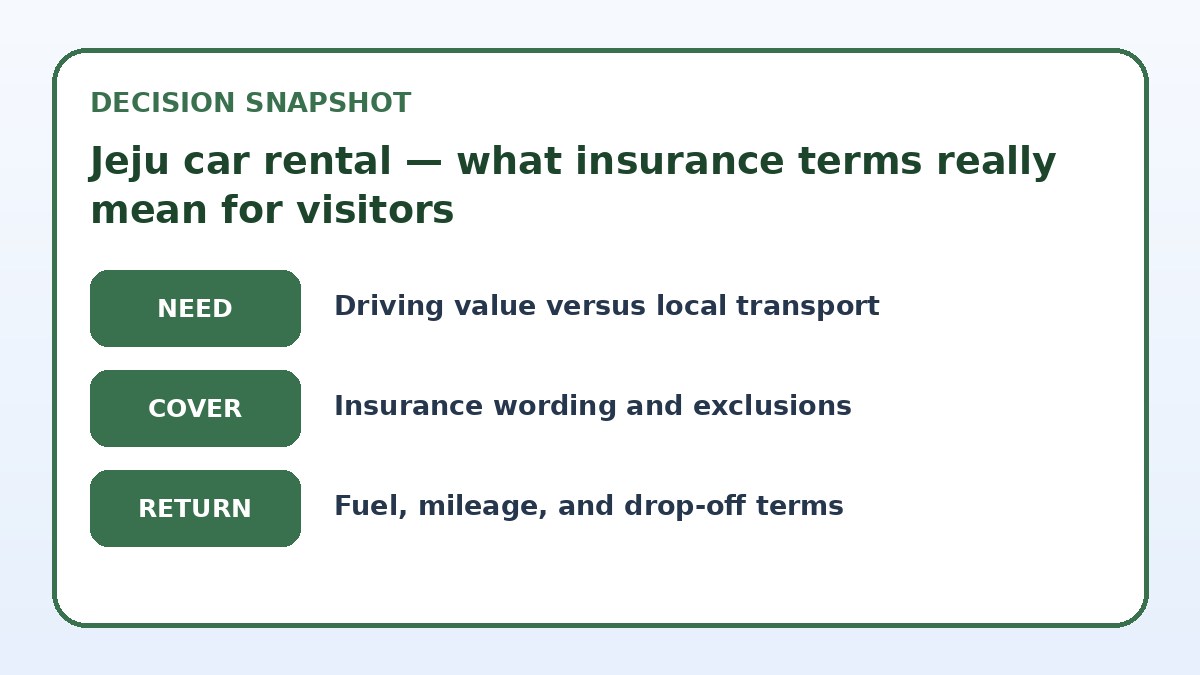
Does driving genuinely improve your Jeju itinerary?
For first-time visitors, ask whether driving adds distinct value beyond convenience. Jeju’s attractions are spread along the coast and inland: certain beaches, scenic drives, and rural cafés are easiest to reach by car. If your plan lists a long sequence of dispersed sights or early-morning/late-evening photo stops, driving saves transit waits and allows changing plans on the fly. But if your days are concentrated in one town, around a few clustered attractions, or you prefer not to navigate unfamiliar roads, that convenience may not justify dealing with rental insurance wording and pickup/return logistics.
Also evaluate your comfort with navigation and driving in a foreign environment. Renting makes sense when you want door-to-door access to remote spots, but it also requires time at pickup and return, familiarity with parking norms, and readiness to handle incidents. If those extra responsibilities would add stress, calculate the time and peace-of-mind tradeoff: sometimes a local tour or reliable taxi rides offer similar sightseeing value without the insurance complexity.
Decide whether driving earns its place
| Mobility strategy | Best for | Cost or friction to check |
|---|---|---|
| Rent a car and drive yourself | Travelers needing full route flexibility and remote access | Requires decoding insurance wording, handling pickup/return, and readiness for possible excess payments |
| Guided day tours | Visitors who want curated routes with minimal logistics | Less schedule freedom and may miss off-route stops you’d find by driving |
| Public buses and ferries | Budget-conscious travelers staying near serviced hubs | Slower, less flexible; routes and timetables can constrain your day |
| Taxi and rideshare on demand | Those prioritizing convenience without rental insurance responsibility | Usually more expensive per trip and dependent on driver availability |
Check live rental choices only after the route test
Use the exact driver, dates, pickup point, and return plan to compare current conditions.
Common insurance wording and what it usually means
Collision Damage Waiver (CDW) typically limits the renter’s responsibility for vehicle damage; it often reduces your liability but usually leaves an excess (deductible) you must pay for any claim. Super Collision Damage Waiver (SCDW) or zero-excess products reduce that excess further or eliminate it, but they cost more and may still exclude certain items such as windscreen, tires, and undercarriage damage. Third-party liability covers damage you cause to others’ property or injury to other people, but policy limits and regional standards vary—confirm exact coverage amounts on the final booking page.
Loss and theft protection may be listed separately and can cover theft or full loss of the vehicle, again typically with an excess unless you buy the highest tier. Roadside assistance is commonly available but may have response-time or mileage limits. Importantly, many contracts include explicit exclusions: unpaved roads, driving under influence, unauthorized drivers, off-road use, and damage from improperly secured loads. When you book, compare the provider’s definitions and exclusions line-by-line rather than assuming terms are identical across companies.
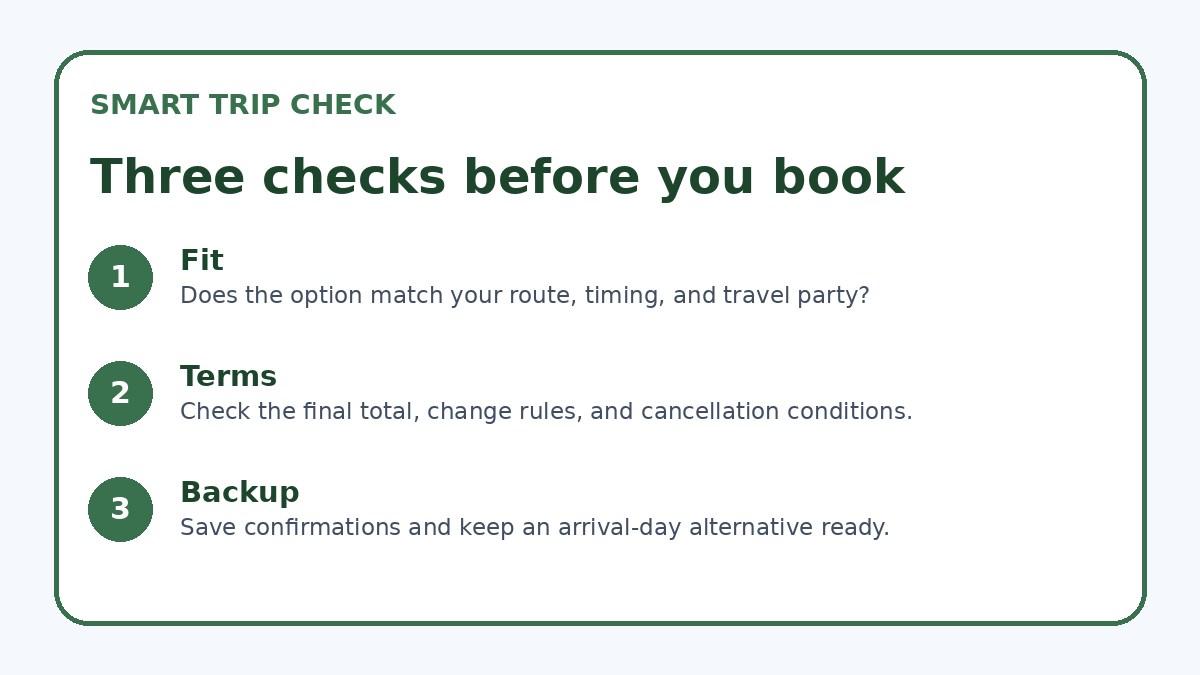
Compare the full rental conditions
Confirm insurance wording, exclusions, deposit, fuel, mileage, and return terms on the final page.
Pickup, return friction, and how insurance affects them
Pickup and return are the moments when insurance wording becomes real. Expect staff to ask for a local or international driver’s license, the credit card used for the reservation, and to explain optional waivers. Friction arises if you arrive late, if there’s damage not documented on the vehicle condition report, or if your chosen insurance product requires documentation (police report, photos) for claims. To reduce setbacks, do a careful walkaround with staff and photograph all sides, tires, and the interior before driving away. Ask staff to initial or record any pre-existing damage.
At return, disputes commonly surface around new damage, fuel policy, and mileage. If you decline an extra waiver and a claim occurs, you’ll likely pay the excess immediately and then work through reimbursement routes. If you pre-purchase SCDW or similar protections, read the fine print to know whether it truly covers windscreen, wheel, and underbody damage—these are frequent exclusions that can cause surprise charges. Always note exactly which documents and receipts you’ll need to support a claim on the provider’s final booking page.
Car rental terms to verify
- At booking, screenshot or download the full rental contract and the exact insurance terms shown on the provider’s final page for later reference.
- Before driving away, complete a vehicle condition report with a staff member and take timestamped photos of every panel, tires, windscreen, and the interior.
- Confirm the rental’s excess (deductible) amount, which damages it applies to, and whether SCDW or similar products remove or lower that excess.
- Ask which specific exclusions apply (wheels, windscreen, underbody, unpaved roads, unauthorized drivers) and get that list in writing if possible.
- Verify what documentation you must provide for a claim (police reports, photos, repair invoices) and where to file claims after returning the vehicle.
- Compare whether your personal travel insurance or a credit card benefit covers rental damage and, if so, what steps they require to validate a claim.
A clear non-driving fallback and how to choose it
If insurance wording or pickup friction outweighs the benefits of driving for you, pick a non-driving strategy that matches your priorities. For flexibility at modest cost, combine public buses with occasional taxis; for efficiency with less planning, book guided day tours that hit multiple highlights; if you prioritize privacy and door-to-door service, rely on taxis or app-based rides. Each approach reduces your responsibility for vehicle damage and most of the paperwork involved in claims, but they differ in schedule flexibility and overall cost profile.
When choosing, check what the provider’s final booking page says about cancellations, meeting points, and refundability. If you pick tours, confirm whether they include hotel pickup and drop-off, how many stops are included, and any group-size limits. If using buses, verify seasonal timetables and route coverage to ensure your desired stops are served. Trip.com can be a helpful place to compare current availability and booking conditions, but always verify insurer and operator terms on their own final pages before confirming.
Car Rental & Road Trip questions travelers ask
Can my credit card cover rental car damage on Jeju?
Many credit cards offer secondary or primary rental vehicle insurance, but coverage varies by card and issuer. Check your card’s guide for whether it applies abroad, whether it is primary (pays first) or secondary (pays after other coverage), and what exclusions exist—some cards exclude certain vehicle categories, drivers under a specific age, or losses such as tires and glass. If relying on a card benefit, confirm whether the rental company requires you to decline their CDW for the card’s protection to apply, and take the card issuer’s contact and claim instructions with you.
What should I do immediately if the rental car is damaged during my trip?
Stop in a safe location, document the scene with multiple photos and timestamped notes, and exchange contact and insurance details with any other parties. Report the incident to local police if required by the rental contract or for third-party injury/property damage; obtain a police report or incident number. Contact the rental company promptly to open a claim and follow their instructions—ask what documents they need and where to submit them. Retain all receipts for towing or repairs, and keep copies of every communication; these will be crucial for reimbursement or dispute resolution.
If I add an extra insurance waiver at pickup, will it always cover everything?
Not necessarily. Extra waivers (SCDW or similar) typically reduce or remove the excess for covered types of damage, but they often still list exclusions such as unauthorized drivers, off-road use, deliberate damage, or normal wear items like tires and windscreen. Read the waiver’s exclusions and ask staff explicitly about items of concern. If staff answers verbally, request that key points be noted on the rental agreement or that you get a written supplement that outlines what the waiver does and does not cover.
Final decision note
For many first-time visitors to Jeju, renting a car yields clear benefits when your itinerary includes dispersed coastal or inland sights, early starts, or spontaneous detours. The decisive factor is whether you’re comfortable parsing insurance wording and accepting the associated pickup/return responsibilities. If you choose to rent, be methodical: compare the exact contract language, photograph the vehicle, and confirm exclusions and excess amounts on the final booking page before you sign. If that process feels risky or onerous, select a non-driving strategy—guided tours, buses, or taxis—that matches your comfort level. Either way, understanding the insurance terms in advance makes the difference between a smooth trip and a stressful claims process.
Continue planning
Check current options and final conditions
Use the provider page to confirm live availability, the final total, cancellation terms, and every condition that matters to your trip.
This evergreen planning guide was created with AI-assisted drafting and a structured quality review. It does not display live prices, schedules, availability, visa guidance, or provider rankings. Verify current details before booking. Some links are affiliate links; we may earn a commission at no additional cost to you.