Practical answer up front: if you have a lot of luggage, choose the option that minimizes hand transfers and fits your door-to-door plan. For many travelers that means prioritizing modes with straightforward terminal access and checked-luggage options — a direct coach or rail service that accepts oversized bags and stops close to your origin or destination will be easier than juggling rides and trains through crowded terminals. Driving or a private car may offer the least handling but adds responsibility for parking and long drives. Whatever you pick, plan transfer legs, reserve extra time, and prepare a backup in case of delays or capacity limits. Below I explain the tradeoffs, how to evaluate terminal fit and luggage rules, timing flexibility, and realistic disruption backups so you can choose the best travel-day plan for your Los Angeles to San Francisco move.

How to choose between rail, coach, driving or mixed routes
Start by thinking door-to-door: measure not just ride time but how many times your bags will be lifted, moved, or rechecked. Rail and intercity coach services often advertise generous baggage allowances and a flat surface to roll a suitcase; these are good when you value steady handling and station access close to city centers. Driving or hiring a private car keeps everything in one vehicle and avoids platform stairs or terminal shuttles, which may suit very large items, but you trade off driving responsibility, traffic stress, and potentially long parking or drop-off logistics.
Mixed routes — for example driving to a suburban station then taking a train — combine benefits and friction. They can reduce city-center driving while limiting transfers, but add a timed connection that requires buffer. When comparing options, list every transfer step from door to door, then score them for lift count, walking distance, and potential for a single point of failure. Choose the route that minimizes the most difficult handlings for your luggage profile rather than only the fastest scheduled ride.
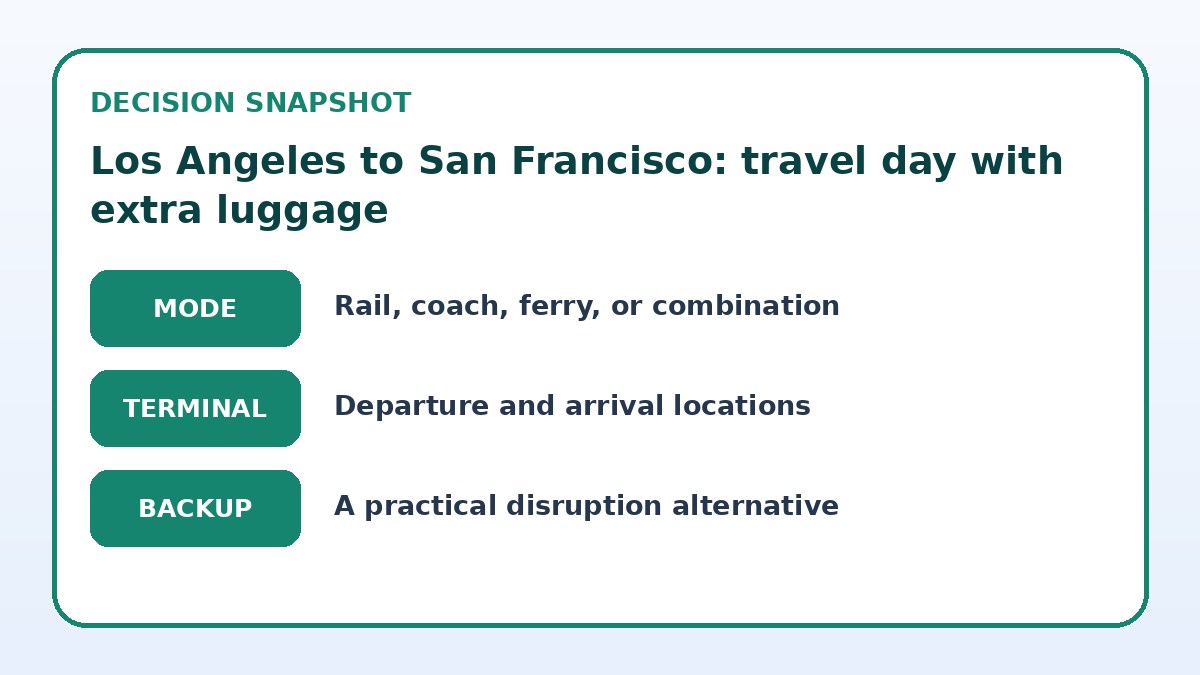
Choose the end-to-end journey plan
| Journey approach | Best for | Friction to check |
|---|---|---|
| Direct intercity coach or train | Travelers wanting fewer handlings and central station drop-offs | Less flexible for precise door-to-door pickup; check luggage size policies and station access before booking |
| Drive or private car direct | Very large or numerous items where keeping everything in one vehicle is ideal | You manage the driving and parking; longer road time and potential urban drop-off limits |
| Mixed route (drive to station + rail/coach) | Reducing city traffic while avoiding multiple lifts in dense urban terminals | Requires well-timed transfers and parking or drop-off planning at the intermediate point |
| Flights combined with ground transfers | Long-distance travelers prioritizing speed when rail or coach is impractical | Adds security, baggage checks, and airport transfers that increase handoffs and timing complexity |
Check live intercity options
Look beyond the ride itself and compare terminals, transfers, luggage, and arrival fit.
Terminal fit and last-mile logistics for heavy bags
Terminal fit means whether the station or stop has level access, elevators, curbside drop-off, or long walks. A downtown train station with elevators and curbside cab stands or rideshare pickup points reduces carry time. Many intercity buses stop at curbside terminals or coach stations that accept luggage drop, which can be ideal for oversized suitcases; however, verify whether bags are loaded into hold compartments or must be handled by you. If your trip begins or ends at an airport, factor in longer transfers between terminals and the need to move bags through security or into checked baggage systems.
Plan the last mile according to the final address: if your accommodation has narrow stairs, no elevator, or strict check-in windows, you may prefer a mode that drops you closer to the front door. Look for accommodations that offer luggage storage or early check-in when you arrive. For pickups, confirm where drivers are allowed to wait curbside and whether there are time-limited loading zones; unauthorized parking can force extra carries. When in doubt, contacting the station or hotel ahead to describe bag size and count clears expectations and often reveals local workarounds.
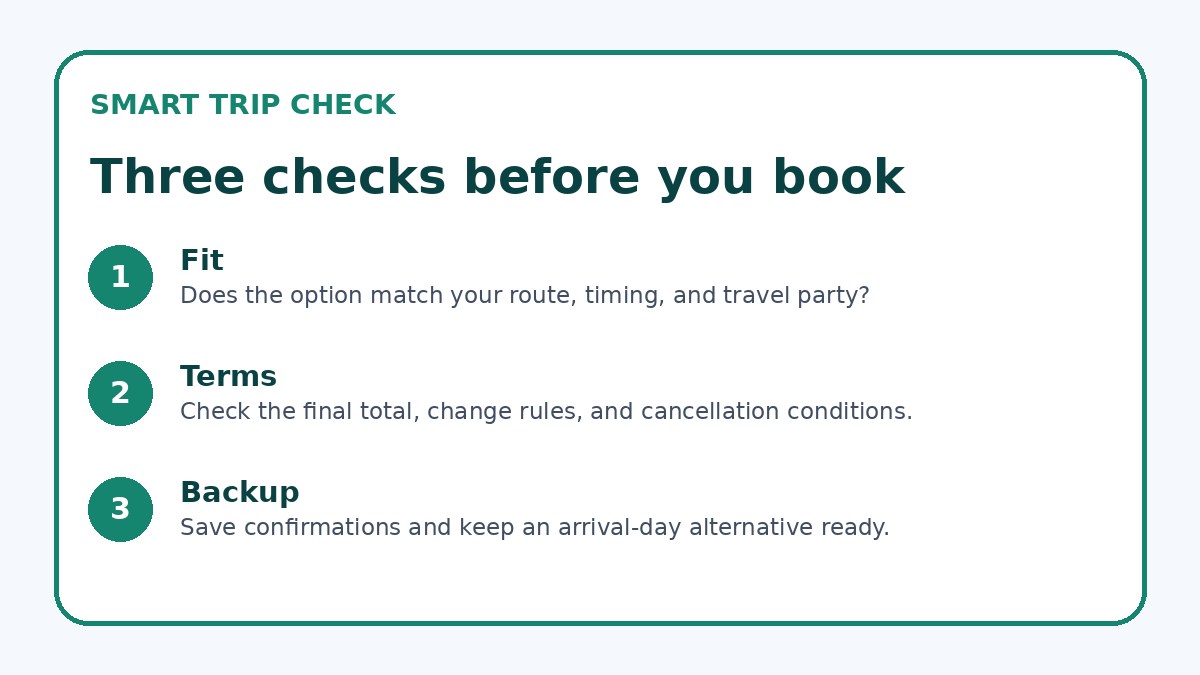
Timing flexibility and how to schedule your travel day
Build time cushions into all legs of your itinerary: additional luggage slows boarding and alighting, taxis take longer to load, and elevators can create bottlenecks. Aim to arrive earlier than typical recommendations for check-in or boarding if you need assistance, oversized handling, or to check baggage in. If you’re using scheduled services, compare departure frequency and choose a service with several runs per day so you can move to another time without losing the entire day if one fills. Where reservations are available, reserve a spot that explicitly includes space for your luggage or a seat with extra room.
Consider travel timing relative to traffic and station congestion. Driving during peak commuter periods adds unpredictable delays; mid-day departures for trains or coaches often have lighter loads and more practical luggage space. If you must connect between modes, leave generous transfer windows — active transfers with heavy bags can easily take 30 minutes or more. Finally, align pickups and drop-offs with site policies (hotel check-in, hosting hours) to avoid holding bags in public areas or paying for same-day storage.
Compare the practical alternatives
Use the final page to confirm what is actually offered on your dates and save a workable fallback.
Intercity travel checklist
- List every transfer step from your door to the final destination and mark how many times you will lift or re-handle each bag.
- Confirm baggage allowances, hold dimensions, and any oversized fees with the carrier on their booking page before you finalize tickets.
- Reserve seats or vehicle space that explicitly mention luggage capacity, or contact customer service to document special arrangements.
- Identify and save addresses for curbside drop-off points, the closest accessible station entrance, and an alternate terminal or coach station.
- Pack a small carry-on with essentials (documents, meds, a spare outfit) and photograph each checked bag before loading.
- Create a disruption plan with two alternate routes and a local private-transfer contact you can book quickly if a scheduled service fails.
Disruption backup: minimize risk to bags and your schedule
Prepare two practical backups: an alternative transport mode and a simplified bag plan. If your booked train or coach is delayed or full, having a pre-researched coach or rideshare route that accepts the luggage you have can keep your trip moving. For example, know the closest major coach terminal or a parking option for a short-term car hire. Keep key items in a small carry-on (documents, medications, a change of clothes) so a delayed main piece of luggage does not cripple the first hours at your destination.
Document and label everything: use visible name tags, take photos of each bag before travel, and keep receipts and booking confirmations in an accessible place on your phone. If you use a baggage check service, note the claim process and keep contact numbers handy. Finally, build contingency funds and time into your plan so you can upgrade to a private transfer if public options fail — the goal of a disruption backup is to re-establish a reliable door-to-door chain with minimal extra handling of your belongings.
Rail & Intercity Transport questions travelers ask
Can I check large or oversized luggage on intercity trains or coaches between Los Angeles and San Francisco?
Policies vary by carrier and can change, so verify on the operator’s booking page before you buy. Many intercity coaches have underfloor holds that accept large suitcases and sporting equipment but may limit oversized items or require separate booking and handling fees. Trains often allow larger carry-on bags and may offer limited checked options, but station layout (stairs, elevators, length of platform walk) affects how easily staff or you can move them. If an operator’s website is unclear, call their customer service and ask how oversized bags are handled at both origin and destination stations.
Should I hire a private transfer to avoid handling my luggage?
A private transfer reduces handoffs because everything stays in one vehicle and a driver can load/unload curbside, making it a strong option for very large or multiple pieces. Consider total door-to-door time and cost: private cars remove public-transport constraints but introduce potential traffic delays and parking or drop-off rules at busy destinations. Verify where drivers are permitted to stop at both ends, whether they will wait while you check into your accommodation, and any baggage limits the company imposes. Book cancellable options when possible so you can revert to scheduled services if traffic looks prohibitive.
How much buffer time should I allow on the travel day when I have extra luggage?
Allow significantly more than you would for light-travel plans because each bag adds minutes to boarding, transfers, and vehicle loading. A useful approach is to add a minimum 30–60 minutes to planned arrival-before-departure time for check-in or boarding when handling multiple or oversized items, and 45–90 minutes to transfer windows between modes. If you must connect to another service or adhere to a hotel check-in window, add extra slack beyond these minimums for elevator waits, finding staff help, or dealing with full holds. Tailor buffers to the number and bulk of your items and the specific station layouts you’ll encounter.
Final decision note
When traveling from Los Angeles to San Francisco with extra luggage, the best practical choice balances minimizing handlings and fitting your door-to-door plan. Direct coach or train services that stop near central stations often cut out additional transfers and are convenient if they explicitly accept large bags; driving keeps everything in one vehicle but shifts responsibility for time and parking onto you. Always map every transfer step, confirm baggage rules on the provider’s booking page, and build multiple time buffers. Finally, prepare a disruption backup that focuses on moving bags reliably rather than matching an exact departure time — this mindset will keep the travel day manageable and reduce stress.
Continue planning
Check current options and final conditions
Use the provider page to confirm live availability, the final total, cancellation terms, and every condition that matters to your trip.
This evergreen planning guide was created with AI-assisted drafting and a structured quality review. It does not display live prices, schedules, availability, visa guidance, or provider rankings. Verify current details before booking. Some links are affiliate links; we may earn a commission at no additional cost to you.