If you’re traveling solo from Ho Chi Minh City to Da Nang, the practical booking question isn’t simply how long the ride takes but how flexible your ticket is when plans change. For many solos, flexibility means refundable or changeable tickets, easy rebooking, and transfer options when delays or missed connections happen. Choose a travel mode — train, coach, ferry where applicable, or a combination — by weighing how terminals match your arrival and departure points, how much effort moving luggage requires, and how easy it is to change or cancel. This article gives a clear, decision-focused comparison so you can pick the most forgiving option that still fits your schedule and comfort needs. Where provider details affect your choice, I’ll tell you exactly what to verify on the booking page before you pay.
Pick a mode by terminal fit and door-to-door convenience
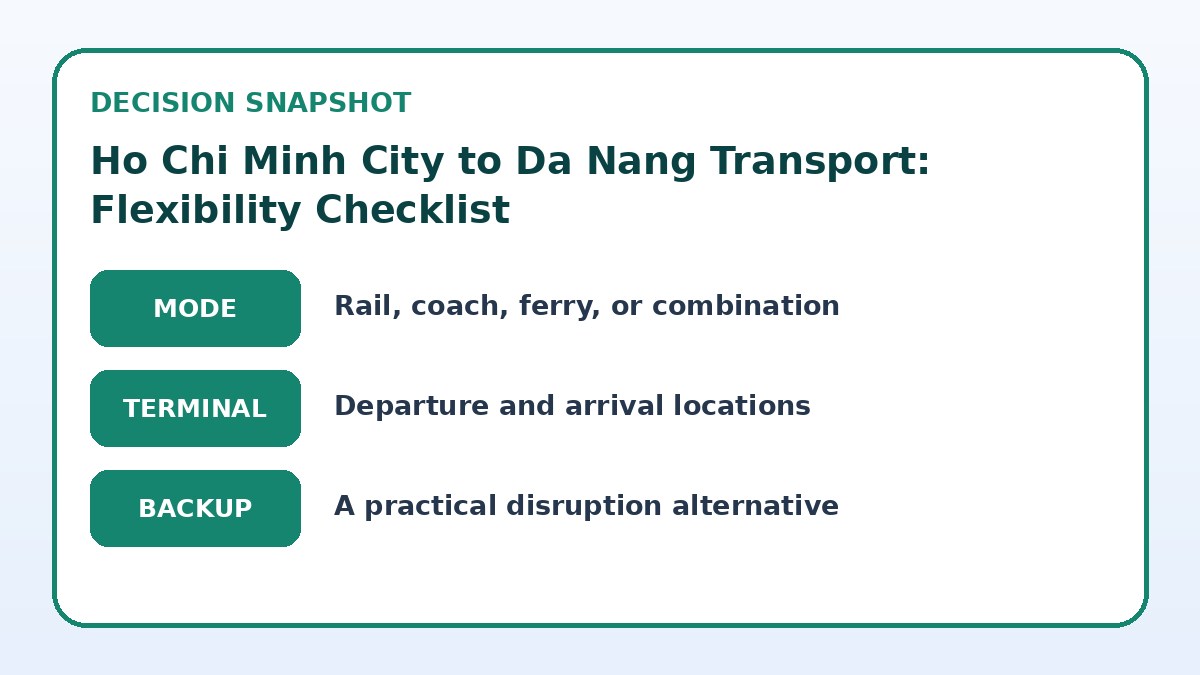
Start by mapping your actual door-to-door journey: where you’re leaving in Ho Chi Minh City and where you need to arrive in Da Nang. Terminals and stations matter because a cheap ticket that lands you at a remote bus depot or a far-side train station may add hours and cost in transfers. Solo travelers should prefer options that deliver close to their accommodation or a simple, known transfer point. If you have heavy luggage or limited mobility, put proximity and available onward transport at the top of your comparison list.
Compare how each mode links with local transport at both ends. Trains often connect to city taxi ranks or bus routes; coaches may stop at dedicated bus stations or highway rest stops. If a ferry is part of a combined route, check how passengers are transferred between docks and land terminals. Always measure total door-to-door time, not just in-vehicle time, and factor in additional costs and effort to reach or leave the terminal when judging overall convenience.
Choose the end-to-end journey plan
| Journey approach | Best for | Friction to check |
|---|---|---|
| Flexible train-first plan | Solo travelers who value predictable passenger support and straightforward station transfers | Usually longer door-to-door if stations sit outside neighborhoods and some tickets have strict advance-purchase windows |
| Coach-first plan with flexible fares | Solos prioritizing frequency of departures and direct drops close to city hubs | Luggage rules and strict low-cost fares can reduce real flexibility unless you buy higher-tier coach tickets |
| Mixed-mode (ferry + land) with buffer time | Adventurous solos combining scenic segments with land travel who can manage more complex transfers | Greater risk of missed connections and varied rebooking rules across operators; requires careful timing and confirmations |
| Redundant-booking backup approach | Solo travelers who want insurance against disruption by holding one flexible ticket plus a standby option | Higher upfront cost and extra administrative hassle; you must reconcile refunds or change fees afterward |
Check live intercity options
Look beyond the ride itself and compare terminals, transfers, luggage, and arrival fit.
Luggage and transfer friction for solo travelers
Luggage is a frequent deal-breaker for solos. Ask whether a mode allows checked bags, onboard storage, or assistance with boarding. Trains often have defined luggage spaces and occasional porter services, whereas coaches may limit lengthy suitcases or charge for oversized items. If you’ll change vehicles, check how baggage is handled between legs—does the coach operator load through, or must you collect and re-check by yourself? If handling transfers alone, lighter, compact packing makes flexible rebooking and last-minute changes easier.
Consider practical transfer friction beyond bag size. How easy is it to navigate a station alone, especially at night or when language barriers exist? Look for terminals with clear signage, reliable local taxis or ride-hail coverage, and straightforward luggage storage if you need to wait to check into accommodation. If a segment uses smaller operators or remote docks, verify whether staff assist with luggage and what happens if a scheduled connection is missed.
Timing flexibility: change and refund rules to compare
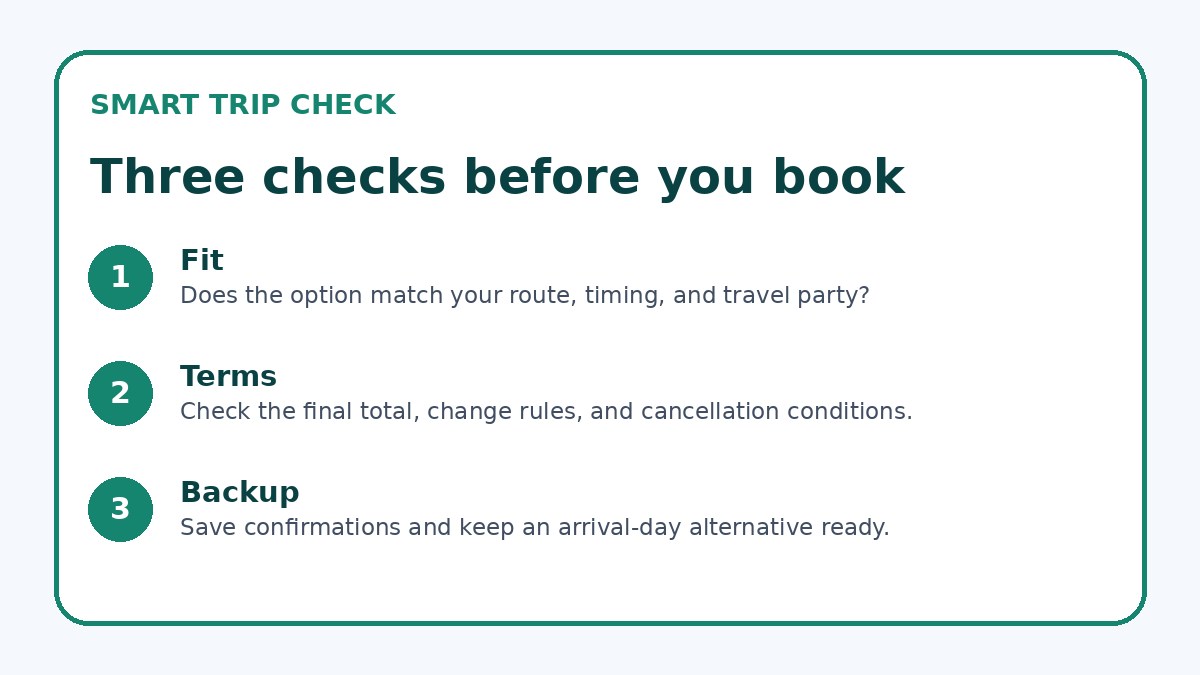
Ticket flexibility is mostly about the change and refund rules on the provider’s booking page. Before you buy, note the deadlines for free changes, the penalties for late changes, and whether credit notes, partial refunds, or full refunds apply. Some low-cost coach fares are strictly non-refundable, while higher-class train tickets may allow same-day changes with a fee. For mixed itineraries, the least flexible leg usually determines your overall risk—if one segment is locked in, plan buffers or buy flexible protection for the rest.
Also consider how easily you can make a change from abroad or on the road. Does the operator provide an online portal, phone support in English, or agent desks at major stations? Solo travelers should prefer channels that let you rebook without returning to a physical ticket office. If an operator requires in-person amendments, that can be a barrier if you’re two legs away when plans shift. Where possible, verify the exact wording on the provider’s final booking page and save screenshots of the fare rules after purchase.
Compare the practical alternatives
Use the final page to confirm what is actually offered on your dates and save a workable fallback.
Intercity travel checklist
- Locate your exact origin address and preferred arrival neighborhood in Da Nang to measure true door-to-door time for each mode.
- Read the provider’s fare rules on the final booking page: change windows, cancellation penalties, and how refunds are processed.
- Confirm luggage allowance and how baggage is handled during transfers or if you must re-board a different vehicle.
- Plan at least one buffer hour between connecting segments and identify alternative same-day departures for each leg.
- Save screenshots of booking confirmations and fare rules; note the operator’s customer service channels and local station office hours.
- If buying through an agent, verify whether they can change tickets on your behalf and keep the operator’s direct contact details.
Disruption backups and realistic rebooking strategies
Build simple, realistic backups into your plan. Good backups include buying a refundable or changeable ticket for one leg, leaving an extra hour or two between segments, or keeping an alternate route in your phone that uses different terminals. For example, if a scheduled coach is delayed, know whether a train departs within a reasonable window and what it would cost to switch. Solo travelers should also identify local transport apps, a taxi stand or a trusted ride-hail operator, and the nearest bus or train ticket office on arrival.
If disruptions occur, prioritize safety and simplicity. Contact your ticket provider immediately to request rebooking and record the provider’s response. When you must arrange a private transfer or overnight stay, keep receipts and screenshots to support refund requests. If you purchased through an agent or aggregator, check whether they handle changes or simply pass you to the operator; Trip.com can be used to compare availability, but always verify the final fare rules on the operator’s own booking page before relying on rebooking claims.
Rail & Intercity Transport questions travelers ask
Is a train or coach more flexible for last-minute changes on this route?
Flexibility depends on the specific fare conditions the provider lists at purchase. Trains commonly offer structured change and refund policies, but low-cost or promotional train fares can be restrictive. Coaches often have a mix of strictly non-changeable seats and higher-tier flexible tickets. The right approach is to compare the final booking page for each option: look for free-change windows, fees for same-day changes, and whether changes can be done online or require a station visit. That comparison will tell you which mode is practically more flexible for your dates.
How much extra time should I allow for transfers between terminals when combining modes?
Allow at least one to two hours between segments for urban transfers, longer if you must cross the city, navigate heavy traffic, or transfer between a dock and a remote station. If you’re unfamiliar with the cities, prefer wider buffers—up to three hours—especially during peak traffic times. Also account for luggage handling and potential language or ticketing interactions. Verify local transit times on the day, and if an operator’s booking rules penalize late arrivals, consider buying a more flexible ticket to reduce the risk and stress of missed connections.
What should I check on the booking page before paying for a mixed-mode itinerary?
On the final booking page, check the change and refund policy for each independent leg, whether transfers are guaranteed, and the operator’s procedure for rebooking missed connections. Confirm baggage allowances, whether your fare includes reserved seating, and the exact terminal addresses for boarding and arrival. If the itinerary was assembled by an aggregator, determine who handles post-booking support—the aggregator or the operator—and save contact details for both. Take screenshots of all fare rules and the itinerary; these will be essential if you need to make a partial claim or request a change.
Final decision note
For solo travelers, the most useful ticket is the one that balances flexibility with minimal transfer friction. Start by mapping door-to-door logistics, then compare fare rules, luggage handling, and rebooking channels for trains, coaches, ferries or mixed options. Favor providers that allow online changes and show clear refund or credit policies on the final booking page, and build simple backups: allow buffers, keep an alternate same-day route in mind, and save all booking confirmations. When in doubt, pay a little more for easier changes—time and stress saved on a solo trip are often worth that premium. Use comparison sites like Trip.com to check availability, but verify every fare rule on the operator’s own booking page before you commit.
Continue planning
Check current options and final conditions
Use the provider page to confirm live availability, the final total, cancellation terms, and every condition that matters to your trip.
This evergreen planning guide was created with AI-assisted drafting and a structured quality review. It does not display live prices, schedules, availability, visa guidance, or provider rankings. Verify current details before booking. Some links are affiliate links; we may earn a commission at no additional cost to you.