On touchdown in Sydney, the first-hour decision is simple: choose the transfer that matches how much baggage you carry, how tired you are, and how central your accommodation is. Solo travellers often need to balance three things quickly — convenience, cost, and predictability — so the practical move is to decide before you land which transfer type you’ll use if timings or luggage change. This guide gives a short, usable recommendation up front, then the tradeoffs and decision criteria so you can adapt if your arrival is late, your bag is oversized, or your hotel’s address sits on a narrow street. If you prefer to compare live availability once you have flight and hotel details, you may check a marketplace such as Trip.com — but always verify pick-up points, permitted kerbside stops, and cancellation rules on the provider’s booking page.
Check options for your arrival details
Use your flight, luggage, party size, and accommodation address to compare current choices.
Choose by luggage and party size
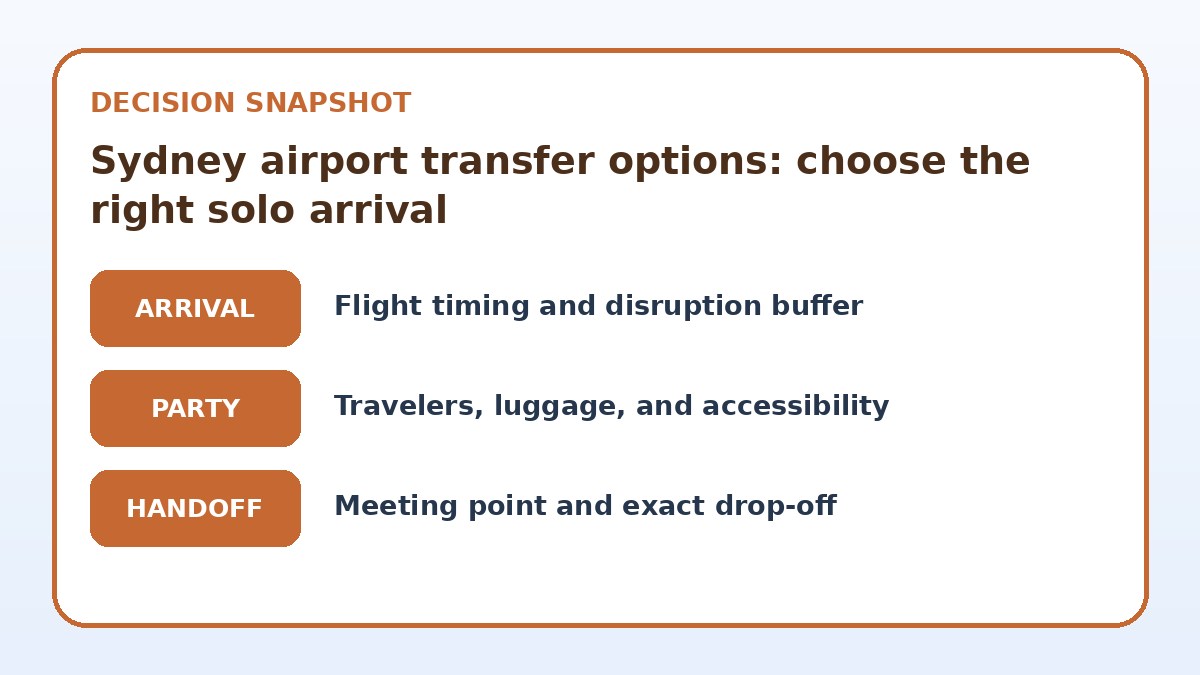
Start with a quick count: how many checked bags, how large they are, and whether you’re carrying anything fragile. Solo travellers with a single medium checked bag and a small carry-on often find public transport convenient because it eliminates the need to wait for a vehicle and usually drops you close to central hotels. If you have oversized luggage, sports equipment, or several large bags, factor in the physical effort of stairs, station transfers, and walking with baggage; in that case, a door-to-door option will likely be worth the extra planning.
Also consider who’s travelling with you — as a solo traveller you won’t split fares, so private or ride-hailing costs fall on you alone. Shared shuttles can be a middle ground: they accept multiple bags and are cheaper than a private car, but they may make several stops. Think about whether you’re willing to trade time for cost: if you’re arriving at peak tiredness, the few extra dollars for direct transfer may prevent a difficult, luggage-heavy walk through unfamiliar streets.
Arrival details to have ready
- Note your arrival terminal, write down the official hotel address and main entrance name, and save both in an app and on paper.
- Count checked bags and oversized items now; choose a transfer type that explicitly accepts your luggage amount.
- If arriving after local public transit hours, pre-book a shuttle or private transfer and confirm after-hours pickup procedures.
- Add your flight number to any booked transfer so the provider can monitor delays and adjust meeting times.
- Confirm the driver’s allowed kerbside pick-up/drop-off zone and ask your hotel whether the vehicle can stop at the front door.
- Save at least one backup option (local taxi number or ride-hailing app) in case your primary transfer is delayed or cancelled.
Plan for late or disrupted arrivals
Arrivals can be delayed, baggage can be slow, and connections may go awry. If your flight could arrive late at night or you have tight connections, prefer options with flexible cancellation policies or providers who explicitly list after-hours availability. Public transport tends to have limited overnight services, so confirm whether the line or bus runs at your arrival time. For late arrivals, a pre-booked private transfer or taxi phone number gives you a reliable fallback instead of waiting in a quiet terminal trying to find an open ticket desk.
When flights are disrupted, clarity about meeting points matters. If you’ve booked a shuttle or driver, provide them with real-time updates — many companies ask for flight numbers and monitor arrivals. If you’re relying on local transport, check the latest live updates on transit apps once you land and be prepared to switch to a ride-hailing app if a scheduled service is canceled or significantly delayed. Always have a backup plan written where you can access it without network connectivity.
Match the transfer to your arrival
| Arrival approach | Best for | Detail to verify |
|---|---|---|
| Public transport (train/bus) | Solo travellers with light luggage staying near central areas who want the lowest hassle after navigating a station. | Requires carrying bags across platforms and walking from the station; services may be limited late at night. |
| Pre-booked shared shuttle | Solo travellers with moderate luggage who want a balance of price and door-to-door convenience. | May make multiple stops and take longer; check baggage allowances and exact drop-off arrangements. |
| Private transfer or hotel-arranged car | Solo travellers valuing door-to-door service, minimal walking, and personalized meet-and-greet. | Higher cost and need to verify pick-up point, wait time policies, and driver contact procedures. |
| Taxi or ride-hailing app | Solo travellers needing on-demand transport, flexible pickup, and direct routing to unusual addresses. | Variable wait times and potential difficulty finding a precise hotel entrance in crowded areas. |
Make the meeting plan clear
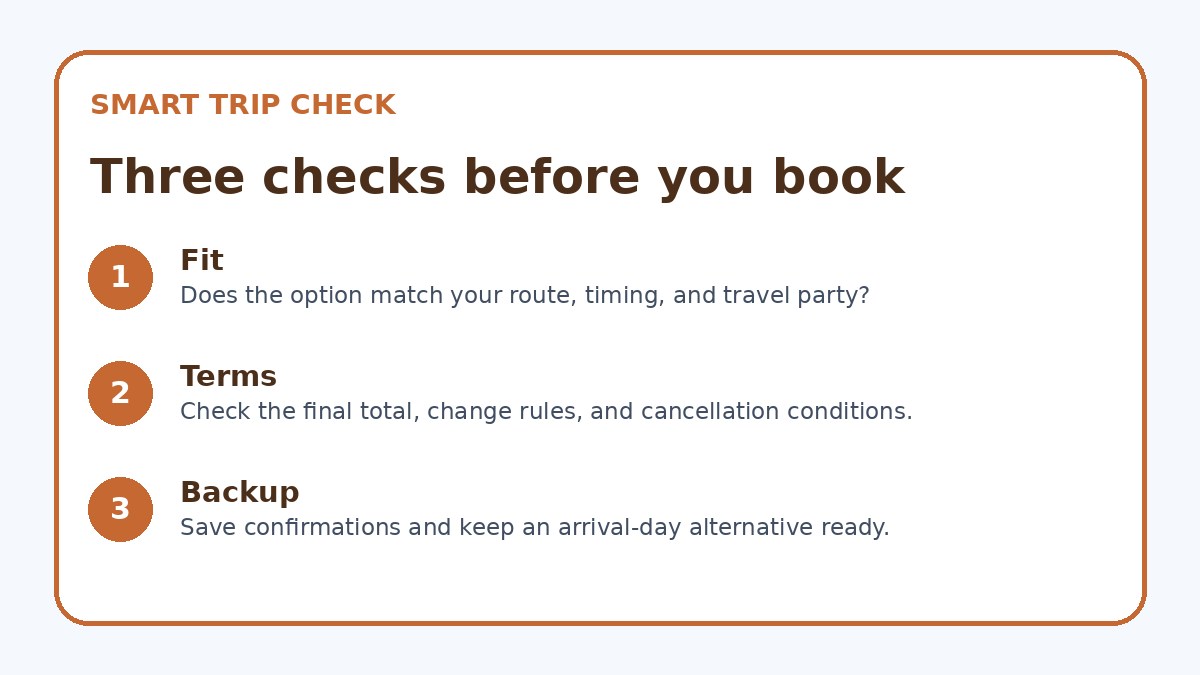
Check the final pickup instructions, waiting conditions, and exact drop-off coverage.
Meeting-point clarity and terminal navigation
Sydney’s airport layout and terminal pickup rules can affect how easily you meet drivers. Before you land, note the terminal your flight uses and the standard meeting areas for taxis, ride-hailing, and pre-booked transfers. Drivers and shuttle companies often use specific kerbside zones or designated bays, while some hotels require drop-offs at a nearby public road rather than inside a private forecourt. If your accommodation is tucked down a laneway or has limited front-door access, confirm whether the driver can pull up close or will need to drop you on a main street a short walk away.
Use clear, concise directions in your booking notes: terminal name, arrival gate if known, and a phone number that works in Australia. If your phone plan may not work immediately, agree on a meet method that doesn’t require calls, such as a named curbside zone, a prominent signboard, or a messaging app you can both open when you land. Carry a printed copy of your hotel name and address in case you lose connectivity while moving between terminal areas.
Drop-off fit for your destination
Not all transport options drop you exactly at your hotel entrance. Some central streets in Sydney have limited vehicle access and short-term loading restrictions, so check whether the driver will be allowed to stop at your hotel’s front door. If your accommodation is on a pedestrianised street or inside a complex, plan for a short walk from the designated drop point. A private driver can sometimes obtain permission for closer access, but this depends on local rules and the hotel’s policies.
Consider the final stretch of your journey: is your hotel on a steep hill, narrow lane, or busy intersection? If so, prioritize a service that can safely and conveniently unload luggage without leaving you stranded. For stays with late check-in or special accessibility needs, tell your provider in advance so they can confirm suitable walking distances and help coordinate assistance if needed. When in doubt, ask the hotel whether their listed ‘address’ matches where transfer companies will stop.
Airport Transfer & Local Mobility questions travelers ask
Can I rely on a ride-hailing app immediately after arriving in Sydney?
You can often request a ride-hail from an arrival terminal, but factors like temporary pickup restrictions, busy demand periods, and luggage volume can affect availability. If you don’t have local mobile data, check whether the airport provides a short-term Wi-Fi sign-in or use an arrival-area kiosk to find the indicated pickup zones. Before relying on a ride-hail, identify the correct terminal curbside zone the app requests and have a fallback plan — such as a taxi rank or pre-booked shuttle — in case cars are scarce or waiting times are long.
Should I pre-book a transfer if my flight length or arrival time is uncertain?
Pre-booking gives certainty about a reserved vehicle and a clear meeting point, but make sure you read the provider’s flight-delay and cancellation policies on their booking page. Many operators ask for flight numbers and will adjust pickup times, but policies vary on late no-shows and rebooking windows. If your arrival time is highly uncertain, choose a provider with flexible amendments or keep a refundable booking strategy and a reliable immediate fallback, like the airport taxi rank, available in case your flight changes.
How do I check that my hotel is reachable by the transfer I’ve chosen?
Contact your hotel before booking to confirm the recommended drop-off point and whether vehicles can stop directly at the entrance; some central addresses may require a short walk from an approved public stop. When comparing transfer options, check booking pages for terms about restricted streets and confirm with the operator whether they serve that drop location. If you’re unsure, ask both the hotel and the transfer provider for written confirmation or a photo of the suggested pickup/drop-off spot so you know exactly where to meet on arrival.
Final decision note
For solo travellers, the practical first-hour decision when arriving in Sydney comes down to luggage, arrival time, and how close your accommodation is to central transport links. Light packers arriving during the day usually find trains or buses an efficient option; travellers with heavy bags, after-hours arrivals, or hotels in restricted-access areas will benefit from the predictability of a pre-booked shuttle or private car. Before you land, confirm terminal meeting points, luggage policies, and drop-off suitability with both your hotel and the chosen provider. Keep a simple backup plan — a taxi rank or ride-hailing app — and save contact details so you can adapt quickly if your flight changes.
Continue planning
Check current options and final conditions
Use the provider page to confirm live availability, the final total, cancellation terms, and every condition that matters to your trip.
This evergreen planning guide was created with AI-assisted drafting and a structured quality review. It does not display live prices, schedules, availability, visa guidance, or provider rankings. Verify current details before booking. Some links are affiliate links; we may earn a commission at no additional cost to you.