Practical answer first: if you have extra luggage, prioritize rail or private car options for the most door-to-door ease, then evaluate coach and multimodal combinations only after checking station terminal access, luggage policies, and door-to-door transfer time. Decide from the start whether you want fewer changes (minimize handling) or lower direct transfer cost (may require handling). On the travel day, schedule additional time at origin and destination — factor in check-in, luggage drop, and last-mile pickup. Verify baggage size/weight rules, advance reservations for larger items, and whether the operator offers help loading or porter service. Have a disruption backup: a flexible alternative departure or a pre-booked rideshare to your next stop. This article walks through terminal fit, luggage friction, timing flexibility, and a simple disruption plan so you can choose the practical travel day that fits your bags and tolerance for transfers.
How to pick between rail, coach, car and multimodal options
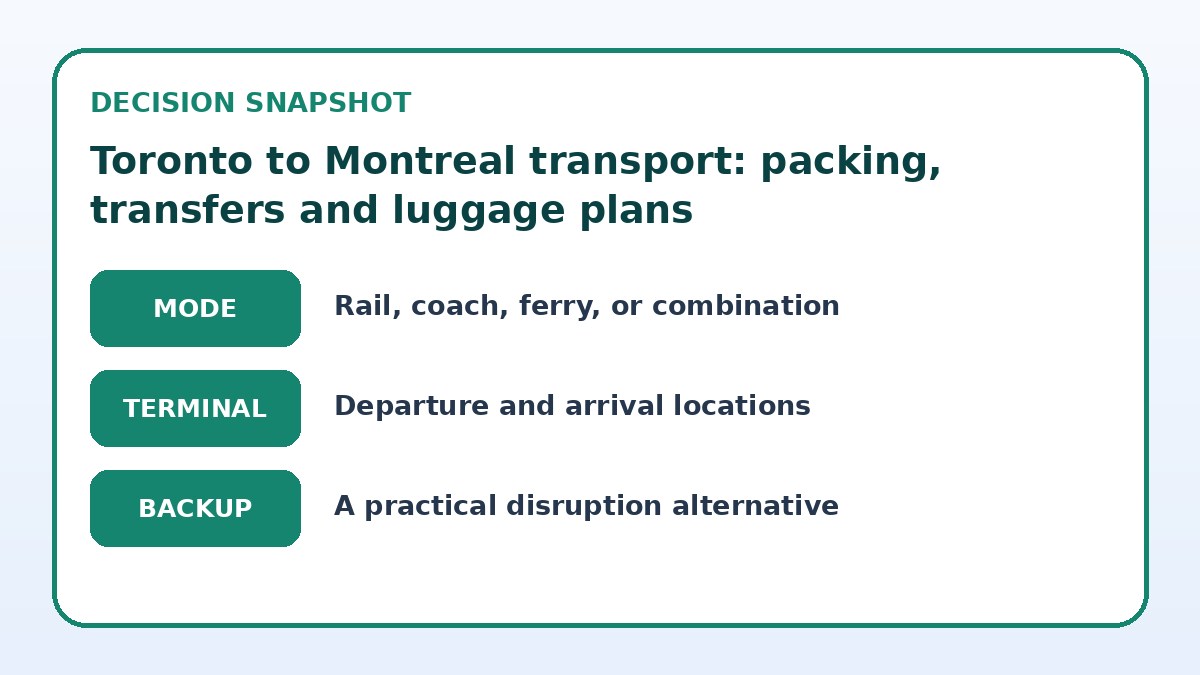
Start by ranking your priorities: minimal handling, schedule flexibility, cost, and door-to-door time. Rail often minimizes handling because platforms and station services commonly accommodate luggage and there is usually more space on board for big bags. Private car (rideshare or hire) wins on door-to-door convenience since it eliminates most transfers, but it can be expensive for long distances. Coaches can be cost-effective but may require sizable lifts into luggage bays and strict size limits. Multimodal choices—train plus local taxi, or coach to a nearby station then rail—can balance cost and comfort if you plan transfers carefully.
To compare options practically, map the door-to-door timeline: time to get from your origin address to the departure terminal, recommended check-in or boarding window, scheduled travel time, and time from arrival terminal to your final address. For each mode, estimate how many times each bag will be handled and whether assistance is available at each touchpoint. If you prefer fewer lifts, eliminate any route that adds extra transfers or that uses carriers with tight hold policies unless those carriers explicitly offer handling assistance.
Choose the end-to-end journey plan
| Journey approach | Best for | Friction to check |
|---|---|---|
| Rail-focused plan (train door-to-door with taxi for first/last mile) | Travelers who want fewer lifts and more onboard space for bags | May require coordinating taxi pick-ups and checking station access for elevators. |
| Private car all the way (rideshare or hired car) | Those prioritizing door-to-door convenience and minimal transfers | Higher cost for long-distance trips and limited space for very large or awkward items. |
| Coach with checked luggage (cheaper, single-operator handling) | Budget-conscious travelers willing to load bags into a hold once | Bag handling is often heavy and you’ll rely on a lower-capacity luggage bay and schedule rigidity. |
| Multimodal mix (coach or train plus courier or local transfer) | Travelers balancing cost with comfort, shipping extra items separately | Requires careful timing and more pre-trip coordination to avoid missed connections. |
Check live intercity options
Look beyond the ride itself and compare terminals, transfers, luggage, and arrival fit.
Terminal fit and last-mile logistics for heavy luggage
Investigate the terminals at both ends with a focus on access and elevator/escalator availability. Large train stations in both Toronto and Montreal usually have level access and elevators but configurations differ; some coach terminals require moving luggage across sidewalks or between platforms. Check whether the departure terminal has curbside drop-off, short-term parking, or porter services—these features materially reduce effort. Also consider the arrival terminal’s proximity to taxi ranks, rideshare pickup points, and public transit that can accommodate luggage; a short, flat transfer beats a long walk or multiple stairs.
If you’ll need storage at either terminal, verify on the provider’s booking page whether left-luggage or luggage lockers exist and their size restrictions. When a direct door-to-door transfer isn’t possible, plan a single, simple handoff: pre-book an accessible taxi or schedule a single rideshare large enough for your bags. Bring bungee cords or straps to secure oddly shaped items during short transfers, and pack a small, strong trolley or folding cart if you expect repeated street-level moves between vehicle and terminal.
Reducing luggage and transfer friction on the travel day
Prepare your bags to reduce friction: consolidate items where possible, use soft-sided luggage that can compress into tight spaces, and mark bags with a bright strap and contact info. Place essentials—medication, documents, a change of clothes—in a carry-on you can manage without setting it down. If you have multiple large items, ship one in advance or use courier services between cities; shipping can be more convenient and sometimes cheaper than extra baggage fees plus transfer hassles. Always photograph contents and weigh bags at home so you know they match the operator’s rules.
At the terminal, arrive earlier than usual to allow time for assistance requests and security checks. If an operator offers advance check-in or priority boarding for bulky luggage, use it. When loading vehicles, ask drivers or staff for the best placement so items won’t shift during travel. Communicate with companions if you have helpers coming: decide who handles which bag and where each bag will be stowed. Clear communication prevents last-minute juggling that can cause delays or damaged items.
Compare the practical alternatives
Use the final page to confirm what is actually offered on your dates and save a workable fallback.
Intercity travel checklist
- Measure and weigh every bag at home; compare against each operator’s posted size and weight rules on their booking page.
- Book a larger vehicle or reserve extra luggage space in advance if the operator allows pre-booked oversized items.
- Create a door-to-door timeline mapping origin, terminal transfer times, scheduled departure, arrival, and final drop-off.
- Pack an essentials carry-on with documents, medication, and one change of clothes you can manage without setting it down.
- Pre-arrange a backup transfer (taxi or rideshare) and keep the provider’s contact details easily accessible on travel day.
- Label bags clearly, photograph contents for insurance, and carry receipts or confirmation for any shipped items or porter services.
Timing flexibility and building a disruption backup plan
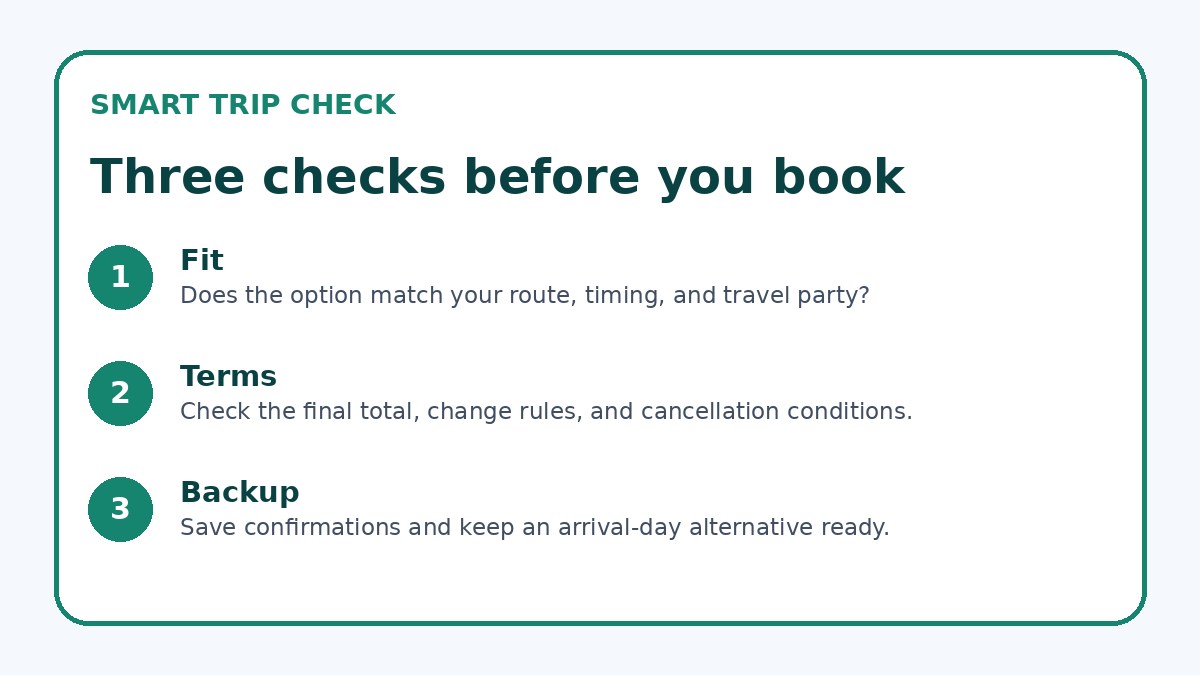
Create a simple disruption plan before travel day: identify at least one later departure on the same route and one alternative mode (for example, a late train or a private car) so you can move options quickly if your booked service is delayed or canceled. Keep the operator’s customer service contact and any relevant booking references handy. If your itinerary includes timed check-ins at your destination, give yourself buffer time or inform the arrival point you may be delayed due to luggage-related issues. Consider refundable or changeable tickets if your schedule is uncertain; the extra flexibility reduces stress if you need to rebook.
On the day, set checkpoints: a target time to leave for the terminal, a time to confirm your booking and baggage allowance, and an emergency plan for oversized items (like calling a local moving company or courier). If you’re traveling in a group, nominate one person to manage rebooking so decisions happen fast. Finally, carry emergency contact numbers, local cash for unexpected porter or taxi costs, and proof of purchase for any luggage services you reserve; having these documents quick to access speeds resolution if plans change.
Rail & Intercity Transport questions travelers ask
How much extra time should I allow at Toronto or Montreal terminals when I have oversized luggage?
Allow at least an extra 30–60 minutes beyond standard recommended arrival times when traveling with oversized or multiple bags. This gives you time to find short-term parking or curbside drop-off, request porter assistance if available, and complete any required check-in or baggage tagging. If you need elevator access, or if the terminal requires moving between platforms, add further buffer. If you’ve pre-booked assistance or checked luggage in advance, confirm the meeting point and allow time for staff handling; always verify the operator’s recommended arrival window on their booking page.
Is it better to ship a heavy bag ahead rather than bring it on the trip?
Shipping can be a sensible choice when the bag is bulky, non-urgent, or expensive to lift repeatedly. Compare the convenience of a shipped item—no last-mile carrying or hold restrictions—against the lead time for delivery and the need to secure the item at origin and destination. Check reputable courier policies for size, value coverage, and delivery timing before booking. If you choose to ship, insure valuable contents, and arrange delivery to a secure pickup point or your destination address to avoid waiting at the terminal.
What should I verify on an operator’s booking page regarding luggage policies?
On the booking page, check the allowed number of bags, maximum dimensions and weight per bag, fees for extra or oversized items, whether advance reservation for oversized items is required, and whether the carrier offers porter or curbside assistance. Also verify boarding and check-in windows, whether luggage is stowed in an unmonitored hold or kept onboard, and any restrictions for sports equipment or fragile items. If a page is unclear, contact the operator directly and save correspondence confirming any special arrangements before travel day.
Final decision note
Traveling Toronto to Montreal with extra luggage is manageable with a bit of planning. Start by choosing the mode that minimizes handling for your bag profile—rail or private car generally reduce lifts—then verify luggage rules and build realistic door-to-door timelines. Reduce friction on travel day with clear labeling, a focused essentials carry-on, and a pre-arranged last-mile transfer. Finally, name a disruption backup and keep operator contact details ready; the right contingency prevents a single delay from becoming a major logistical headache. With these practical steps you’ll turn a heavy luggage challenge into a predictable, solvable part of your trip.
Continue planning
Check current options and final conditions
Use the provider page to confirm live availability, the final total, cancellation terms, and every condition that matters to your trip.
This evergreen planning guide was created with AI-assisted drafting and a structured quality review. It does not display live prices, schedules, availability, visa guidance, or provider rankings. Verify current details before booking. Some links are affiliate links; we may earn a commission at no additional cost to you.