For families deciding how to get from Fukuoka to Hiroshima, the practical choice usually comes down to rail, coach, ferry, or driving — sometimes a combination of those modes. Choose the train when you prioritise predictable transfers and easy access to city-center stations; choose coach for fewer station changes and simpler luggage handling; consider ferry if you want a relaxed crossing and a different travel experience; and drive when door-to-door flexibility or multiple stops suit your family's pace. The right option depends less on raw travel time and more on where you'll start and finish, how much luggage and child gear you carry, and how tolerant your children are of transfers or delays. Read on for clear tradeoffs, terminal-fit advice, tips to reduce transfer friction, and practical disruption backups so you can pick the option that keeps the trip smooth and enjoyable.
Terminal fit: where each mode delivers you in the city
Start by mapping the exact terminals and how they relate to your accommodation and activities. For rail, major stations are often in the urban core, which usually means short taxi rides or direct tram/subway links to hotels and attractions; this reduces the need to haul suitcases on multiple transfers. Coach terminals and bus stops can vary — some stop at central bus stations near hotels, others may unload at roadside stops requiring short taxi or tram rides. Ferry terminals tend to be on the waterfront and may be farther from city-center hotels, so plan the transfer leg in advance, especially with children and luggage.
If you plan to drive or take a private transfer, confirm drop-off and parking options near your accommodation. Some family-friendly hotels have limited parking or charge for it, and unloading close to your room can save a lot of stress with small children. When comparing options, sketch a door-to-door itinerary: home/hotel in Fukuoka → terminal → journey → terminal in Hiroshima → hotel. That visual will reveal whether a 'faster' mode actually means fewer transfers and less carrying for your family.
Choose the end-to-end journey plan
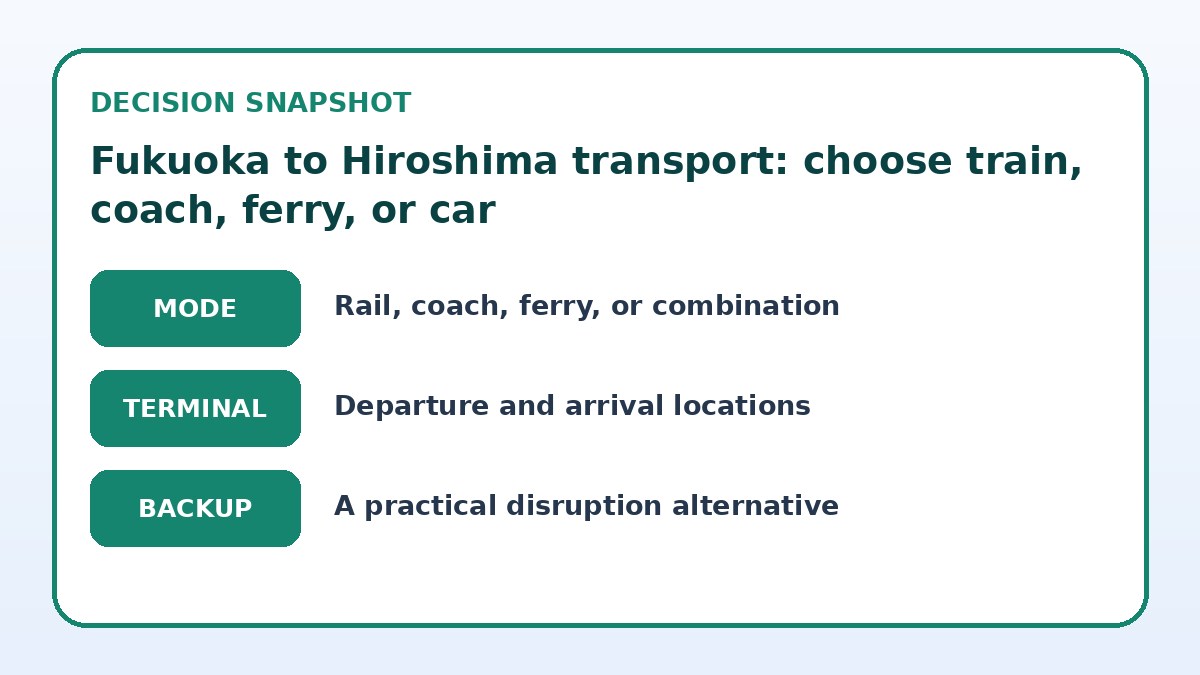
| Journey approach | Best for | Friction to check |
|---|---|---|
| Prioritise rail for central-to-central travel | Families wanting predictable transfers and frequent departures | May involve carrying luggage across station concourses and can be busy at peak times |
| Choose coach for simpler luggage handling | Families with lots of suitcases or bulky gear who value direct hotel-area drop-offs | Fewer departures and possible roadside stops away from exact hotel entrances |
| Take the ferry for a relaxed, spacious crossing | Families who want a scenic, low-activity travel leg with room to move | Fewer sailings and often longer transfers from port to city center |
| Drive or hire a private transfer for maximum door-to-door control | Families needing full control of timing, stops, and direct hotel access | Driver fatigue, parking, tolls, and city traffic can offset convenience |
Check live intercity options
Look beyond the ride itself and compare terminals, transfers, luggage, and arrival fit.
Luggage and transfer friction: keeping kids, bags, and strollers in mind
Count the pieces and types of luggage and factor in strollers, car seats, and child carriers. Trains usually offer luggage racks and level boarding at major stations, but peak trains and crowded platforms can make stowing large items tricky. Coaches often allow checked luggage beneath the bus and provide more cabin space, but transferring between a coach stop and your hotel can still mean a walk or taxi. Ferries typically offer more room to move around, which helps restless kids, but getting on and off a ferry usually involves ramps or gangways and potentially longer walks between parking, check-in, and cabin areas.
For family travel, the number of handoffs matters more than transit time. Each time you move from vehicle to platform to taxi you add complexity and time. If you have a large stroller or multiple kids, a private car or hired transfer cuts most friction by offering doorstep loading and direct drop-off. If you choose public modes, pick departure and arrival points closest to your accommodation and allow generous buffer times for restroom stops, diaper changes, and minor delays.
Timing flexibility and rhythm: departures, naps, and sightseeing windows
Consider how departure frequency and schedule rigidity affect your family's day. Trains often run frequently and offer flexibility to shift to later or earlier services without major penalties, which helps if a toddler naps unpredictably. Coaches may have fewer departures per day, so missing one could mean a long wait, but scheduled direct coaches can be timed to avoid multiple transfers. Ferries usually have a small number of crossings and fixed schedules that make timing crucial; they can be lovely for a mid-day break but risky around a strict itinerary or tight hotel check-in windows.
Driving gives the most control over departure times and stops, letting you build naps and play breaks into the journey. However, driving with tired children can increase stress for the driver and reduce flexibility in dense urban areas where parking or traffic might delay you. Whatever mode you choose, build in extra time for bathroom stops, snack breaks, and transitions; leave the day before a planned activity or reservation free enough to absorb the inevitable small delays when traveling with kids.
Compare the practical alternatives
Use the final page to confirm what is actually offered on your dates and save a workable fallback.
Intercity travel checklist
- Map door-to-door time: note walking, taxi, tram, or bus legs from your Fukuoka accommodation to departure terminal and from arrival terminal to your Hiroshima hotel.
- Measure and photograph bulky items (stroller, car seat, large suitcases) and confirm each operator’s luggage policy on their official booking page.
- Build a flexible schedule with at least one later alternative departure and identify taxi ranks or ride-hail pickup points at both terminals.
- Pack a small ‘travel kit’ with snacks, hand wipes, spare clothes, chargers, and a simple first-aid item for children to reduce stress during transfers.
- Save screenshots of booking confirmations and the operator’s change/cancellation policy; verify those details again on the final provider page before travel.
- Plan two backup routes (e.g., later train, coach alternative, or taxi) and share them with one adult and the kids so everyone knows the plan if a delay occurs.
Disruption backup: what to prepare if plans change
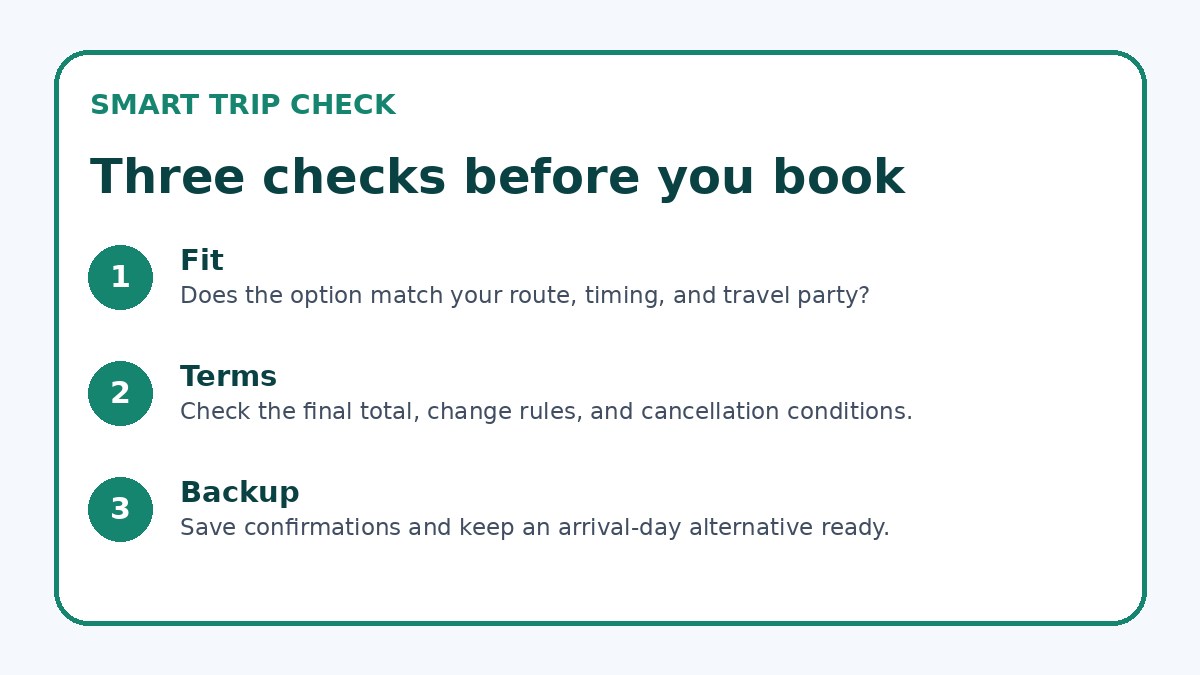
Plan two realistic backups for each mode. For trains and coaches, identify the next few departures and the nearest taxi ranks or ride-hail pickup points at both terminals. Keep tickets, confirmations, and a screenshot of the operator’s contact or delay notices, and know where refunds or changes are handled on the official booking pages. For ferries, check the alternate land-based routes and whether nearby bus or rail services can get you to Hiroshima if crossings are canceled; plan how to move luggage if a ferry is rescheduled.
If driving, have contingency routes and an idea of where you can stop safely for rest if the original plan becomes impractical. Carry basic supplies — spare snacks, medications, a phone charger, and physical copies of key addresses — and pick accommodation with flexible check-in or a luggage-hold option. For all modes, verify the final booking provider’s terms for changes and cancellations before you buy; Trip.com may be a place to compare current availability but always confirm final conditions on the operator’s official booking page.
Rail & Intercity Transport questions travelers ask
What is the easiest option for families with young children and lots of luggage?
If minimizing transfers and physical handling of luggage is the priority, a coach that stops close to central hotels or a private transfer usually reduces on-and-off loading. Coaches typically allow larger items beneath the bus and can drop you nearer to hotel entrances than some rail stations, which reduces carrying with children. A private car is even simpler for doorstep loading, but you should check parking availability and charges at your Hiroshima accommodation. Always confirm baggage rules and terminal locations on the operator’s official booking page before finalising plans.
How should I plan meals, naps, and potty breaks en route?
Build generous buffer time into your schedule and avoid tightly timed connections. For trains, look up station facilities—restrooms and quick food outlets—at both ends; for coaches and ferries, factor in terminal walking time before boarding and possible limited onboard food options. If driving, identify safe rest stops or family-friendly service areas along the route. Pack familiar snacks, a small blanket for naps, and an easy-to-access change of clothes. Planning these small details ahead makes the journey less stressful and reduces the chance of a missed connection due to an unscheduled stop.
How do I check current schedules and change policies before booking?
Always view the official operator page or authorised reseller for the most current departure times, availability, and the exact change or cancellation terms that apply to your ticket type. Many operators post real-time updates and service notifications on their websites or social accounts. Trip.com can be used to compare current availability, but treat it as a comparison tool and verify the final price, schedules, and any penalties directly with the transport provider before booking. Save confirmation emails and screenshots in case you need to present them during a disruption.
Final decision note
Choosing the best Fukuoka to Hiroshima transport option for your family comes down to mapping door-to-door practicality rather than chasing raw travel time. Trains usually offer frequent, predictable service into the city center, coaches simplify luggage handling and can drop you nearer hotels, ferries provide a relaxed on-board atmosphere but need careful transfer planning, and driving gives complete flexibility while adding parking and toll considerations. Make decisions based on where you start and end, how much luggage and child gear you have, and how flexible your schedule must be. Verify terminal locations, luggage policies, and change rules on operator pages before you buy, prepare two backups, and build in time for the small pauses that make family travel manageable and pleasant.
Continue planning
Check current options and final conditions
Use the provider page to confirm live availability, the final total, cancellation terms, and every condition that matters to your trip.
This evergreen planning guide was created with AI-assisted drafting and a structured quality review. It does not display live prices, schedules, availability, visa guidance, or provider rankings. Verify current details before booking. Some links are affiliate links; we may earn a commission at no additional cost to you.