If your flight to Kyoto arrives late, the first decision in the hour after landing is: can you reach your hotel or meeting point directly, or should you pause in a well-lit, staffed location until morning? For business travelers this means weighing immediate convenience against fatigue, luggage management, and the reliability of onward connections. Start by checking whether your arrival airport has staffed late-night transport desks or 24-hour taxi ranks, then confirm whether your hotel offers late check-in or a secure luggage hold. If you must meet colleagues or head straight to a hotel, choose a transfer option that matches your party size, luggage amount, and tolerance for waiting or transfers. The rest of this guide breaks those choices down, explains what to verify before booking, and gives a checklist you can use while your flight and reservation details are open.
Check options for your arrival details
Use your flight, luggage, party size, and accommodation address to compare current choices.
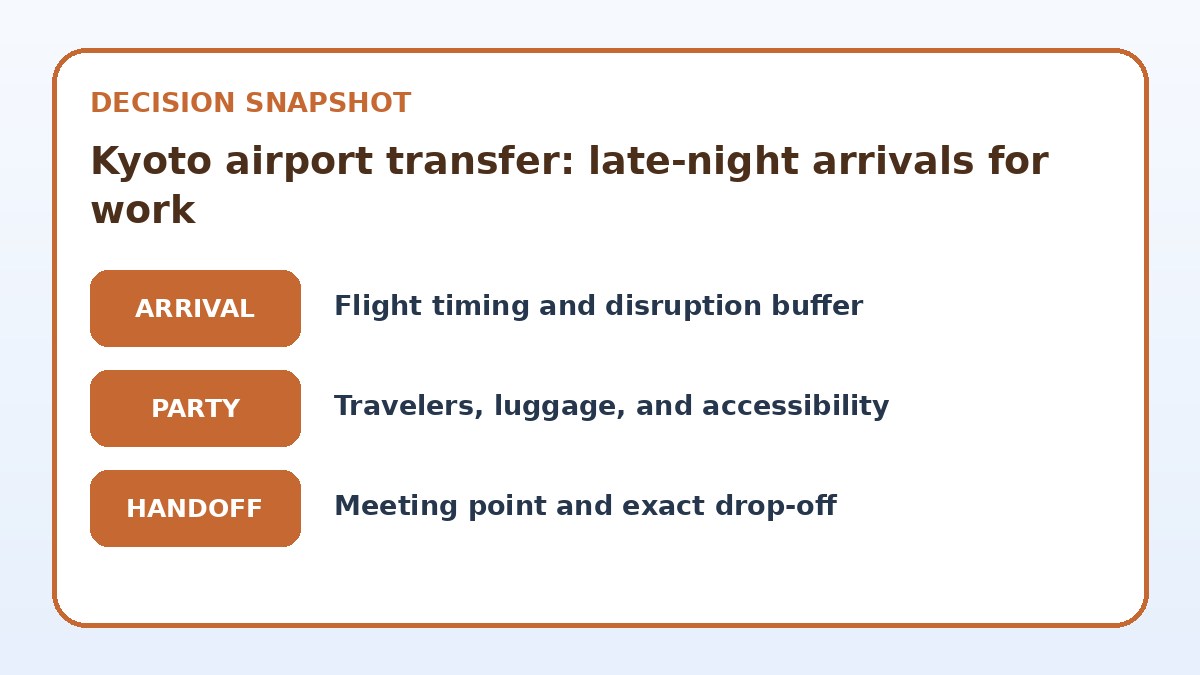
Luggage and party size: pick the right vehicle
Late-night arrivals change the math on luggage. Business travelers often carry a roller-case plus a laptop bag; if you have larger suitcases or equipment, that affects whether a taxi, private transfer, or shuttle is practical. Taxis and private cars generally handle a normal passenger’s luggage well, but groups of three or more with multiple large cases may need a van or an SUV. When you book, state the exact number of people and pieces of luggage; providers can confirm vehicle type or upgrade options, and some require advance notice for larger vehicles.
Think about door-to-door convenience versus cost. A private car will take you directly to your accommodation, eliminating the stress of moving luggage through stations or across platforms late at night. Shared shuttles and trains can be cheaper but often require carrying bags on and off and waiting for scheduled departures. If your itinerary includes an early meeting soon after arrival, prioritize a door-to-door option even if it costs more—saving time and energy can be worth the premium for business travelers.
Arrival details to have ready
- Confirm your flight number and new estimated landing time; share both with your transfer provider and hotel.
- State the exact number of passengers and pieces of luggage when booking a transfer to ensure appropriate vehicle size.
- Ask the provider for a precise meeting point (terminal, exit, landmark) and a driver contact method you can reach from the arrivals hall.
- Verify the provider’s wait time policy and what happens if your flight is delayed beyond the booking window.
- Check whether your hotel accepts late check-in or will secure your key and luggage if you arrive after staff hours.
- Save an alternate plan: local taxi app, airport taxi rank location, or a 24-hour spot in the arrivals terminal in case of missed pickups.
Arrivals that run late or get disrupted
Delays, long immigration queues, or diverted flights are inconvenient at any hour; at night they add an extra layer of uncertainty. When planning a transfer, choose providers with flexible pickup windows or explicit late-arrival policies. If you book a private transfer, confirm what the driver’s wait time is and how long they will hold the booking after your scheduled landing time. If a provider lists fixed pickup times for shared shuttles, have a backup plan: a confirmed taxi app, a hotel shuttle, or a local 24-hour taxi rank.
Keep documentation ready to show staff if lines are long or your pickup is unclear. A clear booking reference, your flight number, and the expected arrival time help drivers locate you faster. Also prepare for the possibility that the airport’s arrivals area is crowded or split into multiple exits—take a quick photo of the nearest signage and note the terminal and exit description you will use. These small actions reduce searching and phone calls in the first hour after landing.
Match the transfer to your arrival
| Arrival approach | Best for | Detail to verify |
|---|---|---|
| Private pre-booked car | Small groups, heavy luggage, direct door-to-door service after late arrivals | Higher cost but minimal waiting and fewer transfer steps |
| Taxi from airport rank | Solo travelers with normal luggage wanting flexible, immediate departure | Variable availability and vehicle size late at night; clarify fixed fares or meters |
| Shared airport shuttle | Budget-conscious travelers arriving within shuttle operating hours | Scheduled pickups and multiple stops can add time and require more walking with luggage |
| Public transport (train+bus) | Experienced travelers comfortable transferring and saving cost when schedules align | Limited late-night frequency and possible transfers with luggage make it less convenient |
Make the meeting plan clear
Check the final pickup instructions, waiting conditions, and exact drop-off coverage.
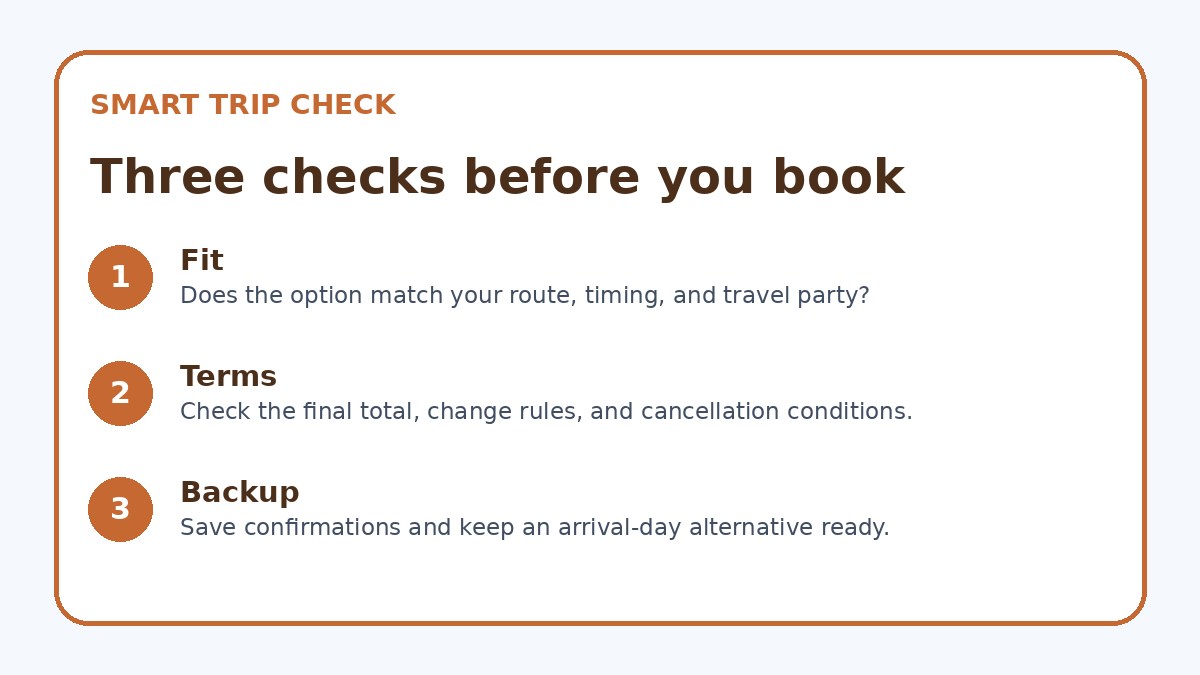
Meeting-point clarity: reduce stress and wasted time
Late-night lighting and fewer staff around mean meeting points must be unambiguously described. Avoid vague instructions like “meet near the exit” and prefer precise references: terminal number, exit letter, nearby landmark (an information desk, a recognizable shop), and the time you will be there. When you book, ask the provider to confirm a single, repeatable meeting point and the driver’s contact method—phone, local SIM, or messaging app. For international travelers, ensure the driver can receive messages if your roaming is limited.
Give backup instructions if you or the driver can’t find each other. This might be a fallback phone number, information desk location, or a second exit point that is safe and well-lit. If you will be met by a corporate contact or colleague, share their phone number with the transfer operator and confirm whether the driver will wait or return after a short interval. Clear, redundant communication prevents the first hour from becoming an anxious scramble.
Drop-off fit: from doorstep to meeting room
Not all central Kyoto streets or hotels are equally easy for vehicles to access late at night. Confirm in advance whether your accommodation has a drop-off zone, late-night entrance, or a nearby recommended curbside point. Some traditional ryokan or older city-center hotels sit on narrow lanes that make direct vehicle access challenging; in those cases plan for a short walk from a nearby allowable drop-off spot. If you have a lot of luggage or mobility constraints, prioritize accommodations with clear vehicle access to avoid last-minute handling.
Consider the timing of your first meeting or check-in. If you arrive late but have early obligations, factor in reduced public transport frequency and early-morning traffic when choosing between a cheaper shared transfer and a more reliable private ride. Communicate expected arrival times with reception or your host so staff can hold a key or prepare a workspace. When in doubt, book a transfer option that gets you as close as possible to your actual destination entrance to conserve time and energy before the meeting.
Airport Transfer & Local Mobility questions travelers ask
Is it safe to take a taxi at Kyoto airports late at night?
Taxis are commonly used for late-night airport transfers and are generally a practical choice when staffed services are reduced. For peace of mind, book through a reputable operator or use an app linked to payment methods so the trip is recorded. Before you enter the taxi, confirm the driver knows your destination and the expected fare arrangement (meter or fixed-rate). Keep copies of your booking reference and the driver’s details, and ask your hotel to confirm the recommended drop-off point if streets near your accommodation are narrow.
Should I book a private transfer in advance or wait until I land?
Booking a private transfer in advance reduces uncertainty after a late-night arrival—especially if your schedule is tight or you have multiple pieces of luggage. An advance booking secures a vehicle type and usually includes driver wait time instructions for delays. However, if you prefer flexibility and your flight is variable, know the provider’s late-arrival policy and choose one that allows reasonable flight-tracking or free rescheduling. If you decide to wait, identify the airport’s taxi rank and any 24-hour transport counters before you land.
How do I handle a late arrival if my meeting is early the next morning?
If you have an early meeting, prioritize rest and reliable, quick transfers over lower-cost options. Choose a transfer that drops you as close as possible to your accommodation entrance and confirm late check-in and wake-up or breakfast arrangements with your hotel. If arrival uncertainty is high, inform your meeting contact of your flight details and the transfer plan so they can adjust timing or offer local support. Pack essential items—charger, documents, a change of clothes—in a carry-on so you can be ready for a morning meeting even if luggage arrives later.
Final decision note
Planning a Kyoto airport transfer for a late-night arrival comes down to matching urgency, luggage, and tolerance for uncertainty. If your schedule requires you to reach a hotel or meeting quickly, prioritize door-to-door options—private transfers or taxis—that limit handling and waiting. If you can accept some time for savings, scheduled shuttles or public transport may work but require careful timing and potentially extra walking. Always confirm meeting-point details, vehicle capacity, and the provider’s policy for flight delays before you book. Keep a short, actionable backup plan ready on your phone so that the first hour after landing is simple, safe, and focused on rest or preparation for work.
Continue planning
Check current options and final conditions
Use the provider page to confirm live availability, the final total, cancellation terms, and every condition that matters to your trip.
This evergreen planning guide was created with AI-assisted drafting and a structured quality review. It does not display live prices, schedules, availability, visa guidance, or provider rankings. Verify current details before booking. Some links are affiliate links; we may earn a commission at no additional cost to you.