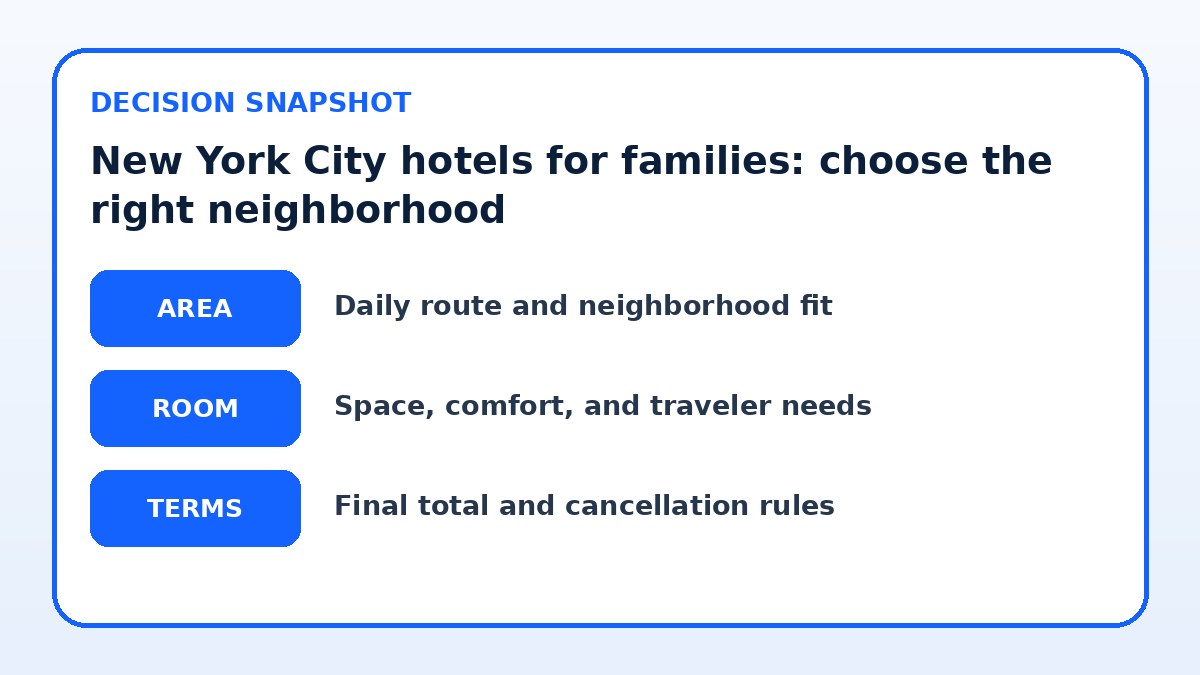
Choose the neighborhood first. For a family trip to New York City, the single most useful planning move is to pick the stay area that matches your family’s daily rhythm: museums and parks for preschoolers, theater and short walks for older kids, or quieter residential streets for longer stays. Once you’ve narrowed to a neighborhood, compare hotels on room configuration, breakfast or kitchenette options, elevator/stroller access, and cancellation or change flexibility. This article helps you shortlist Manhattan and outer-borough neighborhoods by explaining the neighborhood fit, daily-route friction, sleeping arrangements for families, and the specific booking terms you must verify on the hotel’s page before you commit.

Check live stays in the areas that fit
Use your dates and party size to compare current rooms after you narrow the neighborhood fit.
Neighborhood fit: match each area to your family’s rhythm
Pick a neighborhood by asking what most of your days will look like. If your itinerary centers on museums, parks, and playgrounds, consider the Upper West Side or Upper East Side for their cluster of family-focused attractions and straightforward walking routes. For theater, Midtown or Times Square places you near Broadway shows and the bright lights older kids enjoy, but expect more foot traffic and noise. Brooklyn neighborhoods like Brooklyn Heights or DUMBO give quieter, residential streets, easy waterfront playgrounds, and shorter commutes to downtown museums and ferries—the tradeoff is longer subway rides to Midtown attractions.
Think about daily conveniences too: neighborly grocery stores, playgrounds, and pharmacies are invaluable with kids. Areas with more family-oriented buildings often have ground-floor businesses and shorter blocks, which makes strolling with a stroller simpler than long avenues with heavy crowds. Also consider evening needs—will you prefer lots of nearby dining options or a quieter street where kids can nap undisturbed? Match the area to your youngest traveler’s needs and the group’s tolerance for walking and subway transfers.
Choose an area-selection strategy
| Area approach | Best for | Tradeoff to check |
|---|---|---|
| Central Midtown (Times Square area) | Families wanting short walks to theaters and quick access to many attractions | Busier streets, more noise, and longer lines; less quiet residential feel for naps |
| Upper West/Upper East Sides | Families prioritizing museums, parks, and easy strolling with children | Farther from Midtown theaters and downtown ferries; slightly longer transit to some attractions |
| Brooklyn neighborhoods (DUMBO, Brooklyn Heights) | Families seeking quieter streets, waterfront play areas, and residential charm | Commute times to Midtown can be longer and may require more subway or ferry use |
| Greenwich Village/Chelsea | Families who want neighborhood dining, playgrounds, and a walkable evening scene | Some pockets are busier at night and fewer large-suite hotel options than Midtown |
Daily-route friction: minimizing transit and tired feet
Map your likely daily loops before picking a hotel. Calculate how many subway transfers are needed from a candidate neighborhood to your top three activities: museum, playground/park, and evening meal. Each transfer matters when you’re juggling strollers, car seats, or tired kids. Waterfront neighborhoods and areas near multiple subway lines reduce transfers; neighborhoods with only one convenient line can still work, but expect more walking between stops or reliance on buses and rideshares on days you’re short on time.
Also evaluate station access and station infrastructure—does the closest subway have stairs only, a long elevator wait, or direct street-level access? For families with strollers or mobility needs, an elevator-equipped station or a hotel within easy walking distance to green space and playgrounds can be a better tradeoff than a hotel closer to a major attraction but farther from step-free access. Use transit maps and route planners to simulate travel time with stroller or child breaks to get realistic expectations for each day.
Now compare like with like
Keep the same dates, guests, room needs, and cancellation preferences while you compare the final choices.
Room and party needs: layout, sleep, and in-room conveniences
Decide the sleeping configuration that works for your family early. Ask whether the hotel lists connecting rooms, suites with separate living areas, rollaway beds, or sofa beds. Families often prefer a suite or connecting rooms so adults can have quiet while kids nap. If a kitchenette or mini-fridge matters—for storing milk, snacks, or leftovers—prioritize rooms that advertise these features. If that information isn’t explicit on the hotel page, contact the property directly and verify crib availability, cot setup fees, and whether a fridge is standard or only in certain room types.
Consider practical accessibility details that affect day-to-day comfort: elevator size for a stroller, hallway width for luggage, and whether the bathroom layout is family-friendly. Request rooms on lower floors if elevator time is a concern, or rooms away from major streets for quieter nights. Remember to check whether breakfast service is included or available for purchase; having a reliable morning option can make departures and early days much smoother for families.

Hotel booking check before payment
- List your top three daily activities and map them to candidate neighborhoods to see which reduces transfers and walking.
- Confirm elevator availability and stroller-friendly access for the hotel and the nearest subway station.
- Choose the room type: connecting rooms, suite, or double room with sofa bed, and ask the hotel to verify setup.
- Request crib availability and any associated fees in writing and note any required lead time for requests.
- Compare rate rules for cancellation and date changes on the hotel’s final booking page before entering payment.
- Check whether breakfast or a kitchenette is included so you can plan morning routines without last-minute searches.
Booking terms to verify: flexible plans and clear charges
Before you book, verify cancellation and change policies directly on the hotel’s booking page—names and policies may vary by rate type. If your travel dates or party size might change, choose a rate with flexible changes or free cancellation when possible. Also check whether the quoted rate includes taxes, city occupancy fees, or additional per-stay charges for extra guests or cots. When in doubt, screenshot the booking terms and the rate details before finalizing, and keep that confirmation email until after check-out.
Confirm the practicalities the hotel’s listing should show: check-in and check-out times, whether late check-in is allowed, how to request a crib or rollaway, and any deposit or pre-authorization policy. If you plan to request housekeeping at specific times or need early check-in for a morning arrival, ask the property directly and get any promises in writing. Use Trip.com or the hotel’s direct booking page to compare current availability and terms, but always confirm provider-specific facts on the hotel’s final booking page before committing.
Hotel Guide questions travelers ask
What neighborhood is best for toddlers who need frequent naps and playground time?
For toddlers, prioritize neighborhoods with nearby green space and short walking distances between activities—Upper West Side and parts of Brooklyn like Brooklyn Heights and DUMBO fit this need well. These areas cluster playgrounds and parks, which lets you build short, predictable loops that accommodate nap times. Also prioritize hotels near ground-floor conveniences—cafés, pharmacies, and grocery stores—so you can quickly buy supplies without long trips. Verify on the hotel booking page whether early check-in or a late-afternoon quiet room can be arranged if your toddler’s nap schedule is strict.
How should we balance being near Broadway versus quieter family neighborhoods?
If seeing a Broadway show is a priority, staying in Midtown minimizes late-night transit and walking after performances, which is helpful with older children. But Midtown is often busier and noisier, which can make daytime naps harder for younger kids. If you prefer quieter nights and more residential streets, choose a family-friendly neighborhood farther from Broadway and plan a show night using a short taxi or subway ride. Compare the convenience of same-night returns against the comfort of quieter evenings; whichever you choose, check transit times and station access to prevent surprises.
Are suites or connecting rooms worth the extra search when booking "New York City hotels" for families?
Yes—suites or connecting rooms frequently provide the most practical layout for families, offering separate sleeping areas and space for quiet after bedtime. They can make on-site downtime easier and reduce the need for late-night babysitting arrangements. However, larger rooms can reduce the hotel options available in some neighborhoods and may cost more; balance this by searching multiple neighborhoods where suites are common and by confirming the sleeping setup and exact bed types on the hotel’s booking page. If a kitchenette matters, verify whether it’s standard for that room category or an optional upgrade.
Final decision note
Start by choosing the neighborhood that matches how your family will spend most days—museums and parks, theater nights, or quieter residential strolls—then refine choices by looking at room layout, stroller access, and booking terms. Minimizing transfers and prioritizing elevator access, crib availability, and breakfast or kitchenette options will reduce daily friction. Before paying, verify cancellation and change policies plus any extra charges on the hotel’s booking page. With the area shortlisted and these concrete checks complete, you’ll be able to compare live inventory confidently and pick a hotel that keeps your family’s days predictable and enjoyable.
Continue planning
Check current options and final conditions
Use the provider page to confirm live availability, the final total, cancellation terms, and every condition that matters to your trip.
This evergreen planning guide was created with AI-assisted drafting and a structured quality review. It does not display live prices, schedules, availability, visa guidance, or provider rankings. Verify current details before booking. Some links are affiliate links; we may earn a commission at no additional cost to you.