If you have more than a suitcase or a bulky item to move between London and Paris, the most practical decision is to weigh door-to-door ease, transfer friction, and timing flexibility rather than only the ride time. Rail (Eurostar via St Pancras to Paris central stations), coach, ferry-plus-drive or air each create different pain points for bags: where you lug them, how you check or tag them, and when you can access them. Start by mapping your exact door-to-door route and the number, size and weight of bags you must handle. That baseline tells you whether you need checked baggage services, dedicated baggage shipping, a vehicle with trunk space, or a low-friction transfer at terminals. Below you'll find clear tradeoffs to decide quickly, what to check on provider booking pages, and a disruption backup plan so your extra luggage doesn't become a travel crisis.
Choose by terminal fit and door-to-door practicality
First, map where you start and want to arrive in London and Paris. Central terminals reduce last-mile hassle: trains often deliver you closer to city centers, while airports sit farther out. Consider how far you'll drag or transfer heavy bags between your lodging and the transport terminal. If you’re staying near St Pancras in London or Gare du Nord in Paris, rail usually cuts walking or taxi time. If your start or end point is away from train stations and you need a private vehicle to carry oversized items, a ferry-plus-drive or driving directly across may win despite a longer overall journey.
Next, look at terminal infrastructure as a reality check: elevators and ramps, luggage trolleys, checked-baggage desks, and curbside loading. Even if a provider accepts oversized items, the true question is how often you'll be lifting and hauling between modes. Assess whether the carrier offers baggage assistance, whether you can pre-book extra handling, and how busy the terminal typically is at your planned times. Always verify these specific services on the provider's final booking page so you know what help is actually available on travel day.
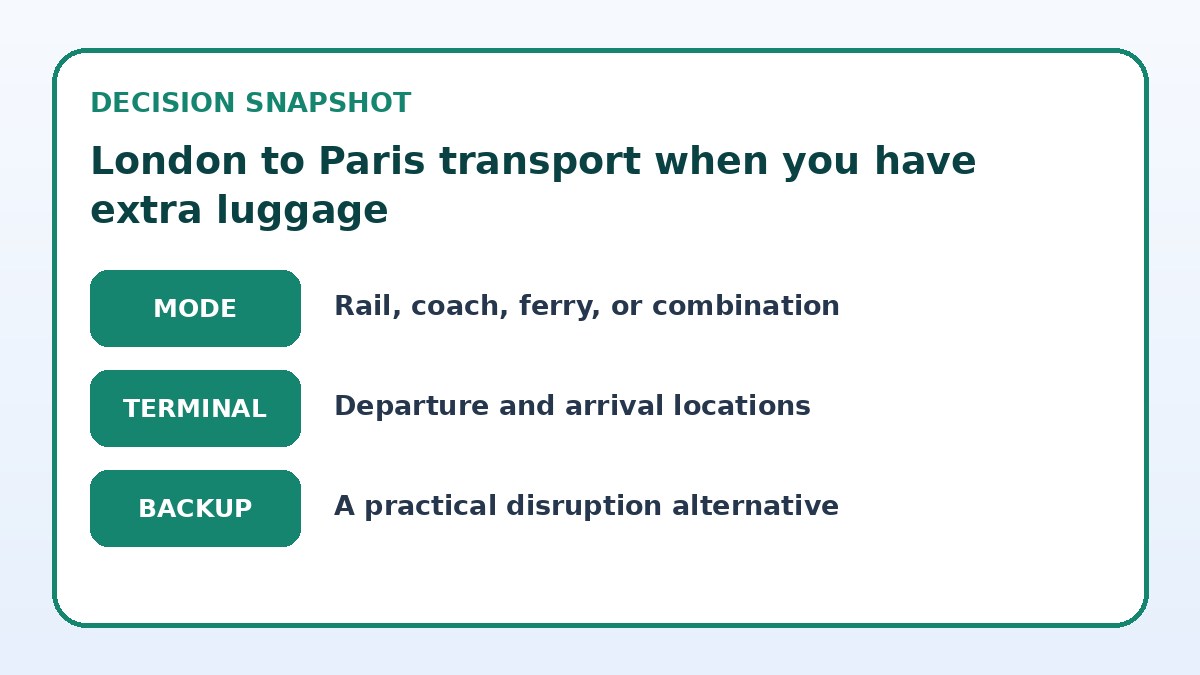
Choose the end-to-end journey plan
| Journey approach | Best for | Friction to check |
|---|---|---|
| Direct high-speed rail (train-focused) | Passengers who need central arrival and low handling between door and platform. | May have size limits and long walks inside stations; check luggage policies and platform access on booking pages. |
| Coach/staged bus travel | Groups with many bags who want lower-cost carriage with some hold space. | Limited control over fragile items and variable terminal locations; confirm luggage hold rules before booking. |
| Air with checked-baggage handling | Very heavy or large items that benefit from airline checked-baggage procedures. | Adds security and check-in friction plus city-center transfers; verify size/weight limits and transfer logistics. |
| Drive or ferry plus private vehicle | Very bulky cargo or door-to-door groups needing direct vehicle access at both ends. | Longer door-to-door travel and border checks; plan parking, loading zones, and vehicle capacity precisely. |
Check live intercity options
Look beyond the ride itself and compare terminals, transfers, luggage, and arrival fit.
Luggage and transfer friction: handling, limits, and options
Different modes treat baggage differently: trains generally allow multiple carry-on pieces and occasional oversize items with limits, coaches constrain number and size, and airlines enforce checked-baggage rules. For truly bulky objects—sports equipment, large boxes, or multiple suitcases—decide whether you’ll use baggage shipping, vehicle transport, or rely on carrier-checked handling. Baggage shipping services or courier options can remove transfer hassle but require lead time and secure pickup/drop-off locations. If you choose baggage shipping, confirm pickup windows, insurance, and how the provider handles delays or damage; verify these terms on the shipper's booking page.
Plan the transfers between modes carefully: escalators and short corridor walks are manageable; narrow station staircases and long airport terminals are not. If you must move luggage across terminals or through security, budget extra time and bring straps or wheels suited to mixed surfaces. Consider portable gear like collapsible luggage carts or protective covers for fragile items. Also confirm whether the train station or coach terminal offers left-luggage facilities for temporary storage if you need to sightsee between connections, and check the provider's official page for opening hours and size limits.
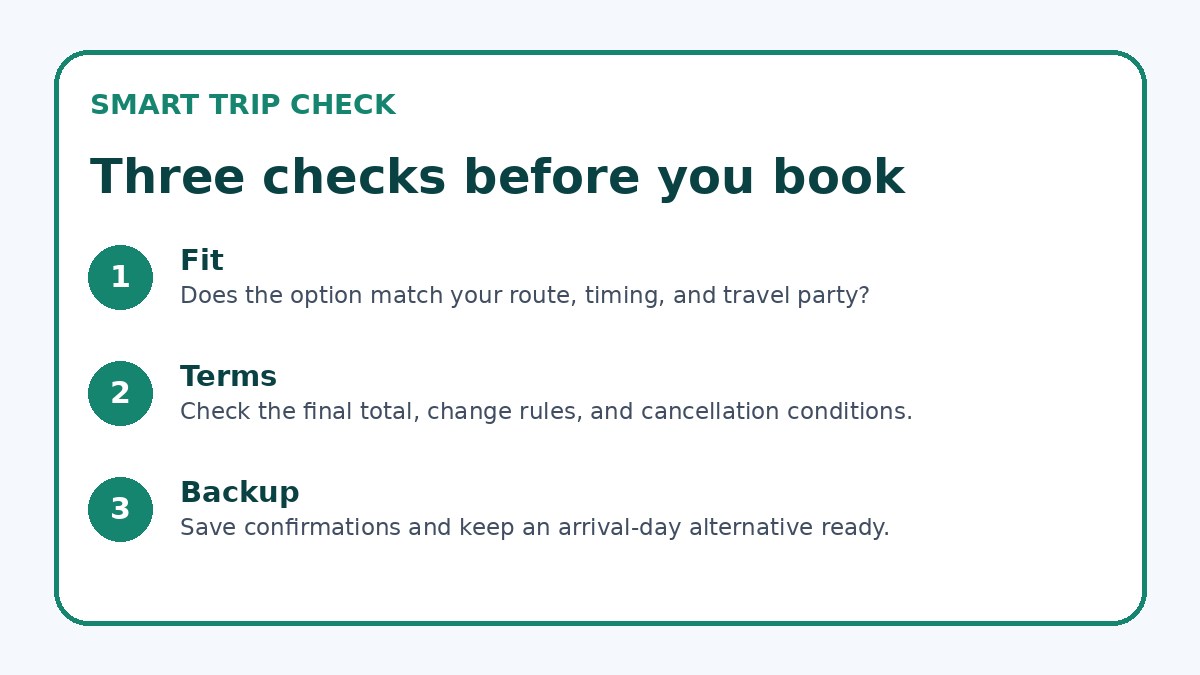
Timing flexibility and booking choices
When traveling with extra luggage, plan for flexible timings: avoid the tightest connections and aim for buffer windows that allow for slow walking, queueing, or last-minute assistance. Trains and coaches run frequently, which can help if your schedule slips; flights are less forgiving. If you need a guaranteed level of service—like assistance from platform to vehicle—book it in advance. On the provider's booking page, look for options such as assistance services, pre-booked luggage space, or priority boarding; these options can make a longer trip feel smoother.
Compare direct options against connections honestly: a longer direct rail or coach journey that keeps you with your bags is often more practical than a faster flight that forces multiple handoffs. Where direct services don't exist, build in transfer buffers and confirm transfer logistics between terminals. If you must mix modes—say a ferry crossing then a train—map the exact transfer route and timing, and identify sheltered loading areas in case of rain. Always reconfirm operating days and the provider's luggage policies before finalizing bookings.
Compare the practical alternatives
Use the final page to confirm what is actually offered on your dates and save a workable fallback.
Intercity travel checklist
- Measure and weigh every bag; list dimensions and weights to compare against carrier baggage rules before booking.
- Map door-to-door time and distance between your lodging and each terminal, including stairs, elevators, and curbside drop-off points.
- Check provider booking pages for baggage allowances, pre-booked assistance, and procedures for oversized or fragile items.
- Reserve additional handling (assistance, trolleys, or pre-booked luggage space) when available and save confirmation emails.
- Pack an essentials carry-on with valuables and a change of clothes in case checked items are delayed or rerouted.
- Save customer-service and lost-luggage contact details for all booked carriers and any third-party shippers you use.
Disruption backup: contingency plans for lost time or luggage
Have a simple contingency kit and plan: a week’s essentials in one carry-on, a small tool kit for bag repairs, copies of receipts and inventory for high-value items, and contact details for any luggage shipping or assistance you've booked. Research nearby left-luggage options at both origin and destination stations, and note the location of luggage claim or lost-and-found desks at airports or terminals. If a connection is missed, your priority is securing your bags and finding the next departure that keeps baggage handling minimal—meaning fewer transfers or a single checked-option.
Also prepare an alternative transport option that minimizes handling: a taxi or pre-booked private transfer can often take you and your bags door to door with one handoff. If a private car isn't viable, consider booking the next direct coach or train even if it departs later. For very high-value or fragile cargo, arrange insured courier pickup as a fallback. Before travel, save the customer-service numbers for your carriers and any third-party shippers so you can act quickly if luggage routing or schedules change.
Rail & Intercity Transport questions travelers ask
Can I bring oversized sports equipment or multiple suitcases on trains between London and Paris?
Many intercity trains accept oversized items and extra suitcases within certain limits, but policies vary. Before you finalize tickets, check the provider’s official booking page for permitted dimensions, weight limits, and whether oversize items must be registered or carried at your own risk. If the train's policy is restrictive, consider booking a baggage shipping service or a private transfer that can load and secure large items. Keep in mind that even when allowed, station layouts—stairs, long corridors or platform gaps—can make handling bulky items difficult, so plan assistance or additional time accordingly.
Is it easier to ship luggage separately instead of carrying it between London and Paris?
Shipping luggage can reduce transfer friction, especially for bulky or numerous items, but it requires planning and trust in pickup/drop-off locations and timing. Use a reputable courier or luggage shipping service that offers tracking and insurance, and verify pickup windows and drop-off addresses on their booking page. Shipping works best when you can send items ahead of arrival or can receive them a day after you get there; if you need immediate access to everything on arrival, shipping may not be practical. Balance cost, timing, and the ability to monitor delivery before you decide.
What is the best disruption backup if my planned London–Paris connection is cancelled and I have many bags?
Prioritize solutions that minimize additional handling: book the next direct train or coach that reduces transfers, or arrange a private transfer or taxi for door-to-door movement if feasible. If those aren’t possible, secure temporary storage at the nearest station or an airport left-luggage facility so you can travel lighter while you sort alternatives. Keep receipts and documentation for any forced storage or emergency handling—these can help with claims. Also contact your carrier and any shippers immediately to understand rerouting options and to avoid leaving bags unattended.
Final decision note
Traveling from London to Paris with extra luggage is mainly a logistics decision: choose the option that reduces the number of handoffs and aligns with where you start and end in each city. Rail tends to be the most convenient for central arrivals and fewer door-to-door movements, coaches offer straightforward hold space for groups, flights provide checked-baggage handling but add transfer friction, and driving or ferries suit extremely bulky loads when you control the vehicle. Before you book, map your door-to-door route, measure bags, confirm assistance and luggage rules on provider pages, and set a disruption backup that minimizes extra handling. Small preparations—pre-booked help, an essentials carry-on, and clear contingency contacts—will keep your journey moving smoothly even when plans change.
Continue planning
Check current options and final conditions
Use the provider page to confirm live availability, the final total, cancellation terms, and every condition that matters to your trip.
This evergreen planning guide was created with AI-assisted drafting and a structured quality review. It does not display live prices, schedules, availability, visa guidance, or provider rankings. Verify current details before booking. Some links are affiliate links; we may earn a commission at no additional cost to you.