The practical first-hour decision after landing in Bali with extra luggage is this: where will you drop your bags and how will you get them to your final accommodation and back to the airport later? If your trip ends with oversized suitcases, surfboards, shopping, or gifts, thinking about the return transfer from your hotel to the airport now will save time and stress. Start by assessing party size, number and size of bags, and whether you plan to move between multiple locations on your last day. That immediately narrows the right vehicle type and whether to pre-book a return transfer or rely on local options. Below you’ll find clear tradeoffs, meeting-point tips, late-arrival contingencies, and how to test whether your chosen drop-off suits departing logistics so you can decide and book with confidence.
Check options for your arrival details
Use your flight, luggage, party size, and accommodation address to compare current choices.
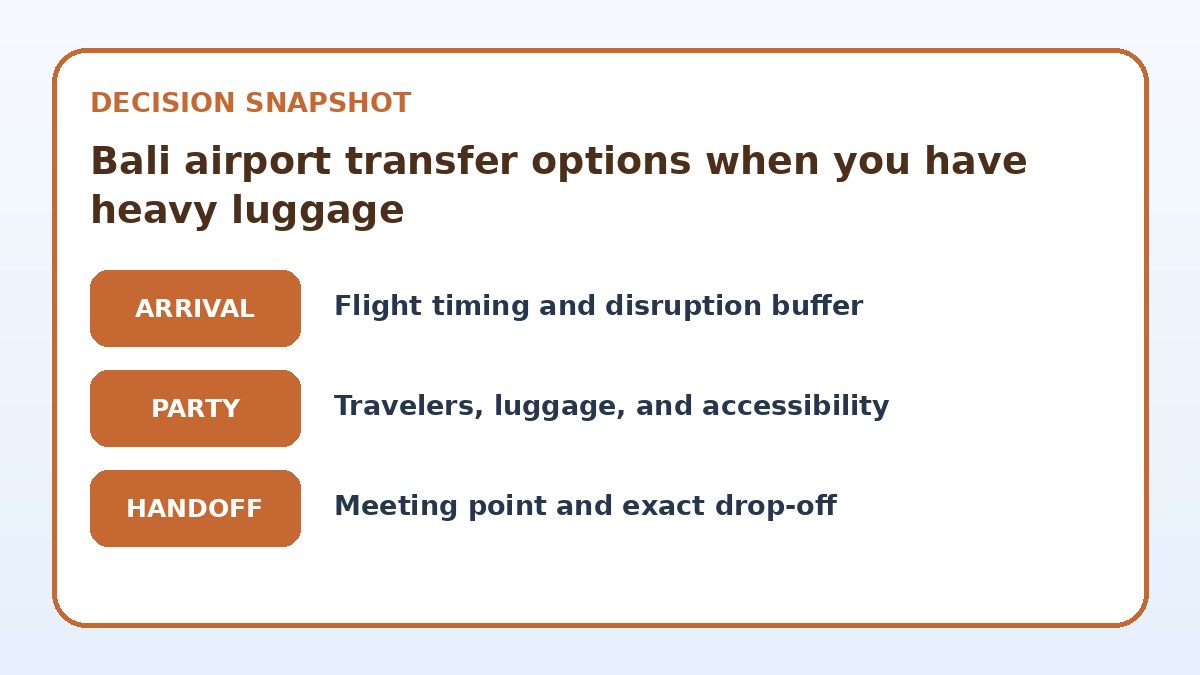
Luggage and party size: choose the right vehicle
Begin by inventorying every bag and large item, not just suitcases. Note dimensions and whether items are soft or rigid—soft bags can be squeezed into tighter spaces while rigid suitcases or surfboards need more dedicated space. Count passengers and any infants in car seats; a child seat requirement affects seating layout and trunk availability. Once you know the total volume and number of seats needed, match that to a vehicle class: sedan, large sedan, SUV, minivan, or small truck. Remember that a vehicle with more passenger seats might still lack trunk volume once people and carry-ons are loaded.
When you compare vehicles, ask providers how they allocate space for both passengers and luggage—some use roof racks, trailers, or second vehicles. If you have oversized gear, ask whether the driver can assist with loading and whether any items must be tied down or come with protective covers. For group travelers, a single larger van is often simpler than multiple cars: fewer meeting points and one pickup time. But multiple cars can be faster if the party splits across separate accommodations or wants to leave at different times.
Arrival details to have ready
- Count and list every bag and large item with approximate dimensions and mark any that won’t fit in a trunk.
- Ask your chosen transfer provider whether the vehicle can fit your luggage list and whether roof or trailer options are available.
- Confirm the exact pickup spot with the driver and hotel, and send a map pin or photo of the meeting point to the provider.
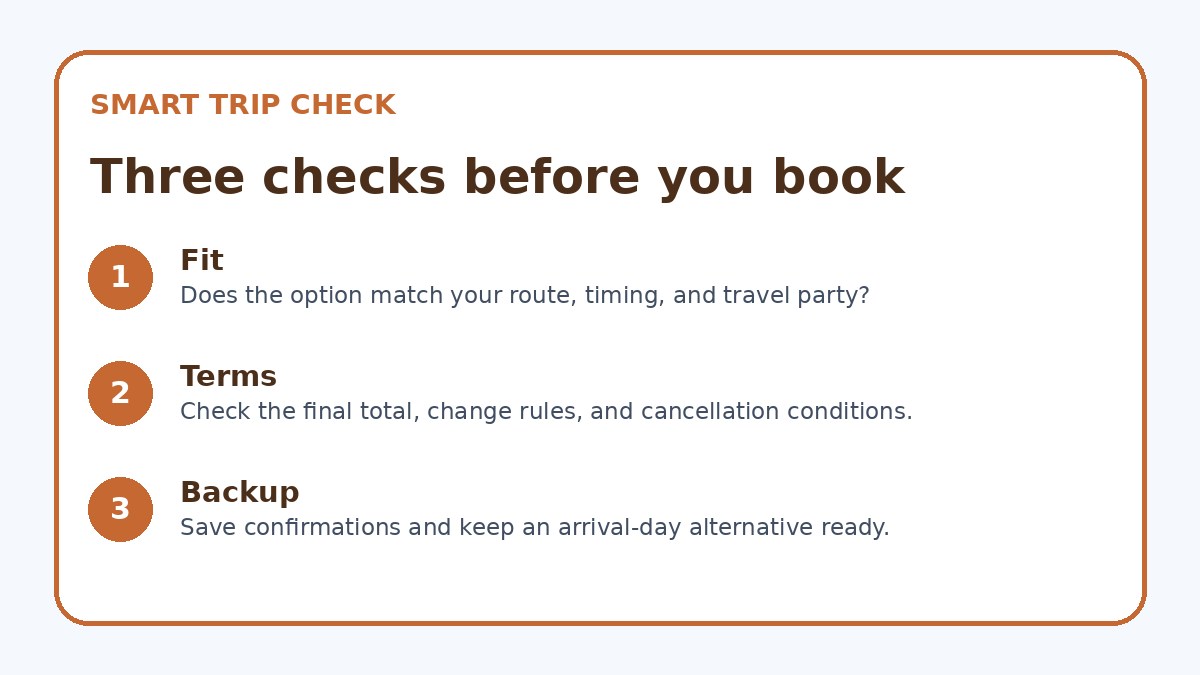
- Verify the provider’s wait-time, late-pickup, cancellation, and change policies and record those terms before you pay.
- If you’ll be away from the hotel on your final day, arrange baggage storage there or a timed pickup at a single agreed location.
- Save the driver’s contact, the booking reference, and your flight number in a place you can access during check-out and travel.
Late or disrupted arrivals: plan backup options
Travel never runs exactly to plan, and flight delays, missed connections, or last-day activities can affect your return. Build contingencies into your transfer choice: verify cancellation and modification policies, ask about wait-time allowances, and learn the provider’s protocol for last-minute flight changes. If you must leave early to return luggage to a specific place before check-out, arrange either a morning pickup or a hold service with your hotel so bags can be stored securely until your transfer arrives.
If your outbound flight is at risk of disruption, consider booking a provider with flexible pickup windows or one that allows real-time updates via messaging. For late-night departures, confirm whether transfers operate at your hour and whether extra fees or different pickup arrangements apply. Keep the driver’s contact details and your flight reference handy; in many cases, an agreed buffer of one to two hours prevents rushed departures and reduces the risk of leaving luggage behind.
Match the transfer to your arrival
| Arrival approach | Best for | Detail to verify |
|---|---|---|
| Pre-booked private transfer | Travelers needing certainty about vehicle size and pickup time. | Less flexible if plans change; you must confirm cancellation and change policies. |
| Taxi or ride-hailing on departure day | Those wanting last-minute flexibility or variable schedule. | Vehicle and trunk space not guaranteed, may require multiple trips for large loads. |
| Hotel-arranged transfer with porters | Guests who prefer minimal handling and coordinated luggage service. | Hotel policies vary; larger or awkward items may need special arrangements. |
| Shared shuttle service | Budget-conscious travelers with standard-sized luggage and flexible timings. | Multiple stops increase travel time and reduce space for oversized baggage. |
Make the meeting plan clear
Check the final pickup instructions, waiting conditions, and exact drop-off coverage.
Meeting-point clarity: avoid last-minute confusion
Clear meeting-point instructions are essential in Bali, where driveways, hotel entrances, and resort layouts vary. When you book, ask for the exact pickup spot: gate name, reception desk, or a specific landmark. If your accommodation is inside a complex or on a narrow lane, confirm whether the driver can enter or will wait at a designated external drop-off. Provide the driver with your room number, reservation name, and a local phone number, and confirm the language options for communication on the day of pickup.
If you plan to be on the move during your last day—touring, eating, or beach time—designate a reliable pickup spot and time that works regardless of where you are. Choose a location with easy vehicle access and minimal traffic bottlenecks, such as a main road outside the complex rather than a tucked-away alley. Share a map screenshot or pin from your phone with the provider, and get the pickup confirmation in writing so both parties have the same reference.
Destination-side drop-off fit: check hotel and airport access
Before booking, verify that your accommodation’s layout and parking allow for the transfer’s vehicle. Some villas have steep drives or narrow gates unsuitable for larger vans; some hotels insist drivers park in a lot and walk luggage in, which can add time and physical handling. Ask the hotel what is typical for arrivals and departures and whether they provide porters or trolley service for heavy bags. If you’re staying in several places on your last day, plan the transfer to pick up at your final stop with enough time for check-in and security.
At the airport end, confirm the terminal and ideal drop-off point for departing flights. Bali’s airport has specific lanes and staging areas; ensure your driver knows which terminal and curb to use to avoid offloading at a remote lot. For large parties or oversized equipment, consider requesting an early curbside drop to allow extra time for check-in and baggage check. Always verify the provider’s familiarity with airport procedures—ask them how they handle traffic or terminal changes on busy days.
Airport Transfer & Local Mobility questions travelers ask
Should I pre-book a larger vehicle if I’m unsure about exact luggage size?
Yes—if you have uncertainty, choose the larger vehicle class when booking. It avoids the risk of arriving at pickup to find the assigned car can’t accommodate all bags. Larger vehicles offer more trunk volume and flexibility for irregular items, and they reduce the need to split your party across cars. Before finalizing, tell the provider about any unusually shaped or heavy items so they can advise if a roof rack, trailer, or extra vehicle is needed.
What if my hotel is inside a complex with limited vehicle access?
Ask the hotel in advance how transfers normally operate there—do drivers pull into a courtyard, or do they meet at the public road? Request details about luggage handling: will porters meet the car, or does the driver carry bags a short distance? If access is restricted, arrange a pickup point on an accessible nearby street and confirm who moves the luggage the remaining distance. A quick photo of the hotel entrance sent to the driver prevents confusion on the day.
How much extra time should I allow on departure day for traffic and loading luggage?
Allow a generous buffer beyond standard travel time to account for loading bulky items and Bali traffic variability. For standard luggage and clear pickup points, a one- to two-hour buffer before your international check-in deadline is common; for oversized gear or long distances to the airport, add more time. Confirm with your transfer provider how long loading typically takes for your luggage profile and use that estimate when scheduling pickup to avoid rushed departures.
Final decision note
When you’re planning the return transfer in Bali with extra luggage, the safest approach is to match vehicle capacity to your exact luggage inventory and confirm meeting-point and pickup terms in writing. Pre-booked private transfers give predictable space and timing, while taxis and ride-hailing offer flexibility but less certainty about trunk volume. Don’t forget to verify how the hotel handles porter service and whether the driver can access the property. With clear communication, a saved booking reference, and a realistic time buffer, your exit from Bali can be calm and orderly even with many bags.
Continue planning
Check current options and final conditions
Use the provider page to confirm live availability, the final total, cancellation terms, and every condition that matters to your trip.
This evergreen planning guide was created with AI-assisted drafting and a structured quality review. It does not display live prices, schedules, availability, visa guidance, or provider rankings. Verify current details before booking. Some links are affiliate links; we may earn a commission at no additional cost to you.