Short practical answer: for most first-time visitors, pick the train or express coach depending on how close your Seoul lodging is to major terminals and how much luggage and timing flexibility you need. The train is usually the easiest door-to-door option if you can reach Seoul Station or Yongsan quickly; coaches can be simpler if you’re near a bus terminal and want fewer transfers. If you’re carrying oversized bags, traveling from an outlying neighborhood, or want maximum flexibility in the evening, a car or mixed approach (taxi to terminal + coach/train) can be better. Read the rest of this piece to weigh terminal fit, luggage friction, timing windows, and a realistic disruption backup so your travel day goes smoothly without surprises.
Choosing between train, coach, or car on travel day
Start by mapping door-to-door time, not just ride time. Identify where you are staying in Seoul and the distance to major stations: Seoul Station, Yongsan, Express Bus Terminal, or the Central City/Seobu Bus terminals. A short taxi ride to a nearby terminal can make a slower mode faster overall if it saves a cross-city transfer. Consider how many people and how much luggage you have; a private car gives door-to-door control but can be more expensive and subject to traffic. For many first-time visitors the balance falls to rail if you can reach a rail terminal quickly, or to express coach if your neighborhood sits closer to a bus terminal.
Also think about service patterns and departure frequency. Trains may have fewer departures and faster ride times, while coaches typically run more often and stop at fewer city-centre points in Jeonju. If you need a specific arrival window (museum opening, guesthouse check-in), a train with a fixed schedule can be easier to plan around. For flexible arrival windows or last-minute travel you may prefer a coach or car. Finally, decide whether you want a single-ticket door-to-door journey or are comfortable coordinating separate legs—taxi to station, then train or bus—because that affects transfer friction.
Choose the end-to-end journey plan
| Journey approach | Best for | Friction to check |
|---|---|---|
| Train-first approach (taxi to station, reserved seat) | Travelers who need predictable timings and comfortable seating with minimal surface traffic risk. | May require longer initial transfer in Seoul and fewer departure times; check reservation and luggage rules before booking. |
| Coach-first approach (nearest express bus terminal) | Visitors staying near a major bus terminal or who want many departure choices and no ride reservations. | Longer ride times and potential surface traffic delays; assess luggage handling and terminal facilities in advance. |
| Car or taxi door-to-door | Groups with lots of luggage, tight door-to-door timing needs, or travelers from neighborhoods far from terminals. | Subject to road traffic and generally higher cost; always plan an alternative route and check expected journey time windows. |
| Mixed approach (taxi to terminal + coach/train) | Balancing cost and convenience when your lodging is not near a main terminal but you still want a scheduled intercity leg. | Requires coordination between private taxi and public departure times; leave buffer time for transfers and ticket collection. |
Check live intercity options
Look beyond the ride itself and compare terminals, transfers, luggage, and arrival fit.
Terminal fit and luggage/transfer friction
Examine the practicalities of the terminal you’ll use. Big rail stations usually have more services like lockers, luggage trolleys, and staff who speak basic English; major bus terminals often provide direct access to city buses and taxis with shorter walking distances. If you have heavy suitcases, prioritize a terminal with lifts, escalators, and easy taxi access to avoid repeated carrying. Also check whether your accommodation in Jeonju is in the Hanok Village area or elsewhere—some terminals have better onward connections than others.
Plan transfers explicitly: if your route requires a city transfer in Seoul, measure the likely time and modes between terminals. Avoid tight connection plans during peak hours. When booking, leave buffer time for ticket collection, restroom stops, or buying snacks. If you think you’ll buy tickets on travel day, allow time for lines. Where possible, arrange a single short taxi ride from hotel to terminal rather than multiple transit legs; that small cost often saves a lot of stress on the travel day.
Timing flexibility and day-of rhythms
Decide whether you need a fixed arrival time or flexible options. Trains often have set departures with reserved seating—good for fixed schedules—while coaches can run frequently enough to offer more flexibility. Consider Seoul traffic patterns: surface roads can be congested during morning and evening peaks, which affects coach and car journeys more than trains. If your schedule is tight, choose a rail option that avoids rush-hour travel through the city.
Think about your personal rhythm on travel day. Allow time for a leisurely breakfast and a last-minute check of accommodation checkout rules. If you prefer fewer time pressures, pick a later departure with a longer travel window or plan an overnight stay in Jeonju. For same-day sight-seeing after arrival, prioritize arrival times that coincide with attraction opening hours; if you’re unsure, aim for midday arrival to give yourself the most options on arrival day.
Compare the practical alternatives
Use the final page to confirm what is actually offered on your dates and save a workable fallback.
Intercity travel checklist
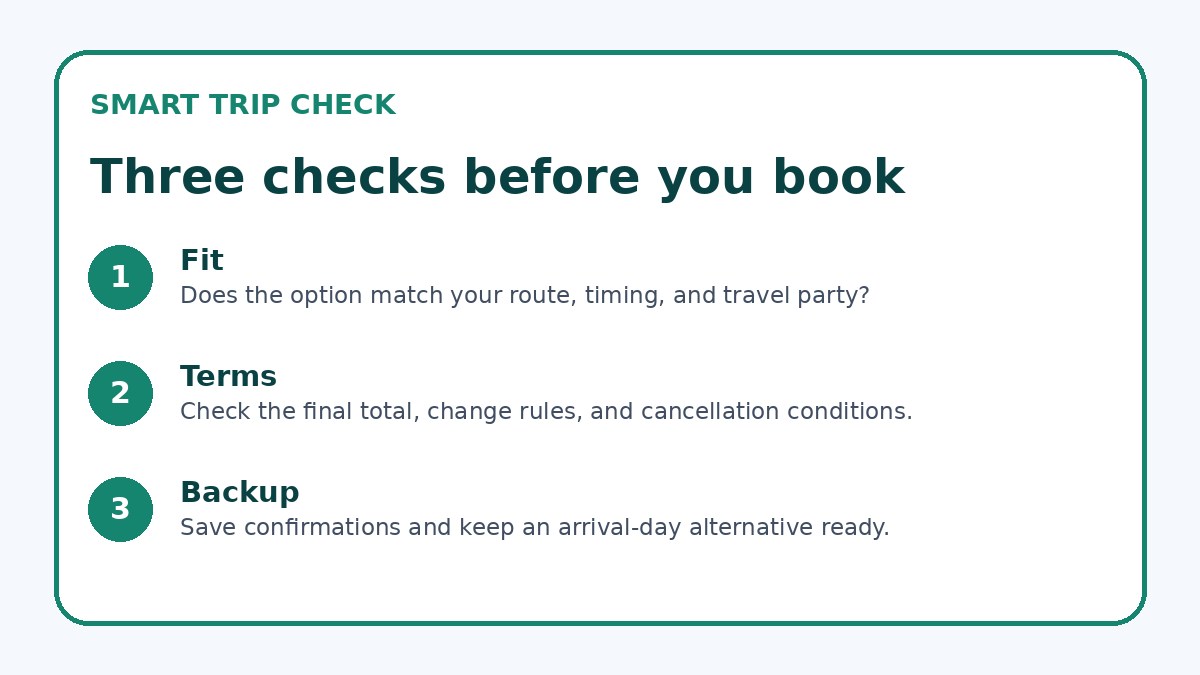
- Map door-to-door travel time from your Seoul lodging to the chosen terminal and add at least 30–45 minutes buffer for transfers.
- Verify luggage rules and storage options on the provider’s official booking page; plan for oversized bags or purchase extra allowance if needed.
- Decide whether to reserve a seat (train) or use flexible coach departures, and book in advance if you require specific times.
- Save offline copies (screenshots or PDFs) of tickets and terminal addresses in both English and Korean for taxi drivers.
- Prepare a simple disruption backup: alternative departure, taxi app installed, and a small contingency budget.
- Confirm how you’ll reach your final Jeonju address from the arrival terminal—taxi rank location, bus routes, or walking distance—and note local operating hours.
Disruption backup and what to verify before booking
Prepare a realistic disruption backup: identify one alternative departure earlier or later, know the approximate taxi cost for a short emergency transfer, and have a working local payment method. Keep the phone numbers or apps for taxi services, and a simple Korean phrase list or translation tool ready for on-the-spot instructions. If you’re traveling during a holiday period or in bad weather, expect the possibility of crowded terminals and slower connections; always have a Plan B that doesn’t require long waits.
Before you buy a ticket, verify terminal addresses, train or coach terminal names, luggage rules, and the final booking page’s cancellation and change policy. Don’t trust third-party summaries for those details—open the provider’s booking page to confirm whether seats are reserved, the baggage allowance, and whether you need to print or collect tickets. If you prefer comparing availability, you can check Trip.com as one optional place to compare live options, but still confirm details on the operator’s official page.
Rail & Intercity Transport questions travelers ask
How do I choose between Seoul Station and an express bus terminal for the start of my trip?
Choose the terminal that minimizes transfers and walking from your accommodation. If you can reach Seoul Station quickly, rail often offers a faster, more reliable intercity leg; if you’re closer to an express bus terminal, coaches may save overall door-to-door time. Check terminal facilities for luggage handling and whether the terminal provides straightforward taxi access at arrival and departure. Before booking, confirm departure frequency, whether seats are reserved, and the final pickup/drop-off addresses on the provider’s site.
What should I do if my scheduled train or coach is delayed or canceled on travel day?
Immediately check the operator’s official update channels and your booking terms for rebooking or refunds. If an alternative departure exists, consider moving to that option; if not, use a taxi or ride-hailing service for a short emergency transfer to the next terminal or directly to Jeonju if cost-effective. Keep receipts and screenshots of communications for any refund claims. Always have local payment methods ready, and a clear backup plan that doesn’t rely on just one departure window.
Is it better to buy tickets in advance or at the terminal for a first-time visitor?
Buying in advance reduces stress on travel day and secures particular departure times and reserved seats; it’s especially useful during peak travel periods. However, if your schedule is flexible and you prefer last-minute plans, terminal ticket counters and kiosks can work fine—just allow extra time for lines and ticket collection. Regardless of method, verify baggage rules, seat reservation status, and cancellation policies on the operator’s booking page before finalizing, and keep confirmation details accessible offline.
Final decision note
Planning a travel day from Seoul to Jeonju is mainly about matching terminal convenience, luggage needs, and your desired timing flexibility. For many first-time visitors, the train or an express coach paired with a short taxi to the terminal will offer the best balance of convenience and predictability—provided you check terminal fit and luggage rules in advance. Always prepare a realistic disruption backup and confirm crucial details on the operator’s booking page before you pay. With a few deliberate checks—door-to-door timing, baggage handling, departure flexibility, and a clear Plan B—you’ll reduce stress and arrive ready to explore Jeonju.
Continue planning
Check current options and final conditions
Use the provider page to confirm live availability, the final total, cancellation terms, and every condition that matters to your trip.
This evergreen planning guide was created with AI-assisted drafting and a structured quality review. It does not display live prices, schedules, availability, visa guidance, or provider rankings. Verify current details before booking. Some links are affiliate links; we may earn a commission at no additional cost to you.