If you’re traveling alone in Osaka, the practical question isn’t whether you can rent a car — it’s whether driving actually makes your plans better and worth the hassle. Driving can open up day trips along the Kansai coast or to rural towns, but it also brings extra time managing pickup, parking, and understanding insurance language that may be written only in small print or in Japanese. This guide gives a clear, booking-stage answer: only rent if your itinerary requires flexible access to places poorly served by public transit, or if group size, luggage, or mobility needs make transit impractical. Otherwise, rely on trains, buses, and short taxis. Below you’ll find how to judge route value, decipher common insurance wording, prepare for pickup and return friction, and a ready non-driving fallback plan.
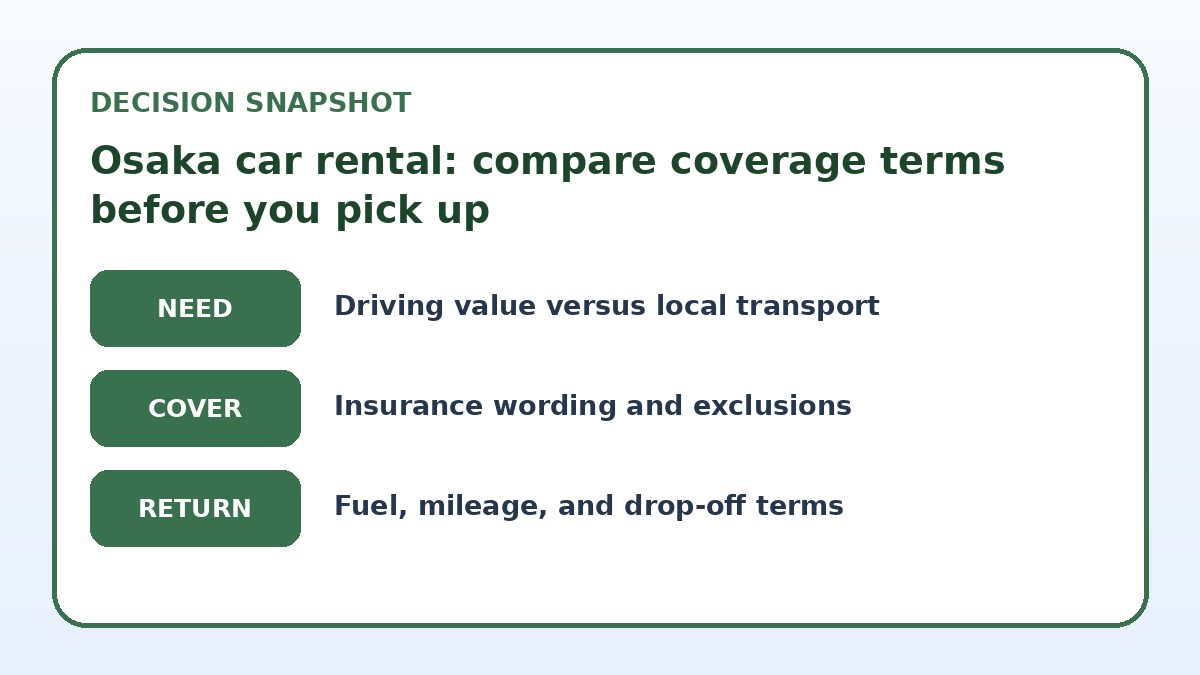
Deciding whether driving improves your Osaka itinerary
Start by listing the places you must visit and marking which are easy to reach by rail or metro. Osaka’s urban core and major tourist sites are well served by JR and private railways, so driving often only saves time when your plan includes coastal towns, mountain areas, or scattered rural shrines. Measure travel in door-to-door time: factor walking, transfers, and local transit frequency. For a solo traveler, convenience gains from driving must outweigh extra tasks like navigating, parking costs, and the attention needed to manage insurance and rental paperwork.
Also consider practicalities that especially affect a solo traveler: night driving after long days, parking availability at remote sites, and whether you’re comfortable driving on Japanese roads. If you value spontaneity and privacy and carry bulky gear, a car may feel liberating. If your days are centered inside Osaka, with strong train links and inexpensive taxis, the complexity of renting and insuring a vehicle often outweighs the marginal time savings.
Decide whether driving earns its place
| Mobility strategy | Best for | Cost or friction to check |
|---|---|---|
| Rent a car for entire trip | Solo travelers with many off-rail destinations or heavy gear | High responsibility: insurance complexity, parking, and pickup/return friction throughout the stay |
| Rent a car for selected days only | Itineraries with a few remote day trips and mostly transit-based days | Saves time on key legs but adds two pickup/return episodes and extra insurance checks |
| Transit-first (trains, buses, taxis) | Urban-focused visits and those who prefer to avoid vehicle paperwork | Limited flexibility for remote sites and potential late-night connectivity gaps |
| Guided day trips or private driver | Solo travelers who want remote access without managing insurance or driving | Less flexibility than self-driving and typically higher per-trip cost than public transit |
Check live rental choices only after the route test
Use the exact driver, dates, pickup point, and return plan to compare current conditions.
Understanding the important insurance wording
When reading insurance sections, focus on a few specific terms. Collision Damage Waiver (CDW) or Loss Damage Waiver (LDW) defines whether the company limits your financial responsibility for damage; check the exact deductible value and whether it applies per incident. Third-Party Liability shows the coverage for injury or property damage to others; verify the monetary limit and whether the policy requires you to pay first and seek reimbursement. Also note exclusions such as unauthorized drivers, off-road use, alcohol-related incidents, or damage to tires, undercarriage, and windows.
Don’t rely on marketing shorthand like ‘full coverage’ without reading the exclusions and excess. Watch for terms that shift blame onto vague borrower duties — for example, requirements to report every minor scratch immediately or to use only certain repair centers. If the language is in Japanese, request an official English summary before signing. Finally, when optional insurer add-ons are offered at pickup, confirm whether those reduce your stated deductible, eliminate it, or simply provide reimbursement after you pay; the booking page should state the mechanics of any additional coverage.
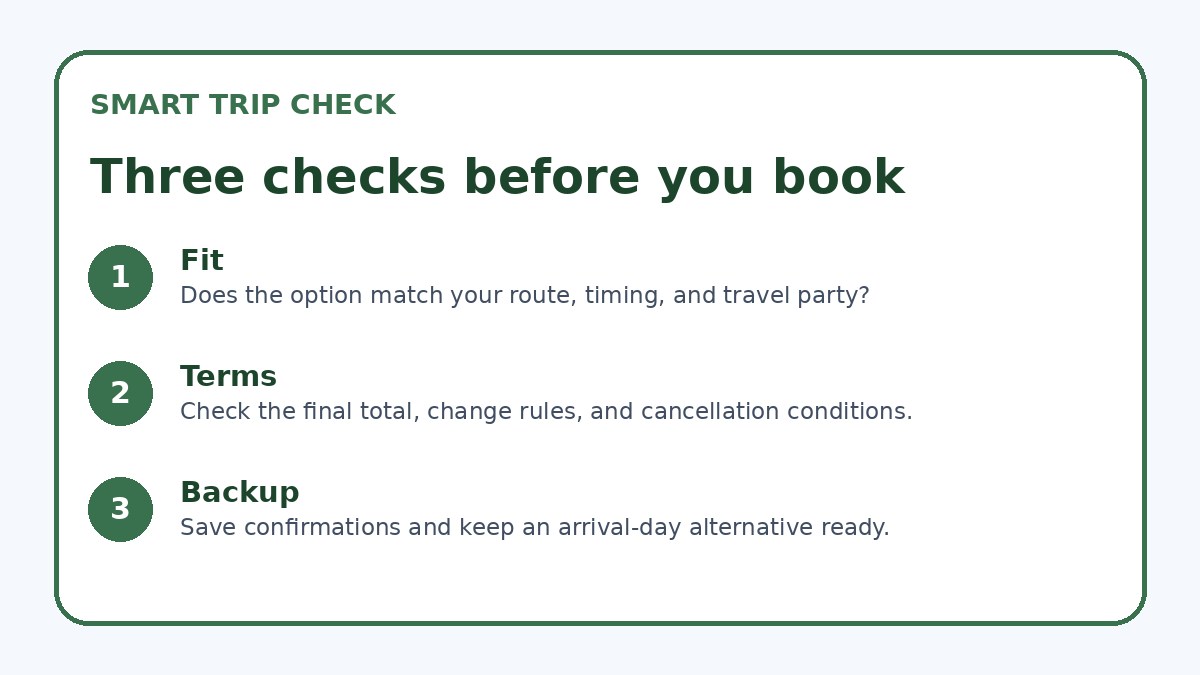
Compare the full rental conditions
Confirm insurance wording, exclusions, deposit, fuel, mileage, and return terms on the final page.
Pickup, return friction, and what to confirm at the counter
Pickup and return are where most travelers hit snags. Expect to show a valid driver’s license recognized in Japan (check whether an International Driving Permit is needed for your country) and the card used to make the booking. At pickup, confirm fuel policy (full-to-full vs. pre-purchase), mileage limits, and the vehicle’s inspection report. Ask staff to record any preexisting damage on paper or a digital form and keep a copy. If language is a barrier, insist on a staff member who can explain terms in English or ask for a translated contract.
For returns, confirm where and how final inspection occurs and whether late return penalties are time-based, distance-based, or calculated differently. Keep all receipts and a timestamped record of the returned vehicle condition. If a damage claim arises afterward, you’ll need the written inspection record and photos from pickup and drop-off. Before you leave the counter, verify the process for filing a claim and who to contact in case of roadside assistance, and note how long after the rental the company may charge your card for disputes.
Car rental terms to verify
- List each place you want to visit and mark whether it’s directly served by rail or regular buses before considering a car.
- On the rental booking page, screenshot the insurance policy wording and note deductible amounts and listed exclusions.
- Request an English contract or summary at pickup and have staff mark preexisting damage on a printed or digital inspection form.
- Confirm fuel policy, mileage limits, and exact late-return penalties before signing the rental agreement.
- Photograph the car thoroughly on pickup and at return with timestamps and keep all receipts for fuel and tolls.
- Save local roadside assistance contacts and the rental company’s claims procedure details to your phone and email.
A non-driving fallback: how to plan transit-first Osaka days
If you decide not to rent, build a resilient fallback using rail, express buses, and taxis. Start each day with a main anchor — a rail hub or bus terminal near your lodging — then pick one or two nearby sites to avoid excessive transfers. For late-evening or remote legs, identify local taxi services and note expected pickup options; apps or hotel concierge services can arrange taxis when language is an obstacle. Carry an offline map and transit app schedules so you can adapt on the go.
For day trips that tempt you to drive, consider organized tours, private day drivers, or renting a car only for a single day from a central location, which can combine transit convenience with targeted driving. Whatever you choose, maintain a simple backup plan: a list of train connections back to Osaka, estimated taxi fares for the route, and the nearest convenience store or station where you can wait safely if plans change. That keeps a solo traveler prepared without committing to continuous car responsibility.
Car Rental & Road Trip questions travelers ask
Do I need extra insurance if the rental already lists liability and CDW?
Not always. If a rental lists third-party liability and a CDW, check the deductible amount, whether CDW covers all damage types, and the liability limits. Optional add-ons may reduce or eliminate your deductible or extend cover to tires, windows, or undercarriage, but they can be expensive. Decide based on the size of the deductible versus your comfort paying that out-of-pocket amount immediately. Always confirm how reimbursements work and whether you must use specific repair centers or submit paperwork in Japanese.
What wording indicates I will be personally charged first and reimbursed later?
Look for phrases like ‘customer is responsible for payment’ or ‘company will reimburse upon documentation’ and any mention of ‘initial payment required’. Contracts that describe insurance as ‘coverage subject to reimbursement’ or state that damage will be billed to the renter’s card and later processed by insurer are examples. If the contract says the company will ‘seek recovery’ from a third party, you may still face immediate charges. Ask the counter agent to explain who pays up front and how long reimbursements typically take.
How can I reduce pickup and return friction as a solo traveler?
Prepare digital and physical paperwork in advance: license, passport, booking confirmation, and the card you used to reserve. Read the fuel and mileage policies on the booking page so you can choose the right option quickly. Ask for a staff member who speaks English and request the inspection checklist at pickup. Take photos and record the vehicle condition. Before returning, allow extra buffer time, choose a staffed return location if possible, and get a written confirmation of return and final inspection to prevent later disputes.
Final decision note
For solo travelers in Osaka, renting a car is a clear yes only when your itinerary includes multiple off-rail destinations, heavy gear, or mobility constraints that public transit can’t solve. Otherwise, trains, buses, and taxis typically offer faster, simpler door-to-door movement through the city and reduce the burden of insurance fine print and constant vehicle care. If you decide to rent, prioritize reading and documenting insurance wording, verify deductible mechanics, and manage pickup and drop-off carefully to avoid surprise charges. If you prefer not to drive, build a transit-first plan with taxis or one-day rentals as targeted solutions so you retain flexibility without taking on full-time driving responsibility.
Continue planning
Check current options and final conditions
Use the provider page to confirm live availability, the final total, cancellation terms, and every condition that matters to your trip.
This evergreen planning guide was created with AI-assisted drafting and a structured quality review. It does not display live prices, schedules, availability, visa guidance, or provider rankings. Verify current details before booking. Some links are affiliate links; we may earn a commission at no additional cost to you.