If you’re in Gyeongju with more than the usual luggage, your first decision after landing at your arrival airport is how you’ll get to your accommodation and plan the return trip with those extra bags in mind. The practical answer: pick a return transfer that matches both your luggage volume and the party size, and confirm meeting points and contingency options before you finish your outbound check‑in. That means deciding now whether you will rely on public transport, a taxi, a private car or a pre‑booked shuttle for the trip back. Early clarity saves stress on departure day—especially if flights change or you need extra time packing. Below I’ll lay out what to compare, when to ask for vehicle specs, how to plan for late or disrupted arrivals, and how to ensure the drop‑off at the airport works with your airline and baggage process.
Check options for your arrival details
Use your flight, luggage, party size, and accommodation address to compare current choices.
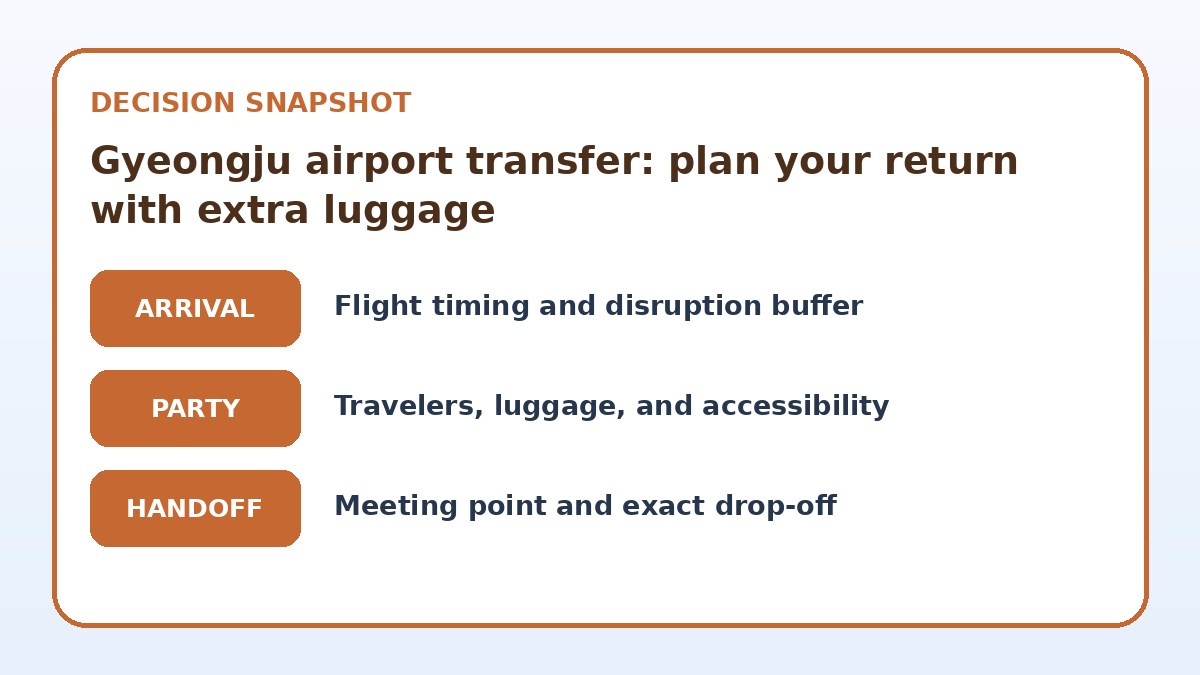
Luggage and party size: choose the right vehicle
When you have extra luggage the most practical factor is physical space—both passenger seats and trunk or cargo capacity. A medium or large private car can be fine for a couple with two big suitcases each, but groups of three or more with multiple large bags usually need a van or two vehicles. If you’re traveling with fragile items, musical instruments, or equipment, a single larger vehicle reduces transfers and handling, which lowers the chance of damage.
Before you book, ask the provider for specific vehicle models or cargo dimensions and describe the exact number, type, and size of bags. If you’re arranging pickups from multiple addresses in Gyeongju, consider whether providers charge for extra stops or require reallocation of space. If you plan to use public transport for the inbound trip, factor whether you’ll need to carry everything to the accommodation and whether you can store excess items at the hotel until departure.
Arrival details to have ready
- Count and photograph every bag and item you plan to take to the airport; save dimensions and a brief description for provider questions.
- Ask any transfer provider for the exact vehicle model, trunk capacity, and guaranteed passenger count before booking.
- Confirm the pickup time, precise meeting point, and a local contact number in writing at least one day before departure.
- Verify your airline’s oversized and excess baggage procedures for your departure airport and note any required counters or check‑in deadlines.
- Allow extra time in your schedule for repacking, oversized baggage handling, and possible traffic or delays on the return trip.
- If your arrival or departure is late, inform both the transfer provider and accommodation immediately and reconfirm any new pickup arrangements.
Late or disrupted arrival: build flexible backups
Flight delays, missed connections, or time lost in customs change the math for your return. If your outbound schedule is uncertain, choose a return option with a flexible cancellation or rescheduling policy, and make sure the provider publishes their late‑arrival terms. When delays look likely, contact both your transfer provider and accommodation to coordinate a new pickup time; having a local phone number or messaging contact speeds this up and reduces confusion on the night before departure.
Also plan a tolerance buffer for departure day. Even with a fixed pickup, you may prefer to leave extra time to repack and secure oversize items. If your airline imposes strict check‑in cutoffs or procedures for oversized baggage, ensure your chosen transfer can get you to the correct terminal in time. If uncertainty is high, consider booking a later return transfer window or split transport plan so you’re not racing across town with extra luggage.
Match the transfer to your arrival
| Arrival approach | Best for | Detail to verify |
|---|---|---|
| Public transport (bus/train) | Travelers with minimal extra luggage and flexible schedules. | Cheapest and predictable route but limited space for large bags, multiple transfers, and less door‑to‑door convenience. |
| Taxi or ride‑hail | Small groups with moderate luggage who want door‑to‑door service on demand. | Good availability and flexibility but you must verify trunk space and may need multiple cars for many bags. |
| Pre‑booked private car or van | Groups or travelers with oversized or fragile luggage seeking guaranteed space. | Most convenient and luggage‑focused, but requires advance coordination on vehicle size and may have stricter cancellation terms. |
| Hotel shuttle or shared shuttle | Travelers wanting lower cost than private transfers with moderate luggage and set pickup times. | Economical and possibly included with accommodation, yet scheduled stops and capacity limits can complicate large or unusual baggage. |
Make the meeting plan clear
Check the final pickup instructions, waiting conditions, and exact drop-off coverage.
Meeting points and communication: avoid surprises
Clear meeting spots save time and frustration. For pickups inside Gyeongju, use recognizable landmarks, the accommodation lobby, or the address’s main entrance as the meeting point. Provide the driver with any building access details, gate codes, or preferred pickup side. For airport drop‑offs, tell the driver which terminal, airline check‑in zone, or curbside lane you need so you’re left in the right spot to hand over oversized items for airline handling or to proceed quickly to security.
Exchange phone numbers and agree on a primary messaging app before the day of travel. If you book online, save the booking confirmation and provider contact in an easy place. If multiple people are traveling, nominate one lead communicator so instructions are consistent. Photos of the pickup point or a screenshot of the hotel façade can be useful to avoid missed pickups, especially after dark or during busy local events.
Destination-side drop-off fit: check airport and airline rules
Not every airport drop‑off is the same—terminals, curbside arrangements, and oversized baggage counters vary. Before you book your transfer, contact your airline or check their official guidance about oversized or excess baggage procedures at your departure airport. If you have items that require special handling, ask the transfer provider whether they will wait while you check them in and whether they can stop at the oversized baggage counter or cargo office if necessary.
Also consider whether you’ll need to unload and re‑pack at the airport (for example, to fit baggage rules) and whether the driver will help or wait. If you rely on an intermediary storage solution at the airport or the hotel, verify availability and operating hours. When possible, compare provider policies on waiting time, extra stops, and luggage assistance so you’re not facing unexpected delays or extra handling at the curb.
Airport Transfer & Local Mobility questions travelers ask
How much lead time do I need to book a transfer in Gyeongju if I have extra luggage?
Book as soon as your outbound and return flight times are set and your accommodation is confirmed. Early booking gives you the best chance to secure a vehicle with sufficient cargo space and to coordinate any special handling for oversized items. If your plans are flexible, waiting until a few days before travel can work for taxis or ride‑hail, but for vans or private cars that must guarantee space, reserve earlier. Wherever you book, check the provider’s change and cancellation policy so you can adjust if flights shift.
Can I combine public transport for arrival and a private transfer for the return if I have extra bags?
Yes, mixing modes is common: some travelers use public transport on arrival to save cost and then pre‑book a private transfer for the return when departure time and luggage volume are known. If you do this, make sure arrival plans don’t exhaust your energy—carrying heavy bags across stations or long walks may be harder than expected. Also ensure the hotel or storage option can hold any bags you don’t want to carry between modes, and confirm the return pickup point in advance.
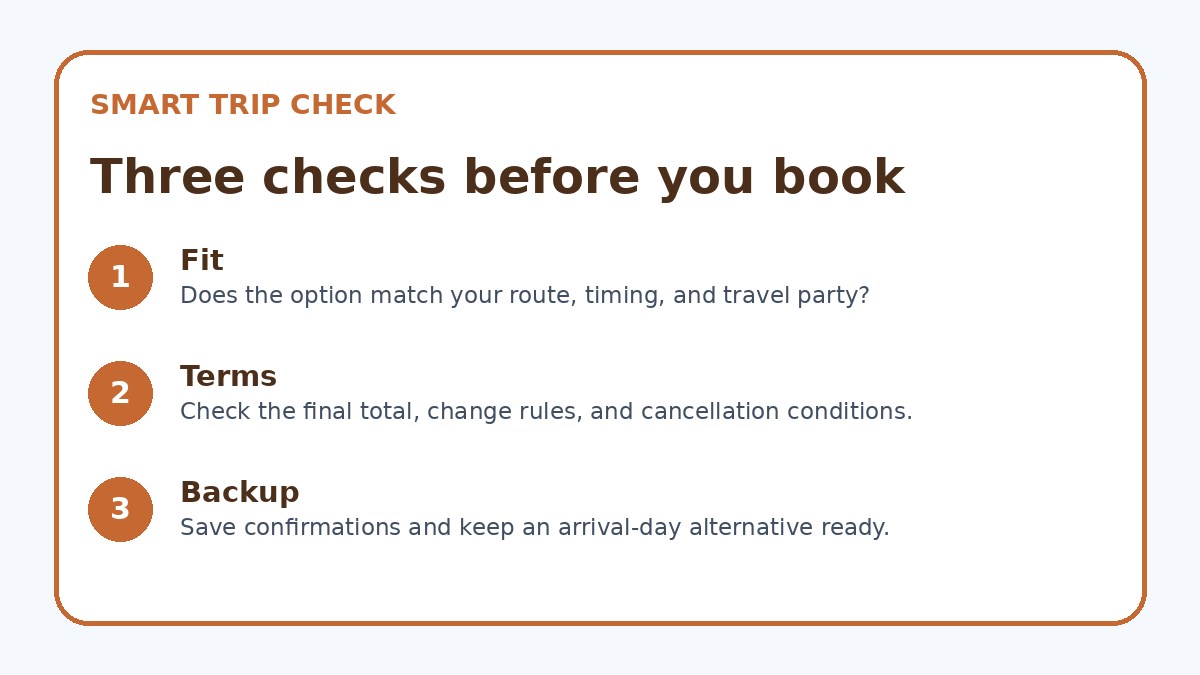
What should I verify on a provider’s booking page before paying for a Gyeongju airport transfer?
On the booking page, look for clear vehicle type or model, the stated luggage capacity, pickup and drop‑off details, included waiting time, and the provider’s late pickup policy. Confirm the method for contacting the driver, any fees for extra stops or long waits, and the terms for changing or cancelling the booking. If the page lacks these specifics, message the provider directly. You can compare current availability and booking terms on Trip.com as one option, but always confirm provider details on their final booking confirmation.
Final decision note
Planning your Gyeongju airport transfer with extra luggage comes down to matching vehicle space, party size, and schedule flexibility. Decide early whether trunk capacity or cost matters most, confirm vehicle specs and pickup instructions, and prepare a contingency for delays. Clear communication—with the driver, hotel, and airline—reduces the chance of last‑minute stress, especially when oversized or fragile items are involved. Use the checklist above while you have flight and accommodation details open, and always verify final terms on the booking confirmation so your return to the airport is calm and well timed.
Continue planning
Check current options and final conditions
Use the provider page to confirm live availability, the final total, cancellation terms, and every condition that matters to your trip.
This evergreen planning guide was created with AI-assisted drafting and a structured quality review. It does not display live prices, schedules, availability, visa guidance, or provider rankings. Verify current details before booking. Some links are affiliate links; we may earn a commission at no additional cost to you.