For a first-time visit to Milan, the quickest practical answer is this: choose a package if you want one-stop convenience, clearer cancellation rules, and fewer booking steps; choose separate bookings if you want tailored timing, favorite hotels, or to shop low-cost carriers and local trains independently. Which path suits you depends on how confident you are managing multiple reservations, how flexible your dates are, and whether you prioritize convenience over control. This guide walks you through the tradeoffs — money, flexibility, support and itinerary control — and gives decision criteria so you can pick with confidence. Read the checklist before you book and use the comparison rows to match your priorities to the booking style that fits your trip plan.
When a package makes sense
A package is useful when you want the administrative burden handled for you. If this is your first time in Milan and you prefer one phone number or online portal to manage flight delays, hotel check-in problems, or a single cancellation process, a packaged deal can be reassuring. Packages often combine airfare, hotel nights, and optionally transfers or excursions so you don’t need to assemble each component yourself. This reduces time spent comparing many small details and can speed up post-booking customer service.
Packages also help travelers who value predictability and a simple itinerary. If you’re booking a short city break with fixed dates and don’t plan to change flights or hotels mid-trip, a package keeps confirmations in one place and can make expense tracking easier. However, you should verify the exact cancellation, change, and baggage policies on the provider’s final booking page and confirm whether transfers or local tickets are included or merely optional add-ons.
When separate bookings are better
Separate bookings give you full control over each choice — airlines, hotel class and location, trains to nearby towns, and individual activities. This approach is best if you want to stay in a specific Milan neighborhood (such as Brera or Navigli), collect hotel loyalty points, or fly with a low-cost carrier where the cheapest fares are not included in standard packages. Building your own itinerary also makes it easier to mix transport types, for example arriving by air and booking a high-speed train for an onward regional day trip.
Choosing separate components requires more time and attention: you’ll juggle different cancellation windows, check-in procedures and potential gaps between arrival time and hotel check-in. You must plan transfers from the airport or station to your accommodation, and be ready to call several providers if changes are needed. Before booking, list the exact arrival times and transfer options, and check each supplier’s final terms for baggage, changes and refunds.
| Approach | Best for | Tradeoff to check |
|---|---|---|
| Package booking | Travelers who want convenience, single-point support, and less booking hassle. | Less control over specific hotels, carriers, and timing; check final change/refund policies closely. |
| Separate bookings | Travelers focused on specific hotels, loyalty programs, or mixing transport modes. | More coordination required and multiple cancellation policies to manage. |
| Hybrid approach | Travelers who want a flight+hotel bundle but prefer to book local tours or trains separately. | Still requires juggling separate suppliers for the non-bundled parts of the trip. |
| Book flexible components | Travelers who prioritize changeability: refundable fares, flexible hotels, and insurance. | Flexible options often carry higher upfront costs; evaluate value vs risk tolerance. |
Money, risk and hidden costs to compare
Cost is often the headline comparison, but true savings depend on what you value and what the package includes. A package might appear cheaper when you factor in bundled transfers or included extras, yet separate bookings can be less expensive if you hunt low-cost fares or midscale hotels with promotional rates. Make a side-by-side total that includes any mandatory fees, baggage costs, city or tourist taxes (paid at the hotel), and transfer fares — these add up quickly and may not be obvious in a headline package price.
Risk management matters as much as headline cost. With separate bookings, you face the risk that a delayed inbound flight could cause a missed connection or require a paid last-minute transfer; a package may offer more coordinated rebooking support. Conversely, packages sometimes have stricter change rules or non-refundable components. Always verify on the final booking page: change and cancellation fees, how refunds are processed, and whether the provider will assist with rebooking if one segment is disrupted.
Before you book
- List must-have priorities (neighborhood, airline preference, loyalty benefits) before comparing package vs separate options.
- Compare total trip cost including taxes, baggage, transfers, and tourist taxes; don’t rely on headline prices alone.
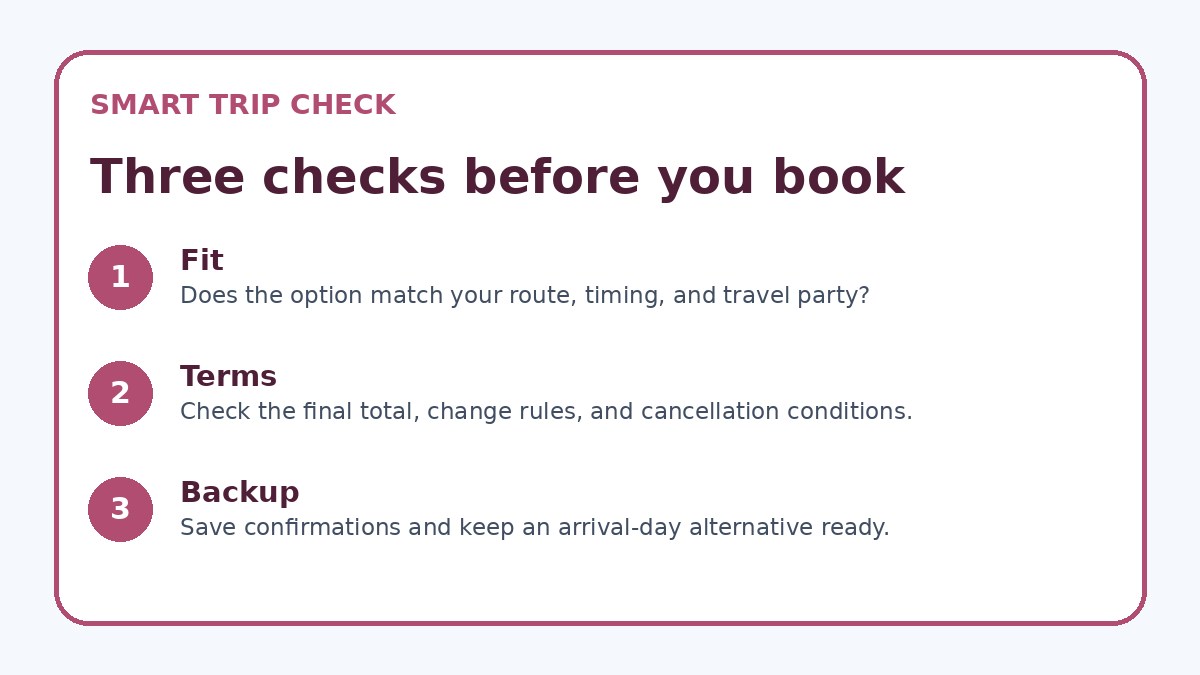
- Read the final booking page to confirm change, cancellation and refund rules for each component before you pay.
- If booking separately, allow buffer time between arrival and onward connections and confirm transfer options in advance.
- Check whether a package provider offers 24/7 support and what that support covers; save emergency contact details.
- Consider travel insurance that covers missed connections and supplier insolvency, and verify its scope before purchase.
How to decide for your Milan trip
Start by listing what matters most: price, convenience, neighborhood, transport preferences, and flexibility. If convenience and a single point of contact are highest priority, lean toward a package. If you prioritize a particular hotel, loyalty benefits, or mixing different transport modes (for example air arrival and train onward), separate bookings are likely better. Consider how comfortable you are managing phone calls or emails to multiple suppliers in multiple languages and time zones — packages reduce that friction.
Before you pay anything, compare two sample itineraries: one package and one assembled from separate bookings. Include all taxes, baggage, transfers and travel insurance. Use aggregator tools such as Trip.com to check current availability, but verify all key details — refund and change rules, exact transfer inclusions, and the addresses of accommodations — on the provider’s final booking page before you finalize payment.
Frequently asked questions
Will a package save me money compared with booking everything separately?
Sometimes, but not always. Packages can appear cheaper when they include transfers or negotiated hotel rates, but separate bookings let you pick budget carriers or discounted hotels that may reduce cost. The only reliable method is to total every component — base airfare, baggage, city taxes, transfers and any mandatory fees — for both a sample package and an independent itinerary. Do that comparison before committing. Also check cancellation and change penalties because a slightly cheaper option could become more expensive if plans shift.
If I book separate flights and hotels, how do I handle disruptions like a delayed flight to Milan?
With separate bookings you may need to coordinate rebooking yourself: contact the airline first about re-accommodation, then see if your hotel will hold a late check-in. If delays force a missed onward train, expect to negotiate new tickets or pay rebooking fees. A package sometimes bundles re-accommodation support, but you should never assume it covers every cost. Before travel, note each provider’s contact numbers and keep digital copies of confirmations. Consider a buffer between arrival and critical onward departures to reduce stress.
Can I combine a package with independently booked day trips or train travel from Milan?
Yes — many travelers use a package for flights and hotels and book local trains, guided tours or regional excursions separately. This hybrid model gives the convenience of a bundled arrival and accommodation while preserving flexibility for in-region travel choices and preferred tour operators. When using a hybrid approach, record exact hotel addresses and arrival times so independent providers can coordinate pickups or meetups. Confirm cancellation terms for each separate tour or train and check the package terms to ensure there are no conflicts with third-party bookings.
Final planning note
Choosing between a Milan package and separate bookings comes down to priorities: convenience and single-point support versus control and fine-grained choices. First-time visitors who want less logistical work and a single customer service channel often prefer packages, while those who value specific neighborhoods, loyalty benefits, or low-cost carriers usually do better booking components separately. A hybrid approach can combine the advantages of both. Whatever you decide, run a full cost-and-terms comparison, verify change and refund rules on each provider’s final booking page, and leave time buffers for arrivals and transfers so your first visit to Milan starts calmly.
Continue planning
Check current options and final conditions
Use the provider page to confirm live availability, the final total, cancellation terms, and every condition that matters to your trip.
This evergreen planning guide was created with AI-assisted drafting and a structured quality review. It does not display live prices, schedules, availability, visa guidance, or provider rankings. Verify current details before booking. Some links are affiliate links; we may earn a commission at no additional cost to you.