Practical answer first: for solo travelers, treat Osaka shoulder-season deals as conditional savings — compare the same dates, traveler profile, and inclusions across package and separate bookings before you pick. Shoulder seasons (the weeks between peak and low demand) can offer comfortable weather and thinner crowds, but the value of a packaged deal depends on what’s included, change policies, and how well the package matches a solo traveler’s pace. Start by listing must-have elements — preferred neighborhood, baggage allowance, transfer needs, and specific attractions you plan to visit — then verify those items are identical when you compare options. The rest of this guide walks you through how to evaluate inclusions, flexibility, solo-traveler value, and final contract terms so you can decide whether a bundle or independent bookings serve you better.
Test package value fairly
| Booking approach | Best for | Tradeoff to check |
|---|---|---|
| All-in-one package (flight + hotel + transfers) | Travelers who want single-point support and reduced planning time. | Often less flexible; changes to one part can affect the whole bundle and incur fees. |
| Flight-plus-hotel bundle (no transfers) | Solo travelers who want convenience but will arrange local transit independently. | May omit useful local services; ensure baggage and seat conditions match your needs. |
| Separate bookings (book flight, hotel, transfers independently) | Travelers who value flexibility and the ability to swap or extend components easily. | More time-consuming to manage and requires tracking multiple supplier policies. |
| Flight-only or hotel-only deals with add-ons later | Solo travelers hunting shoulder-season flight or accommodation flexibility before finalizing plans. | Risk of add-on prices rising later and potential incompatibility between independently chosen services. |
Check current package and separate options
Use identical dates, travelers, room needs, baggage, and flexibility so the comparison stays meaningful.
What to compare before judging a bundle
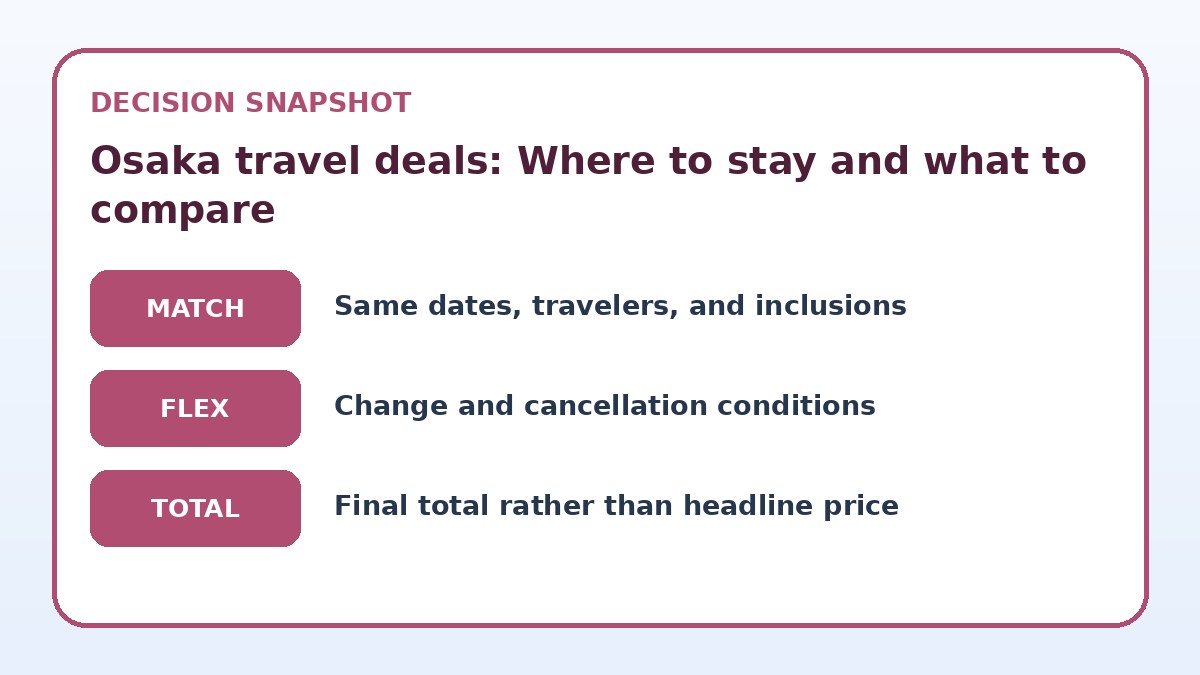
When you see an Osaka travel deal during a shoulder season, don’t compare headline prices alone. Lay out a side-by-side checklist: identical travel dates, number of travelers, flight routing (direct versus connections), checked-baggage allowance, class of service, hotel room type and board basis, transfers, and any included attraction tickets. For solo travelers that one-seat difference changes cost per person calculations; ensure the per-person math reflects a single traveler rather than a divided group fare. If the bundle includes prepaid attraction tickets, verify dates and times since fixed-time inclusions reduce flexibility for solo pacing.
Next, compare the fine print. Look for blackout dates that might apply during local events, minimum-stay rules that convert a shoulder-season date into a peak booking, and change-cancellation fees that often vary between bundled and separate bookings. If the package uses nonrefundable fares to subsidize lower prices, that saving can vanish if you need to move travel plans. Finally, check whether the bundle’s displayed availability is contingent on a third-party supplier or a consolidated inventory — that affects your ability to change parts of the trip without canceling everything.
Inclusions that matter for solo travelers
Not all inclusions are equal for one person. A transfer included in a bundle may add true value if you arrive late or prefer not to navigate trains with luggage. Conversely, a two-person hotel rate that looks cheaper per person won’t benefit you as a solo traveler; always confirm single-occupancy pricing. Meals can be useful if they remove the hassle of finding dinner after long travel days, but they can also lock you into schedules that limit evening exploring in lively Osaka neighborhoods. Evaluate inclusions by how they reduce friction in your journey rather than by their face value.
Also consider the relevance of sightseeing passes or guided tours in bundles. If you prefer wandering neighborhoods like Namba or exploring street food at your own pace, prepackaged tour inclusions might duplicate your plans without saving effort. Conversely, if a bundled attraction skip-the-line ticket saves you time at a major site and aligns with a shoulder-season schedule, that can add meaningful convenience. For each included item, ask: will this save me time, complexity, or stress as a solo traveler, or will it constrain how I move through the city?
Look past the headline total
Compare inclusions and change conditions before deciding whether a package is genuinely useful for this trip.
Deal comparison checklist
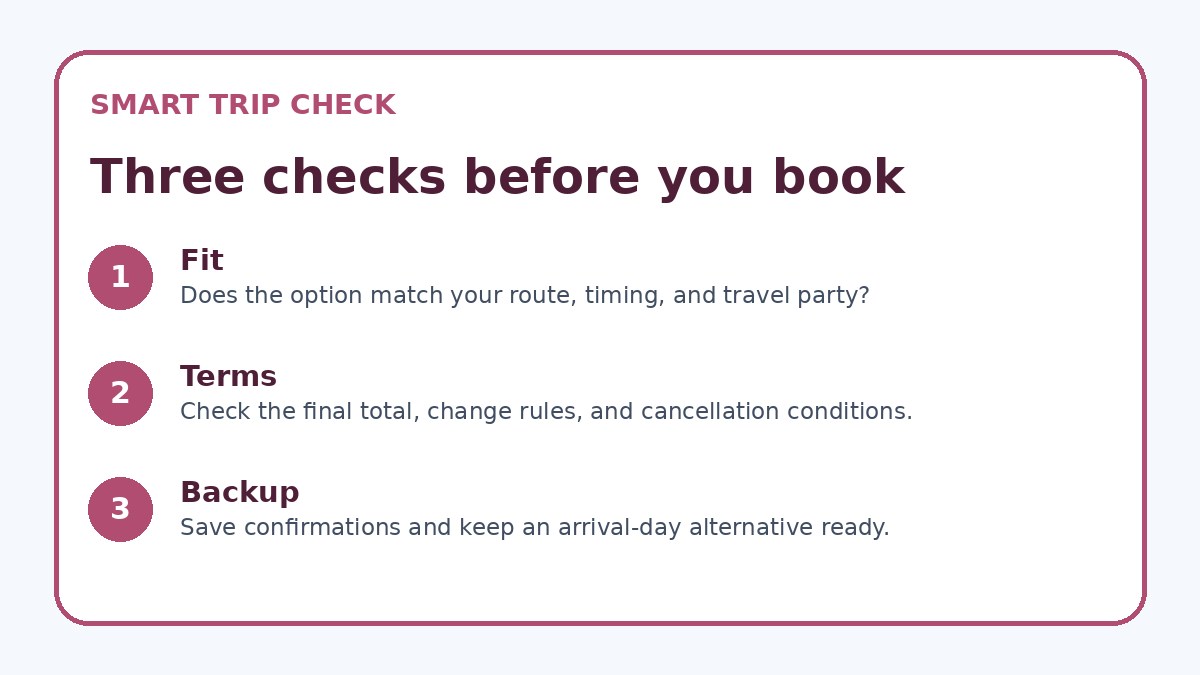
- Match the exact travel dates, traveler count (solo), and room occupancy type across all options before comparing prices.
- Confirm baggage allowance, fare class, and change/cancellation terms on the flight’s final booking page.
- Verify the hotel’s room type, bed configuration, location, and whether breakfast or local taxes are included.
- Check transfer details: private versus shared, meeting point, operator contact, and change policy.
- Compare the same set of optional inclusions (tours, tickets, sim cards) and their redeemability windows.
- Save screenshots of the final terms and supplier contact info before completing payment for easy reference.
Flexibility and traveler-specific value
Flexibility is often the deciding factor for solos planning Osaka trips. Packages can be attractive when they combine elements and offer one-stop support, but they can also tie you to rigid dates or supplier rules. Solo travelers should prioritize refundable or changeable components for at least one part of the trip — typically the flight or the first night’s accommodation — so a delayed arrival or an unexpected reason to extend a stay won’t force a costly rebooking of an entire bundle. Read the provider’s change and cancellation policy and confirm what fees actually apply at the time of modification.
Traveler-specific value also includes comfort with self-service versus managed travel. Some solo travelers prefer a single packaged reservation with a single customer-service contact; others value the control of separate bookings that let them swap hotels, extend nights, or change flights independently. Consider your tolerance for managing multiple vendors, your confidence in handling changes, and whether you want on-the-ground support. If you anticipate travel plan tweaks, independent bookings with flexible terms often outperform tightly bundled deals.
Final terms: what to verify on the booking page
Before you click purchase, check the exact wording on the seller’s final booking page. Verify traveler name-change rules, what documentation is required at check-in, whether airport transfers are private or shared, and how the supplier handles missed connections. If the bundle includes airline tickets, confirm fare classes and baggage allowances for both outbound and return sectors. For hotel reservations, verify room size or bed type, whether you’ll be charged a city tax at arrival, and if the listed rate includes breakfast or other services.
Also confirm points that commonly differ between marketing copy and the live contract: cancellation fee timelines, refund processing windows, and whether amendments must be made through the original vendor or individual suppliers. If any supplier contact is listed, save it. If you plan to compare live availability, you can check sites like Trip.com for current offers, but always validate any detail on the actual provider or booking platform page that will issue your contract and receipt.
Travel Deals & Booking Strategy questions travelers ask
Are shoulder-season Osaka travel deals usually better for solo travelers?
Shoulder-season deals can be advantageous because demand is lower than peak times, often creating more choice in hotels and flights. For solo travelers, the benefit depends on how well a deal aligns with single-occupancy pricing and needed flexibility. A package that looks cheaper per person when split between two travelers may not be economical for one. Evaluate whether included services reduce your planning burden or lock you into fixed schedules that don’t suit solo exploration. Always compare identical dates and inclusions before deciding.
How can I avoid false savings when comparing packaged deals and separate bookings?
Avoid false savings by matching the same variables: travel dates, number of travelers, room occupancy, baggage allowance, and included services. Convert any group-style pricing into a single-traveler equivalent to see the true cost. Read cancellation and change policies on the seller’s booking page so you know what penalties apply if plans shift. If a package bundles attraction tickets or transfers, confirm the date and time restrictions and whether refunds are allowed — those constraints often eliminate the perceived value of a lower headline price.
If I prefer flexibility, which booking approach usually makes sense for a solo Osaka trip?
For maximum flexibility, separate bookings often make sense: book a refundable or changeable flight and reserve first-night accommodation with a flexible cancellation window. That lets you adjust the rest of the trip without undoing an entire package. If you want the convenience of fewer vendors but still need leeway, seek bundles with flexible amendment policies or pay for one flexible component (usually the flight). Whatever you choose, verify change fees and refund processes on the provider’s final booking page before confirming.
Final decision note
Solo travelers planning Osaka trips around shoulder seasons should focus on apples-to-apples comparisons: identical dates, traveler details, and inclusions. Bundles can save time and provide single-point support, but they may sacrifice flexibility that a solo traveler values most. Prioritize what reduces friction on arrival and your first day — convenient location, clear transfer logistics, and refundable options if possible. Read final booking terms carefully, confirm supplier contacts, and weigh whether the included elements genuinely improve your solo experience rather than simply lowering a headline price. With measured comparison and attention to terms, you can decide whether a shoulder-season Osaka travel deal is a convenience or a constraint.
Continue planning
Check current options and final conditions
Use the provider page to confirm live availability, the final total, cancellation terms, and every condition that matters to your trip.
This evergreen planning guide was created with AI-assisted drafting and a structured quality review. It does not display live prices, schedules, availability, visa guidance, or provider rankings. Verify current details before booking. Some links are affiliate links; we may earn a commission at no additional cost to you.