Pick your stay area first: that single choice shapes daily travel, the type of rooms you’ll need, and whether kids can nap easily between activities. For families visiting Melbourne, choose from central (CBD/Southbank), bayside (St Kilda/Brighton), inner-neighbourhoods (Fitzroy/Carlton), or quieter suburbs. Each offers different access to playgrounds, tram routes, family dining, and green space. This guide gives the practical answer up front — which area to shortlist depending on ages, stamina, and priorities — then explains tradeoffs and booking criteria. Use the neighborhood fit checklist and comparison rows below to narrow to one area before you open live hotel inventory. When you do book, verify bedding arrangements, rollaway or extra bed policies, breakfast options, cancellation terms, and any child fees on the hotel’s booking page or a comparison site such as Trip.com.

Check live stays in the areas that fit
Use your dates and party size to compare current rooms after you narrow the neighborhood fit.
Neighborhood fit: match area to your family’s daily rhythm
Start by deciding how you want your days to feel. If your family likes to walk between activities, return to the room for naps, and be within minutes of galleries and child-friendly attractions, a central stay (CBD/Southbank) is a practical pick. Those who imagine mornings on the sand, an easy playground visit, and late afternoon cafés should lean toward bayside stays like St Kilda or Brighton. Inner neighbourhoods such as Fitzroy or Carlton suit families who prefer leafy streets, local markets, and cafés rather than tourist bustle. Suburban bases work well for multi-generational groups needing larger suites or self-catering apartments, but they change your daily rhythm by adding transit time to core tourist spots.
Layer in age and stamina: toddlers and preschoolers benefit from shorter walks and predictable naps, so favor central areas with rapid transport and nearby parks. School-age kids may enjoy exploring neighbourhoods and longer excursions, letting you pick an area that’s more atmospheric but slightly farther from central sights. Also think about mealtimes and sleep schedules — if you must commute back for a quiet lunchtime nap, prioritize proximity over cheaper rooms farther afield. Finally, check for local green spaces and playgrounds in your shortlist area; even a short grassy square can reset a frazzled family day.
Choose an area-selection strategy
| Area approach | Best for | Tradeoff to check |
|---|---|---|
| Central city (CBD & Southbank) | Families wanting minimal transit and quick access to museums, galleries, and riverside walks. | Smaller rooms and more bustle; potentially higher noise and less beach access. |
| Bayside (St Kilda & Brighton) | Families prioritizing beach time, seaside playgrounds, and relaxed mornings. | Longer travel to inner-city attractions and variable public transport frequency. |
| Inner neighbourhoods (Fitzroy, Carlton) | Families who want local cafés, markets, playgrounds, and a quieter, residential feel. | Fewer large hotels and potentially less immediate access to major sights. |
| Suburban stays (Camberwell, Williamstown, outer suburbs) | Multi-generational groups and longer stays that need larger suites or self-catering space. | Daily commuting time increases; you’ll rely more on scheduled trains or driving. |
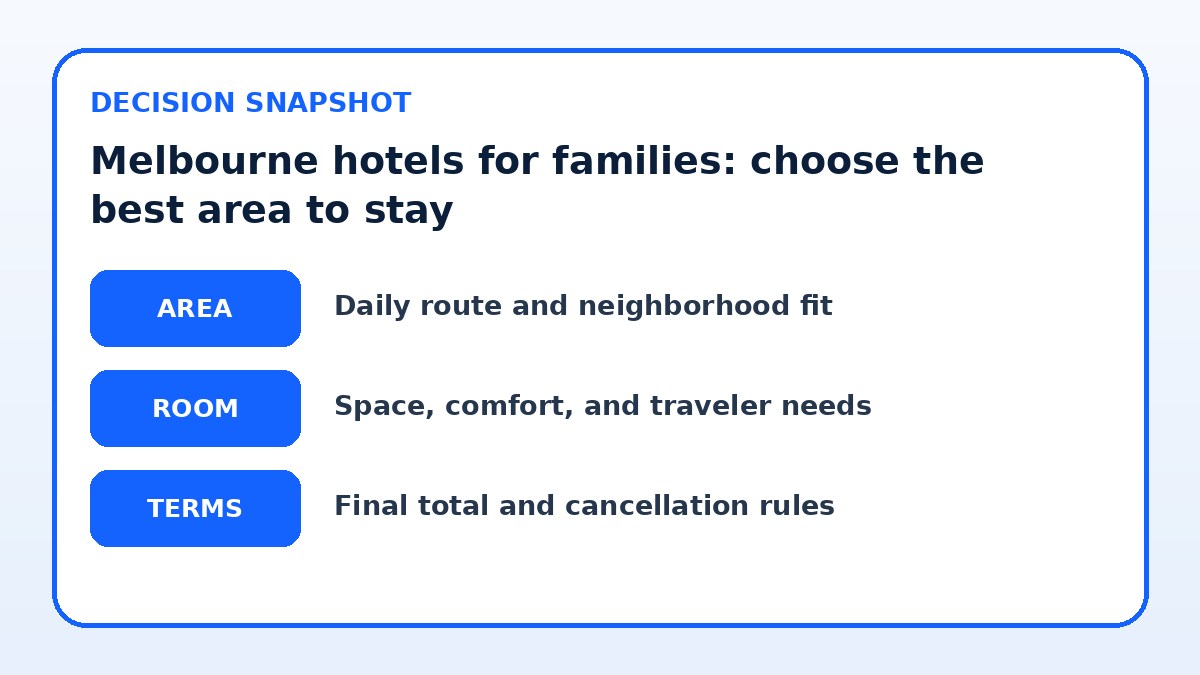
Daily-route friction: how travel adds up each day
Estimate friction by counting likely daily journeys: hotel to breakfast, to a major attraction, for lunch, to a playground, and back for rest. In the CBD and Southbank, many of those legs are short or tram-served, reducing the number of transfers and the hassle of hauling strollers. Bayside and suburbs add longer single legs — helpful for beach days but harder when you have several short errands to run. For inner neighbourhood stays you may walk more and rely on short tram rides; this can be pleasant, but verify tram stops and how they connect to places you plan to visit.
When comparing potential hotels, map the walking and public-transport legs for a sample day rather than only measuring distance to one attraction. Check where the nearest tram or train stops are, whether lifts are available for strollers at stations, and how frequently services run during the hours you usually travel. If you plan day trips outside the city, prefer a hotel near major train stations or tram hubs. Always review any mobility or accessibility notes the hotel lists and confirm details such as elevator access, stroller-friendly entrances, and luggage drop policies on the hotel’s booking page.
Now compare like with like
Keep the same dates, guests, room needs, and cancellation preferences while you compare the final choices.
Room and party needs: what layout suits your family
Decide team size and sleeping arrangements before shopping inventory. Couples with infants usually need a cot and space for a stroller; that often fits easily in standard city rooms. Families with one or two older children typically benefit from rooms with two double beds, interconnecting rooms, or suites with a separate living area. If you want kitchenette capabilities for simple meal prep, target serviced apartments or aparthotels; many suburban and some inner-neighbourhood properties provide these. Make a short list of must-haves — crib availability, room size, extra bed policy — and confirm them directly with the property.
Beyond beds, think about bathroom layout (bathtub for bathing toddlers), storage for toys and gear, and communal amenities like laundry or a kitchenette for longer stays. If you expect to eat breakfast either in the room or at the property, check whether family breakfast options or kids’ menus are offered; if the hotel advertises breakfast, verify what’s included on the booking page. Also confirm accessibility of family facilities such as indoor pools or kid zones, and read cancellation and extra-person fee policies before committing so there are no unexpected costs at check-in.
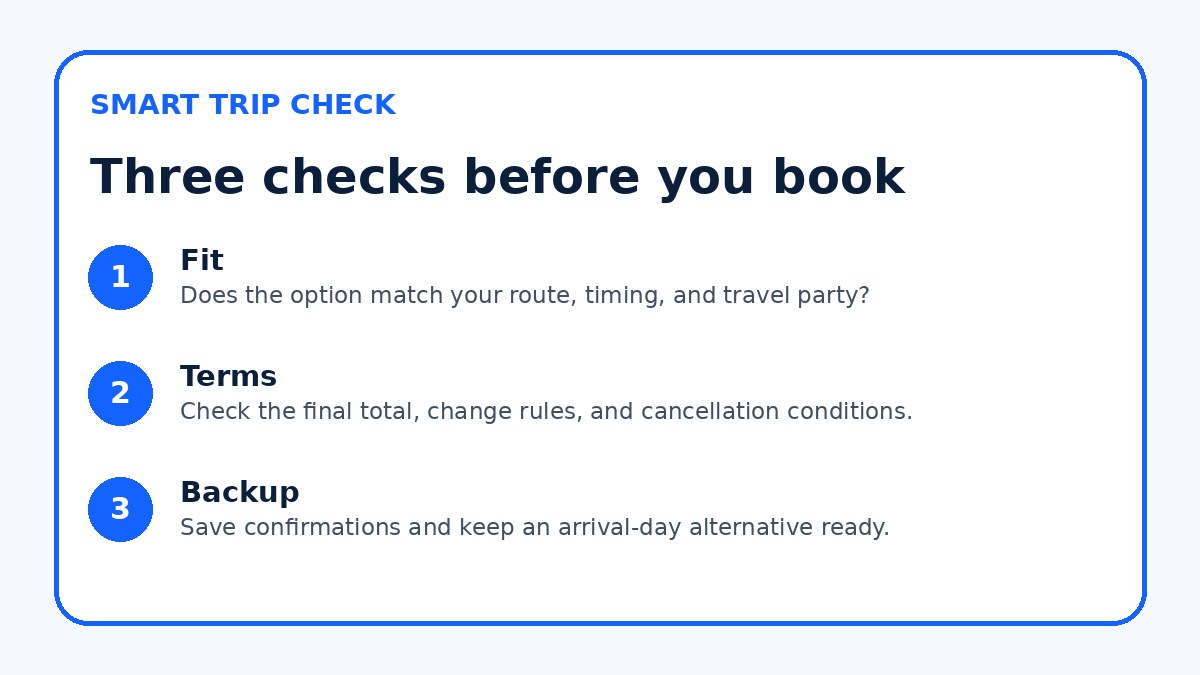
Hotel booking check before payment
- Map a typical family day from each hotel candidate: hotel→breakfast→attraction→playground→nap→dinner and note transfer types and durations.
- Confirm bed configuration, cot availability, and whether an extra bed or interconnecting rooms can be guaranteed in writing.
- Verify bathroom type (bathtub vs. shower), laundry access, and on-site dining options suitable for kids on the hotel booking page.
- Check hotel policies for early check-in, luggage storage, and late arrivals so naps and schedules aren’t disrupted on arrival day.
- Ask the property about stroller-friendly station access or elevator availability at nearby tram stops before finalizing the booking.
- Compare cancellation and modification terms across your shortlisted hotels and keep screenshots or email confirmations of any special requests.
Final booking terms: what to verify before you click book
When you’ve shortlisted an area and a handful of properties, compare key booking terms that affect families. Look for flexible cancellation windows or the ability to modify arrival times, but do not assume these terms: check them on the property’s booking page. Verify whether the listed room rate includes kids under a certain age for breakfast or bedding, and confirm any additional charges for rollaway beds or extra guests. Note whether parking is available (and whether it’s onsite or offsite) if you plan to rent a car for bayside or suburban days.
Also confirm arrival logistics: hotel check-in hours, early check-in options, luggage storage, and how the property handles late arrivals with children. If you rely on public transportation, verify the hotel’s directions to the nearest tram or train stop and whether the hotel can provide maps or preloaded public transit cards. If accessibility, allergy-friendly rooms, or baby equipment are must-haves, request written confirmation from the hotel and save any email or booking notes for your records before travel.
Hotel Guide questions travelers ask
Which Melbourne neighbourhood is easiest for families who want to see museums and the aquarium?
For museum and aquarium access, the CBD and Southbank are the most straightforward choices: many major cultural institutions sit on or near the Yarra River and are reachable by short walks or single tram rides. Staying here reduces the number of transfers with children and lets you return to the room quickly for naps. If you prefer to stay elsewhere, plan for a single tram or train ride and check the nearest stop’s accessibility and frequency for the times you’ll travel.
Is renting a car in Melbourne a good idea for a family stay?
A car helps if you plan regular day trips to the Mornington Peninsula, the Dandenong Ranges, or beaches outside the city; it also makes carrying gear simple. But driving and parking in central Melbourne can be less convenient for short, activity-packed days. If you choose a city or inner-neighbourhood base, compare public-transport access and consider occasional car hire for specific excursions. Always check a hotel’s parking availability and pricing on its booking page before assuming space is included.
What room features should families prioritize when booking Melbourne hotels?
Prioritize clear information on bed count and configuration, cot availability, and whether the property provides rollaway beds or interconnecting rooms. Seek a bathtub if you’ll be bathing young children and a kitchenette or fridge for snacks and simple meals if you prefer some self-catering. Also confirm laundry access for longer stays, any on-site play or pool facilities, and the hotel’s policy on extra-person fees so there are no surprises at check-in.
Final decision note
Decide the neighbourhood before you compare inventory: that choice determines how your days flow, where you’ll eat, and how easy naps and travel will be. Shortlist one area based on your family’s stamina, the ages of children, and whether you value beaches, museums, or local neighbourhood life. Then filter properties by room layout, accessibility, and booking terms that matter to families. Verify critical details — bed configuration, cot and extra-bed policies, bathroom type, parking, and cancellation rules — on the hotel’s booking page and keep written confirmation of special requests. With the right area selected, you’ll spend less time commuting and more time enjoying Melbourne together.
Continue planning
Check current options and final conditions
Use the provider page to confirm live availability, the final total, cancellation terms, and every condition that matters to your trip.
This evergreen planning guide was created with AI-assisted drafting and a structured quality review. It does not display live prices, schedules, availability, visa guidance, or provider rankings. Verify current details before booking. Some links are affiliate links; we may earn a commission at no additional cost to you.