After you land in Tokyo with kids and luggage, your first decision is whether to move straight to your accommodation or pause for a short organized transfer. If your party is one adult and one or two children with a couple of suitcases and carry-ons, a meet-and-greet transfer or private car can remove immediate stress; if you have many bags or a stroller plus car seats, airport-to-station options that include porter help or a shuttle with luggage allowance become more useful. This guide gives a quick practical answer up front—how to choose the right arrival transfer for safety, convenience, and minimizing waits—then explains the tradeoffs and exact things to verify on booking pages so you won’t discover a missing car seat, luggage limit, or unclear meeting point after touchdown.
Check options for your arrival details
Use your flight, luggage, party size, and accommodation address to compare current choices.
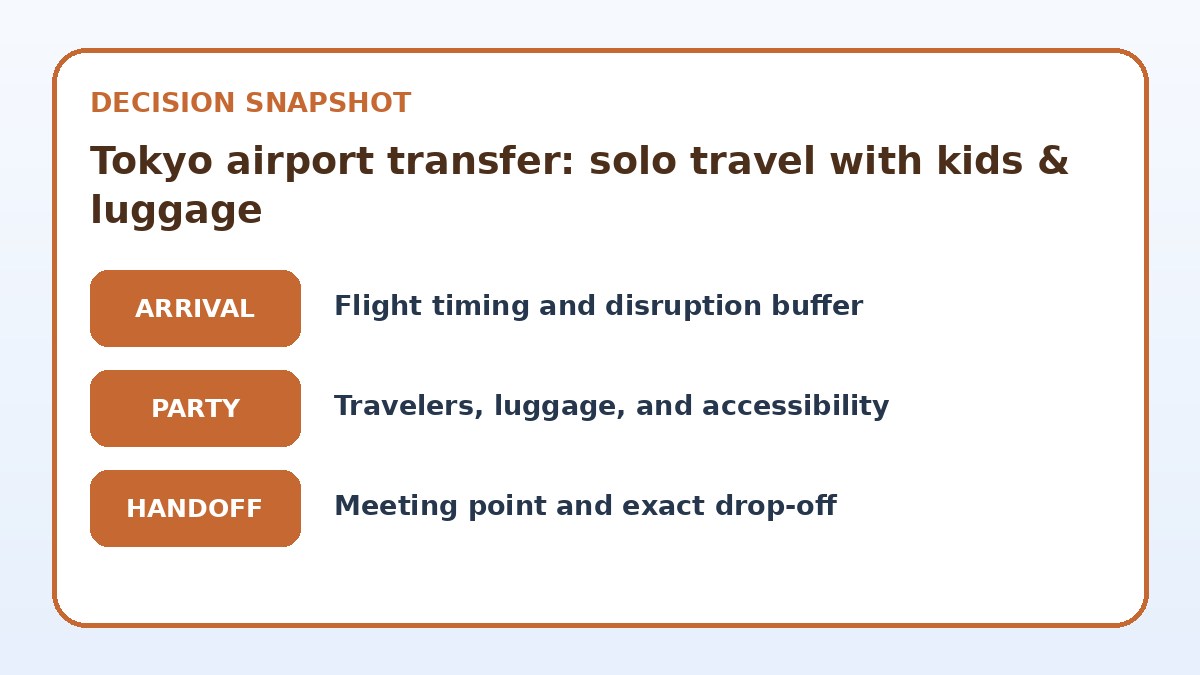
Match luggage and party size to the transfer type
Start by listing exactly what you will carry from plane to accommodation: number of checked bags, carry-ons, a stroller, and any bulky items like a baby travel cot. Solo travelers with one child and two checked bags can often manage a taxi or ride-hail, but once you have three or more large suitcases or a stroller and a car seat the size and configuration of the vehicle matters. Private transfers usually let you specify luggage count and request car seats; shared shuttles have fixed luggage allowances and stricter storage arrangements that may require extra handling.
When comparing options, check vehicle type and maximum passenger count, not just price. A compact car that seats three adults might be cramped with two adults, a child in a car seat, and three medium suitcases. If your booking page does not allow you to list strollers and car seats, contact the provider directly to confirm program details. Also ask whether the driver helps fold strollers, carries luggage to the building entrance, or expects you to manage steps yourself—details that matter more when you are solo with children.
Arrival details to have ready
- Count and list every checked bag, carry-on, stroller, and car seat; include dimensions if possible and add this to your transfer booking.
- Confirm pickup terminal, exit/arrival hall, and a live driver contact; save a photo of the driver or vehicle ID before you land.
- Ask the provider about car seat availability and exact wait-time/flexibility policy for delayed flights; get written confirmation on the booking page.
- Verify drop-off access with your accommodation—curbside, elevator, luggage handling—and note any stairs or pedestrian-only approaches.
- Prepare a short emergency kit (snacks, wipes, medicines, change of clothes) in an easy-to-reach bag for children during potential waits.
- If choosing rail last mile, map station exits, elevator locations, and nearest taxi ranks; pre-book porter or luggage-forwarding if you can’t manage bags alone.
Plan for late or disrupted arrivals
Flights are frequently delayed; plan a transfer that handles schedule changes without leaving you and your child waiting. Private pickup services often allow you to input your flight number and monitor arrivals so a driver will wait for a late gate arrival, but you must verify the provider’s policy on wait time and whether extra waiting is charged. For shuttles and buses with fixed departure times, missed services can mean long waits or last-minute taxi fares. If you expect disruption—tight connections, overnight arrival, or potential cancellations—prioritize providers offering flexible pickup windows and easy rebooking by phone or app.
Also prepare a simple backup plan you can execute alone: know the nearest staffed transport desk, major train line serving your destination, and how to order a taxi using a local app or airport counter. Keep a compact emergency kit—snacks, wipes, a small toy, and contact numbers—reachable in your carry-on. If a child requires a car seat and your booked transfer can’t supply one due to delay or routing changes, be ready to use a taxi with a suitable booster or adapt travel plans to use train services where porter help is available.
Match the transfer to your arrival
| Arrival approach | Best for | Detail to verify |
|---|---|---|
| Private car/driver | Solo parent who wants door-to-door service, confirmed car seats, and minimal walking. | Higher cost and potential difficulty in very narrow streets; confirm vehicle size and car seat availability on booking. |
| Shared airport shuttle | Travelers with moderate luggage who want a lower-cost, direct route to major hotels or hubs. | Fixed schedules and limited luggage allowances; may require busier pick-up points and longer waits for other passengers. |
| Taxi or ride-hail | Quick, flexible solo trips with one child and minimal luggage from terminal to nearby areas. | Variable vehicle sizes and uncertain car seat availability; verify local taxi rules and whether the app offers larger vehicles. |
| Rail to major station plus porter or luggage service | Solo travelers looking to save money and connect efficiently when staying near train lines. | Requires handling stairs or elevators and may involve short walks; confirm luggage assistance and station accessibility beforehand. |
Make the meeting plan clear
Check the final pickup instructions, waiting conditions, and exact drop-off coverage.
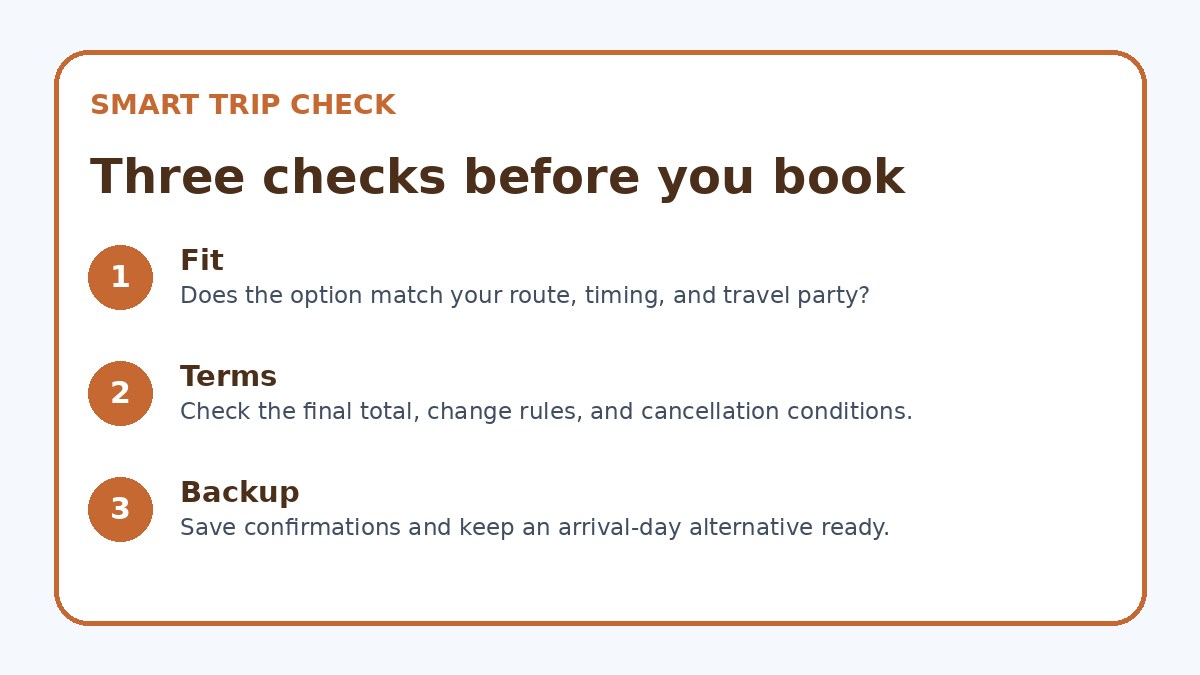
Clarify the meeting point and pickup choreography
Tokyo’s airports have multiple terminals, arrival halls, and frequently changing gate announcements; your transfer is only as reliable as the pickup instructions you and the driver share. Confirm the exact terminal, arrival hall (domestic/international), exit number, and whether the driver meets you at the gate, curbside, or a designated meet-and-greet desk. Ask the provider what they will display on their sign (your name, child’s name, or booking reference) and whether they have an on-ground phone contact. If language is a concern, request driver contact details you can message with live arrival updates.
Children can be impatient at pickup points, so plan a short wait area where you can safely sit with luggage and child. If the meeting point requires crossing a roadway or using an underpass, verify assistance options for carrying strollers and heavy bags. For larger vehicles or minibuses, confirm whether they stop at curbside or at a vehicle staging area that requires a short walk. Finally, always exchange a photo of the booked vehicle or driver’s license plate via the provider’s messaging tool so you can confidently identify the correct transfer in crowded terminals.
Check destination-side drop-off fit and last-mile needs
Think beyond the airport: not every car can stop at a hotel door in Tokyo’s dense neighborhoods, and some accommodations have narrow streets or stairs. Before booking, check with your accommodation about curbside access, luggage drop spots, elevator availability, and whether staff will help with heavy bags. If your hotel is in a pedestrian zone or a residence-style apartment, plan to walk a short distance from the vehicle; in that case, request a smaller vehicle that fits close to your building rather than a larger minibus that must stop farther away.
Also consider check-in timing and whether you need luggage storage before room access. If you arrive before standard check-in and can’t deposit luggage, a transfer that takes you directly to a daytime-friendly luggage storage service or the main station with lockers might be more practical. When using train transfers for the last mile, verify station exit accessibility for strollers, elevator locations, and whether porters or station staff can assist with heavy bags—details to confirm with both the transfer operator and your accommodation.
Airport Transfer & Local Mobility questions travelers ask
How do I get a car seat for my child when booking a Tokyo airport transfer?
Always request a car seat explicitly on the transfer provider’s booking page and check the confirmation text for seat type and child age range. If the booking interface lacks that option, contact the operator by phone or email and get a written reply confirming the seat, its installation method, and any fees. On arrival, compare the seat to your child’s needs and bring a lightweight travel restraint if you prefer familiar equipment. Verify cancellation and refund terms if the operator cannot supply the seat at pickup.
Is it better to take a train or a private car with children and several bags?
There’s no universal answer: a train can be faster and more economical if your accommodation is near a major station and you have manageable luggage with elevator access. However, a private car removes the physical handling of bags and the stress of transferring with children, especially with multiple suitcases or a stroller. Compare door-to-door convenience versus cost and confirm station accessibility, porter services, and elevator locations at both origin and destination before deciding.
What should I verify about meeting points to avoid confusion after landing?
Confirm terminal and specific arrival hall or exit number, whether the driver will meet you at baggage claim, curbside, or a meet-and-greet desk, and the exact sign/name they will display. Get the driver’s phone number and vehicle photo or license plate from the operator and agree how you will communicate delays. If language barriers worry you, use the booking platform’s messaging feature to share a photo of yourself and the child so the driver can recognize you in a crowded arrival area.
Final decision note
For solo travelers landing in Tokyo with children and luggage, the practical choice balances physical ease, flexibility for delays, and realistic access at your final address. If minimizing hands-on baggage handling and ensuring car seats are critical, a private transfer usually gives the clearest fit—confirm vehicle size and child-seat details on the provider’s booking page. For budget-conscious travelers staying near major train lines, combine luggage-friendly rail options with porter or luggage-forwarding services, but map station elevators and exits in advance. Whatever you choose, document pickup instructions, have a simple backup plan, and keep essentials in an accessible carry-on so you can move confidently from plane to room without a last-minute scramble. Trip.com can be a place to compare current availability, but always verify policies and live contact details on the operator’s final booking page.
Continue planning
Check current options and final conditions
Use the provider page to confirm live availability, the final total, cancellation terms, and every condition that matters to your trip.
This evergreen planning guide was created with AI-assisted drafting and a structured quality review. It does not display live prices, schedules, availability, visa guidance, or provider rankings. Verify current details before booking. Some links are affiliate links; we may earn a commission at no additional cost to you.