Practical answer: for most solo travelers the quickest and least-friction single-mode option is a direct high-speed rail or express coach; but the most rewarding and flexible solution is a multi-city ground plan that mixes rail, regional trains and a coastal ferry or coach segment to visit intermediate stops like Daejeon or Gyeongju. Start by mapping your must-see towns, then choose a primary backbone mode (rail or coach) and add short regional hops or ferries for one- or two-night stops. Prioritize terminals with easy luggage transfers and clear onward connections, and plan a disruption backup that keeps you mobile without losing a booked accommodation night. This article helps you weigh terminal fit, luggage friction, timing flexibility and backup options so you can build a realistic door-to-door route, get comfortable with transfers, and know exactly what to verify before hitting purchase.
Choosing rail, coach, ferry or a mix
Begin by matching your priorities: speed, cost, scenery, or stopovers. High-speed rail tends to be the fastest and simplest backbone between major cities, while express coaches often serve more neighborhoods and can be cheaper. Ferries introduce a scenic coastal option and let you include islands or port towns, but they usually add transfer steps. For multi-city planning, a single backbone with occasional regional rail, coach or ferry legs preserves simplicity while letting you detour into smaller destinations.
Think about physical terminals: major train stations are usually centrally located and linked to local transit, which reduces last-mile friction. Coach terminals may sit beside highways or secondary districts, sometimes requiring extra local transit or taxi rides. Ferries depart from ports that can be some distance from town centers. When planning multiple legs, prefer combinations that minimize long, late-night transfers and avoid backtracking—a loop route or linear line with short feeder hops typically works best.
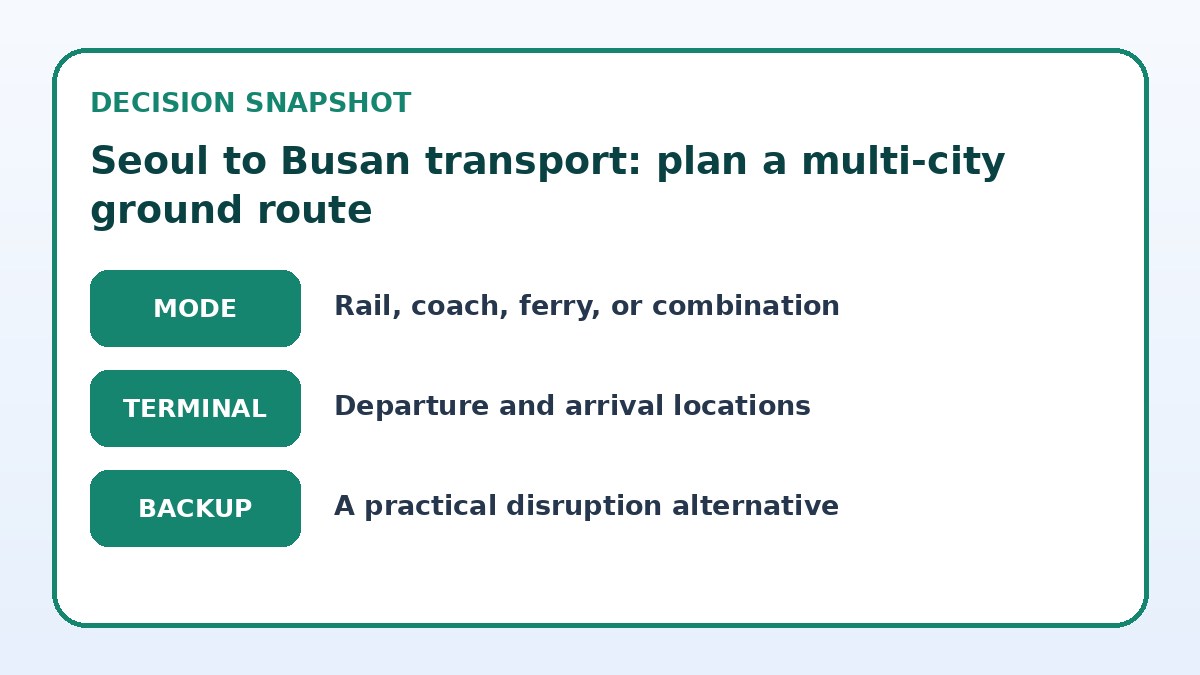
Choose the end-to-end journey plan
| Journey approach | Best for | Friction to check |
|---|---|---|
| Single-mode backbone (all rail or all coach) | Travelers who want predictable transfers and simpler logistics. | Less flexibility to detour to smaller coastal towns or islands without backtracking. |
| Backbone plus regional hops | Solo travelers wanting a main fast corridor with short detours into intermediate cities. | Requires more ticket coordination and slightly higher luggage handling between modes. |
| Multi-day loop with ferry leg | Those prioritizing scenery and coastal stops, combining mainland travel with a ferry segment. | Ferry schedules can be sparse; missing one leg often forces a long delay or alternate transport. |
| Flexible open-jaw approach (different in/out terminals) | Travelers who want to minimize backtracking and cover more ground without returning to the start. | More complex planning for luggage, transfers and coordinating separate return or onward legs. |
Check live intercity options
Look beyond the ride itself and compare terminals, transfers, luggage, and arrival fit.
Terminal fit and luggage / transfer friction
Terminal fit matters more than enthusiasts often admit. A centrally located station with good signage, luggage storage and clear exits makes short overnight stops realistic; by contrast, remote coach stations increase taxi or bus dependency. Solo travelers should choose accommodations close to the terminal for the night you arrive or depart. If you expect to change modes, check whether the terminal has level access, escalators, or elevators—moving big bags across platforms and stairs is the main source of stress on multi-leg journeys.
Luggage strategy changes travel options. Rollers and a compact daypack let you use stairs, climb ferry ramps, and hop local buses without large handling fees. If you plan to leave a larger bag in storage, verify terminal lockers or nearby left-luggage services before booking. For multi-city trips with several short hops, consider using a luggage forwarding service only if it guarantees delivery within a time window that fits your itinerary; otherwise, factor the physical handling into your transfer time budgets.
Timing flexibility and building realistic buffers
Build your schedule around realistic connection times. Frequency is the enemy of overplanning: if trains or coaches run every 10–20 minutes, you can keep tighter buffers; if a ferry or regional train only runs a few times per day, add substantial buffer time and plan an alternative. Solo travelers should avoid planning tight, just-in-time connections across unfamiliar terminals—missed links can cascade and force an overnight stay in a place you didn’t intend to visit.
Also consider boarding and disembarkation habits. Peak travel windows can cause crowds for ticket counters and platform access; if you have an early or late leg, verify station opening times and late-night taxi options. Where ticket collection is required, allow extra time for pickup at kiosks. When booking accommodation, pick options with flexible check-in or late-arrival instructions so a delayed arrival doesn’t turn into a logistical headache.
Compare the practical alternatives
Use the final page to confirm what is actually offered on your dates and save a workable fallback.
Intercity travel checklist
- Map your route and mark the main backbone mode plus every planned regional link and port terminal.
- Check terminal locations relative to your accommodation and reserve a hotel near the station when arriving late.
- Verify provider pages for departure terminals, luggage rules, ticket pickup procedures and boarding cut-off times.
- Build at least 30–90 minute buffers depending on frequency, with longer buffers for ferries or infrequent services.
- Identify at least one alternate route and a late-night taxi or bus option for each critical transfer.
- Pack a compact daypack, rollable main bag, and screenshots of tickets and timetables in case of spotty mobile service.
Disruption backups and what to verify before booking
Every multi-leg plan needs a disruption backup that is simple to execute. Pick at least one alternative route that uses a different backbone mode—if you rely on rail, know the coach options for the same corridor; if a ferry is part of the plan, identify nearby bus or train links that bypass the port. Carry download-ready timetables or screenshots, and keep contact numbers for your accommodation and a local taxi app handy. This makes decisions much faster if you need to change course mid-trip.
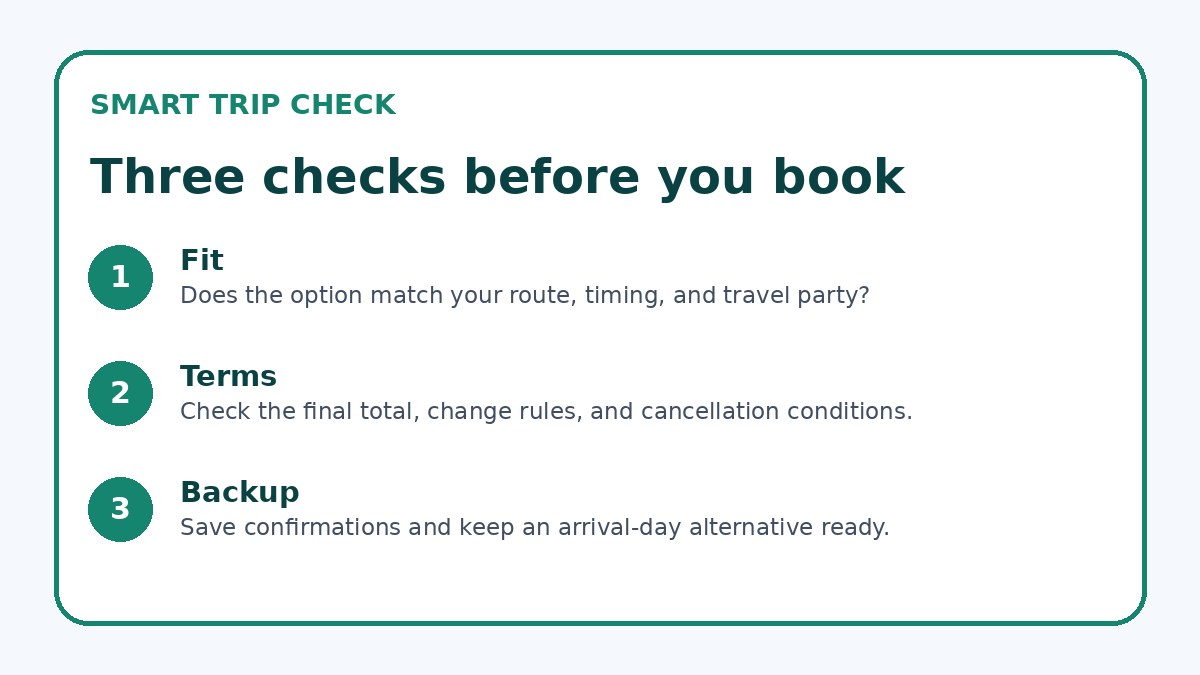
Before booking anything, verify a few provider-specific facts on the final booking pages: official schedules and actual departure terminals, luggage rules and maximum dimensions, ticket-collection requirements, and any boarding cut-off times. Also check cancellation or change policies for both transport and accommodation so you can pivot without losing the whole value of a day. Optionally compare availability on Trip.com but always confirm critical details on the provider’s official site or ticketing platform prior to purchase.
Rail & Intercity Transport questions travelers ask
How do I compare door-to-door travel time when mixing train and ferry?
Don’t just add crossing time; include access time to and from ports, recommended check-in or boarding windows, and last-mile transfers to accommodations. For each leg, write down walking or transit time from the terminal to your lodging and add a buffer for ticketing and boarding. When comparing options, use total door-to-door time from hotel check-out to hotel check-in rather than ride-only durations. If ferry schedules are infrequent, the extra waiting time can outweigh a slightly faster sailing time.
What luggage size and handling approach works best for multiple short transfers?
Choose a main bag with good wheels and manageable weight, plus a small daypack for essentials carried on board. Avoid oversized hardcase luggage if you’ll be using stairs or small local buses; softer bags compress and are easier for tight spaces. If you plan several overnight stops, research station lockers or nearby left-luggage services and verify operating hours. Where lockers aren’t an option, consider splitting items between a checked bag and a daypack or using a luggage forwarding service only if their pickup and delivery windows align with your schedule.
How should a solo traveler handle unexpected cancellations or missed connections?
First, stay calm and evaluate the next available options for the same corridor—often a different operator runs later services. Contact your accommodation to request a later check-in or explain the delay. If the next service is many hours away, consider a taxi for short distances or booking a nearby overnight stay; check cancellation flexibility before you book so you can change plans without major penalty. Keep screenshots of alternative timetables and a local transit or taxi app ready to expedite decision-making when time is short.
Final decision note
A successful Seoul to Busan multi-city ground plan balances a clear backbone mode with the freedom to detour. Choose rail or coach as your spine according to terminal fit and how easily you’ll reach planned stops, then add regional hops or a ferry leg only when the added experience justifies the extra transfer friction. Prioritize terminals with easy luggage handling, allow realistic buffers for infrequent services, and always keep a simple disruption backup. Before you book, verify departure terminals, luggage rules, ticket pickup requirements and cancellation policies on provider pages; these checks prevent small surprises from turning into major delays.
Continue planning
Check current options and final conditions
Use the provider page to confirm live availability, the final total, cancellation terms, and every condition that matters to your trip.
This evergreen planning guide was created with AI-assisted drafting and a structured quality review. It does not display live prices, schedules, availability, visa guidance, or provider rankings. Verify current details before booking. Some links are affiliate links; we may earn a commission at no additional cost to you.