The first hour after your last meeting or the final minutes at your hotel is when the return journey to the airport is decided. For business travelers in Washington, DC that choice shapes whether you arrive relaxed and on time or stressed and scrambling. Start by confirming your flight status, the airport you’re departing (DCA, IAD, or BWI), and how much luggage and equipment you’ll carry. With those facts you can narrow options: a rideshare or taxi for door-to-door speed, a pre-booked car service for reliability and receipts, or a shared shuttle for lower cost but slower pickup. This guide gives the practical decision—what to do right now with your flight and accommodation details open—then explains tradeoffs so you can pick the transfer that fits your time, budget, and meeting-side needs.
Check options for your arrival details
Use your flight, luggage, party size, and accommodation address to compare current choices.
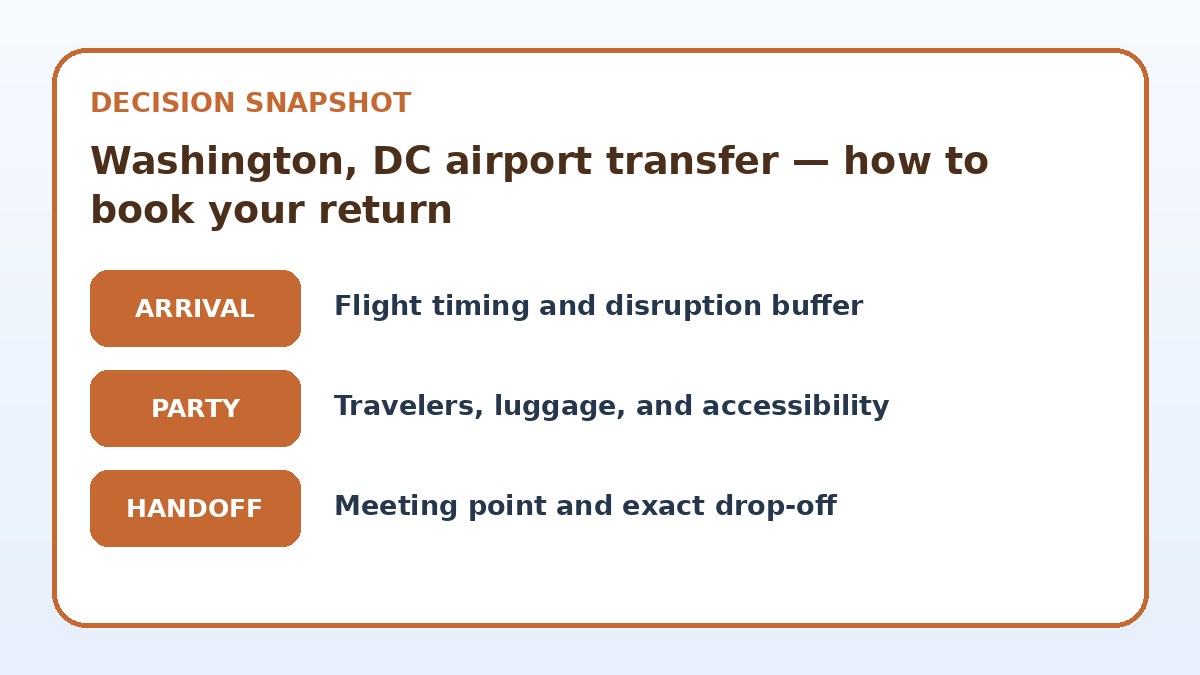
Luggage and party size: pick the right vehicle
Business travelers should decide vehicle size based on more than seat count. A single carry-on and briefcase fit easily in most cars; multiple checked bags, rolling cases, or audio-visual gear need trunk space or an SUV/small van. If you travel with a colleague, check whether one vehicle can comfortably take all passengers plus luggage—otherwise plan separate pickups or reserve a larger vehicle. For train-to-airport transfers or shared shuttles, confirm luggage allowances in the operator’s terms before you commit.
When booking, specify the number and size of bags, any special equipment, and whether you need door-to-door luggage handling. For corporate expense reporting, choose services that provide clear invoices and driver contact details. If you expect to rearrange pickups because a meeting runs long, pick a supplier with straightforward changes. Make a simple packing decision now: consolidate what you can into fewer pieces or pre-order a larger vehicle so you aren’t negotiating space at the curb.
Arrival details to have ready
- Confirm which Washington airport (DCA, IAD, or BWI) your flight departs from and note the terminal on your flight confirmation.
- Count passengers and all luggage items, then select vehicle size or reserve a larger car if you have bulky cases or equipment.
- Check your flight status and factor in the airline’s recommended arrival time plus an extra traffic buffer for DC area congestion.
- Decide on a pickup meeting point with clear signage (hotel lobby name, curb number, or exact terminal door) and share it with the driver.
- Verify the transfer provider’s change and cancellation policy on their final booking page and save the confirmation and driver contact.
- If travel is managed by your company, confirm expense rules for receipts, tip policy, and approved supplier lists before booking.
Late or disrupted departures: build flexibility into plans
Flights or ground delays happen; business travelers cannot always end a meeting early. If your timetable is tight, book transfers with flexible cancellation or change policies and monitor your flight’s status in real time. Choose providers that allow app-based changes or phone contact so you can update pickup windows without long hold times. If you have hard deadlines, consider booking two overlapping options—such as a refundable private car plus a standby rideshare—as a contingency.
Prepare for worst-case scenarios: know the latest time you can leave and still make your check-in or security window, and share those limits with your driver or travel arranger. If your flight is rebooked to a different Washington airport, have a plan for inter-airport transfer: verify whether your supplier will accommodate a change or if you'll need to book anew. Keep electronic copies of confirmations and the provider’s change policy so you can act quickly when disruptions occur.
Match the transfer to your arrival
| Arrival approach | Best for | Detail to verify |
|---|---|---|
| Rideshare app (on-demand) | Single travelers with flexible pickup who need quick, point-to-point service. | Price and pickup time can vary with traffic and surge; verify airport pickup zones and wait for driver details in the app. |
| Traditional taxi | Immediate curbside pickups and straightforward payment with no app required. | Availability can be inconsistent during peak times; confirm if the taxi accepts card payment and provides a receipt for expenses. |
| Prebooked private car or black car | Business travelers needing reliability, receipts, and a professional driver for time-sensitive trips. | Less flexible to last-minute changes; verify cancellation and change policies on the provider’s booking page. |
| Shared airport shuttle | Cost-conscious travelers or small teams traveling light who can tolerate scheduled stops. | Longer door-to-door time due to pickups and drop-offs; check luggage rules and exact pickup locations before booking. |
Make the meeting plan clear
Check the final pickup instructions, waiting conditions, and exact drop-off coverage.
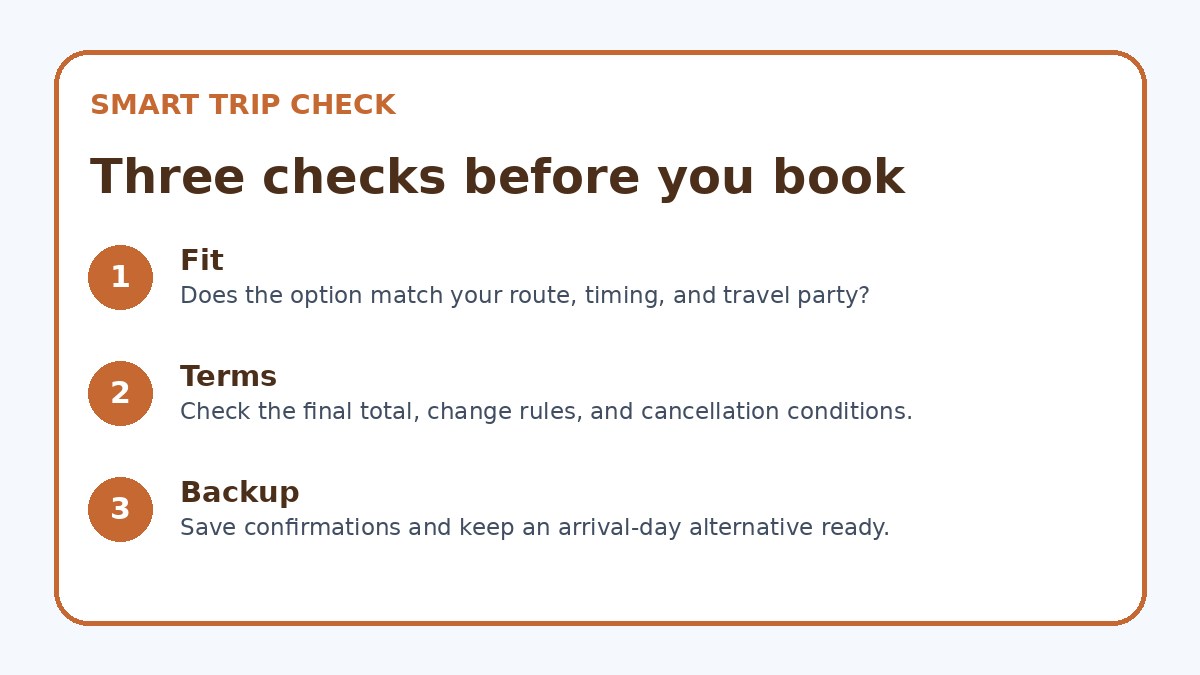
Meeting-point clarity: avoid curbside confusion
Clear rendezvous instructions save minutes and reduce stress at the curb. For pickups at hotels, conference centers, or city streets, specify an obvious landmark, entrance name, or a named hotel lobby to meet your driver. At larger terminals or business buildings, indicate floor, wing, or parking level if relevant. Provide a direct phone number and confirm whether drivers will call or text on arrival; ambiguity is the most common cause of missed pickups.
At the airport, choose the correct terminal and door—Washington’s airports have multiple curb zones and designated rideshare or taxi pickup areas. Verify whether your driver can stop at the curb or must use an offsite lot with a short shuttle, and plan the extra time that could add. If you are traveling with clients, agree on a single meeting point in advance and brief them on how you’ll handle last-minute changes to avoid running late.
Destination-side drop-off fit: end your trip efficiently
Where you are dropped off at the airport matters for check-in and security timing. For tight international departures, curbside or cell-phone lot drop-offs at the correct terminal reduce transfer time. Confirm with your driver whether they will remain at the curb to help with luggage or need to move to short-term parking. If you must transfer between terminals, factor in extra time for terminal shuttles or people-movers and include it in your schedule.
Consider security and airline check-in locations when choosing a drop-off point—some terminals have distant security checkpoints or separate international processing. If your airline recommends an early check-in, plan to arrive earlier and choose a transfer option that reliably meets that window. For expense reports, note drop-off receipts and arrival times; if you use a company travel program, verify whether specific terminals or drop-off processes are required by policy before booking.
Airport Transfer & Local Mobility questions travelers ask
How much buffer time should I leave for a Washington, DC airport transfer when traveling for work?
For business travel, leave a conservative buffer beyond the airline’s recommended arrival: account for DC traffic peaks, local events, and airport security lines. If you’re departing from Reagan National (DCA), Washington traffic patterns may still add unpredictable delays; if departing from IAD or BWI, allow additional time for longer road distances. When timing a transfer, use live flight status plus local traffic apps, and aim to arrive earlier than the minimum recommended check-in to absorb unforeseen delays. If on a tight schedule, choose a private car that can be rescheduled quickly.
Which transfer option is best for a small team traveling with presentation equipment?
For a small team with presentation boxes or AV equipment, a prebooked larger vehicle—an SUV, MPV, or small van—is usually the most practical. This secures trunk space and avoids multiple vehicle charges or cramped cabin conditions. Confirm the provider’s luggage capacity and whether the driver assists with loading. If cost-sharing matters, compare the extra cost of a larger private car to multiple smaller rides and weigh that against the time savings and convenience of keeping the team together.
What should I verify on a provider’s page before booking a return airport transfer from Washington, DC?
Before you confirm, check these items on the provider’s booking page: pickup and drop-off terminal details, luggage allowances, change and cancellation terms, whether curbside pickup is permitted, how driver contact is shared, and the receipt format for expense reporting. If the provider offers meet-and-greet or flight monitoring, verify what that includes and any additional fees. For added comparison, you can check current availability and provider conditions on Trip.com, but always use the supplier’s official booking and policy pages to make your final decision.
Final decision note
Choosing the right Washington, DC airport transfer for a business return trip comes down to three questions: which airport, how much luggage (and who’s traveling with you), and how rigid your schedule is. Start by confirming your flight and terminal, then match vehicle size and flexibility to your needs. For tight schedules prioritize private, prebooked cars; for single travelers with flexible timing consider rideshares; for groups or lower-cost needs explore shared shuttles. Always verify pickup points, luggage rules, and change policies on the provider’s booking page, and keep confirmations and receipts handy for corporate expense processes. With those checks in place you’ll reduce last-minute friction and arrive at the airport ready to travel.
Continue planning
Check current options and final conditions
Use the provider page to confirm live availability, the final total, cancellation terms, and every condition that matters to your trip.
This evergreen planning guide was created with AI-assisted drafting and a structured quality review. It does not display live prices, schedules, availability, visa guidance, or provider rankings. Verify current details before booking. Some links are affiliate links; we may earn a commission at no additional cost to you.