If you and your partner have only a long weekend in Toronto, pick the neighborhood first, then the hotel. For short stays the best practical base balances walkable attractions, quick transit links to any specific must-sees, and a room that supports relaxation and an easy morning departure. Decide whether you want a compact, central neighborhood that reduces transit time, a quieter residential area with couples-focused comforts, or a hotel near transit hubs if you plan one day trips out of the city. This article gives a clear recommendation up front, explains typical daily friction points, and shows how to match room type and booking terms to your short-stay priorities so you can shortlist an area before checking live hotel inventory.

Check live stays in the areas that fit
Use your dates and party size to compare current rooms after you narrow the neighborhood fit.
Neighborhood fit: match energy and access
Start by picturing how you’ll spend most of your hours together. If museum visits, theater, and fine dining dominate your plans, a hotel in Yorkville or the nearby Midtown cluster keeps you close to galleries, boutique shops, and quieter evening streets. For couples who want skyline views, harbour strolls, and quick access to popular attractions, a Waterfront or Downtown core hotel puts major sites within easy walking distance and saves taxi or transit time.
If your couple’s style is neighborhood discovery—cafés, local markets, and quieter streets—consider lodging in the Annex or Leslieville, accepting an extra 10–25 minutes of transit to reach downtown highlights. For practical short stays, balance energy level with transit options: pick a neighborhood where most of your planned activities are grouped within a short transit ride or a comfortable walk, since time saved on commuting translates into more time to enjoy the city together.
Choose an area-selection strategy
| Area approach | Best for | Tradeoff to check |
|---|---|---|
| Central Downtown/Waterfront base | Couples wanting minimal transit time and easy walking to main sights | More bustle, possibly higher noise and fewer quiet residential streets |
| Yorkville/Midtown luxury-orientated base | Couples focused on dining, galleries, and a quieter evening atmosphere | Slightly longer transit to some waterfront attractions and major transit hubs |
| Neighborhood-focused base (Annex/Leslieville) | Couples who prefer local cafés, relaxed discovery, and residential charm | Extra transit time to reach clustered downtown attractions and some venues |
| Transit-hub base (near Union Station/major subway) | Couples planning one-day trips outside the city or fast airport/train access | Areas can be busy at peak travel times and less characterful for evenings |
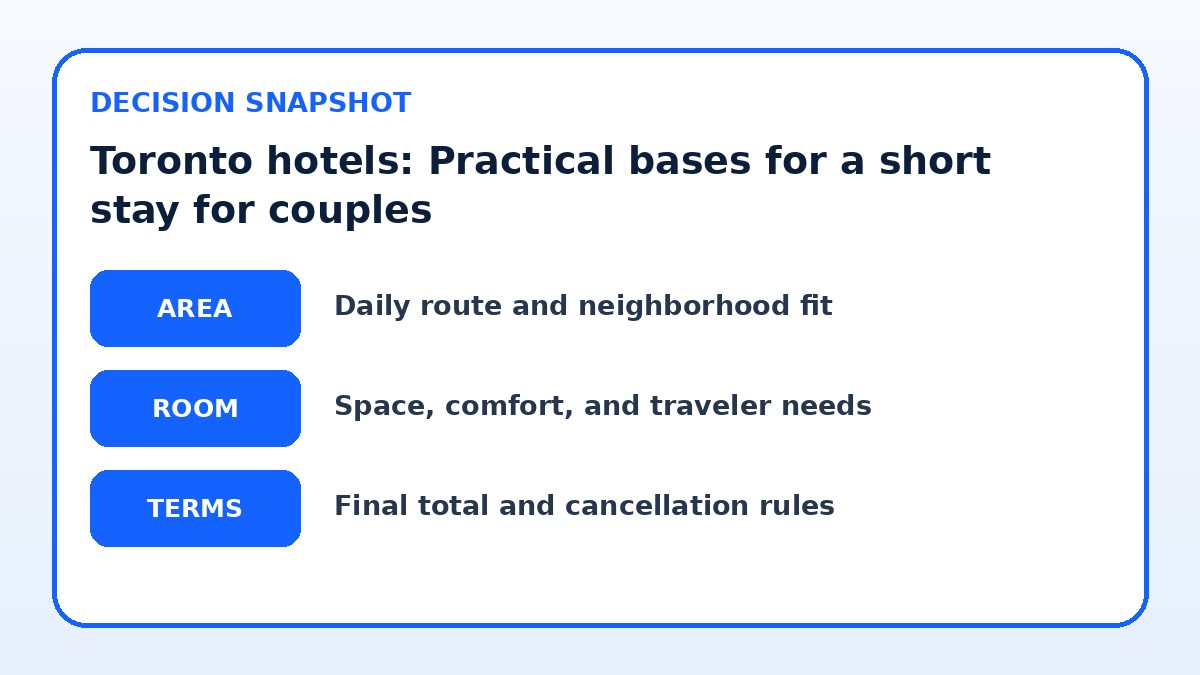
Daily-route friction: reduce commute and decision costs
Identify your top three daily destinations and map them relative to prospective neighborhoods. Downtown and Waterfront minimize first-mile friction for CN Tower, Ripley’s, and major museums; Yorkville shortens evenings and fine dining; and hotel areas near major transit lines or Union Station make arriving and departing easier. Think about where you’ll go for morning coffee, the midday activity, and dinner—if those three are all walkable from your hotel, daily transit decisions become trivial and leave more time for conversation and discovery.
Also consider weather and luggage flow. If rain or cold is likely, a hotel connected to PATH or a short sheltered walk to transit reduces soggy delays. For arrivals or departures with bags, proximity to Union Station, major subway stops, or major taxi ranks lowers hand-off friction. Before booking, check the hotel’s stated walk times to the nearest subway stop and Union Station, and confirm luggage assistance, early luggage drop-off, and late-checkout policies on the hotel’s official booking page.
Now compare like with like
Keep the same dates, guests, room needs, and cancellation preferences while you compare the final choices.
Room and party needs: what couples actually use
For a short stay many couples value a comfortable double or queen room with a good bed and blackout curtains more than extravagant extras. If you plan a romantic evening in, request a room with a sitting area or a small balcony, but don’t assume balconies are standard—confirm the room description. If one partner needs quiet to nap mid-day, ask about room orientation (street-facing versus courtyard) and soundproofing policies. Requesting connecting rooms is rarely necessary for couples and can increase cost; focus on a single well-located room with the amenities you will definitely use.
Consider practical amenities: in-room coffee, reliable Wi‑Fi, and the ability to secure late dinner reservations after a long day matter more on a short trip than gym access. If you expect to arrive early or depart late, choose a rate that permits flexible check-in or luggage hold. For any special requests—high floor, specific view, or accessible features—use the hotel’s contact form or phone line and save a copy of the exchange. Always verify the exact room features and cancellation policy on the provider’s final booking page before paying.

Hotel booking check before payment
- List your three top daytime activities and map them to the neighborhoods you’re considering to see which area minimizes daily travel.
- Confirm hotel proximity to the nearest subway stop or Union Station and note sheltered walking options for bad weather.
- Choose a room type with the bed size, quiet orientation, and seating that matches your couple’s needs; save the room description screenshot.
- Verify cancellation, check-in, and check-out terms on the hotel’s live booking page before paying and note any deadlines.
- Ask the hotel directly about luggage hold, early check-in, and late check-out options if your arrival or departure times are irregular.
- Check whether breakfast, Wi‑Fi, parking, or facility fees are included or charged separately and factor those into your final comparison.
Final booking terms: what to confirm before you commit
Before you click reserve, check four booking details that affect short stays: the cancellation and change window, check-in and check-out times, whether breakfast is included or easily ordered, and any resort or facility fees that could appear at checkout. If flexibility matters, choose a rate with free cancellation through a date that still leaves time to adjust plans. If you must travel on a tight schedule—early flights or late trains—confirm early check-in or late check-out options or a luggage-hold policy so you can maximize time together on your last day.
Verify how the hotel handles incidental charges and whether parking, Wi‑Fi, or breakfast are included or billed separately; these small items add friction on short trips if not anticipated. If you plan to use a specific service (spa, restaurant), check whether reservations are required and can be made before arrival. Finally, compare availability and current terms on a booking marketplace such as Trip.com or the hotel’s own site, and rely on the hotel’s live booking page for the final confirmation of rate, cancellation terms, and included amenities.
Hotel Guide questions travelers ask
Which Toronto neighborhood is the most convenient for a two-night couple’s visit?
For a two-night visit many couples find Downtown or the Waterfront the most convenient because these areas cluster major attractions, restaurants, and evening options within walking distance. Staying centrally reduces time spent on transit, which matters when your schedule is short. If you prefer a quieter dinner atmosphere after daytime sightseeing, prioritize a property close to the core but on a quieter street, or pick Yorkville for more intimate dining—just check transit times back to your daytime stops.
How should couples balance price and convenience when short on time?
When time is limited, prioritize convenience over saving small amounts on nightly rates. A slightly higher rate for a downtown location can return hours of extra together time by cutting travel between activities. Instead of chasing a lower price out of the core, compare what you’ll spend on transit and taxi time, and check whether the hotel offers what you actually use—late checkout, luggage hold, or included breakfast. Use the provider’s booking page to confirm final terms rather than relying on third-party summaries.
What room features matter most for a romantic short stay in Toronto?
For a short romantic stay prioritize a comfortable bed, blackout curtains, and a quiet room orientation rather than premium extras you may not use. A small seating area, good in-room lighting for photos or writing postcards, and reliable Wi‑Fi for quick planning or reservations are practical. If views matter—harbour or skyline—confirm that the room type guarantees that view, and ask the hotel whether specific floors or orientations are available when you book.
Final decision note
For couples on a short Toronto trip, decide your neighborhood first: central Downtown or Waterfront for minimal commute, Yorkville for quieter evenings, neighborhood areas for local flavor, or near transit hubs for easy arrivals and departures. Once you’ve picked the area, match a room type to your shared needs—quiet, bed size, and useful amenities—and confirm check-in, check-out, cancellation, and incidental charge policies on the hotel’s live booking page. With that process you can confidently shortlist a few hotels and compare live availability on the hotel sites or a marketplace such as Trip.com before completing your booking.
Continue planning
Check current options and final conditions
Use the provider page to confirm live availability, the final total, cancellation terms, and every condition that matters to your trip.
This evergreen planning guide was created with AI-assisted drafting and a structured quality review. It does not display live prices, schedules, availability, visa guidance, or provider rankings. Verify current details before booking. Some links are affiliate links; we may earn a commission at no additional cost to you.