If you’re planning Hanoi to Da Nang transport as a solo traveler, choose the mode that best matches your priorities: comfort and scenery (train), lowest hassle door-to-door (direct coach or private transfer), or seaside detours (ferry-combined options where available). Start by deciding if you need a convenient terminal close to your accommodation or if you're willing to handle extra transfers for a scenic or cheaper option. Consider luggage size, arrival time in Da Nang, and how flexible you want to be if schedules change. This guide compares the practical, end-to-end implications of trains, coaches, ferries and mixed routes so you can pick the approach that minimizes stress and maximizes what matters to you on the day of travel.
Terminal fit and door-to-door practicality
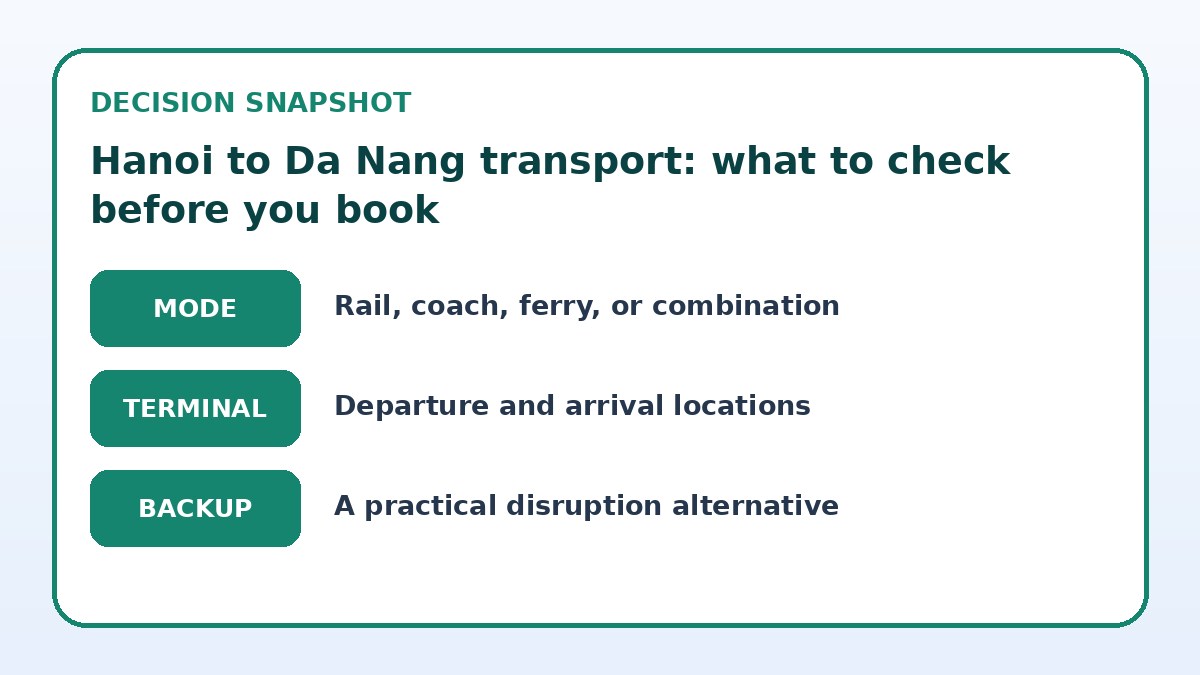
Terminal location changes the whole journey. A train station farther from central Hanoi or Da Nang can add expensive taxi or ride-hail legs that erase any advantage of a cheaper ticket. For coaches, many operators use coach stations or hotels with pick-up services, which can reduce walking and luggage handling if they stop near your accommodation. When planning, map the exact arrival and departure points and estimate realistic transfer times. If you have late-night or early-morning departures, choose an option that keeps transfers short or includes a guaranteed hotel pickup to avoid waiting on unfamiliar streets.
For solo travelers, safety and simplicity count. Prefer options where a single booking covers the door-to-door chain—such as a coach with hotel drop-off or a private transfer—rather than stitching many stand-alone legs. If you pick the train for scenery, verify onward transport availability from the station at arrival time. Where a ferry is part of the plan, confirm the pier’s distance from your final destination and how luggage will be handled between boat and land transport. Mapping these details reduces surprises and helps you keep to a realistic daily schedule.
Choose the end-to-end journey plan
| Journey approach | Best for | Friction to check |
|---|---|---|
| Direct train (one-seat or sleeper where available) | Travelers wanting scenic comfort, space to rest, and a relaxed travel rhythm. | Requires planning for station transfers and potential schedule rigidity compared with frequent coaches. |
| Direct coach or shuttle with hotel pickup | Solo travelers prioritizing minimal transfers and straightforward door-to-door service. | Coach comfort and legroom vary; frequent departures may be better for flexibility than consistent comfort. |
| Ferry-combined route (boat plus land legs) | Those seeking coastal views and a varied travel experience who can handle extra transfers. | Higher transfer complexity and exposure to weather disruptions; check connection timings closely. |
| Mixed approach (train or coach plus short flight or private transfer) | Travelers balancing time savings with comfort, or needing guaranteed arrival times. | More expensive and requires coordinating separate bookings and terminal-to-terminal transfers. |
Check live intercity options
Look beyond the ride itself and compare terminals, transfers, luggage, and arrival fit.
Luggage, transfer friction, and personal comfort
Luggage rules and how transfers are handled differ by mode. Trains usually allow you to keep luggage with you in the carriage but may require you to move it through crowded platforms; coaches often load luggage into an underfloor compartment and handle transfers for passengers. If you travel with large suitcases, fragile gear, or a bike, check whether carriers offer secure storage and how many times you’ll need to move your bags between vehicles. Solo travelers should avoid plans that demand multiple unassisted transfers or long walks between terminals when carrying heavy items.
Personal comfort also includes chance to rest, use toilets, and access power or Wi‑Fi. Trains can be more relaxed for sleeping and spreading out; coaches vary by operator and may be tighter for taller travelers. Ferry segments give open-air space and scenery but can be rough in bad weather. If you rely on charging devices, confirm availability on board or plan a charging stop during a transfer. Bring a compact travel lock, daypack with essentials, and a simple luggage scale to keep transfers predictable and protect valuables during any multi-leg journey.
Timing flexibility and schedule risk
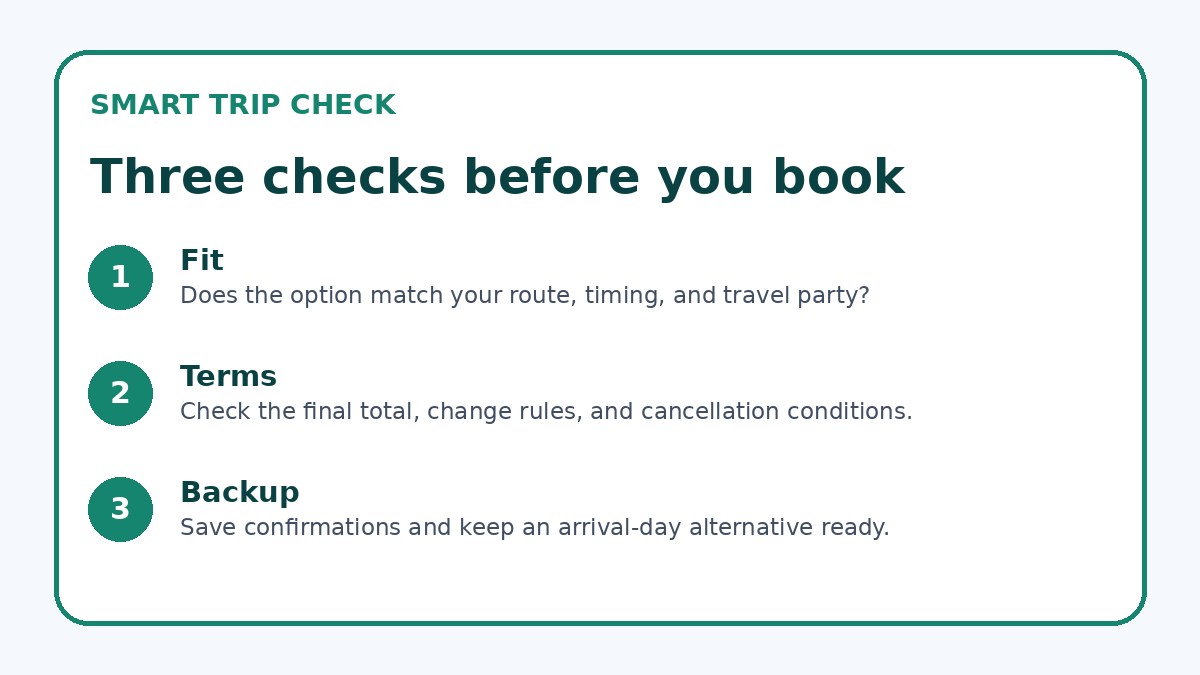
Some travelers prioritize an exact arrival time in Da Nang—for a meeting, check-in, or tour departure—while others can accept variability for lower cost or a scenic route. Coaches sometimes run more frequently and can be easier to rebook at short notice. Trains often run to fixed timetables and can be delayed by track conditions; ferries additionally depend on sea and weather conditions. Build buffer time into your schedule if your onward plans are time-sensitive, and pick departure windows that leave room for minor delays without forcing an expensive last-minute alternative.
For solo planners, timing flexibility influences whether you should book in advance. If your dates are fixed and you need a reliable arrival time, choose the mode with better on-time performance for that season and prefer tickets that explicitly state change or cancellation terms. If your schedule is fluid, you might take a later coach or a sleeper train to save accommodation costs. Regardless of mode, check real-time updates on the provider’s booking page before you leave, and save contact numbers or booking references so you can rearrange connections quickly if delays occur.
Compare the practical alternatives
Use the final page to confirm what is actually offered on your dates and save a workable fallback.
Intercity travel checklist
- Map exact departure and arrival terminals and estimate door-to-door transfer times before booking.
- Confirm baggage allowances and how luggage is handled between segments for your chosen mode.
- Check cancellation, change, and refund policies on the provider’s final booking page before purchase.
- Have at least two backup routes (alternate coach, train or flight) saved and know how to rebook them.
- Carry scanned copies of documents and keep contact details for operators or stations accessible offline.
- Pack a small daypack with essentials, chargers, and a compact travel lock to ease any multi-leg transfers.
Disruption backups and sensible contingency planning
Every intercity route can be disrupted. Prepare two practical backups: an alternative same-day route (different coach operator, another train, or a short domestic flight) and a contingency plan that accepts an overnight stop if needed. Solo travelers should know the nearest hotel options, how to book them quickly via a reputable app, and where the main transport hubs are in both cities in case connections collapse. Having a small cash reserve, a local SIM or eSIM, and access to digital boarding or ticket copies will make it easier to change plans mid-journey.
Also plan for personal contingencies: illness, minor injury, or lost documents. Pack a basic first-aid kit and store scanned copies of your passport and bookings in the cloud. If the route includes a ferry or a longer coastal leg, verify refund or rebooking rules for weather-related cancellations and ask if operators allow free transfer to another service. Before you book, confirm on the provider’s final booking page the operator’s policies for delays, cancellations, baggage claims, and where to find in-person help at departure points.
Rail & Intercity Transport questions travelers ask
Is the train the most scenic option between Hanoi and Da Nang?
Trains generally offer a more scenic, relaxed ride compared with coaches or flights because the route runs along varied landscapes and coastal sections in parts. If scenery is your priority, check whether the service includes daytime running or a sleeper that fits your schedule. Keep in mind that scenic segments can be interrupted by tunnels or urban stretches, and the train arrival station’s distance from your Da Nang lodging may add transfer time. Confirm the specific train’s schedule and whether it runs during daylight if views are essential to you.
How much extra time should I allow for transfers when choosing a coach or train?
Allow at least 45–90 minutes for transfers in major cities to account for traffic, luggage handling, and finding the correct terminal or stop. If you arrive during peak traffic times or late at night, give yourself more cushion. For multi-leg journeys that include a ferry or a separate terminal, plan extra time for ticket checks and boarding procedures. Solo travelers should avoid tight connections unless the carrier explicitly guarantees transfers; if in doubt, build an overnight buffer to reduce stress.
What should solo travelers check on the booking page before confirming a ticket?
Before you confirm, verify exact departure and arrival addresses, baggage rules, change and cancellation terms, boarding requirements, and any included pick-up or drop-off service. Look for contact phone numbers and refund policies for delays or cancellations. If the journey includes a ferry or an intermodal connection, confirm whether delays on one leg allow rebooking onto the next available service or if you must buy a new ticket. Use the provider’s final booking page as the authoritative source for operability and conditions.
Final decision note
Choosing Hanoi to Da Nang transport as a solo traveler comes down to three practical tradeoffs: how close terminals are to your lodgings, how much luggage handling you can tolerate, and how fixed your arrival time must be. Pick trains for comfort and scenery if you’re prepared for station transfers and fixed schedules. Choose coaches or shuttles to minimize transfers with door-to-door options and simpler luggage handling. Consider ferry-combined or mixed routes only if you accept higher transfer complexity or value coastal variety. Whatever option you pick, verify terminal locations, baggage rules, and disruption policies on the operator’s final booking page and keep at least one backup route ready.
Continue planning
Check current options and final conditions
Use the provider page to confirm live availability, the final total, cancellation terms, and every condition that matters to your trip.
This evergreen planning guide was created with AI-assisted drafting and a structured quality review. It does not display live prices, schedules, availability, visa guidance, or provider rankings. Verify current details before booking. Some links are affiliate links; we may earn a commission at no additional cost to you.