For couples who want a relaxed, practical plan from Osaka to Kyoto, pick the combination of modes and transfers that matches your pace, luggage and schedule flexibility. The simplest door-to-door choice is usually a direct rail trip when terminals match your origin and destination neighborhoods, but a well-designed plan can combine local subway segments, a limited express train, or a private transfer for the first or last mile. Start by mapping where you sleep, where attractions are, and how much you want to avoid stairs and trunk handling. Build a primary plan (most practical daily workflow), a faster option for tight schedules, and a disruption backup that keeps you moving if a train is delayed. The guidance below focuses on terminal fit, luggage and transfer friction, timing flexibility, and a clear backup strategy so you leave packing and timing worries behind and enjoy time together in Kyoto.
Terminal fit and door-to-door practicality
Terminal fit is about where a station or stop leaves you in the city, not just the schedule. For couples, the right terminal often means avoiding extra stairs, long underground walks, or multi-leg transfers with heavy bags. In Osaka, major rail nodes sit near hotels and subway lines; in Kyoto, stations are spaced differently and some attractions are closer to other transit stops. Plot your accommodation, evening plans, and morning departures, and prefer options that drop you closest to those points. This reduces stress and lets you enjoy your time together rather than wrestling with maps and luggage.
When comparing end-to-end journeys, think in walking minutes and transfer counts. A technically faster ride that ends two subway stops from your hotel can be slower door-to-door than a marginally longer trip that deposits you at the right station. Couples should also account for shared baggage handling—if one partner can carry a bag while the other manages tickets and navigation, a short walk is fine. If not, favor options with fewer transfers, level platforms, or staffed ticket counters where you can get quick help.
Choose the end-to-end journey plan
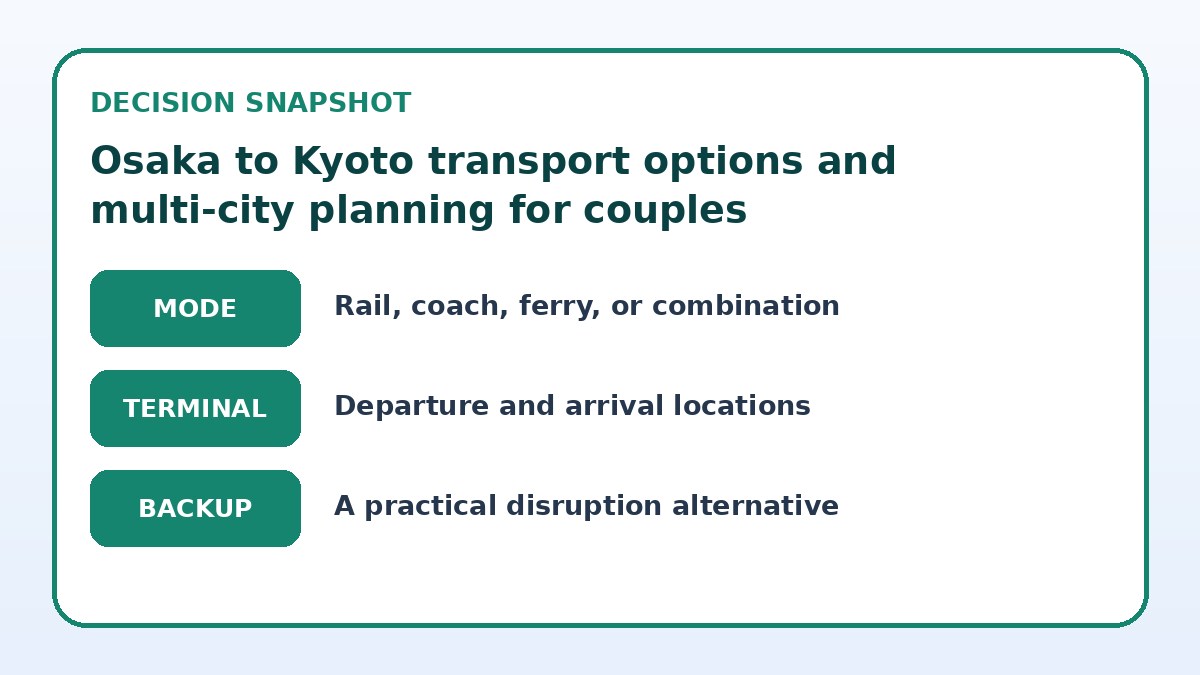
| Journey approach | Best for | Friction to check |
|---|---|---|
| Direct rail-only plan | Couples staying near major stations who want frequent departures and predictable travel rhythm. | May require short luggage transfers and could place you farther from specific attractions on arrival. |
| Mixed: local subway + express train | Couples prioritizing door-to-door efficiency when hotels are away from main intercity stations. | Adds a transfer and some walking but often reduces overall walking time by aligning terminals with destinations. |
| Coach or highway bus | Couples with oversized bags, mobility needs, or who prefer curbside boarding and fewer stairs. | Typically fewer daily departures and potentially longer on-road time compared with express trains. |
| Private transfer or taxi | Couples seeking minimal transfer hassle, exact timing, or door-to-door pickup and drop-off. | Higher cost and potential for traffic variability compared with rail, but simpler with luggage and schedules. |
Check live intercity options
Look beyond the ride itself and compare terminals, transfers, luggage, and arrival fit.
Luggage, transfer friction and comfort tradeoffs
Luggage needs change the best choice. Rail is efficient for standard suitcases, but stairs, narrow station corridors, and platform gaps create friction. Coaches and private transfers reduce handling—doors open at curbside and staff often load larger items—so they make sense for two travelers with bulky bags, a stroller, or mobility aids. If you plan to shop or pick up souvenirs, allow extra capacity in your itinerary; a single additional bag can turn a smooth transfer into a scramble at an unattended station.
Comfort also includes seating, restroom access, and the mental cost of transfers. Couples who prefer uninterrupted time together may prioritize a single-seat coach or private car even if it costs more or takes slightly longer. Conversely, travelers who want flexibility and more frequent departures will value rail. Decide whether you want to trade a little walking and change for the reliability and variety of trains, or pay to remove friction and enjoy uninterrupted transit time together.
Timing flexibility and syncing with activities
Consider how rigid your schedule is. Are you catching a reservation, festival time window, or a guided tour? Trains run frequently between Osaka and Kyoto, but exact frequency and connection times vary by line and time of day. Build your schedule around the activity with a buffer for walking and checking in, not just departure times. If you plan an early morning temple visit or an evening kaiseki dinner, choose options that minimize the risk of missing the appointment, such as earlier departures or a private transfer for fixed-time arrivals.
Couples often trade flexibility for experience: a slower paced day lets you linger, while a tightly timed day requires more reliable arrival windows. When syncing transit with activities, leave at least 30–45 minutes extra for station transfers and unforeseen delays if you have reservations. Also think about return logistics—how you’ll get back after dinner or a late evening event—and whether you need to pre-book a late coach or arrange a taxi.
Compare the practical alternatives
Use the final page to confirm what is actually offered on your dates and save a workable fallback.
Intercity travel checklist
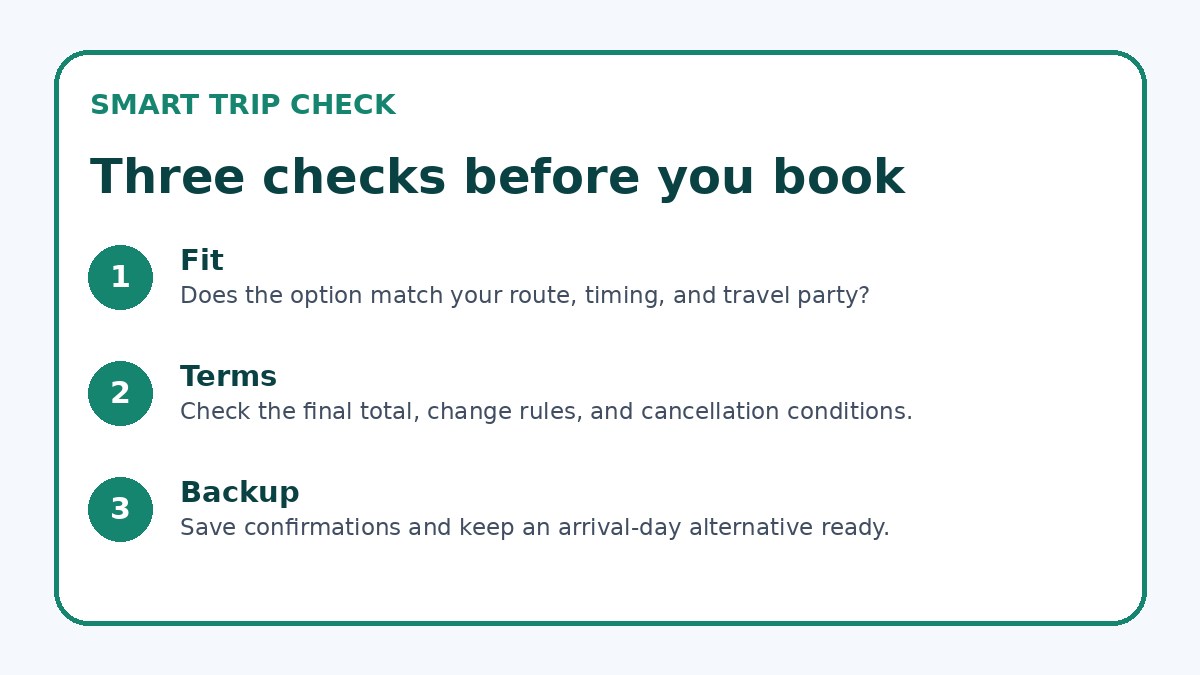
- Map your Osaka accommodation and Kyoto lodging to nearby station exits, then measure walking minutes between entrances and final destinations.
- Decide how many suitcases you’ll carry and choose the plan that minimizes stairs and long platform walks if you exceed a single bag per person.
- Identify primary train or coach departure times and pre-book a seat for your preferred departure if reservations are available.
- Select one realistic backup option—alternate train, later coach, or taxi—and save booking links and phone numbers for quick access.
- Confirm terminal access details on the provider’s booking page (platforms, station exits, accessibility features) before finalizing reservations.
- Pack small day bags with essential items for a potential short delay and note nearby stations, lounges, or cafes where you can wait comfortably.
Disruption backup: simple fallbacks to keep plans intact
A disruption backup should be simple and executable without panic. Choose one alternate rail route, one coach or highway bus option, and one private transfer fallback. Know where to buy tickets on the spot and keep the transit apps and phone numbers for local taxi companies on hand. For couples, the most practical backup keeps you together and avoids complex multi-leg reroutes—so prefer options where you can board the next available coach or hail a taxi at a main station rather than juggling multiple connections.
Familiarize yourselves with refund and change policies before leaving, and identify nearby hotels or lounges where you could wait comfortably for the next departure if needed. If either partner has mobility constraints or medical needs, prioritize backups that require the least walking and momentum. Finally, decide in advance how much time you’ll wait before switching to the backup—this simple decision prevents arguments in stressful moments and gets you back to enjoying your trip.
Rail & Intercity Transport questions travelers ask
How do I choose between a direct train and a mixed subway-plus-express route?
Start by locating your Osaka accommodation and Kyoto destination on a map and compare door-to-door walking minutes, not just ride time. If a direct train station is within a five- to ten-minute walk of your origin and leaves you close to your Kyoto stop, a direct train is often simplest. If either end requires a subway or bus, build the mixed route and add transfer time and luggage handling to the calculation. Choose the option that minimizes transfers and walking with luggage or pick the faster option if timing is critical.
What should couples do about luggage when planning ground transport between cities?
Assess the number and size of bags and who will carry them. If you have oversized items, consider coach or private transfer to avoid stairs and narrow station corridors. For standard suitcases, trains are a good balance of speed and capacity, but identify elevators and escalators at the stations you’ll use. Pack one small day bag for essentials so you don’t need to open large suitcases during transfers, and agree on simple roles—one person manages tickets while the other handles luggage—to streamline movement.
What’s a useful disruption backup for the Osaka–Kyoto ground route?
Pick three straightforward fallbacks: an alternative rail line with similar endpoints, a scheduled coach or bus that serves the route, and a taxi service you can use for a direct ride. Keep the apps or phone numbers and spare time in your schedule to switch. For couples, the most practical backup minimizes their walking and rebooking hassle—so prioritize options with curbside boarding or easy ticket counters. Also decide in advance how long you’ll wait before switching to a backup to avoid stress during delays.
Final decision note
Planning Osaka to Kyoto travel as a couple is about more than the scheduled ride; it’s about how you arrive at your hotel, how tired you’ll be after transfers, and how much luggage or mobility accommodation you need. Choose a primary plan that matches where you’ll sleep and how you like to travel, then create a faster and a disruption backup option so you can adapt without arguing or rushing. Verify station facilities, platform access, and reservation rules on the operator’s booking pages before you purchase. With a clear door-to-door mindset—considering walking minutes, transfer friction, and a simple fallback—you’ll spend less time coordinating logistics and more time enjoying Kyoto together.
Continue planning
Check current options and final conditions
Use the provider page to confirm live availability, the final total, cancellation terms, and every condition that matters to your trip.
This evergreen planning guide was created with AI-assisted drafting and a structured quality review. It does not display live prices, schedules, availability, visa guidance, or provider rankings. Verify current details before booking. Some links are affiliate links; we may earn a commission at no additional cost to you.