For a short couples’ stay in Vancouver, pick the neighborhood first — not a hotel brand or deal. The practical answer: choose one of four area types based on your priorities: downtown/West End if you want walkable attractions and evening life; Coal Harbour for quiet waterfront and ferry access; Kitsilano/Arbutus for beach access and a relaxed local vibe; or Mount Pleasant/Commercial Drive for restaurants and a trendier, lower-cost feel. Each works for a two- to four-night trip but creates different daily rhythms and transit needs. This article helps you weigh neighborhood fit, expected daily-route friction, room and party needs, and final booking terms so you can confidently shortlist one area before scanning live availability. Follow the checklist at the end and verify specific hotel policies, cancellation terms, and transit options on the provider’s booking page before you commit.

Check live stays in the areas that fit
Use your dates and party size to compare current rooms after you narrow the neighborhood fit.
Neighborhood fit: pick by vibe and must-dos
Start by listing the two or three things you absolutely want to do together: a Stanley Park cycle, a seawall sunset, a Granville Island market visit, or an evening theatre show. If most must-dos cluster on the north shore of False Creek and the downtown peninsula, stay in Downtown/West End or Coal Harbour to spend less time in transit. If beach time and a neighborhood café scene are higher priority than seeing every central attraction, Kitsilano or Arbutus will give you that relaxed pace.
Couples sometimes disagree about nightlife versus quiet mornings. Choose Coal Harbour for calmer mornings and views, or Downtown/West End if you want easy access to late-night dining and bars. Mount Pleasant and Commercial Drive work well for couples who prefer exploring independent shops, tasting rooms, and casual eateries that feel more local than touristy. Mapping your must-dos against neighborhood vibe is the fastest shortcut to a suitable base.
Choose an area-selection strategy
| Area approach | Best for | Tradeoff to check |
|---|---|---|
| Stay downtown/West End | Couples prioritizing walkable sightseeing and nightlife | Smaller rooms and more street noise but minimal transit time to core attractions |
| Choose Coal Harbour | Couples who want waterfront calm and easy ferry access | Quieter evenings but a short walk to shops and some attractions |
| Base in Kitsilano/Arbutus | Couples wanting beach time and a relaxed local vibe | Further from downtown attractions, adding short transit or rideshare legs |
| Pick Mount Pleasant/Commercial Drive | Couples seeking independent restaurants and lower rates | More transit transfers to reach central tourist spots |
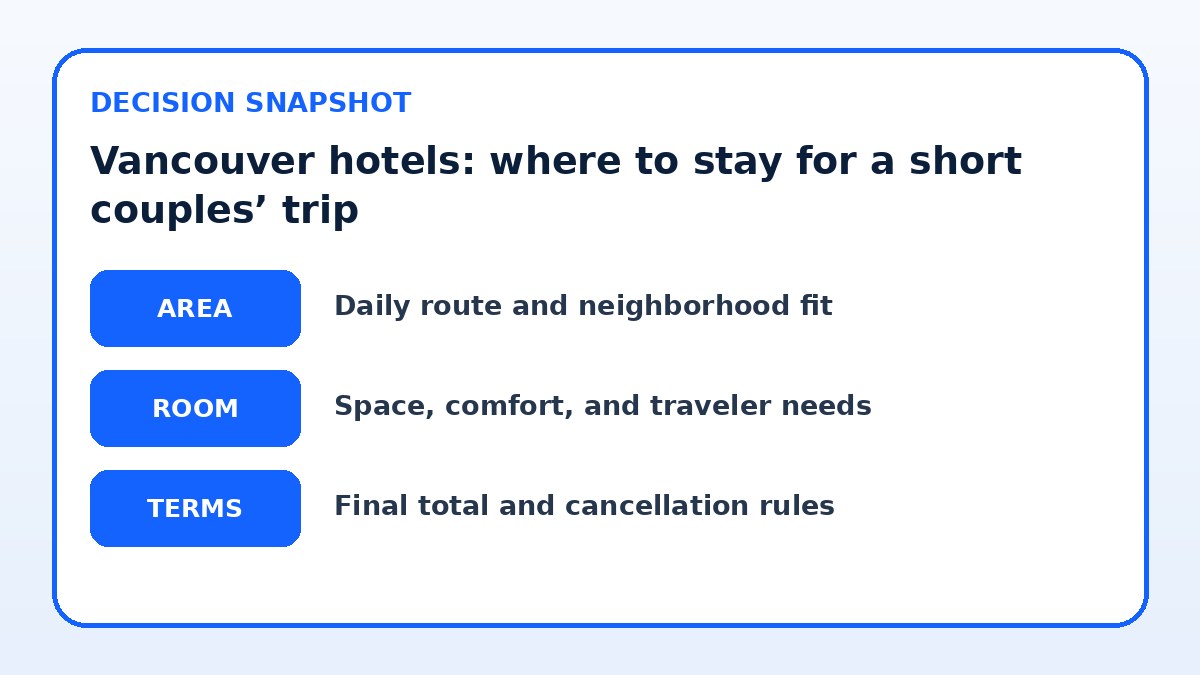
Daily-route friction: how travel will shape your days
Assess how you’ll travel between your base and planned activities. Downtown/West End minimizes walking or transit to many core attractions; you can often walk from your hotel to dinner, a gallery, or the seawall. Coal Harbour sits at the water’s edge and cuts ferry or water-taxi legs for some excursions, but walking to shops and nightlife may require a short stroll into the West End.
Kitsilano and Arbutus raise the likelihood of taking a short transit ride, rideshare, or bike across False Creek for downtown activities; this creates intentional morning and evening transitions that some couples enjoy as downtime together. Mount Pleasant and Commercial Drive have good bus and SkyTrain links, but expect more transfers if you plan several downtown activities in one day. Consider whether you want hotel-to-activity walks or short hops by transit when choosing your base.
Now compare like with like
Keep the same dates, guests, room needs, and cancellation preferences while you compare the final choices.
Room and party needs: choose space, privacy, and amenities
For a short couples’ stay, room type matters more than star rating. If you value a private morning ritual—coffee, reading, planning the day—prioritize a room with a comfortable sitting area or a small balcony; many downtown hotels have compact rooms, while some slightly further-out properties yield larger suites. Decide if you need a kitchenette for breakfast or prefer hotel breakfast service; kitchens add flexibility but occupy space.
Evaluate amenity tradeoffs: a hotel gym or pool can be a relaxing afternoon option between activities, while on-site dining may save time on busy nights. If you’ll be out most of the time, prioritize location and quiet over extensive amenities. When booking, check exact bed configuration, whether rooms connect (if you need extra space), and smoking or pet policies on the property’s final booking page rather than relying on third-party summaries.

Hotel booking check before payment
- Map your top three must-dos and mark which neighborhood puts you closest to most of them.
- Compare travel time and number of transfers from candidate neighborhoods to your planned attractions during likely travel hours.
- Confirm exact room layout, bed configuration, and whether a balcony or sitting area is available on the hotel’s booking page.
- Verify cancellation, change, and incidental-hold policies on the hotel’s final confirmation page before paying.
- Request room orientation or a quiet floor in booking notes if noise or a specific view matters to you.
- Check whether breakfast, parking, or resort fees are included and what conditions apply on the provider’s detailed policy page.
Final booking terms: what to verify before you commit
Before you click book, confirm cancellation and change policies, whether taxes and mandatory fees are included, and what identification or incidental hold is required at check-in. These elements affect flexibility for short stays, especially if travel plans shift by a day or two. For any package that seems convenient, verify on the hotel or booking provider page whether breakfast, parking, or resort fees are truly included and what conditions apply.
Also verify check-in and check-out times against your arrival and departure plans; a late check-out can make a short stay feel less rushed, but it often costs extra or depends on availability. If you care about views or a quieter side of the building, request the room orientation or floor level in the booking notes and confirm on the hotel’s confirmation page. Use Trip.com or another comparison service to scan live availability, but rely on the hotel’s final page for binding terms.
Hotel Guide questions travelers ask
Which Vancouver neighborhood is best for couples who want both nightlife and easy sightseeing?
Downtown and the adjacent West End are the best compromise for couples who want easy access to sightseeing, restaurants, and nightlife. From this area you can walk to the seawall, major museums, and many dining options, which reduces transit time between activities and evenings out. Expect more foot traffic and some street noise depending on where the hotel sits; if quiet matters, ask for a room facing away from main streets or higher up. Always verify the hotel’s location relative to your must-do sites and check exact check-in/check-out times on the booking page.
Is it worth staying in Coal Harbour rather than downtown?
Coal Harbour is worth choosing if calm mornings, water views, and proximity to marina-front walks matter more than being in the heart of busy shopping streets. It’s an easy base for couples who enjoy waterfront scenery and prefer shorter water-taxi connections for certain excursions. Coal Harbour is a short walk from downtown attractions, but plan for that extra stroll if you want late-night dining or theatre. Before booking, confirm the room’s view and whether the hotel places stricter quiet policies or has scenic-facing rooms available on its confirmation page.
How should couples decide between a beach neighborhood like Kitsilano and a trendier area such as Mount Pleasant?
Choose Kitsilano if beach time, casual cafés, and relaxed days near the water are central to your trip; it suits couples who will spend mornings and afternoons outdoors. Pick Mount Pleasant or Commercial Drive if you want to prioritize independent restaurants, bars, and a more local, artsy atmosphere with lower nightly rates. Both require short transit rides to reach downtown attractions. Compare how often you’ll commute into central Vancouver: multiple downtown visits favor staying closer, while a few targeted trips make neighborhood atmosphere the better selection.
Final decision note
For a short couples’ stay in Vancouver, decide your base by prioritizing vibe, travel friction, and room needs rather than hunting for a specific hotel name first. Downtown/West End maximizes walkability to major sights and nightlife; Coal Harbour offers calmer waterfront mornings; Kitsilano and Arbutus deliver beachside relaxation; and Mount Pleasant/Commercial Drive reward food-focused, local neighborhood exploration. Shortlist one area that aligns with your must-dos and the daily rhythm you want, then check exact room layout, cancellation rules, incidental policies, and view requests on the hotel’s booking page. Use a comparison site like Trip.com to scan availability, but make the final booking decision based on the hotel’s own terms and the proximity tradeoffs you’ve identified.
Continue planning
Check current options and final conditions
Use the provider page to confirm live availability, the final total, cancellation terms, and every condition that matters to your trip.
This evergreen planning guide was created with AI-assisted drafting and a structured quality review. It does not display live prices, schedules, availability, visa guidance, or provider rankings. Verify current details before booking. Some links are affiliate links; we may earn a commission at no additional cost to you.