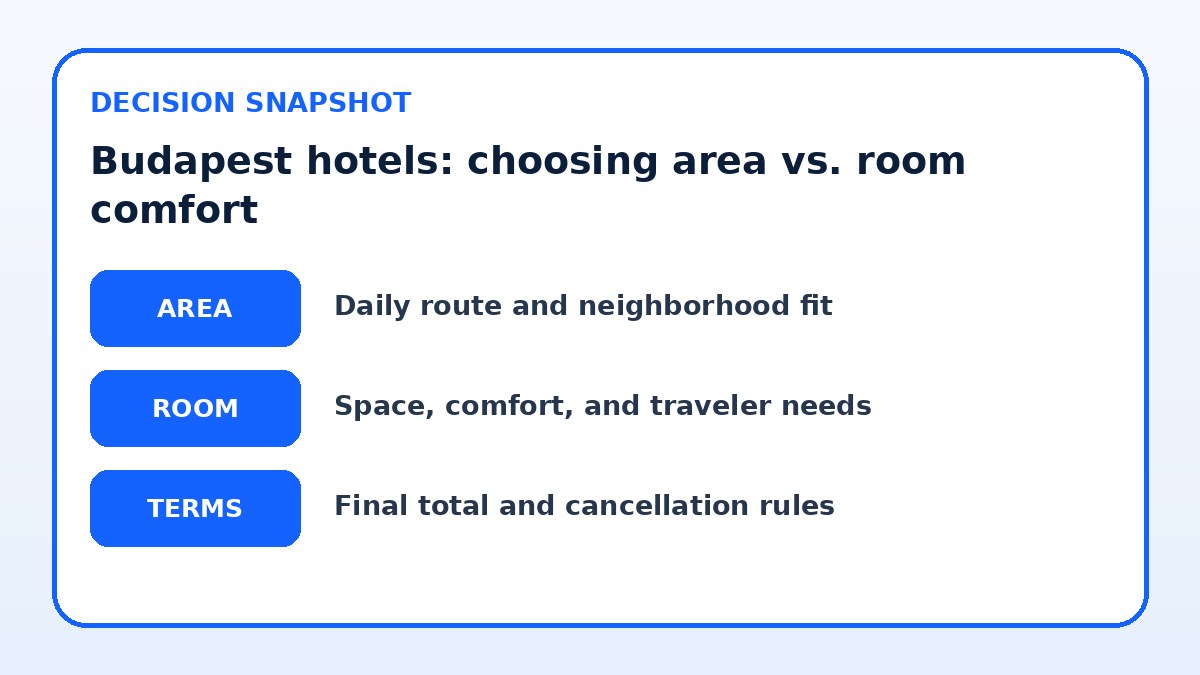
Practical answer up front: if your priority is easy daytime access to museums, thermal baths, and riverfront cafés, book in District V (Belváros) or near the Chain Bridge; if you value quieter nights, larger rooms, and lower cost per square metre, favor District VI–VII edge blocks or Buda neighborhoods like I–II. For solo travelers who mix sightseeing with late-evening safety and solo downtime, aim for a spot within a 10–20 minute tram/metro ride of the river and a short walk to at least two transit lines. That gives you fast daily routes while allowing room options that offer a desk, larger bed, or a small seating area. Use the following guidance to judge neighborhood fit, anticipate daily-route friction, pick room features that matter for one person, and set booking terms to verify before you pay.
Check live stays in the areas that fit
Use your dates and party size to compare current rooms after you narrow the neighborhood fit.
Neighborhood fit: what your days and evenings demand
Start by listing what you plan to do each day and when: museum mornings, riverfront strolling afternoons, thermal-bath relaxation, or late-night ruin-bar visits. If most daytime attractions are clustered on the Pest side and your evenings will keep you near downtown restaurants and bars, staying in Districts V, VI (near Andrássy), or VII (the Jewish Quarter) reduces transfer time and keeps you within safe, well-lit walking distances. These neighborhoods are dense with cafés, tram and metro stops, and short taxi rides for late nights.
If you prefer slower mornings and quiet evenings—perhaps you want longer sleep, workspace in your room, or a calm neighborhood after sunset—look at the edges of central Pest and the Buda side. Buda districts near the Castle, or residential blocks a few tram stops from the river, trade instant centrality for lower noise, more green space, and often larger rooms. Decide whether your solo travel style values convenience of proximity or quality of in-room downtime, and let that guide which neighborhoods to shortlist.
Choose an area-selection strategy
| Area approach | Best for | Tradeoff to check |
|---|---|---|
| Central riverside (District V and Chain Bridge area) | Maximizing walking access to major sights and riverfront cafés | Higher ambient noise and smaller rooms; may pay more for limited space |
| Jewish Quarter and Inner Pest (Districts VI–VII) | Vibrant evening scene and many transport links within short walks | Noisier nights; smaller historical building rooms with variable soundproofing |
| Buda residential pockets and Castle area | Quieter nights, scenic outlooks, and larger room options | Longer transit to many Pest attractions; stairs and uneven terrain possible |
| Outer Pest near major tram/metro hubs | Better room size and value while keeping quick transit access | Short tram or metro ride needed for riverfront and central nightlife |
Daily-route friction: transit, walking, and luggage
Think beyond straight-line distance. Budapest’s efficient metro and tram network can make a hotel three kilometres from an attraction feel closer than a noisy location half that distance away. For a solo traveler, minimizing route friction means picking a hotel within a 10–15 minute walk of a tram stop or metro station that serves multiple lines. That reduces the number of transfers and avoids late-night waits. Also consider the walk experience: uphill streets, cobblestones, and unlit stretches increase fatigue and safety concerns, so inspect map routes and recent photos before deciding.
If you’ll be moving with luggage, arriving by train, or planning day trips with backpacks, factor in step-free access at nearby stations and whether the hotel has elevators or helpful staff. Many central buildings are in older structures with narrow staircases; check room floor level and elevator availability. For quick daily flow, prefer hotels near a hub (Deák Ferenc tér, Kálvin tér, or Nyugati/Kelenföld for rail connections) but weigh noise from busy trams against the benefit of straightforward transit links.
Now compare like with like
Keep the same dates, guests, room needs, and cancellation preferences while you compare the final choices.
Room and solo needs: what to prioritize in your booking
As a solo traveler, you can balance cost against comfort differently than couples or families. Prioritize a quiet room, a comfortable bed, and an uncluttered workspace if you’ll be remote-working or journaling. Look for room photos that clearly show the bed size, desk area, storage, and a seating nook if you like to read. If you care about privacy and security, verify whether the hotel offers a safe in-room or at reception and whether doors have peepholes and secure locks.
Small conveniences make a big difference: decent soundproofing, a fridge or minibar for snacks, reliable Wi-Fi, and a good shower. If you value space, favor hotels advertising larger single or double rooms rather than compact ‘budget single’ units; many properties list square footage or show layout photos—use them. When comparing rooms, check bedding arrangements so you don’t end up with an unexpectedly narrow bed or a sofa that’s the only seating option.
Hotel booking check before payment
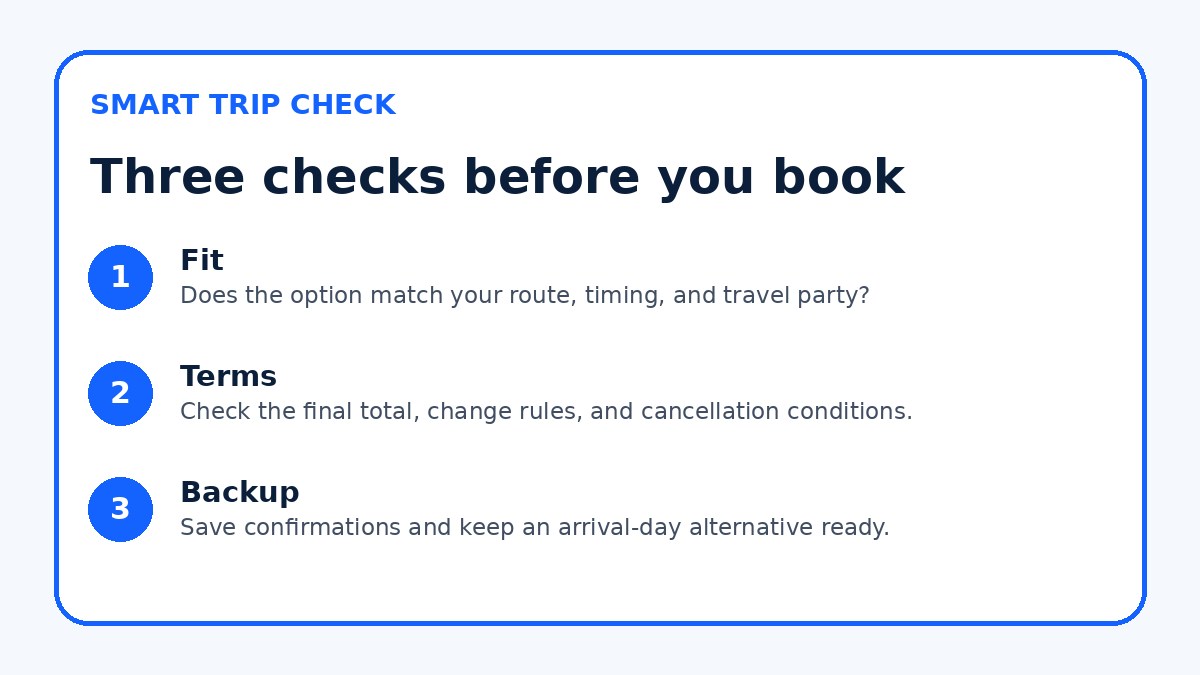
- Map your planned daily activities and circle hotels within a 10–20 minute transit ride of most stops.
- Confirm room photos show bed size, workspace, storage, and which floor the room is on.
- Verify elevator availability and step-free access if you have heavy luggage or mobility concerns.
- Read the hotel’s cancellation and late-check-in policy on the property’s booking page before paying.
- Check recent guest photos or reviews for soundproofing and nighttime noise reports.
- Compare rates and terms on Trip.com or similar and then confirm specifics on the hotel’s official page.
Final booking terms: what to verify before you commit
Before you click reserve, confirm cancellation policy, check-in and check-out times, and any extra fees for early arrival, luggage hold, or city tourist tax that the booking page may mention. Don’t assume free late check-in—especially if you arrive late by train or bus—and look for explicit instructions about after-hours key collection. If flexible plans matter, pick a rate with free cancellation up to a clear cutoff and confirm how and where to manage modifications on the provider’s booking page.
Also verify the exact room details on the property’s final booking page: bed type, floor, presence of elevator, and whether photographs represent the room you will receive. If you plan to work, confirm Wi-Fi speed or ask the hotel directly. Use Trip.com or similar platforms to compare current availability and terms, but always read the hotel’s own policy and contact details on the final booking page before completing payment to avoid surprises.
Hotel Guide questions travelers ask
Should a solo traveler pick Pest or Buda for their first visit to Budapest?
Pest is generally the practical choice for first-time visitors who want compact access to museums, restaurants, and nightlife because many attractions cluster there and transit links are dense. Buda offers a calmer, more residential feel with scenic views and larger rooms but usually requires more transit time to reach Pest’s main sights. Choose Pest if you prioritize short walks and evening convenience; choose Buda if quieter nights and space in-room matter more than immediate proximity.
How do I judge whether a room is worth paying more for as a solo traveler?
Decide which in-room features improve your solo trip: a comfortable bed, a true working desk, reliable Wi-Fi, soundproofing, and a private bathroom are often worth a modest premium. If you will be spending long hours in the room (working, reading, or recovering from travel), prioritize space and a seating area. If most time is out sightseeing, you can save by choosing a smaller room in a more central spot. Always check photos and precise descriptions rather than relying on star rating alone.
What transit considerations should influence my Budapest hotel choice?
Look for hotels within a short walk of a multi-line tram or metro stop to minimize transfers and waiting times—this reduces daily friction. Consider whether nearby stations have elevators or step-free routes if you have luggage. For late arrivals, verify how easily taxis or ride-hail services can access the street in front of the hotel. Finally, use route planning tools to preview the actual walking route; cobblestones, stairs, and dimly lit streets can make a nearby hotel feel less convenient.
Final decision note
Balancing neighborhood and room comfort in Budapest means deciding whether you trade instant proximity to riverfront attractions for quieter nights and larger rooms. For many solo travelers, targeting a hotel within a short tram or metro ride of the riverfront—while prioritizing room features like a comfortable bed, workspace, and clear photos—delivers the best compromise. Narrow your shortlist by matching nightly rhythms (late evenings versus early starts) with neighborhood character, then verify room layout, elevator access, and cancellation terms on the hotel’s final booking page. With those checks complete, you’ll be able to open live inventory confidently and select the room that fits both your days and your downtime.
Continue planning
Check current options and final conditions
Use the provider page to confirm live availability, the final total, cancellation terms, and every condition that matters to your trip.
This evergreen planning guide was created with AI-assisted drafting and a structured quality review. It does not display live prices, schedules, availability, visa guidance, or provider rankings. Verify current details before booking. Some links are affiliate links; we may earn a commission at no additional cost to you.